Join us on a literary world trip!
Add this book to bookshelf
Grey
Write a new comment Default profile 50px
Grey
Subscribe to read the full book or read the first pages for free!
All characters reduced
Language Usage Trends - cover

Language Usage Trends

Forest Greenpath

Translator A AI

Publisher: Publifye

  • 0
  • 0
  • 0

Summary

Language Usage Trends explores the profound connection between language and culture, revealing how our words shape our identities and interactions. It delves into how language acts as a vessel for cultural identity, preserving traditions and fostering belonging.

 
Further, the book analyzes how language dictates communication norms, influencing everything from conversational etiquette to nonverbal cues. Did you know that specific linguistic features, such as grammatical structures and vocabulary choices, often reflect and reinforce cultural values? This examination, crucial for navigating intercultural interactions, appreciates the diversity of human expression, and recognizes biases embedded within language.

 
The book progresses from introducing core linguistic concepts to investigating how linguistic features reflect cultural values. It then focuses on the impact of globalization on language and cultural identity, examining language shift and new hybrid languages. Finally, the role of language in shaping communication norms is studied.

 
Using linguistic surveys, ethnographic studies, and corpus analyses, it demonstrates how language constructs and reinforces cultural identities, shaping our perceptions of ourselves and others. This offers valuable insights for students, scholars, and anyone interested in intercultural communication, sociolinguistics, and the social impact of language.
Available since: 02/20/2025.
Print length: 76 pages.

Other books that might interest you

  • Jo Marries Goethe (Little Women Origins) - cover

    Jo Marries Goethe (Little Women...

    Niina Niskanen

    • 0
    • 0
    • 0
    Louisa May Alcott´s favourite writer was the German poet Goethe and not only did Louisa use Goethe´s plot devices in her novels such as Little Women, but Goethe also seemed to have been one of the main models for professor Bhaer´s character.  
    Here´s what listeners have said about the Little Women podcast 
    rotten Tiger 
    What a beautiful podcast! It’s so insightful and entertaining. It understands the characters perfectly (especially Laurie), I love it 
    Jen 
    As a long-time, die-hard Little Women fan, I LOVE this podcast! I stumbled upon it while doing research for a book series I was working on, and I am addicted! Niina is super knowledgeable in all things LW, from the book(s) to the movies and author Louisa May Alcott’s real life. I love that the discussions are based on the book and highlight the differences (sometimes controversial) between the original and newer adaptations. Highly recommended for anybody who loves getting lost in the world of Meg, Jo, Beth, and Amy March. 
    Paola 
    I love your Little Women content. Thank you for sharing all your studies and research! I read the book earlier this year for the first time and I fell in love with Jo and Fritz’s relationship. I’m so glad I binged listened to your podcast to further my love for them. It also kickstarted an obsession with LMA too, she’s such an interesting woman and moved around in so many circles.
    Show book
  • Seal in the Desert - Moving Past Feeling Stuck - cover

    Seal in the Desert - Moving Past...

    Heather Fritz

    • 0
    • 0
    • 0
    When my late husband and I moved off-grid, we rented property. The previous owners had seals in the middle of the Mojave Desert. The seals clearly did not belong there. 
    You may be unaware that you are stuck, when you do not know better. 
    Our traumas are like building blocks that we use to create walls of a mental prison which effectively becomes the life that we know. 
    Often, the walls are so very clear that even we may not notice them. But our inner voice keeps telling us that we must escape to find where we belong. 
    The problem is that we don't know how to communicate it all to ourselves, let alone to our closest loved ones. 
    This book is about naming, claiming, and taming that feeling of being stuck. Hopefully it will help every seal to get out of the desert and find their ideal ocean. 
    Although this story is a tough one, it sheds a much needed light on emotional and mental abuse. I hope you enjoy this memoir in which healing and growing resilience triumph.
    Show book
  • Constantine the Great - The Roman Emperor Who Made Christianity the Main Religion - cover

    Constantine the Great - The...

    Kelly Mass

    • 0
    • 0
    • 0
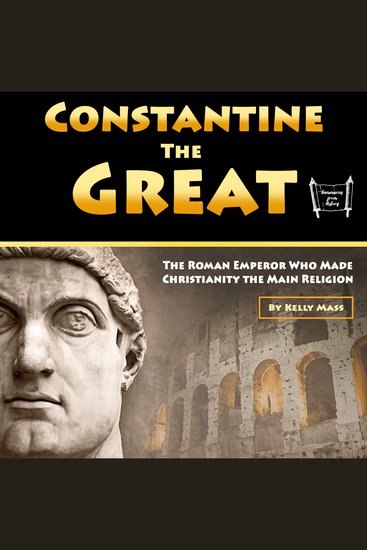
    Constantine I, often called Constantine the Great, was one of the most significant emperors of ancient Rome, reigning from 306 to 337 AD. Born in Naissus, in the province of Dacia Mediterranea (modern-day Niš, Serbia), he was the son of Flavius Constantius, a Roman army officer and a prominent figure in the Tetrarchy, and Helena, a woman of humble Greek origins. His father's position as one of the four emperors in the Tetrarchy was instrumental in shaping Constantine's early life and military career. Under emperors Diocletian and Galerius, Constantine demonstrated his military prowess, initially fighting against barbarian tribes and the Persians in the eastern provinces. In 305 AD, he was summoned to the West to aid his father in campaigns in Britain, where he earned further distinction. 
    Following the death of his father in 306 AD, Constantine’s soldiers declared him emperor at Eboracum (modern York, England). Over the next two decades, he would overcome rival emperors, such as Maxentius and Licinius, in a series of civil wars, eventually becoming the sole ruler of the Roman Empire by 324 AD. His reign marked a period of significant transformation, both militarily and administratively. 
    To strengthen the empire, Constantine initiated a series of reforms. He reorganized the imperial administration, separating civil and military powers to create a more efficient system of governance. Acknowledging the need for economic stability, he introduced the solidus, a new gold coin that helped curb inflation. This currency would become the standard for Byzantine and European economies for nearly a millennium. He also restructured the Roman army, creating specialized units that could respond swiftly to internal threats and barbarian invasions.
    Show book
  • The Golden Age of Piracy - The Rise Fall and Enduring Popularity of Pirates - cover

    The Golden Age of Piracy - The...

    David Head

    • 0
    • 0
    • 0
    Twelve authors shed new light on the true history and enduring mythology of seventeenth– and eighteenth–century pirates in this anthology of scholarly essays. 


    The twelve entries in The Golden Age of Piracy discuss why pirates thrived in the seas of the New World, how pirates operated their plundering ventures, how governments battled piracy, and when and why piracy declined. Separating Hollywood myth from historical fact, these essays bring the real pirates of the Caribbean to life with a level of rigor and insight rarely applied to the subject. 


    The Golden Age of Piracy also delves into the enduring status of pirates as pop culture icons. Audiences have devoured stories about cutthroats such as Blackbeard and Henry Morgan since before Robert Louis Stevenson wrote Treasure Island. By looking at the ideas of gender and sexuality surrounding pirate stories, the renewed interest in hunting for pirate treasure, and the construction of pirate myths, the contributing authors tell a new story about the dangerous men, and a few dangerous women, who terrorized the high seas.
    Show book
  • The Souls of Black Folk - cover

    The Souls of Black Folk

    William Edward Burghardt Du Bois

    • 0
    • 0
    • 0
    This audiobook is narrated by an AI Voice. 
    What if a nation could look at a people every day and still refuse to see their souls? 
     
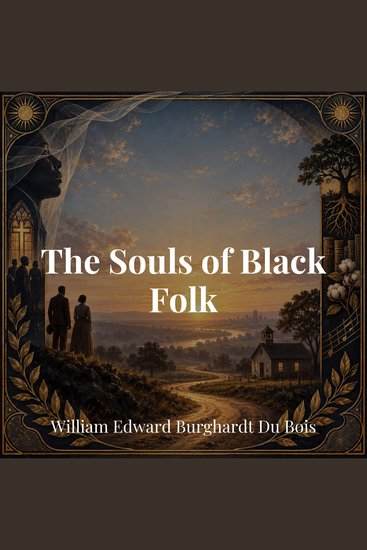
    In *The Souls of Black Folk*, W. E. B. Du Bois created one of the defining works of African American literature, social thought, and moral witness. First published in 1903, this collection of essays blends history, sociology, memoir, political criticism, music, and spiritual reflection to reveal the inner life and public struggle of Black America after emancipation. 
     
    Du Bois writes of the “Veil,” of double consciousness, of education, labor, faith, sorrow, leadership, and the unfinished promise of freedom. He examines the legacy of slavery, the failures of Reconstruction, the debate over accommodation and protest, the spiritual power of sorrow songs, and the human cost of a society built on racial exclusion. 
     
    The book’s force lies in its fusion of intellect and lyricism. Du Bois does not merely analyze oppression; he gives language to the divided self, the wound of being seen through another’s contempt, and the longing for full recognition. His thought continues to shape conversations about race, democracy, identity, education, justice, and American history. 
     
    This AI-narrated audiobook offers a clear, polished, and immersive listening experience, helping modern listeners follow Du Bois’s eloquence, argument, music, and moral urgency with precision and depth. 
     
    Listen to the classic that named the color line, unveiled double consciousness, and remains essential to understanding the soul of America.
    Show book
  • Tao Te Ching - cover

    Tao Te Ching

    Laozi Laozi

    • 0
    • 0
    • 0
    A book of only five thousand characters—yet it can transform an entire life.
    For over two millennia, the Tao Te Ching has guided seekers toward balance, clarity, and effortless living. Through poetic teachings on humility, patience, leadership, and the nature of the Tao, Laozi reveals how to move with the rhythm of the universe rather than against it. Its wisdom is simple, profound, and endlessly renewing.
    
    Celebrated as "one of the greatest spiritual texts ever written," this classic speaks to readers across cultures and generations with its quiet power and timeless truth. Whether read for insight, meditation, or daily reflection, every line offers a doorway to deeper understanding.
    
    If you seek a gentler path, a calmer mind, or wisdom that feels both ancient and newly alive, this book will become a lifelong companion.
    
    Open the book—and step into the Way that flows through all things.
    Show book