Join us on a literary world trip!
Add this book to bookshelf
Grey
Write a new comment Default profile 50px
Grey
Subscribe to read the full book or read the first pages for free!
All characters reduced
Writings Against Christians - cover

Writings Against Christians

Flavius Josephus, Thomas Taylor, Tacitus Tacitus, Porphyry, Sicily Diodorus of, Celsus, Emperor Julian

Publisher: DigiCat

  • 0
  • 0
  • 0

Summary

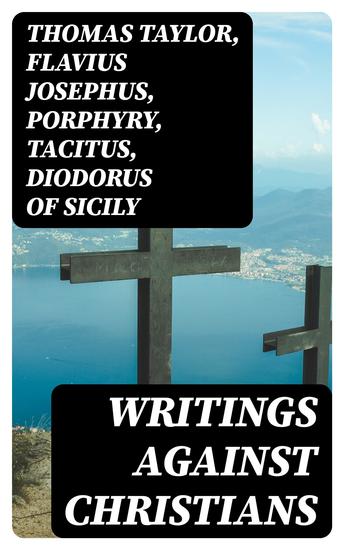
Writings Against Christians is a compelling anthology that delves into the intellectual, cultural, and religious confrontations between early Pagan philosophy and the nascent Christian movement. This rigorously assembled collection offers a profound examination of the tensions that shaped ancient thought, presenting a spectrum of rhetorical and philosophical approaches. From critiques of Christian doctrine to discourses on morality and divinity, the anthology showcases a remarkable array of literary styles, each preserving its cultural significance while contributing to an overarching narrative of dissent. A notable piece ignites conversation about the societal complexities of the era, resonating with timeless inquiry. The anthology features works from a cadre of eminent thinkers such as Thomas Taylor, Flavius Josephus, Porphyry, and Tacitus, providing a rich tapestry of perspectives drawn from varied backgrounds. These contributors, some of whom were direct observers of the early Christian era, bring a wealth of historical and philosophical knowledge. The collection aligns with classical traditions and Greco-Roman thought, offering readers insight into how these critical voices influenced the discourse and intellectual resistance surrounding burgeoning Christian ideologies. Recommended to scholars and lay readers alike, this anthology serves as an essential resource for understanding the diversity of ancient perspectives on Christianity. Offering educational enrichment and a multifaceted exploration of classical counter-narratives, Writings Against Christians encourages a deeper engagement with the historical dialogue that shaped religious and philosophical identities. This volume is a treasure trove for those seeking to navigate the intricate interplay of faith and reason across history's pages, revealing the enduring impact of these early debates on contemporary thought.
Available since: 10/11/2022.
Print length: 79 pages.

Other books that might interest you

  • 480 Codorus Street Book II - Trials and Tribulations - cover

    480 Codorus Street Book II -...

    Sandra L. Kearse-Stockton

    • 0
    • 0
    • 0
    480 Codorus Street Book II, Trials and tribulations is a continuation of 480 Codorus Street Book I - Surviving Unpredictability's. The life of a young Negro girl whose life started in York, Pennsylvania in the 1940s. This book covers the continued challenges that she faces during her life from 1973 to 1988. These years would test Sandra's ability to survive unpredictability's . This book too, is not a book of fiction but, a true mental collage of a 19 year old widowed girl with four children, finding her way through the personal storms that life takes one through.
    Show book
  • I Am Someone - cover

    I Am Someone

    Aisling Creegan

    • 0
    • 0
    • 0
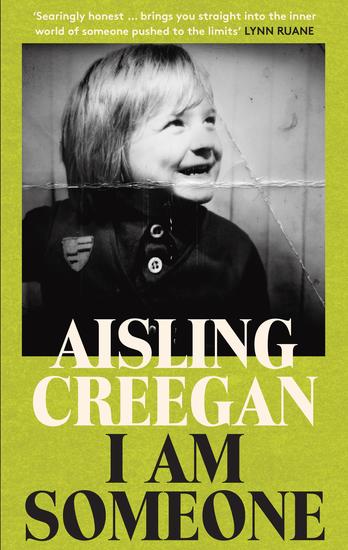
    Aisling Creegan's childhood was dominated by an abusive, alcoholic mother, who tortured her at every turn. From insults and beatings to being threatened with a butcher's knife, Aisling endured unthinkable suffering at the hands of the woman who should have loved her unconditionally. Yet, in the midst of this trauma, Aisling relied on the one person she knew she could trust – herself.
    Possessed of an incredible imagination and remarkable resilience, Aisling found escape in the little things in life. Her power to imagine an alternative world enabled her to hold on and make it to adolescence and the freedom she had longed for since childhood. But the scars of the past take time to heal, and when Aisling suffered a breakdown it took her on a surprising path to freedom – and forgiveness.
    I Am Someone is an extraordinary memoir about female cruelty and – ultimately – female strength and endurance.
    'Searingly honest … brings you straight into the inner world of someone pushed to the limits' Lynn Ruane
    Show book
  • This Autistic Girl Went to Japan - And you won't believe what happened next - cover

    This Autistic Girl Went to Japan...

    Bianca Toeps

    • 0
    • 0
    • 0
    This Autistic Girl Went to Japan is the inspiring story of a young woman who moved halfway around the world in pursuit of happiness. With humor and remarkable candor, Bianca describes the challenges of applying for a visa during a time of terrifying uncertainty, slogging through endless red tape, and the loneliness that comes with being a stranger in a strange land. Oh, and how she wound up evicting a bat from her new apartment, attending a Pokémon GO event with a bunch of middle-aged women, and discovering the best thrift store in all of Tokyo. Along the way, she explains why she feels so at home in Japan, where things are often a bit easier for autistic folks. Well, except for revenue stamps. And opening a bank account. And faxes.
    Show book
  • A Lickpenny Lover - From their pens to your ears genius in every story - cover

    A Lickpenny Lover - From their...

    O Henry

    • 0
    • 0
    • 0
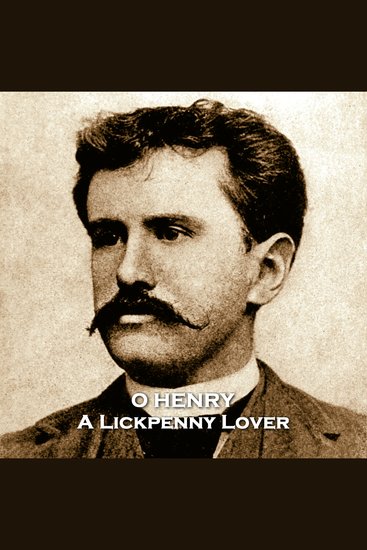
    William Sydney Porter was born on 11th September 1862 in Greensboro, North Carolina. At age 3 his mother died from tuberculosis. From an early age it was clear Porter had a large appetite for reading as he absorbed the world around him. 
    He first attended at a school run by his aunt before enrolling at the Lindsey Street High School and then worked at his uncle’s drugstore and gained a pharmacists’ license in 1881.  
    A persistent cough took him to Texas in the hope that a change of climate would help his symptoms. He took on various types of work, initially from ranch hand and cook and then as varied as pharmacist, draftsman, bank teller and journalist. He also began to write, though for now, purely as a hobby. 
    He was a member of several singing and dramatic groups when he met 17 year old Athol Estes, daughter of a wealthy Austin family. Despite her mother’s objection owing to Athol’s tuberculosis, they began courting and in July 1887, they eloped and soon married. 
    Athol, impressed by his writing, encouraged him to get them published. A job as a draftsman at the Texas General Land Office paid a healthy $100 dollars per month and life was good. 
    But then life turned cruel. His son died a few hours after birth although a daughter, Margaret, came the following year.  His job had to be vacated but another was found at the First National Bank of Austin. The bank operated informally and Porter was careless in keeping the books. He lost that job but began writing for the humourous weekly The Rolling Stone and the Houston Post. Some time later the federal Bank auditors went through his former accounts and he was arrested on charges of embezzlement. 
    Porter fled the day before his trial to Honduras. Holed up for several months he began to write.  Athol had become too ill to travel to meet him and learning that her health was deteriorating he surrendered to the court in February 1897.  Bail was obtained so that he could stay with Athol during her final days.  
    Porter was sentenced to five years at the Ohio Penitentiary in Columbus. His pharmacy qualifications got him the job of night druggist.  His sentence also gave him time to write and publish fourteen short stories. In December 1899 in McClure’s Magazine he published a short story as O Henry.  
    He was released two years early in July 1901, and reunited with Margaret, now 11, in Pittsburgh.  He now began his most prolific period of writing; a short story per week for the New York World, while also publishing works in other magazines.  Eventually over 600 of his short stories were published. 
    Porter was a heavy drinker and in 1908 his health, which had deteriorated for several years, took a dramatic turn for the worse, as did his writing.  
    O Henry died of cirrhosis of the liver complicated by diabetes and an enlarged heart on 5th June 1910.
    Show book
  • The Aeneid - Virgil's Mythic Journey through Ancient Rome - cover

    The Aeneid - Virgil's Mythic...

    Odessa Nightshade

    • 0
    • 0
    • 0
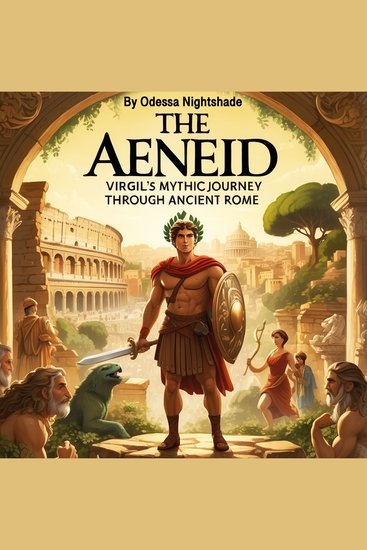
    The Aeneid stands as one of the most influential literary works of the ancient world, a masterpiece that shaped Rome’s cultural and political identity. Written by the poet Virgil between 29 and 19 BCE, this epic tells the story of Aeneas, a Trojan hero destined to lay the foundations for what would become Rome. Blending myth, history, and divine intervention, Virgil crafted a narrative that not only honored Rome’s past but also justified its imperial destiny. Commissioned during the reign of Augustus, The Aeneid served as both a patriotic epic and a moral guide, emphasizing duty, sacrifice, and perseverance.  
      
    At its core, The Aeneid explores Rome’s divine origins through the trials and triumphs of Aeneas. His journey mirrors the struggles of Rome itself—facing adversity, enduring loss, and ultimately fulfilling a grand destiny. Unlike Homer’s heroes, Aeneas is driven by pietas, a sense of duty to the gods, his people, and his future nation. This concept of duty over personal desire defines him, setting him apart from figures like Achilles, who is ruled by rage, or Odysseus, who relies on cunning. Through Aeneas, Virgil presents an ideal Roman leader—one who sacrifices personal happiness for the greater good.  
      
    The themes of fate and duty play a central role in The Aeneid, reinforcing the idea that Rome’s supremacy was preordained by the gods. From the moment Aeneas flees Troy, his path is guided by prophecy. Though he faces obstacles—such as the wrath of Juno, the temptations of love, and the horrors of war—his unwavering commitment to his destiny ensures that he prevails. Virgil uses this theme to legitimize Augustus’ rule, portraying Rome’s rise as part of a divine plan rather than mere political ambition. 
    Show book
  • 100 Facts About The Life and Works of Nikola Tesla - English to Spanish - cover

    100 Facts About The Life and...

    Science-Based Language Learning Lab

    • 0
    • 0
    • 0
    Introduction to the 100 Somethings Language Learning Series 
     
    Welcome to a revolutionary approach to language learning! This series helps you master Spanish by intertwining it with compelling topics like The Life and Works of Nikola Tesla. Each book centers on a theme (art, science, history) and presents 100 carefully chosen facts in both English and Spanish. 
     
    How It Works: 
     
    - Each fact is first introduced in Spanish, encouraging you to interpret it. 
     
    - The following page provides the fact in English and then repeats it in Spanish, aiding comprehension and memorization. 
     
    - The second half flips this order—English first, then Spanish, and English again—helping you practice translation in both directions for better mastery. 
     
    Benefits: 
     
    - Concise Learning: Focuses on one-sentence facts to ensure every word learned is impactful and directly related to your interests, making them easier to remember. 
     
    - Reinforcement: Alternating languages for each fact naturally strengthens vocabulary and grammar. 
     
    - Engagement: Learning vocabulary through topics you're passionate about keeps the process dynamic and relevant. 
     
    - Dual Knowledge: You enrich your understanding of a specific subject while learning a new language. 
     
    This series is tailored for learners who thrive on clear, targeted information, making it both educational and enjoyable. Whether you’re a beginner or expanding your linguistic skills, this series promises an effective and engaging educational journey. Embrace these 100 facts and let your passions drive your progress in mastering a new language!
    Show book