Join us on a literary world trip!
Add this book to bookshelf
Grey
Write a new comment Default profile 50px
Grey
Subscribe to read the full book or read the first pages for free!
All characters reduced
The Wars of the Jews - cover

The Wars of the Jews

Flavius Josephus

Publisher: Passerino

  • 0
  • 0
  • 0

Summary

The Wars of the Jews, is a book written by Flavius Josephus.
Flavius Josephus was a first-century Jewish historian, scholar, and military leader. He was born around 37 AD in Jerusalem, which was then part of the Roman Empire. Josephus is best known for his historical writings, particularly "The Jewish War" and "Antiquities of the Jews," which provide valuable insights into the events surrounding the Jewish-Roman War and the history of the Jewish people.

During the Jewish-Roman War (66-73 AD), Josephus initially fought against the Romans as a commander of Jewish forces in Galilee. However, after being trapped and besieged in the city of Jotapata, he surrendered to the Romans. Josephus was taken captive and eventually became a trusted adviser to the Roman general Vespasian and his son Titus, who later became Emperor.

Josephus witnessed the destruction of Jerusalem in 70 AD and later relocated to Rome, where he took on the name Flavius Josephus, in honor of his patron, the Flavian dynasty. In Rome, he continued his scholarly pursuits and wrote his famous works, "The Jewish War" and "Antiquities of the Jews," as well as other writings on Jewish history and philosophy.

Josephus' writings are highly regarded for their historical accounts of the Jewish people and the events of his time. He provides valuable information about the Jewish sects, political factions, and the socio-political climate in Judea during the Roman occupation. His works are often referenced by historians and scholars studying the period.

It's important to note that while Josephus' writings provide valuable historical information, they are not without controversy. Some scholars have debated the accuracy of certain details in his accounts, and there are discussions about potential biases and motivations behind his writings. Nonetheless, Josephus remains an important figure in understanding the history of ancient Judea and the Jewish-Roman War.
Available since: 07/06/2023.
Other books that might interest you

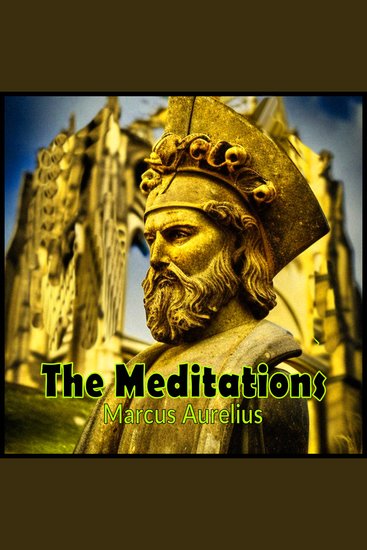
  • The Meditations - cover

    The Meditations

    Marcus Aurelius

    • 0
    • 0
    • 0
    "The Meditations" by Marcus Aurelius, is one of the greatest philosophical works of all time. And what better way to experience this masterpiece than through the audio book version? 
     
    Narrated by skilled voice actors, this audio book will take you on a journey through the thoughts and musings of one of history's greatest minds. As you listen, you'll discover valuable insights and wisdom on how to find inner peace and happiness in the midst of chaos. 
     
    Marcus Aurelius, the Roman Emperor, wrote "The Meditations" as a personal journal to reflect on his own life and to help him cope with the challenges he faced. But his words are just as relevant today as they were nearly 2,000 years ago. Through his timeless wisdom, you'll learn how to navigate the trials and tribulations of life, find meaning and purpose, and cultivate a deep sense of inner peace.
    Show book
  • The Politics of Mass Violence in the Middle East - (Zones of Violence) - cover

    The Politics of Mass Violence in...

    Laura Robson

    • 0
    • 0
    • 0
    The Middle East today is characterized by an astonishingly bloody civil war in Syria, a highly racialized and militarized approach to the concept of a Jewish state in Israel and the Palestinian territories, an Iraqi state paralyzed by the emergence of class- and region-inflected sectarian identifications, a Lebanon teetering on the edge of collapse from the pressures of its huge numbers of refugees and its sect-bound political system, and the rise of a wide variety of Islamist paramilitary organizations seeking to operate outside all these states. 


    The region's emergence as a "zone of violence," characterized by a viciously dystopian politics of identity, is a relatively recent phenomenon, developing only over the past century; but despite these shallow historical roots, the mass violence and dispossession now characterizing Syria, Lebanon, Israel/Palestine, and Iraq have emerged as some of the twenty-first century's most intractable problems. In this study, Laura Robson uses a framework of mass violence—encompassing the concepts of genocide, ethnic cleansing, forced migration, appropriation of resources, mass deportation, and forcible denationalization—to explain the emergence of a dystopian politics of identity across the Eastern Mediterranean in the modern era and to illuminate the contemporary breakdown of the state from Syria to Iraq to Israel.
    Show book
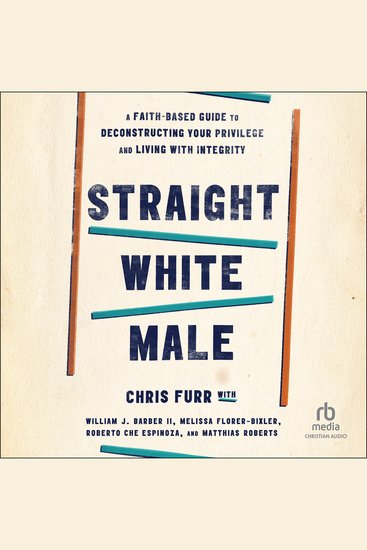
  • Straight White Male - A Faith-Based Guide to Deconstructing Your Privilege and Living with Integrity - cover

    Straight White Male - A...

    Chris Furr, William J Barber II,...

    • 0
    • 0
    • 0
    As the cultural conversation around race, gender, and sexuality has evolved, straight, white men are becoming increasingly aware of their privilege. But many may be left thinking, "OK, what am I supposed to do about it?" "We need a way forward beyond feelings of guilt, overwhelmingness, anger, and denial." "We are looking for transformative guidance that helps us be the good guys we want to be." 


    Straight, white, male pastor Chris Furr offers a guide to deconstructing that privilege in Straight White Male. With an emphasis on confession and redemption, Furr invites other privileged men to reconsider the ways they live, work, believe, and interact with others. Alongside Furr's perspective, essays from contributing writers who lack various types of privilege—straight, Black man William J. Barber II, straight, white woman Melissa Florer-Bixler, queer, nonbinary latinx Robyn Henderson-Espinoza, and gay, white man Matthias Roberts—offer insights on how particular types and combinations of privilege (and the lack thereof) shape the way we move through the world. Their combined voices offer much-needed perspective through this deconstruction and provide a vision for how straight, white men can do better for ourselves, our families, and society.
    Show book
  • Bones of Belonging - Finding Wholeness in a White World - cover

    Bones of Belonging - Finding...

    Annahid Dashtgard

    • 0
    • 0
    • 0
    In this exceptional book, inclusion leader Annahid Dashtgard shares her experiences looking for and teaching about belonging in our divided world. Through moving and deft interlocking stories, Dashtgard examines what it means to belong—to a country, in a marriage, and in our skin—and the price we pay when that belonging is absent.
    Show book
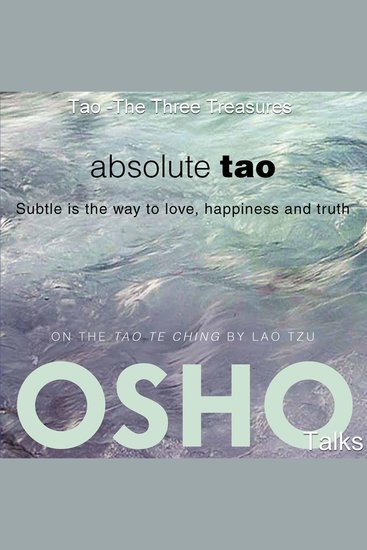
  • Absolute Tao - Subtle is the way to love happiness and truth - cover

    Absolute Tao - Subtle is the way...

    Osho

    • 0
    • 0
    • 0
    Moving beyond the usual interpretations of this classic Chinese text - that of using it as an indicator of what to do next or attempting to predict the future - Osho is using the Tao Te Ching as Lao Tzu intended: to ignite the flame of individual awareness and insight. His commentaries on these seven verses burn through every idea we may hold about ourselves until we can see with the same crystal-clear light as Lao Tzu.
    Tao, like Osho, is the way of wholeness: not dividing or denying anything, simply remaining choiceless and aware. You will find yourself listening to this series as if it were a waterfall; as you listen, you will come to understand the emptiness that puts us in touch with the eternal and makes bliss and ecstasy possible.
    
    - On the Absolute Tao
    - Ordinariness
    - On the Character of Tao
    - Emptiness
    - On the Danger of Overweening Success
    - There Is No Meaning
    - On the Utility of Not-Being
    - Witnessing
    - On the Wise Ones of Old
    - Wisdom and Understanding
    
    © & ℗ 1975 OSHO International Foundation
    Show book
  • Titus - The World English Bible Book 56 (Unabridged) - cover

    Titus - The World English Bible...

    Various Authors

    • 0
    • 0
    • 0
    Titus is one of the three pastoral epistles (along with 1 Timothy and 2 Timothy) in the New Testament, historically attributed to Paul the Apostle. It is addressed to Saint Titus and describes the requirements and duties of elders and bishops.
    Show book