Join us on a literary world trip!
Add this book to bookshelf
Grey
Write a new comment Default profile 50px
Grey
Subscribe to read the full book or read the first pages for free!
All characters reduced
The Jewish Wars - cover

The Jewish Wars

Flavius Josephus

Translator William Whiston

Publisher: DigiCat

  • 0
  • 0
  • 0

Summary

Flavius Josephus's "The Jewish Wars" stands as a monumental historical narrative detailing the tumultuous events of the Jewish revolt against Roman rule from 66 to 73 CE. Josephus employs a reticulated literary style that weaves personal reflection, vivid descriptions, and rhetorical flourish, allowing readers to not only grasp the events but also to feel the palpable tension and anguish of the times. Set against the backdrop of Roman imperialism, the text serves as both a historical document and a profound psychological exploration into the nature of conflict, loyalty, and identity. Josephus, a Jewish general turned Roman historian, offers readers unique insights gained from his own experiences during the siege of Jerusalem and his complex relationship with both Jews and Romans. His dual heritage and the precarious position he occupied provide him with a nuanced perspective that markedly influences his narrative approach, allowing him to depict the struggles of his people with both empathy and analytical distance. "The Jewish Wars" is an essential read for anyone interested in understanding the intricate dynamics of war, faith, and cultural identity. Josephus's account not only enriches historical scholarship but also resonates with contemporary discussions of resistance and the human condition, making it a compelling addition to both academic and personal libraries.
Available since: 11/13/2022.
Print length: 674 pages.

Other books that might interest you

  • Angelica - For Love and Country in a Time of Revolution - cover

    Angelica - For Love and Country...

    Molly Beer

    • 0
    • 0
    • 0
    Few women of the American Revolution have come through 250 years of US history with such clarity and color as Angelica Schuyler Church. She was Alexander Hamilton's "saucy" sister-in-law, and the heart of Thomas Jefferson's "charming coterie" of artists and salonnières in Paris. Her transatlantic network of important friends spanned the political spectrum of her time and place, and her astute eye and brilliant letters kept them well informed. 


    A woman of great influence in a time of influential women (Catherine the Great and Marie-Antoinette were contemporaries), Angelica was at the red-hot center of American history at its birth: in Boston, when General Burgoyne surrendered to the revolutionaries; in Newport, receiving French troops under the command of her soon-to-be dear friend Marquis de Lafayette; in Yorktown, just after the decisive battle; in Paris and London, helping to determine the standing of the new nation on the world stage. 


    In this enthralling and revealing woman's-eye view of a revolutionary era, Molly Beer breathes vibrant new life into a period usually dominated by masculine themes and often dulled by familiarity. In telling Angelica's story, she illuminates how American women have always plied influence and networks for political ends, including the making of a new nation.
    Show book
  • Vision of Inspiration - cover

    Vision of Inspiration

    Michailah Belle

    • 0
    • 0
    • 0
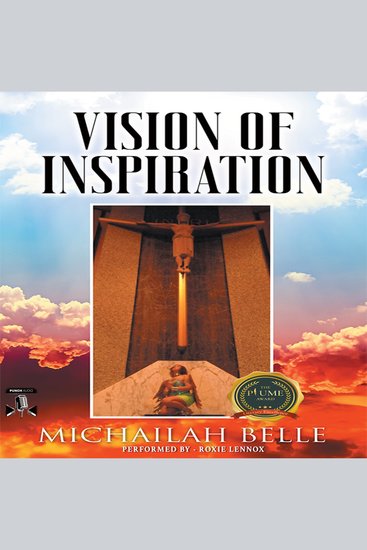
    A Vision Of Inspiration is a book about Love, Abuse, Mental Health, and Faith. Going through life hating yourself and wanting to die, because you could never be enough, or perfect for humans that claim they love you. The same humans who claim they love you are the same ones who betray you the most.Honesty, Loyalty, and Real Love are extremely hard to find these days. This book will prove the obstacles and tribulations I've had to go through to find it. This book is controversial and will have you think outside of the box. You will be set free! Our minds keep us enslaved to Humanity and I am a messenger sent to lead and help you out of Bondage!
    Show book
  • Learn Japanese in your car - Learn to speak practical Japanese without any books - cover

    Learn Japanese in your car -...

    Bobby Allen, Hiroko Isa

    • 0
    • 0
    • 0
    This audio language learning book is made for learning Japanese in your car while driving.You can also use this audio language learning book while you exercise and you can listen to it while you sleep.This audio book is designed for learning speaking Japanese without making any notes and using any books.
    Show book
  • Greenbrier Bunker The: The History of the Emergency Cold War Bunker Designed for Congress during a Nuclear War - cover

    Greenbrier Bunker The: The...

    Charles River Editors

    • 0
    • 0
    • 0
    In October 1962, American spy planes discovered the Soviets were building nuclear missile sites in Cuba, and intelligence officials informed President John F. Kennedy of this on October 16th. It went without saying that nuclear missile sites located just miles off the coast of the American mainland posed a grave threat to the country, especially because missiles launched from Cuba would reach their targets in mere minutes. That would throw off important military balances in nuclear arms and locations that had previously ensured the Cold War stayed cold. Almost all senior American political figures agreed that the sites were offensive and needed to be removed, but how? Ultimately, Kennedy's administration crafted an eventual plan that sought to avoid all-out war: a blockade of Cuba. 
    In the weeks and months following the crisis, Kennedy sought to ease nuclear tensions. By 1963, the first agreement was signed to limit the testing of nuclear devices, and the habit of secretly taping all meetings, phone calls, and other communications continued, due to the great assistance the practice had provided throughout the crisis.  
    As it turned out, October 1962 was probably the closest the Soviet Union and United States came to formally engaging in a war against each other, but of course, the possibility of a destructive nuclear war had been contemplated years before the Cuban Missile Crisis. That doomsday scenario is precisely why the federal government was working on a secret nuclear fallout bunker underneath the Greenbrier Hotel in West Virginia in the years preceding the crisis. Its existence would remain a secret for decades until being declassified shortly after the collapse of the Soviet Union, and to this day the bunker remains both a source of curiosity and mystery. 
    Show book
  • Emotional and Moral Manipulations - How Feelings Shape Our Judgments (2 in 1) - cover

    Emotional and Moral...

    William Rands

    • 0
    • 0
    • 0
    This book contains the following two titles: 
    - The Appeal to Emotion Fallacy: Logical fallacies are errors in reasoning that undermine the validity of an argument. They are often used unintentionally, but in many cases, they are deliberately employed to manipulate or persuade others. A logical fallacy may seem convincing on the surface, yet it lacks a sound basis when scrutinized more closely. Understanding logical fallacies is crucial because they can mislead audiences, derail thoughtful discussion, and obstruct the pursuit of truth. 
    - The Just-World Hypothesis: The Just-World Hypothesis is a psychological concept that suggests people have a deep-seated belief that the world is inherently fair, where individuals get what they deserve. This belief leads people to assume that good things happen to good people, and bad things happen to bad people. It is a cognitive bias that serves as a mechanism for reducing feelings of anxiety or uncertainty about the randomness and chaos of the world. This belief in a just world helps individuals to feel more in control of their lives and less vulnerable to the uncertainties of the world around them.
    Show book
  • The Politics of Urban Development - Power Policy and Planning - cover

    The Politics of Urban...

    Lyric Vale

    • 0
    • 0
    • 0
    Urban development has long been a critical component of economic and social growth worldwide. As populations continue to increase and cities expand, the planning, management, and policies surrounding urban spaces become ever more complex. Urban development encompasses the physical, economic, and social transformation of cities, focusing on housing, infrastructure, transportation, and public spaces, while also addressing broader issues such as economic disparity, environmental sustainability, and social justice. 
    Historically, urbanization has been driven by industrialization, technological advancements, and shifts in global economic patterns. The migration of people from rural to urban areas in search of better job opportunities and living conditions has accelerated this process. As a result, cities have grown in both size and importance, becoming hubs for innovation, culture, and commerce. However, this growth has not come without challenges. Rapid urbanization often leads to overcrowded living conditions, increased pollution, traffic congestion, and the strain of public services. 
    At the heart of urban development is the relationship between power, policy, and planning. Political decisions and governmental priorities often shape the trajectory of cities, influencing everything from zoning laws and land use to infrastructure development and housing affordability. In this context, urban planning becomes not just a technical exercise, but a deeply political one, with differing interests—ranging from developers and business leaders to community groups and activists—competing for influence. The way these decisions are made can either foster inclusivity and equity or exacerbate social inequalities.
    Show book