Join us on a literary world trip!
Add this book to bookshelf
Grey
Write a new comment Default profile 50px
Grey
Subscribe to read the full book or read the first pages for free!
All characters reduced
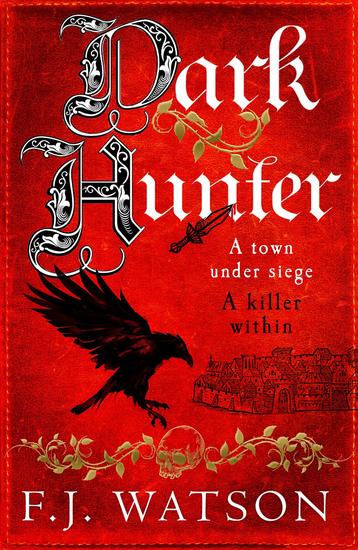
Dark Hunter - A town under seige A killer within - cover

Dark Hunter - A town under seige A killer within

Fiona Watson

Publisher: Polygon

  • 0
  • 0
  • 0

Summary

'An immersive and entertaining read' – Alistair Mabbot, The Herald
The year is 1317, and young squire Benedict Russell has joined the English-held garrison of Berwick-upon-Tweed after the spectacular Scottish victory at Bannockburn three years earlier.
Serious and self-doubting, he can't wait for his time there to come to an end. Living on the disputed territory between Scotland and England is a precarious existence, and as the Scots draw ever closer and the English king does nothing to stop them, Benedict finds himself in a race against time to solve the brutal murder of a young girl and find the traitor who lurks within Berwick's walls.
Available since: 04/07/2022.
Print length: 336 pages.

Other books that might interest you

  • The Way of All Flesh - cover

    The Way of All Flesh

    Samuel Butler

    • 0
    • 0
    • 0
    "The Way of All Flesh" is a semi-autobiographical novel by Samuel Butler, published posthumously in 1903. The narrative critiques Victorian society, particularly its hypocrisy surrounding family, religion, and education, through the lens of the Pontifex family across four generations 
    The story begins with John Pontifex, a carpenter whose ambitions lead him to become a wealthy but morally questionable businessman. His obsession with social status sets the stage for the struggles faced by his descendants, particularly his son George and grandson Theobald. 
    The central character, Ernest Pontifex, emerges as the great-grandson of John. Raised in a repressive environment by his domineering parents, Theobald and Christina, Ernest grapples with the expectations placed upon him to follow a path in the clergy. Despite initial enthusiasm for religious life, he becomes disillusioned during his time at Cambridge and later as a curate. His attempts to reform the Church lead to personal crises, including a misguided sexual advance that results in imprisonment.
    Show book
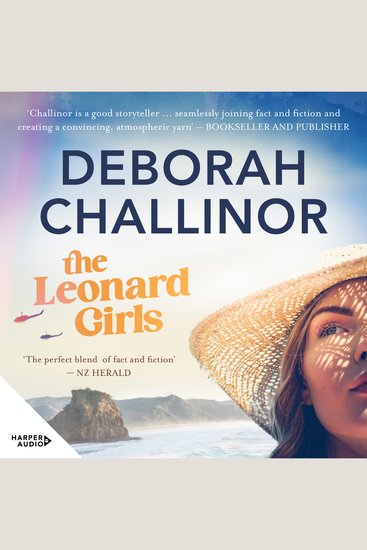
  • The Leonard Girls - cover

    The Leonard Girls

    Deborah Challinor

    • 0
    • 0
    • 0
    Rowie's pro-war, her sister Jo's a protester. And they're both in Vietnam.  
    The compelling new novel from the bestselling author of From the Ashes 
      
    In 1969, at the height of the Vietnam war, nurse Rowie Leonard is serving a 12-month tour of duty. She supports the war and is committed to caring for wounded New Zealand and Australian troops. After a few months, however, she realises that nothing at all about the conflict is as clear-cut as she'd assumed. 
    Her younger sister, Jo, is the opposite - a student at Auckland University, a folk singer and a fervent anti-war protestor. But when Jo falls for professional soldier Sam Apanui, home on leave to visit his ill father, she finds herself torn between her feelings and her convictions. 
    As the three of them grapple with love, loss, and the stresses and sorrows of war, each will be forced to confront and question everything they believed. 
    Praise for Deborah Challinor: 
    'Challinor is a good storyteller ... seamlessly joining fact and fiction and creating a convincing, atmospheric yarn' Bookseller and Publisher 
    'The perfect blend of fact and fiction' NZ Herald
    Show book
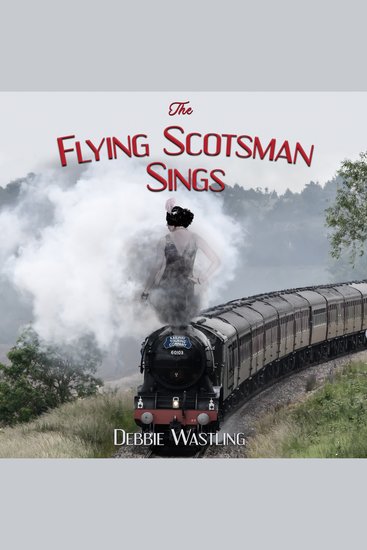
  • The Flying Scotsman Sings - cover

    The Flying Scotsman Sings

    Debbie Wastling

    • 0
    • 0
    • 0
    This witty, caustic yet compassionate novel explores the meeting of two unlikely young people in 1923: Amos Bell, the train driver of the Flying Scotsman train, and an opera singer, Madame Neil-Gregory.  This is a true story. 
    Their Northern erratic love story takes place in cities around Britain, as Alice Neil-Gregory (her birth name) builds her career as a coloratura, eventually singing dressed as Elizabeth 1 for George V at the new Wembley Park in London. The couple struggles with changes in society after World War 1,  and try to embrace becoming ‘Bright Young Things’ in a world of jazz music, silent movies, and women’s emancipation. These people break with the conventions of their working class parents, but the burning question, which keeps the reader wanting more, is ‘Will Alice ever marry Amos?’
    Show book
  • The Midwife's Child - cover

    The Midwife's Child

    Amanda Lees

    • 0
    • 0
    • 0
    Auschwitz, January 1945. Forced on a terrifying death march from the notorious concentration camp, midwife and former secret agent Maggie must find the strength to protect the tiny baby girl her dying friend left in her care. Only weeks old, little Leah is in terrible danger—from the Nazis, from the freezing weather, from starvation. So when a company of soldiers led by brave Captain Jamie Maclean rescues the marching women, Maggie’s relief knows no bounds. But it soon turns to astonishment when Jamie vows to help Maggie reunite Leah with her father—he has fallen in love with Maggie and will do everything in his power to assist her. Maggie can’t yet trust her own budding feelings. But she accepts Jamie’s help and slowly starts to dream of a life together—until Maggie gets the news every survivor dreads. The most fearsome Nazi of all, Dr. Mengele, the terror of Auschwitz, has escaped—and she may be the only person strong enough to track him down. Looking at baby Leah’s trusting eyes, Maggie’s heart is torn. But she has to find Mengele and bring him to justice. Can she succeed on the most terrifying mission of her life when so many others have failed? And if she does, will she find her way back home to the ones she loves, or will the heartbreak of everything she has suffered destroy any chance of happiness forever?
    Show book
  • Top 10 Short Stories The - The 1920's - The English - The Women - The top ten short stories written in the 1920s by female authors from England - cover

    Top 10 Short Stories The - The...

    Virginia Woolf, Radclyffe Hall,...

    • 0
    • 0
    • 0
    Short stories have always been a sort of instant access into an author’s brain, their soul and heart.  A few pages can lift our lives into locations, people and experiences with a sweep of landscape, narration, feelings and emotions that is difficult to achieve elsewhere. 
     
    In this series we try to offer up tried and trusted ‘Top Tens’ across many different themes and authors. But any anthology will immediately throw up the questions – Why that story? Why that author?  
     
    The theme itself will form the boundaries for our stories which range from well-known classics, newly told, to stories that modern times have overlooked but perfectly exemplify the theme.  Throughout the volume our authors whether of instant recognition or new to you are all leviathans of literature. 
     
    Some you may disagree with but they will get you thinking; about our choices and about those you would have made.  If this volume takes you on a path to discover more of these miniature masterpieces then we have all gained something. 
     
    In this volume English women have begun the long haul to be treated as equals, even though some see others as beneath them.  Class still has its boundaries and its distinctions. Our authors show that the decade brings much to revel in but also much to worry our hearts.  
     
    01 - The Top 10 - The 1920's - The English - The Women - An Introduction 
    02 - The String Quartet by Virginia Woolf 
    03 - Miss Ogilivy Finds Herself by Radclyffe Hall 
    04 - Her Murderer by Mary Cholmondeley 
    05 - Hodge by Elinor Mordaunt 
    06 - Blessed Are the Meek by Mary Webb 
    07 - Young Magic by Helen Simpson 
    08 - Sylvia by Bessie Kyffin-Taylor.wav 
    09 - The Black Crusader by Alicia Ramsay 
    10 - Decay by Marjorie Bowen 
    11 - The Night of No Weather by Violet Hunt
    Show book
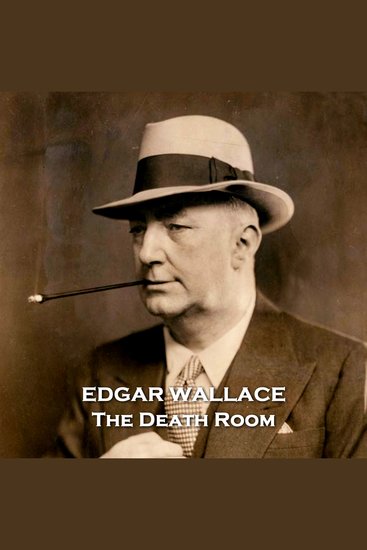
  • The Death Room - Former soldier and journalist that became a revered author and screenwriter - cover

    The Death Room - Former soldier...

    Edgar Wallace

    • 0
    • 0
    • 0
    Richard Horatio Edgar Wallace was born on the 1st April 1875 in Greenwich, London.  Leaving school at 12 because of truancy, by the age of fifteen he had experience; selling newspapers, as a worker in a rubber factory, as a shoe shop assistant, as a milk delivery boy and as a ship’s cook.  
     
    By 1894 he was engaged but broke it off to join the Infantry being posted to South Africa. He also changed his name to Edgar Wallace which he took from Lew Wallace, the author of Ben-Hur.  
     
    In Cape Town in 1898 he met Rudyard Kipling and was inspired to begin writing. His first collection of ballads, The Mission that Failed! was enough of a success that in 1899 he paid his way out of the armed forces in order to turn to writing full time.  
     
    By 1904 he had completed his first thriller, The Four Just Men. Since nobody would publish it he resorted to setting up his own publishing company which he called Tallis Press. 
      
    In 1911 his Congolese stories were published in a collection called Sanders of the River, which became a bestseller. He also started his own racing papers, Bibury’s and R. E. Walton’s Weekly, eventually buying his own racehorses and losing thousands gambling.  A life of exceptionally high income was also mirrored with exceptionally large spending and debts.  
     
    Wallace now began to take his career as a fiction writer more seriously, signing with Hodder and Stoughton in 1921. He was marketed as the ‘King of Thrillers’ and they gave him the trademark image of a trilby, a cigarette holder and a yellow Rolls Royce. He was truly prolific, capable not only of producing a 70,000 word novel in three days but of doing three novels in a row in such a manner. It was estimated that by 1928 one in four books being read was written by Wallace, for alongside his famous thrillers he wrote variously in other genres, including science fiction, non-fiction accounts of WWI which amounted to ten volumes and screen plays. Eventually he would reach the remarkable total of 170 novels, 18 stage plays and 957 short stories. 
     
    Wallace became chairman of the Press Club which to this day holds an annual Edgar Wallace Award, rewarding ‘excellence in writing’.  
     
    Diagnosed with diabetes his health deteriorated and he soon entered a coma and died of his condition and double pneumonia on the 7th of February 1932 in North Maple Drive, Beverly Hills. He was buried near his home in England at Chalklands, Bourne End, in Buckinghamshire.
    Show book