Join us on a literary world trip!
Add this book to bookshelf
Grey
Write a new comment Default profile 50px
Grey
Subscribe to read the full book or read the first pages for free!
All characters reduced
Titanic - cover

Titanic

Filson Young

Publisher: 책보요여

  • 0
  • 2
  • 0

Summary

\"Captain Smith came running out of the chart room. \'What is it?\' he asked. \'We have struck ice, Sir.\'\"

\"Titanic\" was published in 1912, shortly after the disaster. In his book, Young provides a detailed account of the Titanic\'s construction, the voyage, and the sinking, using information from survivors and other firsthand sources. He also analyzes the events leading up to the disaster, including the warnings that were ignored, the actions of the crew, and the inadequate number of lifeboats.
Available since: 05/08/2023.
Print length: 120 pages.
Other books that might interest you

  • The Sphinx and Its Significance - Mysteries of Egypt's Guardian - cover

    The Sphinx and Its Significance...

    Omar Khalil

    • 0
    • 0
    • 0
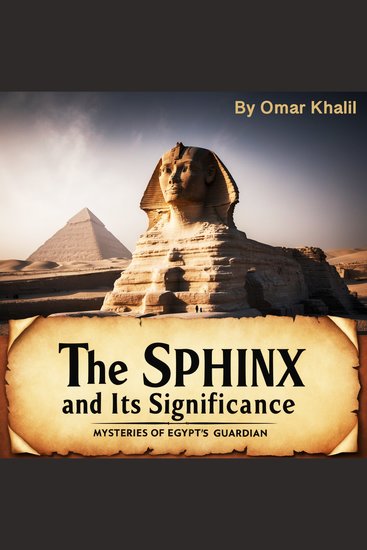
    The Great Sphinx of Giza is one of the most iconic and enigmatic monuments in the world. It stands as a symbol of ancient Egypt's grandeur, captivating historians, archaeologists, and tourists alike. The monument, which lies near the pyramids of Giza, is a colossal limestone statue with the body of a lion and the head of a human, believed to represent the Pharaoh Khafre. Its massive size and mysterious features have sparked fascination and numerous theories about its purpose, creation, and significance throughout history. 
    The origins of the Sphinx are shrouded in mystery, with its construction dating back to the Old Kingdom of Egypt, around 2500 BCE. Some scholars believe that the Sphinx was carved during the reign of Pharaoh Khafre, who also commissioned the construction of the second pyramid at Giza. Others propose that the monument predates Khafre's reign, possibly dating back to the reign of his father, Pharaoh Sneferu. While the precise dating remains uncertain, the Sphinx is undoubtedly a product of Egypt's architectural and artistic achievements, built to withstand the test of time. 
    The significance of the Sphinx in ancient Egyptian culture is multifaceted. In Egyptian mythology, lions were often associated with strength, power, and protection. The body of the lion, combined with the human head, symbolizes the union of human intelligence and animal strength, a combination that represented the ideal qualities of a ruler. The Sphinx’s location near the pyramids further emphasizes its role as a guardian, watching over the tombs of the pharaohs and ensuring their safe passage into the afterlife. The monument also reflects the Egyptians' reverence for their gods and the divine authority bestowed upon their rulers.
    Show book
  • The Menace of Prosperity - New York City and the Struggle for Economic Development 1865–1981 - cover

    The Menace of Prosperity - New...

    Daniel Wortel-London

    • 0
    • 0
    • 0
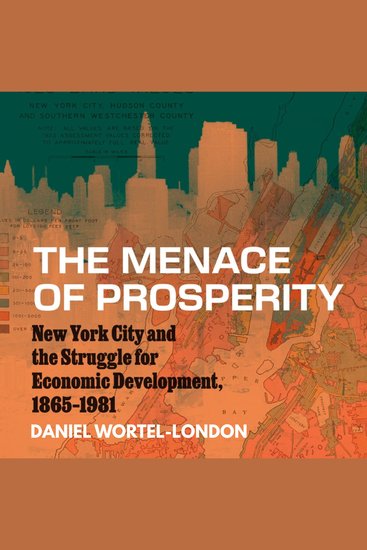
    Many local policymakers make decisions based on a deep-seated belief: what’s good for the rich is good for cities. Convinced that local finances depend on attracting wealthy firms and residents, municipal governments lavish public subsidies on their behalf. Whatever form this strategy takes—tax-exempt apartments, corporate incentives, debt-financed mega projects—its rationale remains consistent and assumed to be true. But this wasn’t always the case. Between the 1870s and the 1970s, a wide range of activists, citizens, and intellectuals in New York City connected local fiscal crises to the greed and waste of the rich. These figures saw other routes to development, possibilities rooted in alternate ideas about what was fiscally viable. 
      
    In The Menace of Prosperity, Daniel Wortel-London argues that urban economics and politics are shaped by what he terms the “fiscal imagination” of policymakers, activists, advocates, and other figures. His survey of New York City during a period of explosive growth shows how residents went beyond the limits of redistributive liberalism to imagine how their communities could become economically viable without the largesse of the wealthy. Their strategies—which included cooperatives, public housing, land-value taxation, public utilities, and more—centered the needs and capabilities of ordinary residents as the basis for local economies that were both prosperous and just. 
      
    Overturning stale axioms about economic policy, The Menace of Prosperity shows that not all growth is productive for cities. Wortel-London’s ambitious history demonstrates the range of options we’ve abandoned and hints at the economic frameworks we could still realize—and the more democratic cities that might result.
    Show book
  • The Scandal of Cal - Land Grabs White Supremacy and Miseducation at UC Berkeley - cover

    The Scandal of Cal - Land Grabs...

    Tony Platt

    • 0
    • 0
    • 0
    The University of California, Berkeley—widely known as "Cal"—is admired worldwide as a bastion of innovation and a hub for progressive thought. Far less known are the university's roots in plunder, warfare, and the promotion of white supremacy. As Tony Platt shows in The Scandal of Cal, these original sins sit at the center of UC Berkeley's history. Platt looks unflinchingly at the university's desecration of graves and large-scale hoarding of Indigenous remains. He tracks its role in developing the racist pseudoscience of eugenics in the early twentieth century. He sheds light on the school's complicity with the military-industrial complex and its incubation of unprecedented violence through the Manhattan Project. And he underscores its deliberate and continued evasions about its own wrongdoings, which echo in the institution's decision-making up to the present day. This book, above all, illuminates Cal's culpability in some of the cruelest chapters of US history and sounds a clarion call for the university to undertake a thorough and earnest reckoning with its past. It is a must-listen for Cal alumni, students, faculty, and staff, and for anyone concerned with the impact of higher education in the United States and beyond.
    Show book
  • Swapped in the Pen Complete Bundle - Gender Swap - cover

    Swapped in the Pen Complete...

    Kinky Press

    • 0
    • 0
    • 0
    Being in the pen isn’t that bad as long as you stayed on top of the band of skin heads. 
      
    If you’re big enough, the female guards may even let you bang them – and Michael is good at banging. 
      
    But, there’s a new game in town. Glendyle Corp has a solution to the female sterility plaguing their world, and they want to turn the prisoners into voluptuous baby making bimbos. 
      
    Can a big, bad dude like Michael grow melons and a she-thing if he’s promised a free ticket out of jail? Yes. Yes, he can. 
      
    Michael has a fantastic time exploring his, or rather her, new body before being taken into the lab where a machine relentlessly pumps him full of baby making goodness. 
      
    PSA: This story contains a man forced into an undesirable situation. There will be pistons shoved into places – and he never knew how good a woman has it. He’ll do some exploration with a big, black bull and be satisfied by a fertilization machine. Next, he will find out what it’s like to be fertile and expecting.
    Show book
  • The Super Cadres - ANC Misrule in the Age of Deployment - cover

    The Super Cadres - ANC Misrule...

    Pieter Du Toit

    • 0
    • 0
    • 0
    The ANC’s obsession with cadre deployment and total control has taken South Africa to the brink of destruction. 
      
    After taking power, the ANC implemented its policy of cadre deployment. It sought command of all levers of power, from the Cabinet, through the civil service, down to municipal level. 
      
    Despite the party recently lasing its majority, cadre deployment will ensure that the ANC maintains its iron grip on power and patronage, and it remains fused with the state. 
      
    In The Super Cadres, bestselling author Pieter du Toit exposes how Nelson Mandela and Thabo Mbeki laid the foundation for complete ANC control of the state, how Jacob Zuma's ANC exploited it and why Cyril Ramaphosa is complicit in the destruction that followed. 
      
    It is a searing critique of the ANC's desire for untrammelled power.
    Show book
  • Who Pays for Diversity? - Why Programs Fail at Racial Equity and What to Do about It - cover

    Who Pays for Diversity? - Why...

    Oneya Fennell Okuwobi

    • 0
    • 0
    • 0
    How diversity initiatives harm employees of color by turning them into workplace commodities. 
      
    Diversity programs are under attack. Should those interested in racial justice fight to keep them, or might there be another way forward? Who Pays for Diversity? reveals the costs that employees of color pay under current programs by having their racial identities commodified to benefit white people and institutions. Oneya Fennell Okuwobi proposes fresh and thoughtful ways to reorient these initiatives, move beyond tokenism, and authentically center marginalized employees. 
      
    Drawing on accounts of employees from across the workplace spectrum, from corporations to churches to universities, Who Pays for Diversity? details how the optics of diversity programs undermine employees' competence while diminishing their well-being and workplace productivity. Okuwobi argues that diversity programs have been a costly detour on the path to racial justice, and getting back on track requires solutions that provide equity, dignity, and agency to all employees, instead of defending the status quo.  
      
    "Oneya Fennell Okuwobi brilliantly uncovers the hidden costs of diversity initiatives, challenging the superficiality of such programs and the burdens they place on people of color within so-called 'diverse' environments with a powerful, evidence-backed critique. This book is an essential read for anyone committed to creating genuine racial equity in workplaces and institutions."—Mary Murphy, Herman B. Wells Endowed Professor, Indiana University
    Show book