Join us on a literary world trip!
Add this book to bookshelf
Grey
Write a new comment Default profile 50px
Grey
Subscribe to read the full book or read the first pages for free!
All characters reduced
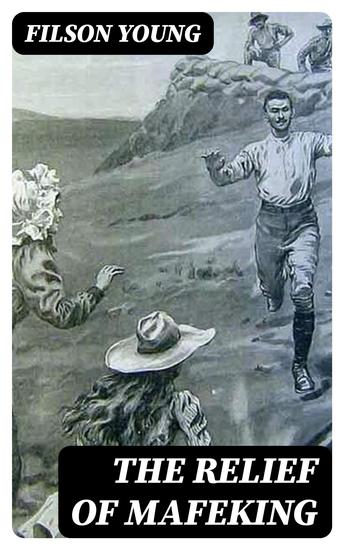
The Relief of Mafeking - How it Was Accomplished by Mahon's Flying Column; with an Account of Some Earlier Episodes in the Boer War of 1899-1900 - cover

The Relief of Mafeking - How it Was Accomplished by Mahon's Flying Column; with an Account of Some Earlier Episodes in the Boer War of 1899-1900

Filson Young

Publisher: DigiCat

  • 0
  • 0
  • 0

Summary

In "The Relief of Mafeking," Filson Young presents a vivid and compelling narrative that chronicles the events surrounding the Siege of Mafeking during the Second Boer War. Young's literary style is characterized by his detailed and dramatic prose, which transports readers to a time of crisis and valor. Combining a gripping narrative with insightful analysis, the book immerses its audience in the tense atmosphere of the besieged town, revealing the psychological and social dynamics at play. Written against the backdrop of late Victorian Britain, the book examines themes of imperialism, heroism, and the complexities of war, capturing the fervor and contradictions of the period. Filson Young was a distinguished journalist and historian whose experiences during the Boer War profoundly influenced his writing. Born in 1871, he developed a keen interest in political and military affairs, which guided his passion for documenting the stories of those embroiled in conflict. Young's firsthand observations and interviews with soldiers and civilians lend authenticity to his portrayal of the siege, as he navigates the intersection of personal narratives and broader historical implications. For readers interested in the intricate tapestry of colonial history and military struggles, "The Relief of Mafeking" is an indispensable work that combines rich storytelling with historical rigor. Young's engaging prose not only captivates but also invokes a critical reflection on the nature of war and its far-reaching consequences, making it a recommended read for both history enthusiasts and literary scholars alike.
Available since: 11/22/2022.
Print length: 144 pages.
Other books that might interest you

  • Work Life Balance Survival Guide - How to Find Your Flowstate and Create a Life of Success - cover

    Work Life Balance Survival Guide...

    Jessica Holsman

    • 0
    • 0
    • 0
    Whether you are striving for better work-life balance, ways to stress less, or need help getting organized and finding your flow state, you've come to the right place! 


    Workflow and productivity tips for an organized life. Jessica Holsman, author of the bestselling High School Survival Guide, has helped thousands of her fans study smarter, improve their grades, and get the most out of their high school experience. Now, in Work Life Balance Survival Guide, Jess is showing her high achievers how to thrive and succeed as college students, successfully enter the working world, and/or navigate a career shift. 


    Potential life-changing skills in Work Life Balance Survival Guide include: how to create a productive morning routine; tips on finding your flow; work life balance advice to avoid burnout and brain fog; self-care habits including yoga poses to nourish the body; ways to break up the work day and sustain productivity; optimal night routines for ending your work day; ways to prepare for the next day; and weekly reflection exercises to enter a new week with a new intention. 


    If you like books such as Deep Work, How to Change, or Tiny Habits, you'll love Work Life Balance Survival Guide.
    Show book
  • The End of Feudalism - How Societal Changes Transitioned to Modern Economic Systems - cover

    The End of Feudalism - How...

    Arlo Holders

    • 0
    • 0
    • 0
    Feudalism was a social, political, and economic system that dominated medieval Europe, particularly from the 9th to the 15th century. Its structure was based on the exchange of land for loyalty, military service, and labor. At its core, feudalism established a hierarchical order in which the king, or monarch, granted land, known as fiefs, to vassals (nobles) in exchange for their service. In turn, these vassals would grant portions of their land to serfs or peasants, who worked the land in return for protection and sustenance. This land-based economy was highly localized, with power concentrated in the hands of a few, and much of daily life revolved around agricultural production. 
    The decline of feudalism did not happen overnight but was a gradual process influenced by several interconnected factors. Key to its decline was the increasing centralization of power by monarchs. As monarchs gained more control, often through military conquest or strategic marriages, they began to diminish the power of feudal lords. This shift marked the beginning of the nation-state as a powerful political entity, replacing the decentralized feudal system. Additionally, the rise of a money-based economy undermined the land-based economy that feudalism relied upon. The growth of trade, the development of markets, and the emergence of a merchant class further destabilized feudal structures. 
    Another critical event in the decline of feudalism was the Black Death in the 14th century. The plague decimated large portions of Europe’s population, resulting in severe labor shortages. This, in turn, weakened the traditional feudal relationships between lords and serfs. With fewer workers available, peasants were able to demand better conditions, higher wages, or even freedom from their obligations. This shift in labor dynamics helped to weaken the power of feudal lords, who could no longer rely on a subjugated, large labor force to maintain their estates.
    Show book
  • Eastern Inferno - The Journals of a German Panzerjäger on the Eastern Front 1941–43 - cover

    Eastern Inferno - The Journals...

    Christine Alexander, Mason Kunze

    • 0
    • 0
    • 0
    This book presents the remarkable personal journals of German soldier Hans Roth. Writing as events transpired, he recorded the mystery and tension as the Germans deployed on the Soviet frontier in June 1941. In these journals, battles are described in "you are there" detail, as Roth wrote privately, as if to keep himself sane, knowing that his honest accounts of the horrors in the East could never pass through Wehrmacht censors. When the Soviet counteroffensive of winter 1942 begins, his unit is stationed alongside the Italian 8th Army, and his observations of its collapse, as opposed to the reaction of the German troops sent to stiffen its front, are of special fascination. 


    Roth's three journals were discovered many years after his disappearance, tucked away in the home of his brother, with whom he was known to have had a deep bond. After his brother's death, his family discovered them and quickly sent them to Rosel, Roth's wife. In time, Rosel handed down the journals to Erika, Roth's only daughter, who had immigrated to America. Hans Roth was doubtlessly working on a fourth journal before he was reported missing in action in July 1944 during the battle known as the Destruction of Army Group Center. Although Roth's ultimate fate remains unknown, what he did leave behind is an incredible firsthand account of the horrific war the Germans waged in Russia.
    Show book
  • Dark Psychology and Manipulation - Using the Art of Persuasion you can Influence and Control Anybody in Just Ten Minutes Discover NLP and Emotional Influence Secrets (2022 Guide for Beginners) - cover

    Dark Psychology and Manipulation...

    Cedric Poole

    • 0
    • 0
    • 0
    Warning: if you are content and do not want to learn the truth, do not continue reading. 
    The truth often hurts and puts you at a crossroads. 
    When you become aware, you have two options: continue to reap the same outcomes or take charge of the situation and alter it. 
    The fact is that we are ALL manipulable, some more than others. The salesperson who persuaded you to buy his goods was not lucky; he most likely learned the art of persuasion. 
    With the help of this guidebook, you may finally take control of your life and be the one to lead others in the direction you want to go. 
    Do you like to be an active participant in circumstances rather than being subjugated to them? On the other hand, you'll learn how to fight yourself against various forms of manipulation and thrive in relationships and at work. 
    Specifically, you'll learn:To avoid falling into the trap of manipulators, learn their quirks.The seven persuasive principlesBody language is used to encode any nonverbal communication.The subtle manipulation tactics you need to know to protect yourself.The persuasive strategy for getting anything you desire 
    ... And a lot more 
    Human relationships are as vital as they are delicate: when you enter into them, you have to know precisely what to do, how to do it, and what the outcome of your actions will be. Unfortunately, if you lack the necessary understanding, you will have to prepare to surrender. 
    Are you willing to investigate the systems that cause you to give in to any demand? The truth is there at your fingertips: just add the guide to your cart and enjoy the ride.
    Show book
  • Living Room Revolution - A Handbook for Conversation Community and the Common Good - cover

    Living Room Revolution - A...

    Cecile Andrews

    • 0
    • 1
    • 0
    The author of The Circle of Simplicity “joyfully invites us to discover a robust and real personal expansion with each other as we remake our society” (Mark Lakeman, cofounder, The City Repair Project). 
     
    Every man for himself! For too long we have lived in a competitive, consumer-oriented culture, destroying the well-being of people and the planet. We believe that money brings happiness, yet all too often, the opposite is true. The pursuit of wealth at any cost corrupts our values and diminishes our lives. The resulting inequality breaks down social cohesion and generates envy, bitterness, and resentment. Greed breeds more greed. 
     
    Living Room Revolution refutes the notion that selfishness is at the root of human nature. Research shows that people—given the right circumstances—can be caring, nurturing and collaborative. Presented with the opportunity, they gravitate toward actions and policies embodying empathy, fairness, and trust instead of competition, fear, and greed. The regeneration of social ties and the sense of caring and purpose that comes from creating community drive this essential transformation. 
     
    At the heart of this movement is the ancient art of conversation. Living Room Revolution provides a practical toolkit of concrete strategies to facilitate personal and social change by bringing people together in community and conversation. 
     
    The heart of happiness is joining with others in good talk and laughter. Each person can make a difference, and it can all start in your own living room! 
     
    “Small groups. Study circles. Stop ’n chats. House parties. Movie nights. Online sharing. Bring people together, and you never know what kind of fuse you’ll ignite for change.” —Wanda Urbanska, author of The Heart of Simple Living
    Show book
  • The Art of Living - The Classical Manual on Virtue Happiness and Effectiveness - cover

    The Art of Living - The...

    Epictetus, Sharon Lebell

    • 0
    • 0
    • 0
    Epictetus, one of the greatest of the ancient thinkers, believed that the primary mission of philosophy is to help ordinary people meet the challenges of daily life and deal with losses, disappointments, and grief. His prescription for the good life: master desires, perform one's duties, and learn to think clearly about oneself and the larger community.
    
    In this accessible interpretation by Sharon Lebell, contemporary listeners will find useful advice from this ancient text. This recording also includes an interview with philosopher Jacob Needleman on the significance of Epictetus' work.
    Show book