Join us on a literary world trip!
Add this book to bookshelf
Grey
Write a new comment Default profile 50px
Grey
Subscribe to read the full book or read the first pages for free!
All characters reduced
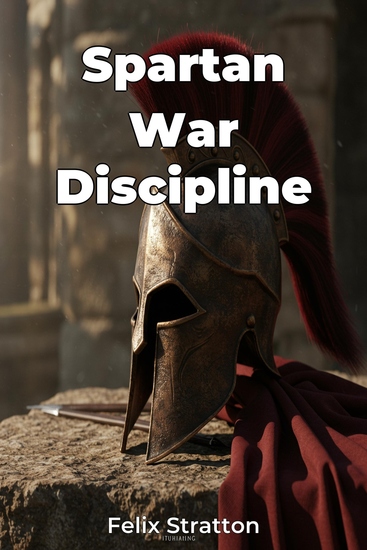
Spartan War Discipline - cover

Spartan War Discipline

Felix Stratton

Translator A AI

Publisher: Publifye

  • 0
  • 0
  • 0

Summary

Spartan War Discipline explores how Sparta, despite its small population, dominated ancient Greek battlefields for centuries. This was achieved through a rigorous system of military training known as the "agoge" and a unique social structure that emphasized unwavering discipline and unit cohesion. The book highlights that Spartan military success wasn't just about combat skills but also about deeply ingrained values and societal expectations that shaped every aspect of a Spartan citizen's life.

 
The book examines the historical context of Sparta, including its political system and economic foundations, before delving into the "agoge." It uncovers how continuous drills and shared hardships fostered absolute obedience and transformed Spartan boys into formidable soldiers. The analysis extends to Spartan battle tactics and command structures, demonstrating how these elements were integrated with the social and psychological foundations established through the "agoge."

 
The book progresses by first establishing Sparta's historical and social context, then dissecting the "agoge" and finally analyzing Spartan battle tactics. By drawing on ancient texts and archaeological evidence, Spartan War Discipline challenges traditional views by emphasizing the critical role of social conditioning in shaping their military capabilities and offers insights into leadership, discipline, and social cohesion that underpinned their success.
Available since: 05/03/2025.
Print length: 51 pages.


Other books that might interest you

  • Flying Through the Ranks - The Extraordinary Experiences of Airmen to Air Marshals from the Cold War to the Gulf - cover

    Flying Through the Ranks - The...

    Air Marshal G.A. 'Black' Robertson

    • 0
    • 0
    • 0
    The inspiration for this brilliant anthology is the "I Learnt About Flying from That" articles that first appeared in the RAF flight safety magazine Air Clues in the 1940s and continue to feature in the magazine to this day. Flying Through the Ranks gets a five-star start with an extraordinary tale from a marshal of the Royal Air Force and continues in the same vein. Men and women of every rank—pilots, navigators, engineers, a RAF regiment officer, and airmen too—reveal similar intriguing experiences in both war and peace. Exciting, amusing, poignant too at times, their stories say as much about the development of the RAF and the making of the Cold War warrior as they do about the individuals themselves. It's impossible not to be moved by these rousing stories of courage and leadership, risk-taking and pressure, invention and adventure. Starkly exposing human fallibility at times, they highlight the skill and improvisation central to the flying business. Other common themes across some uncommon accounts are the sheer exhilaration of flying, the role that luck plays in everyone's life, and the unspoken bond of respect that binds aviation professionals together. Strap yourself in for a top flight experience!
    Show book
  • River of Lakes - A Journey on Florida's St Johns River - cover

    River of Lakes - A Journey on...

    Bill Belleville

    • 0
    • 0
    • 0
    First explored by naturalist William Bartram in the 1760s, the St. Johns River stretches 310 miles along Florida's east coast, making it the longest river in the state. The first "highway" through the once wild interior of Florida, the St. Johns may appear ordinary, but within its banks are some of the most fascinating natural phenomena and historic mysteries in the state. The river, no longer the commercial resource it once was, is now largely ignored by Florida's residents and visitors alike. 


    In the first contemporary book about this American Heritage River, Bill Belleville describes his journey down the length of the St. Johns, kayaking, boating, hiking its riverbanks, diving its springs, and exploring its underwater caves. He rediscovers the natural Florida and establishes his connection with a place once loved for its untamed beauty. Belleville involves scientists, environmentalists, fishermen, cave divers, and folk historians in his journey, soliciting their companionship and their expertise. River of Lakes weaves together the biological, cultural, anthropological, archaeological, and ecological aspects of the St. Johns, capturing the essence of its remarkable history and intrinsic value as a natural wonder.
    Show book
  • The Birth of Anarchism - 1849-1887 - cover

    The Birth of Anarchism - 1849-1887

    Pierre-Joseph Proudhon, Mikhail...

    • 0
    • 0
    • 0
    Mankind can rule itself without the force of top-down authority, and freedom is more than just choosing how to meet the needs and demands of capital. Inequality is structural and intentional, not inevitable and necessary.  
    It does not have to be this way. In solidarity, we are better. 
    Think for yourself, and question authority. 
    This is the essence of anarchism, which has a bad name and reputation because it attacks the necessity of centralised power and authority. The media archetype is Tyler Durden, filled with violence and nihilism – yet anarchism is the most positive of political philosophies, one that Jesus and Buddha both preached, stating that empathy and a rejection of authority were key to human flourishing. Neither would disagree with most early anarchists. 
    Proudhon, whose “property is robbery” is perhaps the most well-known anarchist slogan, lays out the conceptual foundation for key anarchist ideas. He argues that usury (charging interest) is a fundamental harm to society, that there is enough for everyone if we simply take other values to be higher than capital gain, that mutualism is inevitable, and that all governments and ideologies make the same mistake, in trying to change society from the top. Positive change must arise from the great masses of humanity, not from their rulers. 
    Bakunin's speeches are about solidarity arising from the masses, and the ground for a global reconfiguration. 
    Louis Lingg was convicted to death with six others, for being one of the ‘Chicago Anarchists’. They were executed to make a political point, based on corrupted evidence and perjury. His statement is one of contempt for the powers that be, and his belief that mankind should be free and should fight until it is. 
    We end with Kropotkin, who firmly believed in decentralized society. He believed that the greatest strength of mankind lies in the masses, not their rulers, and exhorts us to “Act for Yourselves”.
    Show book
  • History of Georgia: A Captivating Guide to the People and Events That Shaped the History of the Peach State of the United States of America - cover

    History of Georgia: A...

    Captivating History

    • 0
    • 0
    • 0
    Georgia’s history is more than just peaches—it’s a story of prisoners, preachers, and presidents who rose above the status quo to help transform a nation. 
    Georgia has been home to many influential figures in US history, including President Jimmy Carter and Martin Luther King Jr. But how much do you really know about the state? 
    Did you know, for instance, that Georgia was the last of the Thirteen Colonies to be created? Or that it was the last state to be admitted into the Union after the Civil War. 
    This introductory guide takes you on a journey through Georgia’s past, starting with the earliest settlers of the land to more current events, such as the 1996 Summer Olympics. This page-turning read will provide you with interesting facts about one of the largest states in the South. 
    Here’s just a small fraction of what you’ll discover:The people who called Georgia home long before it was called GeorgiaAn easy-to-read account of Georgia’s pre-Revolution historyHow a preacher was able to unify the nation for warFascinating accounts of the people and events that transformed AmericaThe truth of why such a weak state became a pillar of the nationThe heartbreaking reality of Jim Crow laws in the SouthAn amazing victory of a down-on-his-luck governorAnd so much more! 
    Scroll up and click the “add to cart” button to learn more about the Peach State!
    Show book
  • Sociology of Youth and Development - Youth Society and Transformation (3 in 1) - cover

    Sociology of Youth and...

    Fred Grandsen

    • 0
    • 0
    • 0
    This 3-in-1 volume investigates how identity, social interaction, and constructed realities influence the development of youth within a constantly evolving world. 
    The first section, Youth and Society, examines the social roles, challenges, and transitions that young people face as they grow into adulthood. It explores how education, culture, media, and institutions affect youth identity, opportunity, and social mobility. 
    The second section, The Social Animal, delves into human social behavior with a special focus on youth. Drawing from psychology and sociology, it analyzes group behavior, conformity, interpersonal connection, and the deep need for belonging during formative years. 
    The third section, The Social Construction of Reality, explores how our perceptions of the world—including concepts like adolescence, success, and rebellion—are not just discovered, but socially constructed. This section helps readers understand how youth experiences are shaped by societal narratives and expectations. 
    Together, these three volumes offer an interdisciplinary lens on the transformation of youth and the broader changes shaping society.
    Show book
  • Japan and World War II: The History of the Imperial Japanese Empire during the War - cover

    Japan and World War II: The...

    Anonymous

    • 0
    • 0
    • 0
    All Americans are familiar with the “day that will live in infamy.” At 9:30 a.m. on Sunday, December 7, 1941, Pearl Harbor, the advanced base of the United States Navy’s Pacific Fleet, was ablaze. It had been smashed by aircraft launched by the carriers of the Imperial Japanese Navy. All eight battleships had been sunk or badly damaged, 350 aircraft had been knocked out, and over 2,000 Americans lay dead. Indelible images of the USS Arizona exploding and the USS Oklahoma capsizing and floating upside down have been ingrained in the American conscience ever since. In less than an hour and a half the Japanese had almost wiped out America’s entire naval presence in the Pacific. 
    Despite fighting in North Africa and the Atlantic, the United States still had the resources and manpower to fight the Japanese in the Pacific. Though the Japanese had crippled the American fleet at Pearl Harbor, its distance from Japan made an invasion of Pearl Harbor impossible, and Japan had not severely damaged important infrastructure. Thus, the United States was able to quickly rebuild a fleet, still stationed at Pearl Harbor right in the heart of the Pacific. This forward location allowed the United States to immediately push deeply into the Pacific theater. 
    In fact, the turning point in the Pacific theater took place in 1942 near Midway Island. The Japanese had moved a sizable fleet intending to occupy Midway Island and draw the American navy near. Instead, American aircraft flying from three aircraft carriers that had been away from Pearl Harbor in December 1941 got a bearing on the Japanese fleet and sunk four Japanese aircraft carriers, permanently crippling Japan’s navy. The Battle of Midway was one of the first naval battles in history where the enemy fleets never saw or came into contact with each other.
    Show book