Join us on a literary world trip!
Add this book to bookshelf
Grey
Write a new comment Default profile 50px
Grey
Subscribe to read the full book or read the first pages for free!
All characters reduced
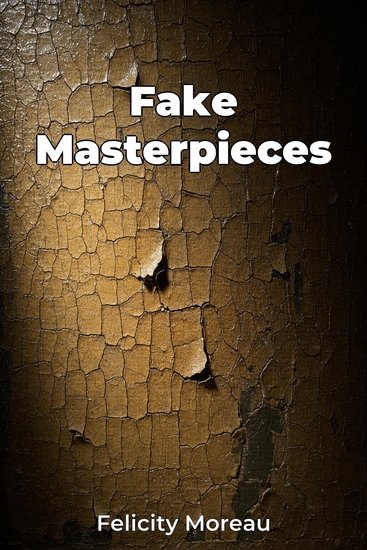
Fake Masterpieces - cover

Fake Masterpieces

Felicity Moreau

Translator A AI

Publisher: Publifye

  • 0
  • 0
  • 0

Summary

"Fake Masterpieces" explores the captivating and deceptive world of art forgery, revealing how skilled counterfeiters exploit vulnerabilities within the art market. It exposes the profound consequences that ripple through museums and private collections, challenging our understanding of authenticity. 

 
The book argues that art forgery is more than just a crime; it's a complex phenomenon that exposes the subjective nature of art appreciation. For instance, the story of Han van Meegeren, who famously fooled the Nazis with his "Vermeers," highlights how even the most discerning eyes can be deceived.

 
The book begins by introducing core concepts like authentication and the art market, then progresses through various case studies. A significant portion is dedicated to the Beltracchi scandal, a contemporary case involving sophisticated techniques and a vast network.

 
By examining the techniques forgers use to replicate master artists and the failures of authentication, the book reveals weaknesses in a system built on connoisseurship and scientific analysis. It ultimately proposes ways to improve authentication methods and encourages a more critical approach to art appreciation.
Available since: 02/25/2025.
Print length: 70 pages.

Other books that might interest you

  • Short Nonfiction Collection Vol 042 - cover

    Short Nonfiction Collection Vol 042

    Various Various

    • 0
    • 0
    • 0
    Eighteen short nonfiction works in the public domain, independently chosen by the readers. Topics include biographies of astronomer Fiammetta Wilson, naturalist Alexander von Humboldt, mountaineer Jacques Balmat, French Revolutionist Camille Desmoulins, and Buddha; a climb of Mt. Fuji by Lafcadio Hearn, reviews of 20th century poetry and of books by E. M. Delafield, Mrs. Gaskell, and Kierkegaard; marriage; motion pictures; color blindness; and an essay on optimism by Helen Keller. (Summary by Sue Anderson)
    Show book
  • Editor Missing - The Media in Today's India - cover

    Editor Missing - The Media in...

    Ruben Banerjee

    • 0
    • 0
    • 0
    This is a time when the space for free speech is shrinking in India, along with a growing intolerance of contrarian views. The right to dissent, which should be the bedrock of any democracy, is seriously endangered. There is widespread belief that we are in an undeclared emergency. Not everyone agrees with this, though, and the jury is out on the state of play in the world's largest democracy. As charges and countercharges fly, with no unanimity in sight, India's national discourse, particularly its news media, is becoming increasingly divided and polarized. 
    In Editor Missing, veteran journalist Ruben Banerjee attempts to provide clarity on the state of Indian media at a time when there is consensus only on the lack of it. The media mirrors society, and Banerjee is best placed to tell its contested story in contemporary India. As a top editor for various publications, he has had a ringside view for years of the decline in its standards, quality and objectivity. His own experiences reflect the time we live in. The book provides rare insights into the minefield that an editor today runs into - from pressures that are exerted to the risks of upsetting the powers that be. At the end of it, the reader is left with a chilling realization that defending the truth can come at a huge personal cost in present-day India.
    Show book
  • Under Cover - Inside the Shady World of Organized Crime and the RCMP - cover

    Under Cover - Inside the Shady...

    Garry Clement

    • 0
    • 0
    • 0
    The Royal Canadian Mounted Police is no longer fit for purpose.
    		 
    Reflecting on his career in the RCMP from 1973 to 2003, Garry Clement recounts his childhood in rural Ontario; his RCMP training in Regina; his drug-bust days based in British Columbia, Montreal, and Toronto; his work battling the Chinese Communist Party’s infiltration of Canada; his role in the Parliament Hill bus hijacking; his involvement in the post–9/11 Maher Arar inquiry; his impact on the RCMP’s Proceeds of Crime program and on anti–money laundering in Canada and abroad; and his reasons for leaving the RCMP. Under Cover  provides a gripping and vulnerable inside look into the corruption of politics and policing in Canada.
    		 
    In light of the mounting complexities of transnational organized crime, terrorism, cybercrime, and financial crime, Clement calls for a complete revamping of the culture of federal policing. We need a fundamental structural reformation of the RCMP. Garry Clement offers direct recommendations for how to approach such a task.
    Show book
  • Misery - From their pens to your ears genius in every story - cover

    Misery - From their pens to your...

    Anton Chekhov

    • 0
    • 0
    • 0
    Anton Pavlovich Chekhov was born on 29th January 1860 in Taganrog, on the south coast of Russia.  
    His family life was difficult; his father was strict and over-bearing but his mother was a passionate story-teller, a subject Chekhov warmed to. As he later said; ‘our talents we got from our father, but our soul from our mother’.  
    At school Chekhov was distinctly average. At 16 his father mis-managed his finances and was declared bankrupt. His family fled to Moscow. Chekhov remained and eked out a living by various means, including writing and selling short sketches to newspapers, to finish his schooling. That completed and with a scholarship to Moscow University obtained he rejoined his family. 
    He was able to help support them by selling satirical sketches and vignettes of Russian lifestyles and gradually obtained further commissions. In 1884, he qualified as a physician and, although it earned him little, he often treated the poor for free, he was fond of saying ‘Medicine is my lawful wife, and literature is my mistress.’ 
    His own health was now an issue as he began to cough up blood, a symptom of tuberculosis.  Despite this his writing success enabled him to move the family into more comfortable accommodation.  
    Chekhov wrote over 500 short stories which included many, many classics including ‘The Kiss’ and ‘The Lady with a Dog’.  His collection ‘At Dusk’ won him the coveted Pushkin Prize when was only 26.  
    He was also a major playwright beginning with the huge success of ‘Ivanov’ in 1887.   
    In 1892 Chekhov bought a country estate north of Moscow. Here his medical skills and money helped the peasants tackle outbreaks of cholera and bouts of famine. He also built three schools, a fire station and a clinic.  It left him with less time for writing but the interactions with real people gained him detailed knowledge about the peasantry and their living conditions for his stories.  
    His most famous work, ‘The Seagull’ was received disastrously at its premiere in St Petersburg. It was later restaged in Moscow to highlight its psychological aspects and was a huge success. It led to ‘Uncle Vanya’, ‘The Three Sisters’ and ‘The Cherry Orchard’.  
    Chekhov suffered a major lung hemorrhage in 1897 while visiting Moscow. A formal diagnosis confirmed tuberculosis and the doctors ordered changes to his lifestyle.  
    Despite a dread of weddings the elusive literary bachelor quietly married the actress Olga Knipper, whom he had met at rehearsals for ‘The Seagull’, on 25th May 1901. 
    By May 1904 with his tuberculosis worsening and death imminent he set off for the German town of Badenweiler writing cheerful, witty letters to his family and assuring them his health was improving.  
    On 15th July 1904 Anton Chekhov died at Badenweiler.  He was 44.
    Show book
  • American Men of Action - cover

    American Men of Action

    Burton Egbert Stevenson

    • 0
    • 0
    • 0
    In this book, Burton Egbert Stevenson writes a brief biography of some of the most noteworthy men in American history. He begins at the very beginning of the history of America with Christopher Columbus and proceeds forward with the story of people who made America what it is today by their respective vocations. It is interesting to note that the vast majority of the subjects started in poverty and excelled financially and in stature.
    Show book
  • I Hate Men: More than a banned book the must-read on feminism sexism and the patriarchy for every woman - cover

    I Hate Men: More than a banned...

    Pauline Harmange

    • 0
    • 0
    • 0
    The feminist book they tried to ban in France‘A delightful book’ Roxane Gay 
    Women, especially feminists and lesbians, have long been accused of hating men. Our instinct is to deny it at all costs. (After all, women have been burnt at the stake for admitting to less.) 
    But what if mistrusting men, disliking men – and yes, maybe even hating men – is, in fact, a useful response to sexism? What if such a response offers a way out of oppression, a means of resistance? What if it even offers a path to joy, solidarity and sisterhood? 
    In this sparkling essay, as mischievous and provocative as it is urgent and serious, Pauline Harmange interrogates modern attitudes to feminism and makes a rallying cry for women to find a greater love for each other – and themselves. 
    Pauline Harmange's work is a top-rated exploration of modern attitudes towards feminism in Europe, a short yet impactful autobiography that delves into the social and political aspects of sexism. It's not just a biography, but a collection of essays that challenge the status quo and inspire a greater love for sisterhood and self. 
    For fans of Rebecca Solnit (A Paradise Built in Hell), Florence Given (Women Don't Owe You Pretty), Bell Hooks (The Will to Change), Laura Bates (Fix the System, Not the Women), and Mikki Kendall (Hood Feminism).
    Show book