Join us on a literary world trip!
Add this book to bookshelf
Grey
Write a new comment Default profile 50px
Grey
Subscribe to read the full book or read the first pages for free!
All characters reduced
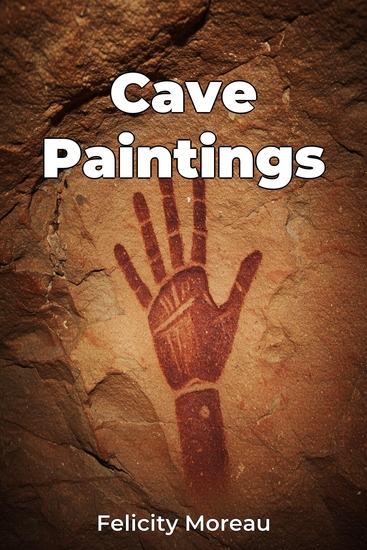
Cave Paintings - cover

Cave Paintings

Felicity Moreau

Translator A AI

Publisher: Publifye

  • 0
  • 0
  • 0

Summary

Cave Paintings explores the captivating world of prehistoric art, offering a unique window into the minds of our early human ancestors. This journey through art history and archaeology reveals how cave art served as a sophisticated form of communication and storytelling, far beyond mere decoration. Intriguingly, the placement of art within caves, and the utilization of naturally-occurring pigments like ochre, suggest a deep connection between the artists, their environment, and their creative expression.

 
The book progresses from establishing the archaeological context of cave paintings, including dating methods, to detailed analyses of recurring themes such as animal depictions and abstract symbols. By integrating scientific analysis with artistic interpretation, Cave Paintings provides a holistic understanding of cave art, emphasizing its role in early human symbolic thought and cognitive development. This approach highlights the profound implications for understanding the evolution of human consciousness and the development of culture.
Available since: 03/06/2025.
Print length: 62 pages.

Other books that might interest you

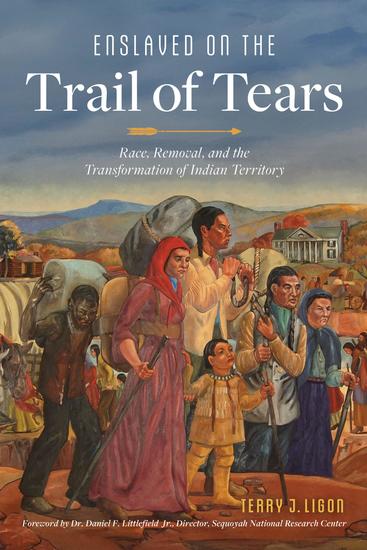
  • Enslaved on the Trail of Tears - Race Removal and the Transformation of Indian Territory - cover

    Enslaved on the Trail of Tears -...

    Terry J. Ligon

    • 0
    • 0
    • 0
    A Harrowing Heritage of Resilience
    
    Beginning in the 1820s, Indian removal saw scores of families of African descent forced west alongside the so-called Five Civilized Tribes. The Choctaw, Chickasaw, Cherokee, Muscogee (Creek), and Seminole Nations all brought their own slaves on the arduous, obligatory journey. These tribes demonstrated shared patterns—including Native women enslavers—as well as important distinctions. Seminole records more frequently preserved the names of their enslaved, reflecting resistance to removal and the central role of Black Seminoles. But enslaved people were present at every stage of removal, even when misclassified or omitted entirely from official records. Power operated differently within each tribe. Gender shaped vulnerability and authority. Enslavement and forced migration reconfigured tribal societies during one of the most traumatic periods in their histories. Drawing on oral accounts and extensive documentation, Terry J. Ligon's unique scholarship restores voice and lineage to the remarkable survival of those carried west in bondage on the Trail of Tears. 
    Show book
  • A Horse at Night - On Writing - cover

    A Horse at Night - On Writing

    Amina Cain

    • 0
    • 0
    • 0
    Amina Cain's unique wandering sensibility, her attention to the small and the surprising, finds a profound new expression in her first nonfiction book, a sustained meditation on writers and their work. Driven by primary questions of authenticity and freedom in the shadow of ecological and social collapse, Cain moves associatively through a personal canon of authors—including Marguerite Duras, Elena Ferrante, Renee Gladman, and Virginia Woolf—and topics as timely and various as female friendships, zazen meditation, neighborhood coyotes, landscape painting, book titles, and the politics of excess. A Horse at Night: On Writing is an intimate reckoning with the contemporary moment, and a quietly brilliant contribution to the lineage of Woolf's A Room of One's Own or Gass's On Being Blue, books that are virtuosic arguments for—and beautiful demonstrations of—the essential unity of writing and life.
    Show book
  • It Happens Here Too - The Shepherd's Daughter - cover

    It Happens Here Too - The...

    Marissa Conklin

    • 0
    • 0
    • 0
    You are safe. You are loved. You are good. These are the words Serenity Shepherd whispers to her son—the words no one ever said to her. Growing up as the perfect pastor's daughter meant learning to disappear behind smiles, to swallow truth like poison, to believe that love always came with conditions. It meant surviving in plain sight while everyone praised her father's holy work. But bodies remember what minds try to forget. And when the past refuses to stay buried, Serenity must choose between the silence that's slowly destroying her and a truth that could destroy everything else. From a childhood shadowed by stained glass and scripture to motherhood that becomes her salvation, this is a story about breaking cycles, finding voice, and discovering that sometimes the most sacred act is refusing to be quiet. A fictionalized memoir drawn from the author's own journey of survival and healing, It Happens Here Too: The Shepherd's Daughter is a luminous debut novel about religious trauma, the long road to recovery, and the revolutionary power of speaking your truth. Some voices are worth breaking the silence for.
    Show book
  • Why Your Phone Knows You Better Than Your Friends - cover

    Why Your Phone Knows You Better...

    Felix Crane

    • 0
    • 0
    • 0
    This audiobook is narrated by an AI Voice. Discover how your smartphone has become the most intimate surveillance device in history, collecting data that reveals more about you than you know about yourself. This unsettling audiobook examines how mobile devices track every location, communication, search, purchase, and app interaction to construct psychological profiles of unprecedented accuracy. Learn why tech companies understand your habits, desires, vulnerabilities, and intentions better than people who have known you for years based solely on phone usage patterns. The narrator reveals specific data collection practices that transform innocent-seeming activities into psychological intelligence that predicts your behavior with disturbing accuracy. Discover how phone data reveals health conditions, financial status, relationship problems, and mental states you have shared with no one through patterns invisible to you but obvious to algorithms. Understand why you willingly carry the ultimate surveillance device everywhere, granting access to your life that no previous authoritarian regime could have imagined. This audiobook examines the business models that incentivize maximum data extraction, the psychological manipulation techniques that keep you engaged despite harm, and the impossibility of informed consent for data practices too complex for anyone to understand. Learn practical strategies for reducing phone surveillance and reclaiming privacy within the constraints of digital dependence. Essential listening for anyone carrying a smartphone who wants to understand what they are actually carrying.
    Show book
  • Corporal Cannon - A Female Marine in Afghanistan - cover

    Corporal Cannon - A Female...

    Savannah Cannon

    • 0
    • 0
    • 0
    Not even old enough to drink, Corporal Savannah Cannon is a young enlisted United States Marine deployed to support Operation Enduring Freedom in Afghanistan in 2010. As a tactical data networking specialist, she is sent away from everyone she knows and attached to a Regimental Combat Team where women are not allowed to repair communications. Her experiences over the next few months shed light on the unique and difficult positions women are placed in when supporting combat roles, while offering a raw look at the painful choices women must sometimes make. 


    Cannon finds herself in a combat zone, ostracized from family, friends, and even her fellow Marines as the men are told to avoid her. The connections she makes are born from trauma and desperation and the choices she makes will echo throughout many lives. 


    Corporal Cannon is not the story of a heroine; it is the hard-hitting account of just one of the flawed individuals who make up the United States' fighting forces. Mistakes in the battlefield can have dire consequences, personally and professionally. Reflecting on her time in service, the author weaves a story of past and present, and the healing that can come with admitting our mistakes and moving past them.
    Show book
  • 332nd Fighter Group The: The History of the Tuskegee Airmen’s Fighter Unit during World War II - cover

    332nd Fighter Group The: The...

    Charles River Editors

    • 0
    • 0
    • 0
    The United States has no shortage of famous military units, from the Civil War’s Iron Brigade to the 101st Airborne, but one would be hard pressed to find one that had to go through as many hardships off the field as the Tuskegee Airmen, a group of African American pilots who overcame Jim Crow at home and official segregation in the military to serve their country in the final years of World War II. In fact, it required a concerted effort by groups such as the National Association for the Advancement of Colored People (NAACP) and the extreme circumstances brought about by World War II that the military eventually decided to establish the “Tuskegee Experiment.” 
    The Black crews trained at Tuskegee before being sent overseas, and even then, they faced discrimination from those who didn’t trust them to do more than escort bombers flown by white pilots. However, as the men proved their worth in the heat of battle, some of the squadrons’ red markings helped them earn the nickname “Red Tails,” and their track record was so good that eventually the white pilots of American bombers wanted to fly with them. As Tuskegee airman Roscoe Brown eloquently put it, “They have a saying that excellence is the antidote to prejudice; so, once you show you can do it, some of the barriers will come down.” 
    In time, the Tuskegee Airmen would be romanticized and mythologized to the extent that it was claimed that some escort squadrons didn’t lose a bomber to the enemy, which led Tuskegee airman Grant Williams to note in jest, “Back then, nobody realized the significance of what we were doing. Now, they seem to think we could walk on water." However, even though the suggestion that the escorts lost no bombers on their missions was inaccurate, there is no question that the Tuskegee Airmen’s record was elite and some of the fighter pilots were among the best to serve.
    Show book