Join us on a literary world trip!
Add this book to bookshelf
Grey
Write a new comment Default profile 50px
Grey
Subscribe to read the full book or read the first pages for free!
All characters reduced
Sissy Landlord - Dominated and Forced Feminised by his Young Tenant & Her Friends - cover

We are sorry! The publisher (or author) gave us the instruction to take down this book from our catalog. But please don't worry, you still have more than 500,000 other books you can enjoy!

Sissy Landlord - Dominated and Forced Feminised by his Young Tenant & Her Friends

Felicity Fyst

Publisher: Hautbois Publishing

  • 0
  • 1
  • 0

Summary

He should never have gone into Kerry’s bedroom; but curiosity got the better of him. A weakness that had cost him dearly.
 
When a young and elegant female colleague comes to rent a room in his flat, Stephen Williamson can’t wait to rummage through her lingerie and try them on. Kerry Carfax is oblivious to the fact her landlord secretly dresses in his tenants’ panties and bra and is unaware he is a closet sissy with fantasies of being humiliated by young, sexy women. His obsession extends to a spying on a long back catalogue of female tenants but he has never taken the plunge to ask any of them out or even to consider confessing his proclivities of cross-dressing or female BDSM. Will Stephen take the leap and realise his deep fantasies could become a reality in the presence of this young strong-willed woman and her friends? Will he ask her to be his Sissy Mistress or will he return to his life of watching and fantasising? Possibly he may have no choice. Read ‘Sissy Landlord’ and find out, now.
 
A story of young domme female superiority, blackmail and forced feminisation approximately 6000 words long.
Available since: 07/17/2019.
Print length: 24 pages.
Other books that might interest you

  • Apple Blossom in Brittany - From their pens to your ears genius in every story - cover

    Apple Blossom in Brittany - From...

    Ernest Dowson

    • 0
    • 0
    • 0
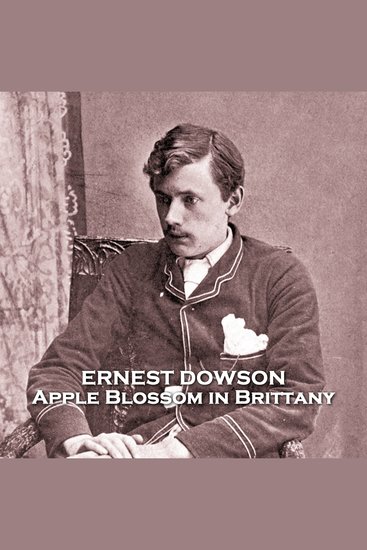
    The bookshelves of British literature are incredible collections that have gathered together centuries of very talented authors.  From these Isles their fame spread and whilst among their number many are now forgotten or neglected their talents endure.  Among them is Ernest Dowson.
    Show book
  • God Sees the Truth But Waits - From their pens to your ears genius in every story - cover

    God Sees the Truth But Waits -...

    Leo Tolstoy

    • 0
    • 0
    • 0
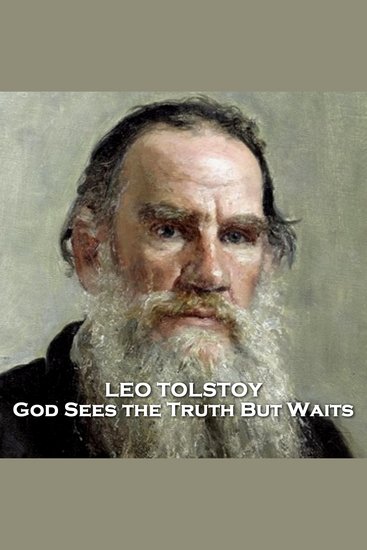
    Leo Tolstoy was born in 1828 in the Russian province of Tula to a wealthy noble family. As a child, he had private tutors but he showed little interest in any formal education. When he went to the University of Kazan in 1843 to study oriental languages and law, he left without completing his courses.  Life now was relaxed and idle but with some writing also taking place.  Gambling debts forced an abrupt change of path and he joined the army to fight in the Crimean War.  He was commended for his bravery and promoted but was appalled at the brutality and loss of life.  He recorded these and other earlier experiences in his diaries which formed the basis of several of his works. 
    In 1852 ‘Childhood’ was published to immediate success and was followed by ‘Boyhood’ and ‘Youth’. 
    His experience in the army and the horrors he witnessed resulted in ‘The Cossacks’ in 1862 and the trilogy ‘Sevastopol Tales’. After the war he travelled around Europe, visiting London and Paris and meeting such luminaries as Victor Hugo and Charles Darwin.  
    It was now that Tolstoy began his masterpiece, ‘War and Peace’. Published in 1869 it was an epic work that changed literature. He quickly followed this with ‘Anna Karenina’.  
    These successes made Tolstoy rich and helped him accomplish many of his dreams but also brought problems as he grappled with his faith and the lot of the oppressed poor. These revolutionary views became so popular that the authorities now kept him under surveillance.  
    He led a life of asceticism and vegetarianism and put his socialist ideals into practice by establishing numerous schools for the poor and food programmes. He also believed in giving away his wealth, which caused much discord with his wife.  
    His writing continued to bring forth classics such as ‘The Death of Ivan Ilyich’ and many brilliant and incisive short stories such as ‘How Much Land Does A Man Need’.  
    In 1901 Tolstoy was excommunicated from the Church and controversially deselected for the Nobel Prize for Literature. 
    Whilst undertaking a pilgrimage by train in October 1910 with his daughter Aleksandra he caught pneumonia in the nearby town of Astapovo.  Leo Tolstoy died on November 9th, 1910, he was 82.
    Show book
  • The Demon Spell - cover

    The Demon Spell

    Hume Nisbet

    • 0
    • 0
    • 0
    Title: The Boarded Window 
    Author: Hume Nisbet 
    Narrator: Jonathan Dunne 
    Original Publication: 1902 
    Public Domain: Yes 
    Series Placement: Number 21 in the Timeless Terrors series 
    Description: 
    The Boarded Window by Hume Nisbet is a grimly atmospheric tale steeped in Gothic dread and the macabre. Set against the backdrop of a mysterious house with its single, shuttered window, the story reveals secrets of death, decay, and the lingering presence of the uncanny. Nisbet weaves a chilling exploration of isolation, superstition, and the spectral weight of things best left hidden. 
    Narrated by Amazon bestselling horror author Jonathan Dunne, this performance captures the story’s brooding suspense and eerie tension, merging gothic atmosphere with psychological horror. While the text is in the public domain, this narration is an original work and copyright © 2025 Jonathan Dunne. 
    This audiobook is part of Timeless Terrors, a series dedicated to resurrecting classic horror — works from masters of the macabre, retold in haunting new performances for a modern audience. 
    Listeners should be prepared for an unsettling encounter with shadows, silence, and the terrifying suggestion of what lies beyond the boarded window.
    Show book
  • After the Race - From their pens to your ears genius in every story - cover

    After the Race - From their pens...

    James Joyce

    • 0
    • 0
    • 0
    James Augustine Aloysius Joyce was born on the 2nd February 1882 in Dublin into a middle-class family, and the eldest of ten surviving siblings 
    Admired as a brilliant student he briefly attended the Christian Brothers-run O'Connell School before excelling at the Jesuit schools of Clongowes and Belvedere.  From there he went on to attend University College Dublin from 1898, studying English, French and Italian 
    In 1902, Joyce was now in his early twenties, and went to Paris to study Medicine but soon abandoned his teachings.  Back in Dublin to attend to his dying Mother he met Nora Barnacle. They bonded immediately into a life-long match. Together they decided to emigrate to Europe.  The couple lived in Trieste, Rome, Paris, and finally Zürich where Joyce pursued a variety of jobs and ventures to supplement his literary pursuits but none of these paid off.  
    After publishing a poetry volume, ‘Chamber Music’, in 1907, his short story collection ‘The Dubliners’, in 1914, helped establish his talent in the rapidly changing world.  
    Although far from home Joyce’s literary heart and works were set in his recollections of Dublin.  Characters are close resemblances of family and friends and indeed enemies.  His landmark work ‘Ulysses’, published in 1922, is set in the streets and alleyways of the city as it parallels Homer’s Odyssey in a variety of styles including its famed stream of consciousness. 
    His pen continued to produce classics of the order of ‘A Portrait of the Artist as A Young Man’ and ‘Finnegan’s Wake’ together with several volumes of poetry and a play ‘The Exiles, in 1918.   
    On the 11th January 1941, Joyce underwent surgery in Zürich for a perforated duodenal ulcer. The next day he fell into a coma. On the 13th after a brief period of lucidity in which he called for his wife and son he passed.  He was 58.
    Show book
  • The Unpleasantness at the Bellona Club - The Lord Peter Wimsey Mysteries Vol: 5 - cover

    The Unpleasantness at the...

    Dorothy L. Sayers

    • 0
    • 0
    • 0
    Step into the world of classic detective fiction with Dorothy L. Sayers' The Unpleasantness at the Bellona Club. This compelling mystery invites readers to join the brilliant and charming detective Lord Peter Wimsey as he unravels a perplexing case set within the exclusive Bellona Club.When a member of the club is found dead under suspicious circumstances, Lord Peter delves into a tangled web of secrets, inheritance disputes, and hidden motives. With her trademark wit and meticulous plotting, Sayers crafts a story filled with intrigue, sharp characterizations, and a vivid portrayal of London's high society.Perfect for fans of traditional whodunits and intelligent storytelling, The Unpleasantness at the Bellona Club offers an enthralling journey into the world of mystery, loyalty, and justice. A must-read for admirers of Dorothy L. Sayers and the iconic Lord Peter Wimsey.
    Show book
  • The House - Turn of the century writer that supported feminism pacifisim and labour reform - cover

    The House - Turn of the century...

    W L George

    • 0
    • 0
    • 0
    Walter Lionel George was born to British parents on the 20th March 1882 in Paris, France. 
    It was not until he was a young man of 20 that he learned English.  In 1905 he moved to London to work in an office but soon found himself working as a journalist, and as a foreign correspondent, for various London newspapers. 
    By 1911, with the publication of his first novel ‘A Bed of Roses’, which portrayed the fall of a penniless young woman into prostitution, his efforts were rewarded, and he turned to literature as a full-time career. 
    His writings now sold well.  He added short stories to his offerings as well as literary essays and several tracts that discussed left-wing themes.  Some critics thought his subject matter to be difficult and poorly chosen. His political views gained him little credit amongst his peers although such luminaries as George Orwell praised both subject matter and style. 
    His personal life was also turbulent.  His three marriages left him widowed twice.  In 1908 he married Helen Porter who died in 1914.  Helen Agnes Moorhead followed in 1916 but died only 4 years later.  His last marriage was to Kathleen Geipel in 1921. 
    W. L George died on 30th January 1926.  He was 43.
    Show book