Join us on a literary world trip!
Add this book to bookshelf
Grey
Write a new comment Default profile 50px
Grey
Subscribe to read the full book or read the first pages for free!
All characters reduced
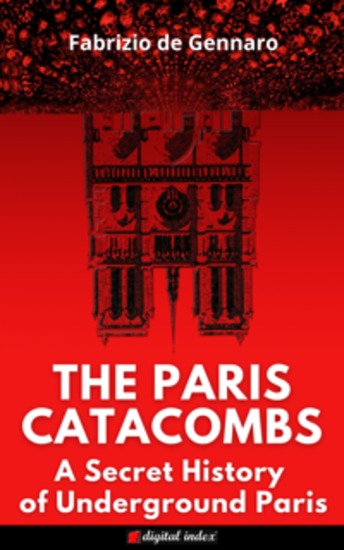
The Paris Catacombs - A Secret History of Underground Paris - cover

The Paris Catacombs - A Secret History of Underground Paris

Fabrizio de Gennaro

Publisher: Digital Index

  • 0
  • 0
  • 0

Summary

Beneath the streets of Paris lies a forbidden underground world: nearly 300 kilometers of tunnels that run deeper than the city's sewers and metro lines. These mysterious passageways bear hidden traces of key moments in history — from the French Revolution and the Paris Commune to the failed coup of 1937 by the Cagoule, the German occupation, and Cold War nuclear shelters.

The catacombs stretch 15 to 25 meters below ground, sometimes across two or three levels. Originally ancient stone quarries, they provided the materials to build many of the city’s iconic monuments. Today, these underground tunnels offer a rare glimpse into a forgotten Paris — a city whose hidden stories remain buried beneath the surface.

Officially, only a small portion of the catacombs is open to the public: about 6 kilometers beneath the Left Bank, housing the remains of six million Parisians from the city's former cemeteries. But beyond this section, hundreds of kilometers of tunnels remain off-limits. Adventurous explorers, known as cataphiles, defy the authorities to venture inside, often accessing the network through manhole covers and hidden shafts that are frequently sealed off or reinforced.

Entry to these dark passages has long been forbidden. Yet throughout history, people have used them to hide, escape, or move discreetly through the city during turbulent times. The catacombs played a role during the French Revolution, the Paris Commune, and other uprisings — even earning a mention in 19th-century literature and more recently in Umberto Eco’s The Prague Cemetery.

In more modern times, these tunnels served a strategic purpose. In 1937, the far-right paramilitary group known as the Cagoule attempted a little-known fascist coup from the underground. During World War II, the German occupiers built air-raid bunkers in the tunnels, while members of the French Resistance used them as a hidden headquarters during the city’s liberation. In the Cold War era, secret nuclear shelters were quietly built beneath public buildings, far from the public’s knowledge.

Since the 1980s, the catacombs have become the setting for clandestine parties, where small groups of students and thrill-seekers evade authorities and navigate this forbidden underworld — even as the entrances are periodically sealed shut.

Exploring the Paris catacombs means diving into centuries of forgotten stories and hidden histories — an underground city that holds the secrets of a tumultuous past.
Available since: 01/27/2025.
Print length: 300 pages.
Other books that might interest you

  • Foundational Existential Thinkers - Early Reflections on Freedom Existence and Meaning (2 in 1) - cover

    Foundational Existential...

    Hector Davidson

    • 0
    • 0
    • 0
    This book contains these titles: 
    Kierkegaard - Søren Kierkegaard, often regarded as the father of existentialism, was born on May 5, 1813, in Copenhagen, Denmark. His early life was marked by tragedy, as his mother died when he was just a child, and his father, a deeply religious man, instilled in him a sense of guilt and the weight of existential questioning. Kierkegaard’s relationship with his father deeply influenced his philosophical development, particularly in his exploration of faith, despair, and the individual's relationship with God. 
    Jean-Paul Sartre - Jean-Paul Sartre, a towering figure in 20th-century philosophy, is perhaps best known for his development of existentialism, a school of thought that emphasizes individual freedom, choice, and the creation of meaning in an otherwise indifferent universe. Sartre’s philosophy arises from the existentialist tradition but distinguishes itself through its rigorous approach to human freedom and responsibility. At the heart of Sartre's thought is the idea that human beings are condemned to be free, burdened with the constant task of making choices without any external justification or predetermined essence.
    Show book
  • Zen Buddhism And Its Relation To Art - cover

    Zen Buddhism And Its Relation To...

    Arthur Waley

    • 0
    • 0
    • 0
    A great primer on the history of Japanese art as it evolved under the Buddhist (and later Zen) movements embedding in Japan's culture. Written by the first great populariser of Chinese and Japanese cultural artefacts, including translating a great number of Chinese poems and literary works.
    Show book
  • 8 Keys to Safe Trauma Recovery Workbook - cover

    8 Keys to Safe Trauma Recovery...

    Vanessa Bear, Babette Rothschild

    • 0
    • 0
    • 0
    Exercises of healing and transformation for trauma survivors. 


    Drawing from neuroscience and psychotherapy with empowering strategies to take charge of healing from trauma, this workbook follows the theme of each of the eight keys in 8 Keys to Safe Trauma Recovery. The two books complement each other; but it is not necessary to have listened to the original to benefit from this workbook, which presents practical exercises and activities integral to safe trauma recovery and designed to support listeners' control of their mind, body, and life in the aftermath of trauma. 


    One thing is for sure: there is no one-size-fits-all method for healing trauma. This workbook will help listeners identify, assess, and celebrate the resources they already have, and add more resources to their toolbox. 


    Most importantly, the authors do not subscribe to the old motto "no pain, no gain," fostering instead the concept that healing from trauma should not be traumatic.
    Show book
  • Plutarco Elías Calles and the Mexican Revolution - cover

    Plutarco Elías Calles and the...

    Jürgen Buchenau

    • 0
    • 0
    • 0
    This biography of the Mexican revolutionary examines his rise from soldier to president to his continued influence as Jefe Maximo. Hailing from the border state of Sonora, Plutarco Elías Calles found his calling in the early years of the revolution, quickly rising to national prominence. As president from 1924 to 1928, Calles undertook an ambitious reform program, modernized the financial system, and defended national sovereignty against an interventionist U.S. government. Yet these reforms failed to eradicate underdevelopment, corruption, and social injustice. Moreover, his unyielding campaigns against political enemies and the Catholic Church earned him a reputation as a repressive strongman. After his term as president, Calles continued to exert broad influence as his country's foremost political figure while three weaker presidents succeeded each other in an atmosphere of constant political crisis. He played a significant role in founding a ruling party that reined in power-hungry military leaders and helped workers attain better living conditions. This dynastic party and its successors, including the present-day Partido Revolucionario Institucional (Party of the Institutional Revolution), remained in power until 2000. Through this comprehensive assessment of a quintessential Mexican politician, Buchenau opens an illuminating window into both the Mexican Revolution and contemporary Mexico.
    Show book
  • The 1960's - A Decade of Change Revolution Resistance and Reform - cover

    The 1960's - A Decade of Change...

    Harry Montgomery

    • 0
    • 0
    • 0
    The 1960s opened with a sense of cautious optimism in America. Following the stability of the postwar 1950s, the country was on the brink of transformation. The seeds of change were being planted by a young and increasingly restless population. The rise of youth culture signaled a break from the conservatism of their parents’ generation. Young people began questioning authority, traditional values, and the social norms that had shaped American life for decades. Television became a powerful force in shaping ideas, music spread messages of rebellion, and college campuses buzzed with debates over justice and freedom. Teenagers and young adults embraced new forms of expression, setting the stage for a cultural revolution. 
    At the heart of this evolving decade was the civil rights movement, which had already begun stirring in the 1950s. In the early years of the sixties, the push for racial justice gained momentum, marked by nonviolent protests, sit-ins, and mass marches. African Americans, particularly in the South, fought against systemic racism and demanded equal treatment under the law. Martin Luther King Jr. became a prominent voice during this time, advocating for civil disobedience and peaceful protest. As the movement grew, so did the urgency for legislation that would challenge segregation and discrimination. The activism of this period began to awaken a broader consciousness about social injustice, laying the groundwork for other rights movements to follow. 
    On the global stage, the Cold War continued to cast a long shadow over American life. The rivalry between the United States and the Soviet Union defined much of the political atmosphere. The threat of nuclear conflict loomed, and the government’s efforts to contain communism influenced both foreign and domestic policy.
    Show book
  • Dust and Light - On the Art of Fact in Fiction - cover

    Dust and Light - On the Art of...

    Andrea Barrett

    • 0
    • 0
    • 0
    The celebrated National Book Award–winning writer's intimate exploration of how fact is transformed into fiction. 


    In this thoughtful collection of essays, Andrea Barrett draws from her experiences writing some of the most acclaimed historical fiction of our time to explore the mysteries and delights of the genre. Inspiration found in the past, she argues, can illuminate fiction, just as dust scatters light and makes the unseen visible. Delving into some of the largest questions in the genre—How does a writer find meaningful subject matter beyond the confines of their life? How are scraps of history transformed into a fully formed narrative?—Barrett explores how she came to create some of her beloved works and explores lessons gleaned from the work of such masters of historical fiction as Toni Morrison, Leo Tolstoy, Hilary Mantel, and Colm Tóibín. Candid and elegant, Dust and Light is the perfect book for anyone who loves reading fiction set in the past, as well as for anyone aspiring to write it.
    Show book