Join us on a literary world trip!
Add this book to bookshelf
Grey
Write a new comment Default profile 50px
Grey
Subscribe to read the full book or read the first pages for free!
All characters reduced
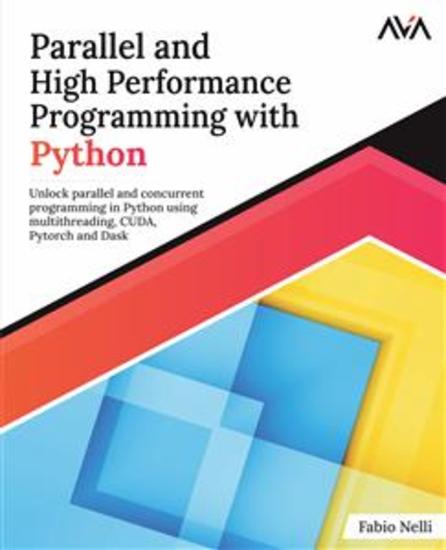
Parallel and High Performance Programming with Python - Unlock parallel and concurrent programming in Python using multithreading CUDA Pytorch and Dask - cover

Parallel and High Performance Programming with Python - Unlock parallel and concurrent programming in Python using multithreading CUDA Pytorch and Dask

Fabio Nelli

Publisher: Orange Education Pvt Ltd

  • 0
  • 0
  • 0

Summary

Unleash the capabilities of Python and its libraries for solving high performance computational problems.KEY FEATURES ● Explores parallel programming concepts and techniques for high-performance computing. ● Covers parallel algorithms, multiprocessing, distributed computing, and GPU programming. ● Provides practical use of popular Python libraries/tools like NumPy, Pandas, Dask, and TensorFlow.DESCRIPTIONThis book will teach you everything about the powerful techniques and applications of parallel computing, from the basics of parallel programming to the cutting-edge innovations shaping the future of computing. The book starts with an introduction to parallel programming and the different types of parallelism, including parallel programming with threads and processes. The book then delves into asynchronous programming, distributed Python, and GPU programming with Python, providing you with the tools you need to optimize your programs for distributed and high-performance computing. The book also covers a wide range of applications for parallel computing, including data science, artificial intelligence, and other complex scientific simulations. You will learn about the challenges and opportunities presented by parallel computing for these applications and how to overcome them. By the end of the book, you will have insights into the future of parallel computing, the latest research and developments in the field, and explore the exciting possibilities that lie ahead.WHAT WILL YOU LEARN ● Build faster, smarter, and more efficient applications for data analysis, machine learning, and scientific computing● Implement parallel algorithms in Python● Best practices for designing, implementing, and scaling parallel programs in PythonWHO IS THIS BOOK FOR?This book is aimed at software developers who wish to take their careers to the next level by improving their skills and learning about concurrent and parallel programming. It is also intended for Python developers who aspire to write fast and efficient programs, and for students who wish to learn the fundamentals of parallel computing and its practical uses.TABLE OF CONTENTS 1. Introduction to Parallel Programming 2. Building Multithreaded Programs 3. Working with Multiprocessing and mpi4py Library4. Asynchronous Programming with AsyncIO5. Realizing Parallelism with Distributed Systems 6. Maximizing Performance with GPU Programming using CUDA7. Embracing the Parallel Computing Revolution8. Scaling Your Data Science Applications with Dask9. Exploring the Potential of AI with Parallel Computing10. Hands-on Applications of Parallel ComputingAUTHOR BIO Fabio Nelli holds a Master's Degree in Chemistry and a Bachelor's Degree in IT and Automation Engineering. He currently works at various research institutes and private companies, where he delivers educational courses on data analysis and data visualization technologies. He contributes to writing articles on the web and writes in-depth books on the subject.
Available since: 08/23/2023.

Other books that might interest you

  • Mastering Multi-Cloud Paradigm for Enterprises - Transform Enterprise Infrastructure with Multi-Cloud Strategies Using Azure AWS and GCP for Optimizing Resources Enhancing Security and Disaster Recovery - cover

    Mastering Multi-Cloud Paradigm...

    Barjender Paul

    • 0
    • 0
    • 0
    Building Tomorrow's Enterprise: Embracing the Multi-Cloud Era with AWS, Azure, and GCP. 
    Book Description
    This book is a comprehensive guide designed for IT professionals and enterprise architects, providing step-by-step instructions for creating and implementing tailored multi-cloud strategies. Covering key areas such as security, performance, cost management, and disaster recovery, it ensures robust and efficient cloud deployments. 
    This book will help you learn to develop custom multi-cloud solutions that align with the organization's specific needs and goals. It includes in-depth discussions on cloud design patterns, architecture designs, and industry best practices. The book offers advanced networking strategies and DNS design insights to optimize system reliability, scalability, and performance. Practical tips help readers navigate the complexities of multi-cloud environments, ensuring seamless integration and management across different cloud platforms. 
    Whether new to cloud concepts or an experienced practitioner looking to enhance your skills, this book equips you with the knowledge and tools needed to excel in your role. By following expert guidance and best practices, you can confidently design and implement multi-cloud strategies that foster innovation and operational excellence in your organization. 
    
    Table of Contents
    
    1. Getting Started with Multi-Cloud
    2. Cloud Computing Concepts
    3. Building a Solid Foundation
    4. Security and Governance in Multi-Cloud
    5. Designing Network Solution
    6. DNS in a Multi-Cloud Landscape
    7. Architecture Design Pattern in Multi-Cloud
    8. FinOps in Multi-Cloud
    9. The Role of Automation and Orchestration
    10. Multi-Cloud Monitoring
    11. Resilience and Disaster Recovery   
    Index
    Show book
  • A World Without Soil - The Past Present and Precarious Future of the Earth Beneath Our Feet - cover

    A World Without Soil - The Past...

    Jo Handelsman, Kayla Cohen

    • 0
    • 0
    • 0
    A scientist's manifesto addressing a soil loss crisis accelerated by poor conservation practices and climate change 


    This book by celebrated biologist Jo Handelsman lays bare the complex connections among climate change, soil erosion, food and water security, and drug discovery. 


    Humans depend on soil for 95 percent of global food production, yet let it erode at unsustainable rates. In the United States, China, and India, vast tracts of farmland will be barren of topsoil within this century. The combination of intensifying erosion caused by climate change and the increasing food needs of a growing world population is creating a desperate need for solutions to this crisis. 


    Writing for a nonspecialist audience, Jo Handelsman celebrates the capacities of soil and explores the soil-related challenges of the near future. She begins by telling soil's origin story, explains how it erodes and the subsequent repercussions worldwide, and offers solutions. She considers lessons learned from indigenous people who have sustainably farmed the same land for thousands of years, practices developed for large-scale agriculture, and proposals using technology and policy initiatives.
    Show book
  • Man Cattle and Veld - cover

    Man Cattle and Veld

    Johann Zietsman

    • 0
    • 0
    • 0
    THE book for Profitable Ranching. A Real Ranching Revolution. Cattle Breeding. Grazing Management. 
    Much like nature, this book is both simple and complex. The author has taken great care to create both a simple technical guide as well as a philosophic declaration about complex human and environmental nuances, all in one volume. 
    Those persons who see and shape the future often say that the future is already here, it just isn't evenly distributed. I am confident that, several years from now many will look back upon this book, as well as the rest of Johann Zietsman's works, as foundational to the restoration of—and relationships between—man, cattle, and veld. 
    Zietsman puts forth a much-needed critique of man and his actions over the past century as well as personal stories as contra-example to the narratives we that have dominated the ranching world. 
    Achieving the ranch goal of maximum sustainable profit per hectare depends on breeding and feeding cattle (and all grazing species) as the grazers that they are. Efforts should be directed at raising cattle that are more efficient converters of forage, not on trying to make forage-reliant species into grain-efficient machines. Forces of nature created the animals we have, and their genetic potential will be brought out through non-selective grazing and proper supplementation. 
    Non-selective, time-controlled grazing, in which 80 to 95 percent of the mass of all grasses and forbs are utilized, thus pruning plants back to their crowns, is the process by which grasslands are improved in both plant vigor and species composition. I cannot overemphasize the importance of this last point—plant species diversity is promoted by time-controlled severe grazing events, whereas selective, take half leave half grazing is much more limited in improving species diversity, even leading to species narrowing in some circumstances.
    Show book
  • Dr Nurse - Science Politics and the Transformation of American Nursing - cover

    Dr Nurse - Science Politics and...

    Dominique A. Tobbell

    • 0
    • 0
    • 0
    An analysis of the efforts of American nurses to establish nursing as an academic discipline and nurses as valued researchers in the decades after World War II. 
     
    Nurses represent the largest segment of the U.S. health care workforce and spend significantly more time with patients than any other member of the health care team. Dr. Nurse probes their history to examine major changes that have taken place in American health care in the second half of the twentieth century. The book reveals how federal and state health and higher education policies shaped education within health professions after World War II. 
     
    Starting in the 1950s, academic nurses sought to construct a science of nursing—distinct from that of the related biomedical or behavioral sciences—that would provide the basis for nursing practice. Their efforts transformed nursing’s labor into a valuable site of knowledge production and proved how the application of their knowledge was integral to improving patient outcomes. Exploring the knowledge claims, strategies, and politics involved as academic nurses negotiated their roles and nursing’s future, Dr. Nurse highlights how state-supported health centers have profoundly shaped nursing education and health care delivery. 
    Show book
  • Social Engineering for Beginners - Manipulating Minds Securing Systems - cover

    Social Engineering for Beginners...

    Brandon Scott

    • 0
    • 0
    • 0
    "Social Engineering: Manipulating Minds, Securing Systems" dives deep into the shadowy world of psychological manipulation and digital deceit, where human psychology meets cutting-edge technology. This compelling book offers a riveting exploration of social engineering tactics, from classic con artistry to the sophisticated cyber scams that threaten personal and organizational security in the digital age. 
    Structured to educate, enlighten, and empower, the book navigates the reader through the intricate landscape of human vulnerabilities and the methods employed by attackers to exploit them. By combining real-life stories, expert insights, and practical guidance, "Social Engineering" sheds light on the psychological underpinnings that make us susceptible to manipulation and how these vulnerabilities are exploited in various social engineering attacks. 
    Key features of the book include:The Psychology of DeceptionTypes of Social Engineering AttacksReal-World Case StudiesDefense StrategiesEthical ConsiderationsFuture Trends 
    "Social Engineering: Manipulating Minds, Securing Systems" is not just a cautionary tale; it is a critical toolkit for anyone looking to understand the intricacies of human manipulation and how to protect against it. Whether you are a cybersecurity professional, a business leader concerned about organizational security, or simply an individual interested in the psychology of influence and manipulation, this book offers valuable insights and practical advice to help you navigate the complex interplay between human behavior and technology.
    Show book
  • Serverless Data Engineering - Streamlining Big Data Workflows in the Cloud - cover

    Serverless Data Engineering -...

    Chuck Sherman

    • 0
    • 0
    • 0
    In the fast-paced world of data engineering, staying agile, scalable, and cost-efficient is paramount. "Serverless Data Engineering" is your essential guide to revolutionizing the way you handle data pipelines and analytics. Dive into the cutting-edge technology of serverless computing and discover how it can supercharge your data engineering projects. 
    This book begins by unraveling the fundamentals of serverless architectures, shedding light on the core components and services offered by leading cloud providers. You'll explore the stark differences between serverless and traditional data engineering approaches, setting the stage for a paradigm shift in your work. 
    From there, you'll embark on a hands-on journey through the various stages of data engineering, from data ingestion to transformation, storage, orchestration, and beyond. Learn how to architect robust data pipelines using serverless functions, and discover the power of serverless data storage solutions like data warehouses and NoSQL databases. 
    "Serverless Data Engineering" doesn't stop at the technical aspects. It delves into the critical realms of data quality, governance, monitoring, and error handling to ensure your data remains pristine and your pipelines resilient. Harness the true potential of scalability and cost optimization, and gain insights into emerging trends like edge computing and machine learning integration. 
    "Serverless Data Engineering" is your indispensable companion on the journey to mastering serverless technology and transforming your data engineering practices. Start building smarter, leaner, and more efficient data pipelines today. 
     
    Show book