Join us on a literary world trip!
Add this book to bookshelf
Grey
Write a new comment Default profile 50px
Grey
Subscribe to read the full book or read the first pages for free!
All characters reduced
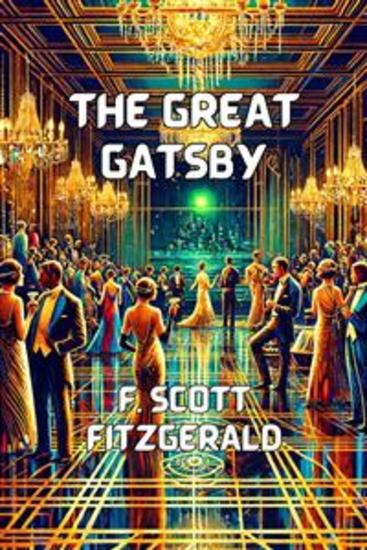
The Great Gatsby(Illustrated) - cover

The Great Gatsby(Illustrated)

F. Scott Fitzgerald

Publisher: Swish

  • 0
  • 0
  • 0

Summary

Illustrated edition featuring 20 stunning illustrations capturing key moments from the novel
	Includes a comprehensive summary of the book
	Features a detailed list of characters
	Contains an engaging biography of the author, F. Scott Fitzgerald

The Great Gatsby by F. Scott Fitzgerald is a timeless classic that delves into the glamour, excess, and moral decay of the Jazz Age. Set in the opulent world of 1920s New York, the novel follows the mysterious millionaire Jay Gatsby, whose lavish lifestyle and extravagant parties hide a deep obsession with the love of his life, Daisy Buchanan. Through the eyes of Nick Carraway, a newcomer to West Egg, we witness the tragic unraveling of Gatsby’s grand dream as he strives to rekindle a romance with Daisy that was lost to time and circumstance.
This illustrated edition brings Fitzgerald’s world to life with 20 beautifully crafted illustrations, immersing readers in the novel’s vibrant scenes—from the glittering parties at Gatsby’s mansion to the haunting valley of ashes. Alongside the stunning artwork, this edition also includes a comprehensive summary, a detailed character list, and a biography of F. Scott Fitzgerald, giving readers a deeper understanding of the novel and its historical context.
The Great Gatsby remains a poignant exploration of ambition, love, and the elusive American Dream, making it a must-read for every generation.
 
Available since: 11/02/2024.
Other books that might interest you

  • Persuasion - cover

    Persuasion

    Jane Austen

    • 0
    • 0
    • 0
    Persuasion by Jane Austen is a tale of love, regret, and second chances. Anne Elliot, a young woman, was once convinced to break off her engagement with Frederick Wentworth, a naval officer, due to societal pressures. Years later, Wentworth returns as a successful and wealthy man, and Anne finds herself drawn to him once more. As they navigate the complexities of their past and the challenges of their present, they must confront their unresolved feelings and decide if their love can withstand the test of time.
    Show book
  • Clouds - cover

    Clouds

    Aristophanes

    • 0
    • 0
    • 0
    Strepsiades is an Athenian burdened with debt from a bad marriage and a spendthrift son.  He resolves to go to the Thinking Shop, where he can purchase lessons from the famous Socrates in ways to manipulate language in order to outwit his creditors in court.  Socrates, represented as a cunning, manipulative, irreverent sophist, has little success with the dull-witted Strepsiades, but is able to teach the old man's son Phidippides a few tricks.  In the end, the play is a cynical, clever commentary on Old Ways vs. New Ways, to the disparagement of the former. - Summary by Expatriate
    Show book
  • Master and Man - cover

    Master and Man

    Leo Tolstoy

    • 0
    • 0
    • 0
    "The thought that he might, and very probably would die that night occurred to him, but did not seem particularly unpleasant or dreadful."
    Master and Man is the haunting tale of a landowner and his servant caught in a snowstorm, where survival hinges not on status but on sacrifice. As the cold deepens and death looms, Tolstoy strips away social pretenses to reveal the redemptive power of selflessness.
    Leo Tolstoy (1828–1910) was a Russian novelist, philosopher, and social reformer, widely regarded as one of the greatest writers of all time. He is best known for his epic novels War and Peace and Anna Karenina, both celebrated for their intricate character development and profound exploration of moral dilemmas and human nature. In his later years, Tolstoy experienced a spiritual awakening which led him to reject materialism and embrace a life of simplicity, seeking to align his life with his beliefs about nonviolence and compassion. Tolstoy's legacy endures not only through his literary masterpieces but also through his profound impact on literature and philosophy.
    Show book
  • The Uses of Literature - cover

    The Uses of Literature

    Italo Calvino

    • 0
    • 0
    • 0
    In these widely praised essays, Calvino reflects on literature as process, the great narrative game in the course of which writer and reader are challenged to understand the world. Calvino himself made the selection of pieces to be included in this volume.
    Show book
  • Brothers Karamazov - cover

    Brothers Karamazov

    Fyodor Dostoevsky

    • 0
    • 0
    • 0
    First published in 1880, "The Brothers Karamazov" is a philosophical novel by Russian author Fyodor Dostoevsky. The story revolves around the morally complex Karamazov family: Fyodor, the debauched father, and his three sons—Dmitri, Ivan, and Alyosha. The novel delves deep into themes like faith, doubt, morality, and the complexities of human nature. Through a blend of narrative styles, including dialogues, monologues, and essays, the book grapples with existential and spiritual questions.
    Show book
  • Don Quixote (Volume 2) - cover

    Don Quixote (Volume 2)

    Miguel de Cervantès

    • 0
    • 0
    • 0
    The Ingenious Gentleman Don Quixote of La Mancha is a Spanish novel by Miguel de Cervantes. Published in two parts, in 1605 and 1615, Don Quixote is the most influential work of literature from the Spanish Golden Age and the entire Spanish literary canon. A founding work of Western literature, it is often labeled "the first modern novel" and is sometimes considered the best literary work ever written.
    Although the two parts are now published as a single work, Don Quixote, Part Two was a sequel published ten years after the original novel. While Part One was mostly farcical, the second half is more serious and philosophical about the theme of deception. Part Two of Don Quixote explores the concept of a character understanding that he is written about, an idea much explored in the 20th century. As Part Two begins, it is assumed that the literate classes of Spain have all read the first part of the story. Cervantes' meta-fictional device was to make even the characters in the story familiar with the publication of Part One, as well as with an actually published, fraudulent Part Two.
    Show book