Join us on a literary world trip!
Add this book to bookshelf
Grey
Write a new comment Default profile 50px
Grey
Subscribe to read the full book or read the first pages for free!
All characters reduced
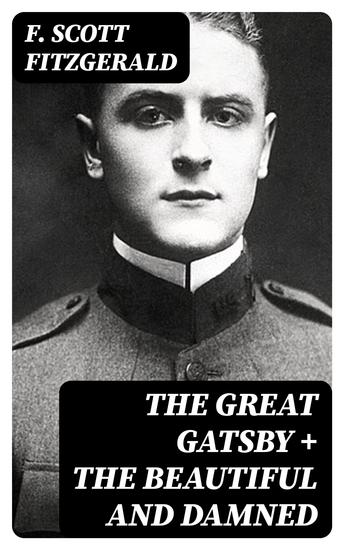
The Great Gatsby + The Beautiful and Damned - cover

The Great Gatsby + The Beautiful and Damned

F Scott itzgerald

Publisher: DigiCat

  • 0
  • 0
  • 0

Summary

F. Scott Fitzgerald's seminal works, The Great Gatsby and The Beautiful and Damned, epitomize the disillusionment of the Jazz Age while exploring themes of aspiration, wealth, and the elusive nature of the American Dream. The Great Gatsby unfolds through a vivid, lyrical prose style, immersing readers in the opulent yet hollow world of 1920s America, where the tragic figure of Jay Gatsby symbolizes both hope and futility. In contrast, The Beautiful and Damned offers a gritty and introspective narrative concerning the lives of Anthony and Gloria Patch, whose descent into decadence and moral decay reveals the darker undercurrents beneath the surface glamour of society at the time. Both texts are remarkable for their rich characterization and insightful social commentary, underscoring Fitzgerald's role as a chronicler of his era. Fitzgerald, born in 1896 and a prominent figure of the Lost Generation, faced struggles with both personal ambition and societal expectations. His tumultuous marriage to Zelda Sayre and their ensuing financial problems provided him with the experiential foundation to depict the complexities of love and ambition in his works. The author's keen observations of the Roaring Twenties, characterized by prosperity and excess, allowed him to produce incisive critiques of the era's moral fabric, particularly evident in both The Great Gatsby and The Beautiful and Damned. These masterpieces are essential readings for anyone seeking to understand the intricate dynamics of the American Dream and the era's social dilemmas. Fitzgerald's masterful storytelling, paired with his profound insights into human nature, invites readers to reflect on the aspirations and disillusions that define the human experience. Dive into these narratives to uncover the timeless truths about love, ambition, and the ever-elusive pursuit of happiness.
Available since: 05/17/2022.
Print length: 433 pages.
Other books that might interest you

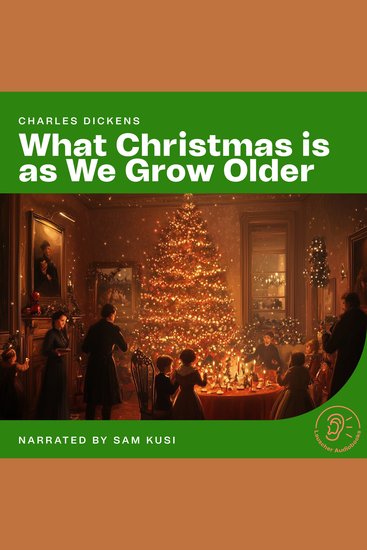
  • What Christmas is as We Grow Older - cover

    What Christmas is as We Grow Older

    Charles Dickens

    • 0
    • 0
    • 0
    “What Christmas is as We Grow Older” is a short Christmas-Story by Charles Dickens: Time was, with most of us, when Christmas Day encircling all our limited world like a magic ring, left nothing out for us to miss or seek; bound together all our home enjoyments, affections, and hopes; grouped everything and every one around the Christmas fire; and made the little picture shining in our bright young eyes, complete.
    Show book
  • After the Funeral - From their pens to your ears genius in every story - cover

    After the Funeral - From their...

    Mary Butts

    • 0
    • 0
    • 0
    Mary Frances Butts was born on 13th December 1890 in Poole, Dorset. 
    Her early years were spent at Salterns, an 18th-century house overlooking Poole Harbour.  Sadly in 1905 her father died, and she was sent for boarding at St Leonard's school for girls in St Andrews. 
    Her mother remarried and, from 1909, Mary studied at Westfield College in London, and here, first became aware of her bisexual feelings.  She was sent down for organising a trip to Epsom races and only completed her degree in 1914 when she graduated from the London School of Economics.  By then Mary had become an admirer of the occultist Aleister Crowley and she was given a co-authorship credit on his ‘Magick (Book 4)’. 
    In 1916, she began the diary which would now detail her future life and be a constant reference point for her observations and her absorbing experiences. 
    During World War I, she was doing social work for the London County Council in Hackney Wick, and involved in a lesbian relationship.  Life changed after meeting the modernist poet, John Rodker and they married in 1918. 
    In 1921 she spent 3 months at Aleister Crowley's Abbey of Thelema in Sicily; she found the practices dreadful and also acquired a drug habit.  Mary now spent time writing in Dorset, including her celebrated book of short stories ‘Speed the Plough’ which saw fully develop her unique Modernist prose style. 
    Europe now beckoned and several years were spent in Paris befriending many artists and writing further extraordinary stories.   
    She was continually sought after by literary magazines and also published several short story collections as books. Although a Modernist writer she worked in other genres but is essentially only known for her short stories.  Mary was deeply committed to nature conservation and wrote several pamphlets attacking the growing pollution of the countryside. 
    In 1927, she divorced and the following year her novel ‘Armed with Madness’ was published.  A further marriage followed in 1930 and time was spent attempting to settle in London and Newcastle before setting up home on the western tip of Cornwall.  By 1934 the marriage had failed. 
    Mary Butts died on 5th March 1937, at the West Cornwall Hospital, Penzance, after an operation for a perforated gastric ulcer. She was 46.
    Show book
  • Great State The (Unabridged) - cover

    Great State The (Unabridged)

    H. G. Wells

    • 0
    • 0
    • 0
    Herbert George Wells (21 September 1866 - 13 August 1946) was an English writer. Prolific in many genres, he wrote dozens of novels, short stories, and works of social commentary, history, satire, biography and autobiography. His work also included two books on recreational war games. Wells is now best remembered for his science fiction novels and is often called the "father of science fiction", along with Jules Verne and the publisher Hugo Gernsback.
    THE GREAT STATE: For many years now I have taken a part in the discussion of Socialism. During that time Socialism has become a more and more ambiguous term.
    Show book
  • History of Tom Jones a Foundling The - Book 1 (Unabridged) - cover

    History of Tom Jones a Foundling...

    Henry Fielding

    • 0
    • 0
    • 0
    A foundling of mysterious parentage brought up by Mr. Allworthy on his country estate, Tom Jones is deeply in love with the seemingly unattainable Sophia Western, the beautiful daughter of the neighboring squire though he sometimes succumbs to the charms of the local girls. When Tom is banished to make his own fortune and Sophia follows him to London to escape an arranged marriage, the adventure begins. A vivid Hogarthian panorama of eighteenth-century life, spiced with danger and intrigue, bawdy exuberance and good-natured authorial interjections, Tom Jones is one of the greatest and most ambitious comic novels in English literature.
    BOOK 1: An author ought to consider himself, not as a gentleman who gives a private or eleemosynary treat, but rather as one who keeps a public ordinary, at which all persons are welcome for their money. In the former case, it is well known that the entertainer provides what fare he pleases; and though this should be very indifferent, and utterly disagreeable to the taste of his company, they must not find any fault; nay, on the contrary, good breeding forces them outwardly to approve and to commend whatever is set before them.
    Show book
  • The Way Things Were - cover

    The Way Things Were

    Marko Vovchok

    • 0
    • 0
    • 0
    The Way Things Were is a collection of stories and novellas by Ukrainian writer Marko Vovchok (Maria Alexandrona Vilinskaya-Markevich) focused around the lives of Russian and Ukrainian serfs during the last decade of slavery in the Russian Empire. These works were instrumental to the abolitionist movement, whose members - writers, poets, artists, and political activists - eventually succeeded in bringing about the Emancipation reform of 1861 and ending six centuries of serfdom. 
    Marko Vovchok's stories are not epic, historically significant episodes, but rather small, everyday vignettes from the lives of serfs and their masters, made all the more powerful by their serene, conversational style bringing the reality of the era into stark relief. 
    This collection includes the following works:The Merchant's DaughterSashaMischief MakerThe SchoolgirlKaterinaNine Brothers and Their Sister GalyaThe Tulle BabaLazy BonesLittle ToyThe King of HeartsLemerivnaMasha
    Show book
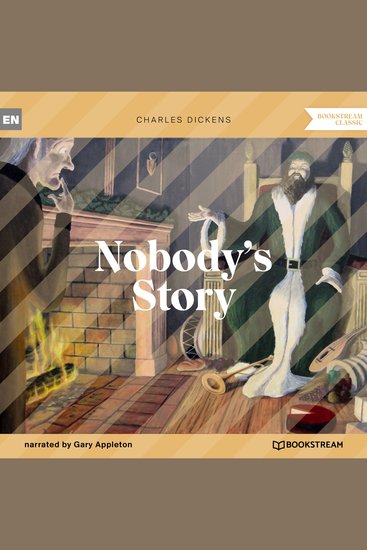
  • Nobody's Story (Unabridged) - cover

    Nobody's Story (Unabridged)

    Charles Dickens

    • 0
    • 0
    • 0
    Who's story is this? Nobody. - Who's nobody? The average working man.
    This story is very old but very relevant. The common man's opinions are disregarded. His needs are manipulated. But of course the story makes clear that he is key to society.
    The story shows that. Then the narrator comes in and rather dramatically reinforces that point in the final three paragraphs just in case you missed it the first time. Yes, there's a pretty high soapbox. Yes, it's pretty holier than thou. But hey, it's Christmas time. What's so funny 'bout peace, love and understanding, anyway? And that's quite a trick on Dickens's part.
    Show book