Join us on a literary world trip!
Add this book to bookshelf
Grey
Write a new comment Default profile 50px
Grey
Subscribe to read the full book or read the first pages for free!
All characters reduced
The Beautiful & Damned - Enriched edition - cover

The Beautiful & Damned - Enriched edition

F. Scott Fitzgerald

Publisher: DigiCat

  • 0
  • 0
  • 0

Summary

In 'The Beautiful and Damned,' F. Scott Fitzgerald masterfully explores the decadence and disillusionment of the Jazz Age through the lives of the self-indulgent Anthony Patch and his captivating wife, Gloria. Written in a rich, lyrical style, Fitzgerald delves into themes of ambition, love, and the moral decay of the American elite in the tumultuous 1920s. The novel's intricate character studies reveal the fragility of dreams and the harsh realities that often accompany extravagance, ultimately offering a sobering critique of the era's hedonism. Fitzgerald's vivid prose and keen observations encapsulate the zeitgeist of a generation teetering on the brink of change. Fitzgerald, a chronicler of the Roaring Twenties, drew inspiration from his own experiences within the vibrant social milieu of his time, as well as his tumultuous marriage to Zelda Sayre. His intimate knowledge of the world he depicts infuses the narrative with authenticity while reflecting his broader concerns about wealth, identity, and the American Dream. The struggles and ambitions of Anthony and Gloria are proxy representations of Fitzgerald himself, capturing both aspiration and despair. Highly recommended for scholars and enthusiasts of American literature, 'The Beautiful and Damned' serves as an essential text for understanding the complexities of aspiration and the darker undercurrents of the American Dream. Fitzgerald's poignant insights and captivating storytelling make this novel not just a relic of its era, but a timeless exploration of human ambition and the ephemeral nature of beauty.

In this enriched edition, we have carefully created added value for your reading experience:
- A succinct Introduction situates the work's timeless appeal and themes.
- The Synopsis outlines the central plot, highlighting key developments without spoiling critical twists.
- A detailed Historical Context immerses you in the era's events and influences that shaped the writing.
- An Author Biography reveals milestones in the author's life, illuminating the personal insights behind the text.
- A thorough Analysis dissects symbols, motifs, and character arcs to unearth underlying meanings.
- Reflection questions prompt you to engage personally with the work's messages, connecting them to modern life.
- Hand‐picked Memorable Quotes shine a spotlight on moments of literary brilliance.
- Interactive footnotes clarify unusual references, historical allusions, and archaic phrases for an effortless, more informed read.
Available since: 11/13/2022.
Print length: 308 pages.

Other books that might interest you

  • When the Devil Was Well - From their pens to your ears genius in every story - cover

    When the Devil Was Well - From...

    Gertrude Atherton

    • 0
    • 0
    • 0
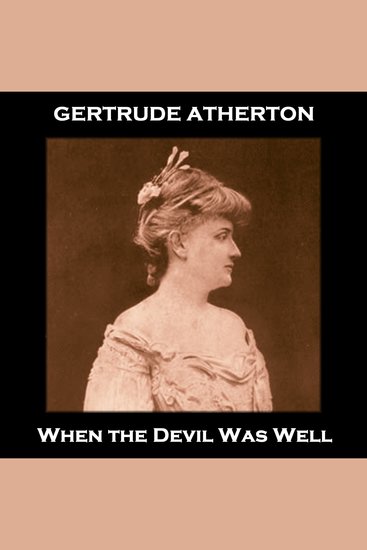
    Gertrude Franklin Horn was born on October 30th, 1857, in San Francisco, California. Her parents separated in 1860 when she was two years old, and she was raised by her maternal grandfather, Stephen Franklin, a devout Presbyterian. He insisted she be well read, and was a great influence on her.  
    She attended St. Mary's Hall high school in Benicia, California, and, briefly, the Sayre School in Lexington, Kentucky. 
    In Kentucky, the rebellious Gertrude met George H.B. Atherton, who was courting her mother. His attentions wandered to Gertrude and, after she accepted his sixth proposal, they eloped on February 15th, 1876.  
    She went to live with him and his domineering Chilean mother. Gertrude found life stultifying. As a result of her disappointment she began to develop an independent life. But two tragedies changed her life dramatically: her son George died of diphtheria, and her husband died at sea. She was left with their daughter Muriel but and needed to support herself. Her mother-in-law agreed to raise Muriel. 
    Her first publication was ‘The Randolphs of Redwood: A Romance’, and serialised in The Argonaut in 1882. When she told her family, she was ostracized.  
    Gertrude’s first novel, ‘What Dreams May Come’, was published in 1888 under the pseudonym Frank Lin. 
    With the death of her grandfather and her mother-in-law she returned to California to resume care of Muriel. In 1891, while writing a weekly column for The San Francisco Examiner, she met Ambrose Bierce, with whom she carried on a love-hate relationship. 
    She wrote ‘Doomswoman’ in 1892, it was published in Lippincott's Monthly Magazine and as a book in 1893. The story focuses on Chonita Moncada y Iturbi and her love of Diego Estenega, as he dreams of modernizing California.  
    In 1892, Atherton left for New York to write for the New York World. She wrote letters to Bierce, confiding her loneliness, her dismay at freelance writing and her dislike of eastern literary circles. Whilst there though she published another California novel, ‘Before the Gringo Came’ (1894). 
    Following this was ‘Patience Sparhawk and Her Times’ (1897), but it proved to be controversial. Its rejection encouraged her to leave for London.  
    In 1898, she completed ‘The Californians’, her first novel set in the post-Spanish era. Critics received this much more positively: The Spectator said "The novel fairly establishes her claim to be considered as one of the most vivid and entertaining interpreters of the complex characters of emancipated American womanhood."  
    Further works followed, many from her California series dealing with the social history of California.  
    Gertrude wrote several stories of supernatural horror, including ‘Death and the Woman’, and ‘Crowned with One Crest’, as well as ‘The Foghorn’, and the much anthologised ‘The Striding Place’.  
    She was an early feminist well acquainted with the plight of women although she spoke against its militancy. Add to this her strong-will, independent-mind, and sometimes her oversteps into controversy, especially over anti-communism and its easy to identify why her novels had such sharp and strong characters. 
    Gertrude Atherton died on June 14th, 1948. She is buried in Cypress Lawn cemetery in Colma, California.
    Show book
  • The Judge's House - cover

    The Judge's House

    Bram Stoker

    • 0
    • 0
    • 0
    More classic horror narrations on Jonathan's YouTube channel: https://www.youtube.com/@JonathanDunneHorrorAudiobooks 
    Title: The Judge’s House 
    Author: Bram Stoker 
    Narrator: Jonathan Dunne 
    Original Publication: 1891 
    Public Domain: Yes 
    Series: Timeless Terrors 
    Number: 104 
    Description: 
    The Judge’s House is a chilling tale of isolation, superstition, and creeping supernatural terror. The story follows Malcolm Malcolmson, a diligent mathematics student who rents an abandoned house in a quiet English town to prepare for his examinations. Dismissing local warnings as mere rural folklore, he soon discovers that the house harbors a sinister presence tied to its former owner—a notorious and merciless judge. 
    As the nights grow longer and stranger, Malcolmson’s rational certainty begins to erode. Strange sounds echo through the halls, an unnaturally large rat watches from the shadows, and the grim history of the house presses in upon him. In this unsettling narrative, Bram Stoker masterfully blends psychological tension with gothic atmosphere, exploring themes of arrogance, disbelief, and the terrifying persistence of evil. 
    Narrated by Amazon-bestselling horror author Jonathan Dunne, this performance heightens the mounting dread and claustrophobic unease of Stoker’s classic ghost story. The Judge’s House remains a powerful example of Victorian supernatural fiction, where skepticism falters and ancient horrors wait in the dark.
    Show book
  • The Mad Planet - cover

    The Mad Planet

    Murray Leinster

    • 0
    • 0
    • 0
    A classic Sci-Fi tale by the master Murray Leinster of the last catastrophic stages of our planet and its inhabitants. The true villain of this fascinating piece is excess carbon dioxide!..The results on the earth, plant life, animals and humans are vividly imagined and described: giant insects, weird fungi, poisonous air and gases, fighting and conflict amongst humanity...How, or rather, how badly will all of this end? (Published in 1920)
    Show book
  • Middlemarch Volume 3 - cover

    Middlemarch Volume 3

    George Eliot

    • 0
    • 0
    • 0
    Middlemarch, Volume 3 delves deeper into the intricate lives of its characters. Dorothea's path takes unexpected turns as she navigates the constraints of her past and seeks a more fulfilling future. Lydgate's professional and personal crises escalate, testing his ambition and integrity. The narrative expands to reveal the interconnectedness of the town's inhabitants, exposing the subtle power dynamics and social pressures that shape their destinies. Eliot masterfully portrays the nuances of human relationships and the challenges of moral choices.
    Show book
  • Oil of Dog - From their pens to your ears genius in every story - cover

    Oil of Dog - From their pens to...

    Ambrose Bierce

    • 0
    • 0
    • 0
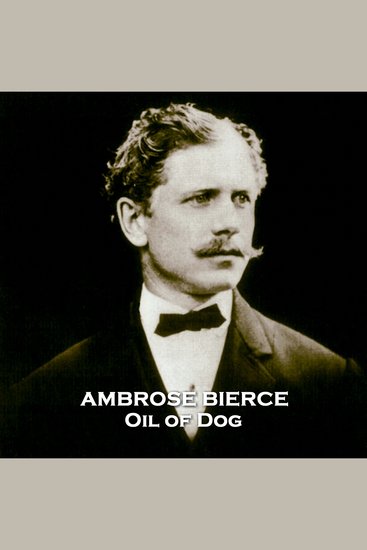
    Ambrose Gwinnett Bierce was born on 24th June 1842 at Horse Cave Creek in Meigs County, Ohio. His parents were poor but they introduced him to literature at an early age, instilling in him a deep appreciation of books, the written word and the elegance of language.  
    Growing up in Koscuisko County, Indiana poverty and religion were defining features of his childhood, and he would later describe his parents as “unwashed savages” and fanatically religious, showing him little affection but always quick to punish. He came to resent religion, and his introduction to literature appears to be their only positive effect. 
    At age 15 Bierce left home to become a printer’s devil, mixing ink and fetching type at The Northern Indian, a small Ohio paper. Falsely accused of theft he returned to his farm and spent time sending out work in the hopes of being published. 
    His Uncle Lucius advised he be sent to the Kentucky Military Institute. A year later he was commissioned as an Officer.  As the Civil War started Bierce enlisted in the 9th Indiana Infantry Regiment.  
    In April 1862 Bierce fought at the Battle of Shiloh, an experience which, though terrifying, became the source of several short stories. Two years later he sustained a serious head wound and was off duty for several months. He was discharged in early 1865.  
    A later expedition to inspect military outposts across the Great Plains took him all the way to San Francisco. He remained there to become involved with publishing and editing and to marry, Mary Ellen on Christmas Day 1871.  They had a child, Day, the following year.  
    In 1872 the family moved to England for 3 years where he wrote for Fun magazine. His son, Leigh, was born, and first book, ‘The Fiend’s Delight’, was published.  
    They returned to San Francisco and to work for a number of papers where he gained admiration for his crime reporting. In 1887 he began a column at the William Randolph Hearst’s San Francisco Examiner.  
    Bierce’s marriage fell apart when he discovered compromising letters to his wife from a secret admirer. The following year, 1889 his son Day committed suicide, depressed by romantic rejection. 
    In 1891 Bierce wrote and published the collection of 26 short stories which included ‘An Occurrence at Owl Creek Bridge’.  Success and further works including poetry followed.  
    Bierce with Hearst’s resources helped uncover a financial plot by a railroad to turn 130 million dollars of loans into a handout. Confronted by the railroad and asked to name his price Bierce answered “my price is $130 million dollars. If, when you are ready to pay, I happen to be out of town, you may hand it over to my friend, the Treasurer of the United States”.  
    He now began his first foray as a fabulist, publishing ‘Fantastic Fables’ in 1899.  But tragedy again struck two years later when his second son Leigh died of pneumonia relating to his alcoholism.  
    He continued to write short stories and poetry and also published ‘The Devil’s Dictionary’.  
    At the age of 71, in 1913 Bierce departed from Washington, D.C., for a tour of the battlefields where he had fought during the civil war. At the city of Chihuahua he wrote his last known communication, a letter to a friend. It’s closing words were “as to me, I leave here tomorrow for an unknown destination,” Ambrose Bierce then vanished without trace.
    Show book
  • Northanger Abbey - cover

    Northanger Abbey

    Jane Austen

    • 0
    • 0
    • 0
    Northanger Abbey is the light-hearted account of a young girl's first excursion into fashionable society. While in Bath, Catherine Morland is invited by Henry Tilney and his sister Eleanor to visit their home, Northanger Abbey. A devotee of Gothic novels, Catherine hopes that the Abbey will live up to her vision of haunted ruins. This delightful novel pokes fun at the popular fiction of its day and exposes the difference between illusion and reality.
    Show book