Join us on a literary world trip!
Add this book to bookshelf
Grey
Write a new comment Default profile 50px
Grey
Subscribe to read the full book or read the first pages for free!
All characters reduced
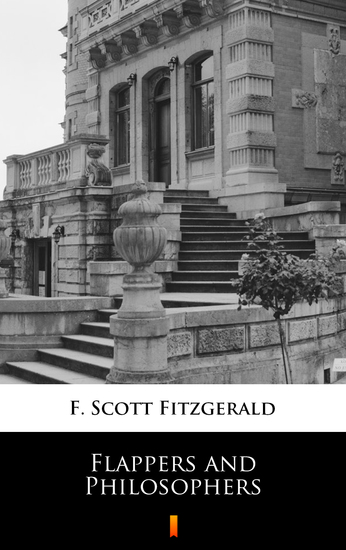
Flappers and Philosophers - cover

Flappers and Philosophers

F Scott itzgerald

Publisher: Ktoczyta.pl

  • 0
  • 0
  • 0

Summary

Published soon after Fitzgerald’s debut novel „This Side of Paradise”, the novel that had made him famous at the age of twenty-three, „Flappers and Philosophers” was the author’s first iconic collection of short fiction. In these pages we meet Fitzgerald’s trademark characters: the beautiful, headstrong young women and the dissolute, wandering young men who comprised what came to be called the Lost Generation. This collection evokes 1920s America through the eyes of a writer indelibly linked to that singular era.
Available since: 03/08/2022.
Print length: 208 pages.

Other books that might interest you

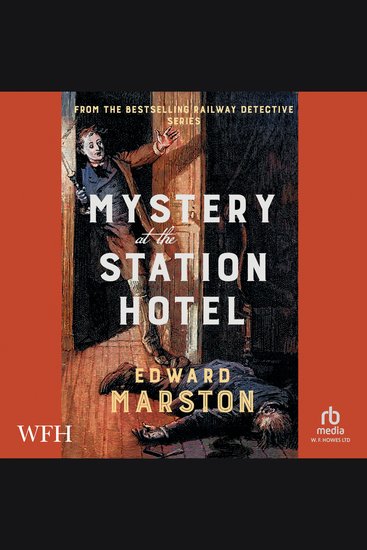
  • Mystery at the Station Hotel - cover

    Mystery at the Station Hotel

    Edward Marston

    • 0
    • 0
    • 0
    Shrewsbury, 1866. Julian Lockyer is an imposing gentleman in his late fifties. Having reserved a room for the night at the Station Hotel, he asks to be called early in the morning because he has a train to catch. Repeated attempts are made to wake him but there is no response. After forcing the door, the horrified hotel staff discover the bloodied corpse but with the knife still in his hand ... could he have killed himself in such a brutal manner? 
     
    The Railway Detective is summoned by his boss Tallis to journey to Shrewsbury and investigate. If it is a simple case of suicide, Colbeck believes that he may be back home that same evening and no need to trouble his sergeant. But when he reaches Shrewsbury, one mystery is solved. The stationmaster tells Colbeck that the dead man is a director of the Great Western Railway company and he was due to takeover as Chairman. Colbeck wonders if this was a case of murder rather than suicide...
    Show book
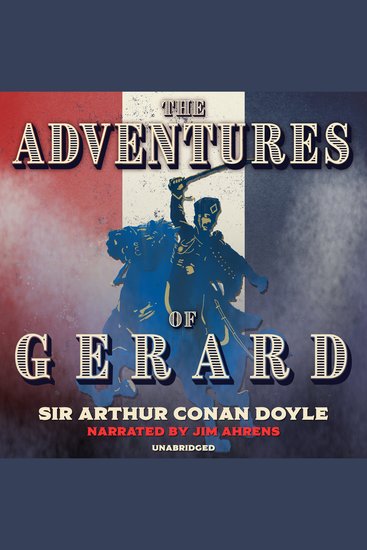
  • The Adventures of Gerard - cover

    The Adventures of Gerard

    Sir Arthur Conan Doyle

    • 0
    • 0
    • 0
    The Adventures of Gerard is a compilation of short stories that Sir Arthur Conan Doyle wrote regarding a French Brigadier named Etienne Gerard who thinks very highly of himself as can be reflected in how he told his stories. The book is divided into chapters containing different segments of his life as a soldier under the leadership of Napoleon together with his personal exploits and the romance that swept his way in between. Typical of war stories, some depicts bloody encounters with his enemies and how he was able to escape those encounters. However, there were soft moments particularly his encounter with women along the way even if she is from their enemy.Brigadier Gerard is the hero of a series of historical short stories by the British writer Arthur Conan Doyle. The hero, Etienne Gerard, is a Hussar officer in the French Army during the Napoleonic Wars. Gerard's most notable attribute is his vanity – he is utterly convinced that he is the bravest soldier, greatest swordsman, most accomplished horseman and most gallant lover in all France. Gerard is not entirely wrong, since he displays notable bravery on many occasions, but his self-satisfaction undercuts this quite often. Obsessed with honour and glory, he is always ready with a stirring speech or a gallant remark to a lady. Conan Doyle, in making his hero a vain, and often rather uncomprehending, Frenchman, was able to satirise both the stereotypical English view of the French and – by presenting them from Gerard's baffled point of view – English manners and attitudes....Gerard tells the stories from the point of view of an old man now living in retirement in Paris.
    Show book
  • A Tale of Two Cities - cover

    A Tale of Two Cities

    Charles Dickens

    • 0
    • 0
    • 0
    "A Tale of Two Cities" by Charles Dickens is a historical novel written in the mid-19th century. Set against the backdrop of the French Revolution, the story begins by exploring the social and political turmoil of the era, introducing key themes such as resurrection, sacrifice, and the contrast between oppression and liberty.  
    The narrative follows Mr. Jarvis Lorry on his mission to retrieve Dr. Alexandre Manette, an imprisoned former physician who has been "recalled to life" after years of suffering. Dickens vividly depicts the contrasting conditions in England and France, highlighting the hardships faced by ordinary people. 
    A notable scene unfolds as Mr. Lorry travels on a Dover mail coach and encounters a mysterious messenger who delivers a message concerning Dr. Manette. Upon arriving in Paris, the ominous undertones of the Revolution are palpable, with Madame Defarge's wine shop symbolizing the growing discontent.  
    The story hints at the challenges ahead as the characters intertwine in a tale of personal and political upheaval, setting the stage for a drama that explores the quest for justice in the face of tyranny.
    Show book
  • Twenty Thousand Leagues Under the Sea - cover

    Twenty Thousand Leagues Under...

    Jules Verne

    • 0
    • 0
    • 0
    Published in 1870, "Twenty Thousand Leagues Under the Sea" is one of Jules Verne's most famous works. This science fiction novel takes readers on an underwater journey with Captain Nemo and his submarine, the Nautilus. The story is narrated by Professor Pierre Aronnax, who, along with his assistant Conseil and the harpooner Ned Land, becomes an unwilling guest of Captain Nemo. The trio experiences a series of adventures under the sea, encountering exotic sea creatures, exploring sunken ships, and discovering the wonders and dangers of the ocean depths. The book is renowned for its scientific foresight and imaginative storytelling.
    Show book
  • The Confusions of Young Master Törless - cover

    The Confusions of Young Master...

    Robert Musil

    • 0
    • 0
    • 0
    Robert Musil (1880-1942) is best known for his enduring masterpiece The Man Without Qualities, one of the great European works of the 20th century. It was with The Confusions of Young Master Törless first published in 1906, a challenging but very different work, that he signalled his extraordinary talent. As the nineteenth century draws to an end, young Torless is sent to a military boarding school for the sons of the nobility on the eastern outreaches of the Austro-Hungarian Empire. Far from his comfortable, free-thinking bourgeois home and left to his own devices, he experiences the joy, pain and self-doubt of adolescence. He is confronted with desire and love, but also his own cruelty, as he finds himself participating in his fellow pupils' bullying campaigns. A dark Bildungsroman which shocked its readership at the time, Robert Musil's first novel is a fresco of psychoanalysis, philosophy, eroticism, snobbery, sado-masochism and schoolboy humour, a hothouse of alternately repressed and unchained desires that prefigure the carnage of both World Wars.
    Show book
  • The Folkungs - cover

    The Folkungs

    M.E. Javits

    • 0
    • 0
    • 0
    Based on 14th Century Scandinavian actual events, The Folkungs --Sweden's royal family--is a generational saga interwoven with jealousy, conspiracy, rivalry, treason, regicide, exorcism, paganism, torture, witchcraft, shamanism, Falconry, folklore, power struggles, and deeply touching love stories.It begins at Nykoping Castle, Sweden, 1291. King Magnus is dead and his three young sons--Birger (eleven), Erik (nine), and Valdemar (eight)--await the arrival of the appointed Regent of Sweden, a powerful noble and celebrated warrior, who will teach them the arts of governing, knighthood and skills of war until the young king, Birger, comes of age. Under his tutelage, Erik, the middle child, will show himself to be the most intelligent and skilful of the three; Valdemar, the youngest, will look on in admiration, while the fledgling King, will bridle with jealousy.Kristina, all innocence, is entering a world where personal desires are sacrificed to political necessity. Marriage is about forging international alliances so Birger, King of Sweden, will marry Princess Marta of Denmark; the King of Denmark will marry Princess Ingeborg of Sweden while Dukes Valdemar and Erik will marry a Norwegian princess or a princess from one of the German principalities. Kristina cannot but wonder what her own future will hold.As the young princes mature, King Birger proves himself to be increasingly inept and manipulated by the self-seeking Regent. He accuses his innocent brothers of treachery and wages war against them as punishment, wreaking unnecessary bloodshed on the land. For Erik this is intolerable. Can Sweden be left prey to his brother's weak rule? Alliances are formed across the borders as t
    Show book