Join us on a literary world trip!
Add this book to bookshelf
Grey
Write a new comment Default profile 50px
Grey
Subscribe to read the full book or read the first pages for free!
All characters reduced
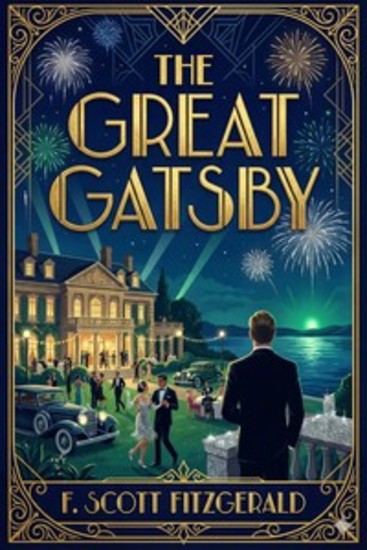
The Great Gatsby - cover

The Great Gatsby

F. Scott Fitzgerald

Publisher: Bu Classics Books

  • 0
  • 0
  • 0

Summary

In the shimmer of West Egg, a mysterious millionaire chases a green light and a dream that remains forever out of reach. Jay Gatsby’s obsession with the past collides with the careless brutality of the old money elite, leading to tragic consequences. This definitive American novel exposes the hollow core of the American Dream.
Available since: 03/04/2026.
Print length: 194 pages.

Other books that might interest you

  • After Darcy - cover

    After Darcy

    Joanna Nadin

    • 0
    • 0
    • 0
    Lydia, home from Paris on New Year’s Day in a welter of hangover and humiliation, finds herself swearing off drink, drugs and sex for the next 12 months. Through her unfamiliar sobriety, she’ll see a landmark year for all the Bennet sisters, including a disruptive 40th birthday, an engagement and a funeral: and, maybe, coming to terms with the results of a run-of-the-mill run-in with a jacknifed lorry on a wet stretch of the M1… 
     
    A sharply funny and unexpectedly tender modern Pride and Prejudice, this is a story of sisterhood, survival, and second chances. For fans of Marian Keyes, Dolly Alderton, and anyone who's ever wondered what the Bennet sisters would be like in the age of therapy, WhatsApp, and wellness trends gone rogue.
    Show book
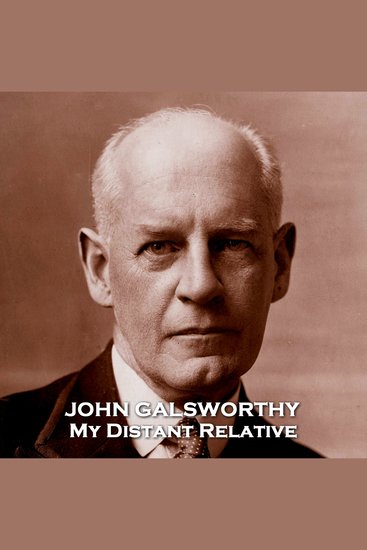
  • My Distant Relative - Short story from a Nobel Prize winning author - cover

    My Distant Relative - Short...

    John Galsworthy

    • 0
    • 0
    • 0
    John Galsworthy was born on the 14th August 1867 on the family estate, Parkfield, in Kingston-upon-Thames.  His family’s wealth came from the shipping industry 
    At age nine he began his education at Saugeen, a Bournemouth preparatory school, before moving to Harrow school in 1881, distinguishing himself as an athlete.  
    Galsworthy attended New College, Oxford to read law and left with a second-class degree with honours in 1889. The bar called him in 1890 but Galsworthy decided he would rather run the family’s shipping business. This also meant travelling to destinations such as Vancouver, South Africa and Australia. 
    In 1895 Galsworthy began a decade long affair with Ada Nemesis Pearson Cooper, the wife of his first cousin. It was only when, in 1905, she divorced and married Galsworthy that their affair became known. 
    His literary career began in 1897 with a short story volume, ‘From the Four Winds’, with the pseudonym John Sinjohn as were three further works. Under his own name, in 1904, came ‘The Island Pharisees’, a novel of social observation, seasoned with flashes of satire and propaganda. He also switched from small, independent publishers to the larger Heinemann and to whom he remained for the duration of his career. 
    1906 saw first major play, ‘The Silver Box’, and the novel ‘The Man of Property’. Each to considerable acclaim. The latter was the first in ‘The Forsyte Saga’ trilogy written between 1906 and 1921. It dealt with the questions of status, class and materialism through Soames Forsyte, who is acutely aware of his ‘new money’ status. Jealous of his wife, his machinations drive her into the arms of another. Soames engages in a terrible revenge with terrible consequences.  
    His social agenda was enlightened particularly in his condemnation over the use of solitary confinement in prisons, his attacks on theatrical censorship and campaigning for animal rights. 
    Galsworthy, having been passed over for active service, spent much of the First World War working as an orderly in a field hospital in France. 
    Despite his it was only in 1920 that he had his first blockbuster play ‘The Skin Game’, a melodrama dealing with ethics, property and class.  
    In 1920 ‘In Chancery’ also arrived with further discourse on the marital disharmony between Soames Forsyte and his wife.  
    The appreciation of his work gradually shifted from plays to novels, particularly through his detailing English social difference, tension and pretension with the Forsytes.  A second trilogy, ‘A Modern Comedy’, followed, examining his love for his daughter Fleur and the English commercial upper-middle class, its ideologies and Soames’ poisonous materialism.  
    Having rejected a knighthood in 1918 he was appointed, in 1929, to the Order of Merit. Galsworthy spent his last years writing a third Forsythe trilogy, ‘End of the Chapter’.   
    In 1932 he was awarded the Nobel Prize, but by now failing health meant he was too ill to attend the ceremony. 
    John Galsworthy died at his Hampstead home of a brain tumour on 31st January, 1933. He was cremated and his ashes scattered from an aeroplane over the South Downs.
    Show book

  • Robin Hood - cover

    Robin Hood

    Paul Creswick

    • 0
    • 0
    • 0
    The adventures of legendary Robin Hood, a heroic outlaw who chooses to rob from the rich to help the poor. He lives with his band of merry men in Sherwood Forest, in Nottinghamshire. Robin Hood is known for his mastery of archery as well as his talent for disguising himself.
    Show book
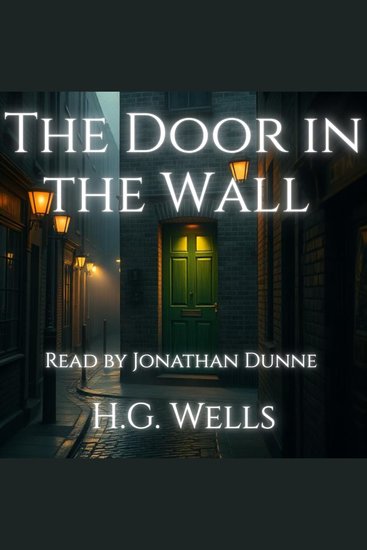
  • The Door in the Wall - cover

    The Door in the Wall

    H. G. Wells

    • 0
    • 0
    • 0
    Title: The Door in the Wall 
    Author: H. G. Wells 
    Narrator: Jonathan Dunne 
    Original Publication: 1906 
    Public Domain: Yes 
    Series Placement: Number 42 in the Timeless Terrors series 
    Description: 
    The Door in the Wall by H. G. Wells is a haunting meditation on memory, regret, and the fragile boundary between reality and imagination. Blending psychological mystery with quiet supernatural suggestion, Wells crafts one of his most poignant and enduring tales. 
    Lionel Wallace, a successful statesman, is haunted by a recurring vision from his childhood — a green door in a white wall that opens onto a garden of impossible beauty. Throughout his life, the door reappears at unexpected moments, tempting him to abandon the world he knows for one that may not exist at all. As Wallace’s obsession deepens, the story becomes a reflection on the price of ambition, the ache of lost wonder, and the peril of yearning for what lies beyond the known. 
    Narrated by Amazon bestselling horror author Jonathan Dunne, this performance captures Wells’s tone of wistful dread and quiet revelation — the sense that paradise may be only a step away, but that to open the door is to lose oneself forever. While the text is in the public domain, this narration is an original performance and copyright © 2025 Jonathan Dunne. 
    Part of Timeless Terrors, a series devoted to resurrecting the masters of the macabre and uncanny, The Door in the Wallendures as a tale of elusive beauty and the inexorable pull of the mysterious — a reminder that some doors, once found, can never truly be closed.
    Show book
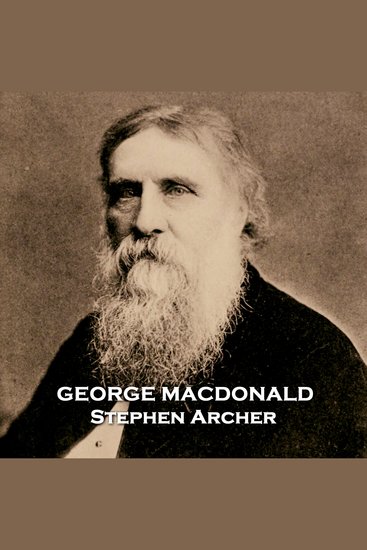
  • Stephen Archer - From their pens to your ears genius in every story - cover

    Stephen Archer - From their pens...

    George MacDonald

    • 0
    • 0
    • 0
    George MacDonald was born on December 10th 1824 at Huntly, Aberdeenshire, Scotland.  
    The MacDonald family had proud and long historical roots. His father, was a farmer, was a direct descendant of one of the families that suffered in the infamous massacre of 1692 when the Campbells set upon the MacDonalds. 
    George grew up with the Congregational Church, with its atmosphere of Calvinism to which George never really attached himself. A story often told is that the young George on hearing that life was already mapped out and pre-destined burst into tears and was only comforted by the re-assurance that he was one of the elect. 
    When he was only 8, his mother Helen died. His father re-married 7 years later in 1839. The next year George was successful in obtaining a bursary to study at King’s College in Aberdeen and from which he also received his M.A.  
    In 1846 George was first published, anonymously, but his poem was there in print in the Scottish Congregational Magazine. 
    In 1848 he attended Highbury Theological College to study for the Congregational ministry.  That same year he became engaged to Louisa Powell. An enduring relationship that would see them as life long companions coupled with a marriage of over fifty years. 
    By 1850 George was appointed as the pastor of Trinity Congregational Church in Arundel. His sermons were however sometimes at odds with the Church and their more segmented views.  
    It is also at this time that George’s health becomes a major concern.  In November he suffered what would be termed ‘a severe haemorrhage’.  However Louisa was by his side and her support and nursing ensured his recovery. 
    On March 8th 1851 George and Louisa married.  As a Christmas gift to friends later that year he had printed his translation of Twelve of the Spiritual Songs of Novalis. 
    The year of 1852 started on a very bright note with the birth of his daughter on January 4th – Lilia.  
    Meanwhile George preached that with God’s universal love and the possibility that none would, ultimately, fail to unite with God were deemed to be almost heretical by the Church elders and as a punishment his salary was cut in half in June of 1852. 
    In May 1853 George could no longer reconcile with the Church’s demands and he resigned from the pulpit. Interestingly in his later novels, such as Robert Falconer and Lilith, there is common theme for distaste at the idea that God's electing love is limited to some and denied to others running through. 
    Happier news for 1853 was the birth of his daughter Mary Josephine born on July 23rd. 
    And with this the family decided to move to Manchester where he continued his ministerial work but his health again deteriorated. Another daughter, Caroline Grace was born on September 16th 1854.  In 1855 his collection of poems ‘Within and Without’ was published.  
    On 20th January 1856 his son Greville was born. The year brought further good news when Lady Byron decided to become his patron. However his health once more deteriorated and the family moved to Algiers to recuperate over the winter. 
    The following spring he was back in London and teaching at the University of London. 
    On August 31st 1857 a fourth daughter, Irene, was born and the family decided to settle in Hastings. 
    1858 brought bitter sweet times. His brother and Father both died but another daughter, Winifrid Louisa was born and his classic work ‘Phantastes’ was published. 
    The following year, 1859, George returned again to London and became the Professor of English Literature at Bedford College. 
    The following few years brought several more children into the ever growing family and a growing literary reputation. 
    In 1869 George accepted the editorship of Good Words for the Young and embarked on a lecture tour of Scotland. 
    In 1871 ‘At the Back of the North Wind’ was published followed by such other classics as Wilfrid Cumbermede, The Princess and the Goblin and in 1876, Exotics. 
    In 1877 came the beginning of a new chapter in
    Show book
  • Robinson Crusoe - cover

    Robinson Crusoe

    Daniel Defoe

    • 0
    • 0
    • 0
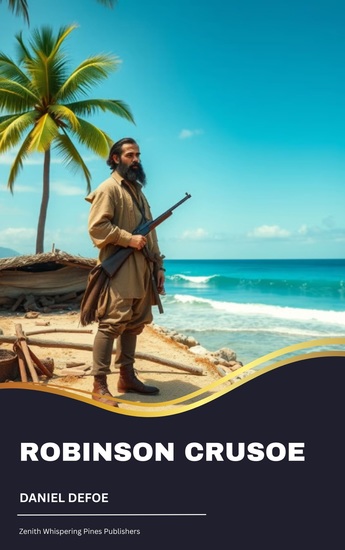
    Shipwrecked. Alone. Forced to build a life from nothing.
    After a disastrous voyage, Robinson Crusoe finds himself stranded on a deserted island with only his ingenuity, faith, and determination to keep him alive. As years pass, he learns to master the land, confront fear and solitude, and discover what it truly means to survive. His journey becomes one of resilience, self-reliance, and spiritual awakening.
    
    Celebrated as "the first great English novel," this enduring classic blends thrilling adventure with deep reflection on human strength and perseverance. Crusoe's struggle against nature—and himself—has inspired readers for generations.
    
    If you love survival stories, epic journeys, and classics that celebrate the power of the human spirit, this novel is an essential read.
    
    Open the book—and experience the adventure that defined a genre.
    Show book