Join us on a literary world trip!
Add this book to bookshelf
Grey
Write a new comment Default profile 50px
Grey
Subscribe to read the full book or read the first pages for free!
All characters reduced
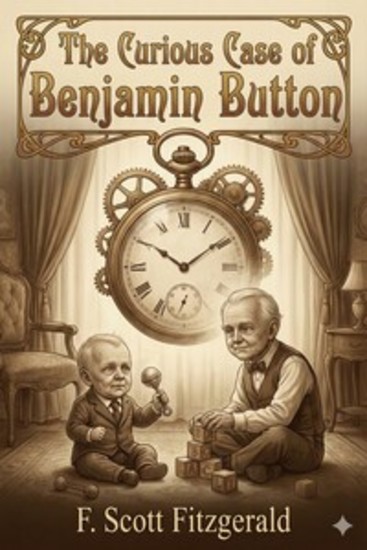
The Curious Case of Benjamin Button - cover

The Curious Case of Benjamin Button

F. Scott Fitzgerald

Publisher: Bu Classics Books

  • 0
  • 0
  • 0

Summary

Discover the bizarre and poignant life of a man born as an elderly gentleman who grows younger with each passing year. As he navigates life in reverse, his unique perspective sheds light on the absurdities of convention and the inevitability of time. It is a satirical yet deeply moving fable about identity and the human condition.
Available since: 03/04/2026.
Print length: 37 pages.

Other books that might interest you

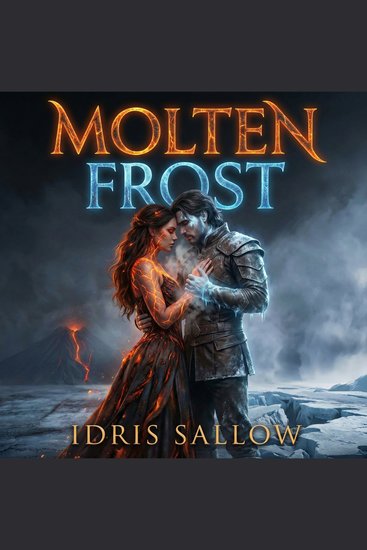
  • Molten Frost - cover

    Molten Frost

    Idris Sallow

    • 0
    • 0
    • 0
    This audiobook is narrated by an AI Voice.   
    In the city of Anthracite, the ground burns, the sky rains ash, and touch is a lethal necessity. 
    Built atop an eternal subterranean fire, the city is a crumbling industrial nightmare. The poor swelter in "The Smolder," a district of unbearable heat, while the elite hoard imported glaciers in "The Fridge." Survival is a constant war against the elements. 
    Elara is a "Sun-Kin." Born with a curse that keeps her body temperature at a lethal fever pitch, she is a living furnace. She cannot feel cold, only an internal, consuming fire. The local Guild uses her as a human kiln to smelt rare ores, but her own heat is slowly killing her, burning her alive from the inside out. 
    Kaelo is a "Voidwalker." To survive the deep mines, he underwent an alchemical procedure that replaced his blood with sub-zero coolant. His skin is frost-bitten blue, his touch causes instant necrosis, and he feels no heat, only an agonizing, eternal freeze. He is the Guild's hunter, a monster of ice sent to execute Sun-Kin who are about to explode. 
    When Kaelo is ordered to extinguish Elara, everything changes. Instead of death, their contact brings the one thing neither has ever known: relief. His lethal cold soothes her burning veins; her infernal heat warms his frozen core. They are biological opposites, yet the only two people on earth who can touch each other without pain. 
    Now, bound by a thermodynamic need that defies the Guild's laws, they must uncover the truth beneath the city's fire. But the balance is fragile. If they stay apart, they die. If they get too close, they risk triggering a reaction that could crack the world apart. 
    She burns. He freezes. Together, they are the storm.
    Show book
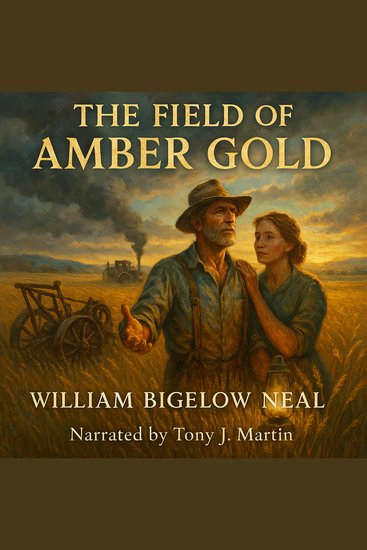
  • The Field of Amber Gold - cover

    The Field of Amber Gold

    William Bigelow Neal

    • 0
    • 0
    • 0
    The Field of Amber Gold is a powerful tale of resilience, sacrifice, and quiet heroism on the harsh plains of the American Midwest. Written by William Bigelow Neal and brought vividly to life by narrator Tony J. Martin, this timeless short novel follows John Grahame, a determined farmer battling not only drought, blizzards, and hailstorms—but the looming collapse of his livelihood. 
    Through hardship and hope, John and his steadfast wife Jane fight to preserve their home and dreams. When all seems lost, a mysterious figure known only as Ironheart reemerges with unexpected grace. In lyrical yet grounded prose, Neal explores the enduring strength of love, the nobility of labor, and the golden miracle that can sprout from the darkest soil. 
    An ode to the American spirit forged in storm and sun, this is prairie storytelling at its most heartfelt.
    Show book
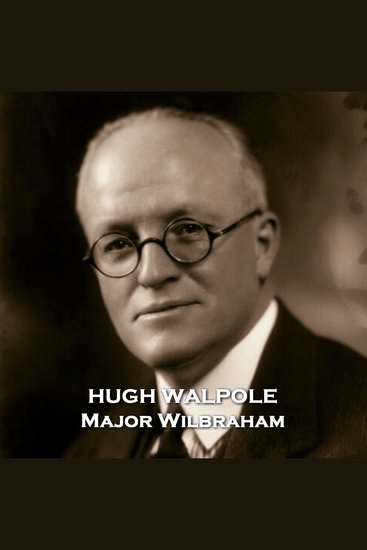
  • Major Wilbraham - A respected veterans mysterious death causes all manner of uproar - cover

    Major Wilbraham - A respected...

    Hugh Walpole

    • 0
    • 0
    • 0
    Sir Hugh Seymour Walpole, CBE was born in Auckland, New Zealand, on March 13th, 1884.  
     
    His father was an Anglican clergyman which involved postings abroad.  Walpole’s early educated was by a Governess until, in 1893, his parents decided he needed a better education and the young boy was sent to England. 
     
    He first attended a preparatory school in Truro followed by Sir William Borlase's Grammar School in Marlow in 1895, where he was bullied, frightened and miserable.  
     
    The following year, 1897, the Walpole’s returned to England and Walpole became a day boy at Durham School. His refuge was the local library and its books.   
     
    From 1903 to 1906 Walpole studied history at Emmanuel College, Cambridge and there, in 1905, had his first work published, the critical essay "Two Meredithian Heroes".  
     
    Walpole was also attempting to cope with and come to terms with his homosexual feelings and to find “that perfect friend”.  
     
    After a short spell tutoring in Germany and then teaching French at Epsom in 1908 he immersed himself in the literary world. In London he became a book reviewer for The Standard and wrote fiction in his spare time. In 1909, he published his first novel, ‘The Wooden Horse’ followed, in 1911, by ‘Mr Perrin and Mr Traill’.  In early 1914 Henry James, in an article for The Times Literary Supplement, ranked Walpole among the finest of the younger British novelists. 
     
    As war approached, Walpole’s poor eyesight disqualified him from service and so he worked, based in Moscow, reporting for The Saturday Review and The Daily Mail. Although he visited the front in Poland, his dispatches failed to stop comments that he was not ‘doing his bit’ for the war effort.  
     
    Walpole was ready with a counter; an appointment as a Russian officer, in the Sanitar. He explained they were “part of the Red Cross that does the rough work at the front, carrying men out of the trenches, helping at the base hospitals in every sort of way, doing every kind of rough job”. 
     
    During a skirmish in June 1915 Walpole rescued a wounded soldier; his Russian comrades refused to help and this meant Walpole had to carry one end of a stretcher, dragging the man to safety. He was awarded the Cross of Saint George.  For his wartime work he was later awarded the CBE in 1918. 
     
    After hostilities ended Walpole continued to write and publish and began a career on the highly lucrative lecture tour in the United States. 
     
    In 1924 Walpole met Harold Cheevers, who soon became his constant companion and remained for the rest of his life; “that perfect friend”.  
     
    Hollywoods MGM studios, invited him in 1934 to write the script for a film of David Copperfield. Walpole also had a small acting role in the film.  
     
    In 1937 Walpole was offered a knighthood and accepted although Kipling, Hardy, Galsworthy had all refused. “I'm not of their class... Besides I shall like being a knight," he said. 
     
    His health was plagued by diabetes, made worse by the frenetic pace of his life.  
     
    Sir Hugh Seymour Walpole, CBE, died of a heart attack at his home at Brackenburn, on June 1st, 1941. He was 57.
    Show book

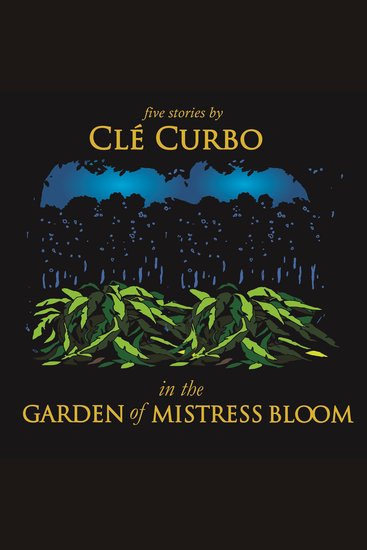
  • In the Garden of Mistress Bloom - cover

    In the Garden of Mistress Bloom

    Cle Curbo

    • 0
    • 0
    • 0
    Whimsical and surreal, this collection of short stories won 1st Place in Sci-Fi in 2021 from Writer's Digest for self-published ebooks. All that really matters is that the listener delight in hearing these tales of adventure in the spacetime strangeness the characters encounter.
    Show book
  • Jane Austen Cannot Marry! - cover

    Jane Austen Cannot Marry!

    May McGoldrick, Jan Coffey

    • 0
    • 0
    • 0
    Jane Austen Cannot Marry! 
    “POWERFUL AND POIGNANT…I LOVED THIS BOOK.” - Jane Porter, NYT Bestselling Author 
    Nadine Finley is a Scribe Guardian from the future who must play ‘un-matchmaker’ to Jane Austen, a British naval officer, and the romance that jeopardizes literary history.  
    Xander is an American billionaire who accidentally follows the woman he loves back to Regency England...and may just be sabotaging her entire mission. 
    Show book
  • Chaperon - cover

    Chaperon

    Henry James

    • 0
    • 0
    • 0
    What on earth is a girl to do when London society has convicted her mother of a dreadful sin and has ostracized her? If blood is thicker than water, and the daughter remains loyal to her erring parent, how far will affect her own standing in society (and most important, of course) in the marriage market that is controlled by that society? This is the problem facing Rose Tramore and it will take all her charm -- and perseverance -- to solve it.(Nicholas Clifford)
    Show book