Junte-se a nós em uma viagem ao mundo dos livros!
Adicionar este livro à prateleira
Grey
Deixe um novo comentário Default profile 50px
Grey
Assine para ler o livro completo ou leia as primeiras páginas de graça!
All characters reduced
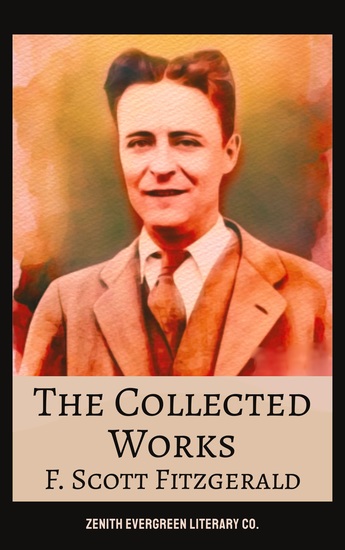
The Collected Works of F Scott Fitzgerald - The Great Gatsby Tender Is the Night This Side of Paradise and More - cover
LER

The Collected Works of F Scott Fitzgerald - The Great Gatsby Tender Is the Night This Side of Paradise and More

F. Scott Fitzgerald, Zenith Evergreen Literary Co.

Editora: Zenith Evergreen Literary Co.

  • 0
  • 0
  • 0

Sinopse

Dreams glitter, passions burn, and fortunes rise and fall against the golden haze of the Jazz Age.

The Collected Works of F. Scott Fitzgerald gathers the complete literary brilliance of one of America's greatest storytellers. From the timeless love and longing of The Great Gatsby to the bittersweet romance of Tender Is the Night and the youthful ambition in This Side of Paradise, Fitzgerald captures the beauty, excess, and disillusionment of a bygone era with lyrical precision.

Perfect for readers who savor timeless love stories, glittering prose, and sharp social critique, this collection is a tribute to the dreams and heartbreaks of the Roaring Twenties.

💬 "So we beat on, boats against the current, borne back ceaselessly into the past."

🍸 Why Every Reader Should Own This Collection:
Includes all major novels, short story collections, and autobiographical sketches

Perfect for fans of Ernest Hemingway, Truman Capote, Tennessee Williams, and Zelda Fitzgerald

Essential for students of American literature, 20th-century fiction, and modernist storytelling

📣 Live the Dream. Taste the Glamour. Feel the Fall.
Buy The Collected Works of F. Scott Fitzgerald today and journey into the dazzling world of the Jazz Age.
Disponível desde: 29/04/2025.
Comprimento de impressão: 5093 páginas.


Outros livros que poderiam interessá-lo

  • White Fang - cover

    White Fang

    Jack London

    • 2
    • 27
    • 1
    Rediscover Jack London’s beloved classic in this unique hardbound edition. White Fang has been called “one of London’s most interesting and ambitious works.” Follow the wolfdog White Fang in a story of violence and hardship, morality and redemption, and finding home during the 1890s Klondike Gold Rush. Truly a must-have for London fans.
    Ver livro
  • The Monkey's Paw - cover

    The Monkey's Paw

    W. W. Jacobs

    • 0
    • 0
    • 0
    Title: The Monkey’s Paw 
    Author: W. W. Jacobs 
    Narrator: Jonathan Dunne 
    Original Publication: 1902 
    Public Domain: Yes 
    Series Placement: Number 6 in the Timeless Terrors series 
    Description: 
    The Monkey’s Paw by W. W. Jacobs is a classic tale of supernatural horror and the peril of tampering with fate. First published in 1902 in the collection The Lady of the Barge, it tells the chilling story of the White family, who come into possession of a mysterious monkey’s paw said to grant three wishes. 
    What begins as a curious indulgence soon spirals into tragedy, as each wish carries unforeseen and terrible consequences. Jacobs weaves a tightly paced narrative filled with suspense, dread, and an unforgettable warning about the costs of interfering with destiny. 
    This recording, narrated by Amazon bestselling horror author Jonathan Dunne, brings to life the eerie atmosphere and relentless tension of one of the most enduring cautionary tales in English literature. While the text is in the public domain, this performance is an original work and copyright © 2025 Jonathan Dunne. 
    Listeners should prepare for a haunting story that lingers long after the final word.
    Ver livro
  • Candide - cover

    Candide

    Voltaire

    • 0
    • 0
    • 0
    Candide, ou l'Optimisme is a French satire first published in 1759 by Voltaire, a philosopher of the Age of Enlightenment. The novella has been widely translated, with English versions titled Candide: or, All for the Best (1759); Candide: or, The Optimist (1762); and Candide: Optimism (1947). It begins with a young man, Candide, who is living a sheltered life in an Edenic paradise and being indoctrinated with Leibnizian optimism by his mentor, Professor Pangloss. The work describes the abrupt cessation of this lifestyle, followed by Candide's slow and painful disillusionment as he witnesses and experiences great hardships in the world. Voltaire concludes Candide with, if not rejecting Leibnizian optimism outright, advocating a deeply practical precept, "we must cultivate our garden", in lieu of the Leibnizian mantra of Pangloss, "all is for the best" in the "best of all possible worlds".
    Candide is characterized by its tone as well as by its erratic, fantastical, and fast-moving plot. A picaresque novel with a story similar to that of a more serious coming-of-age narrative (Bildungsroman), it parodies many adventure and romance clichés, the struggles of which are caricatured in a tone that is bitter and matter-of-fact. Still, the events discussed are often based on historical happenings, such as the Seven Years' War and the 1755 Lisbon earthquake. As philosophers of Voltaire's day contended with the problem of evil, so does Candide in this short theological novel, albeit more directly and humorously. Voltaire ridicules religion, theologians, governments, armies, philosophies, and philosophers. Through Candide, he assaults Leibniz and his optimism.
    Candide has enjoyed both great success and great scandal. Immediately after its secretive publication, the book was widely banned to the public because it contained religious blasphemy, political sedition, and intellectual hostility hidden under a thin veil of naïveté. However, with its sharp wit and insightful portrayal of the human condition, the novel has since inspired many later authors and artists to mimic and adapt it. Today, Candide is considered as Voltaire's magnum opus and is often listed as part of the Western canon. It is among the most frequently taught works of French literature. The British poet and literary critic Martin Seymour-Smith listed Candide as one of the 100 most influential books ever written.
    Ver livro
  • A Wireless Message - From their pens to your ears genius in every story - cover

    A Wireless Message - From their...

    Ambrose Bierce

    • 0
    • 0
    • 0
    Ambrose Gwinnett Bierce was born on 24th June 1842 at Horse Cave Creek in Meigs County, Ohio. His parents were poor but they introduced him to literature at an early age, instilling in him a deep appreciation of books, the written word and the elegance of language.  
    Growing up in Koscuisko County, Indiana poverty and religion were defining features of his childhood, and he would later describe his parents as “unwashed savages” and fanatically religious, showing him little affection but always quick to punish. He came to resent religion, and his introduction to literature appears to be their only positive effect. 
    At age 15 Bierce left home to become a printer’s devil, mixing ink and fetching type at The Northern Indian, a small Ohio paper. Falsely accused of theft he returned to his farm and spent time sending out work in the hopes of being published. 
    His Uncle Lucius advised he be sent to the Kentucky Military Institute. A year later he was commissioned as an Officer.  As the Civil War started Bierce enlisted in the 9th Indiana Infantry Regiment.  
    In April 1862 Bierce fought at the Battle of Shiloh, an experience which, though terrifying, became the source of several short stories. Two years later he sustained a serious head wound and was off duty for several months. He was discharged in early 1865.  
    A later expedition to inspect military outposts across the Great Plains took him all the way to San Francisco. He remained there to become involved with publishing and editing and to marry, Mary Ellen on Christmas Day 1871.  They had a child, Day, the following year.  
    In 1872 the family moved to England for 3 years where he wrote for Fun magazine. His son, Leigh, was born, and first book, ‘The Fiend’s Delight’, was published.  
    They returned to San Francisco and to work for a number of papers where he gained admiration for his crime reporting. In 1887 he began a column at the William Randolph Hearst’s San Francisco Examiner.  
    Bierce’s marriage fell apart when he discovered compromising letters to his wife from a secret admirer. The following year, 1889 his son Day committed suicide, depressed by romantic rejection. 
    In 1891 Bierce wrote and published the collection of 26 short stories which included ‘An Occurrence at Owl Creek Bridge’.  Success and further works including poetry followed.  
    Bierce with Hearst’s resources helped uncover a financial plot by a railroad to turn 130 million dollars of loans into a handout. Confronted by the railroad and asked to name his price Bierce answered “my price is $130 million dollars. If, when you are ready to pay, I happen to be out of town, you may hand it over to my friend, the Treasurer of the United States”.  
    He now began his first foray as a fabulist, publishing ‘Fantastic Fables’ in 1899.  But tragedy again struck two years later when his second son Leigh died of pneumonia relating to his alcoholism.  
    He continued to write short stories and poetry and also published ‘The Devil’s Dictionary’.  
    At the age of 71, in 1913 Bierce departed from Washington, D.C., for a tour of the battlefields where he had fought during the civil war. At the city of Chihuahua he wrote his last known communication, a letter to a friend. It’s closing words were “as to me, I leave here tomorrow for an unknown destination,” Ambrose Bierce then vanished without trace.
    Ver livro
  • The Son of the Wolf - cover

    The Son of the Wolf

    Jack London

    • 0
    • 0
    • 0
    Short story written by Jack London The Son of the Wolf consists of a single man who is known as Mckenzie or "Scruff". The story tells of the hardships of what single men had to endure on the frontier. Often men would venture on journeys that may consist of months or even years just in order to find the right suitor. Scruff had been the toughest of the tough and had lasted the longest on the frontier without the company of a woman. 
    This story connects with naturalism by showing that nature can be just as cruel as it can be forgiving if someone is alone on the frontier.
    Ver livro
  • The Hound of the Baskervilles - cover

    The Hound of the Baskervilles

    Arthur Conan Doyle

    • 0
    • 0
    • 0
    The Hound of the Baskervilles is the third of the four crime novels written by Sir Arthur Conan Doyle featuring the detective Sherlock Holmes. Originally serialised in The Strand Magazine from August 1901 to April 1902, it is set largely on Dartmoor in Devon in England's West Country and tells the story of an attempted murder inspired by the legend of a fearsome, diabolical hound of supernatural origin. Sherlock Holmes and his companion Dr. Watson investigate the case. This was the first appearance of Holmes since his apparent death in "The Final Problem", and the success of The Hound of the Baskervilles led to the character's eventual revival.According to an old legend, a curse runs in the Baskerville family since the time of the English Civil War, when a Sir Hugo Baskerville abducted and murdered a woman in the mires of Dartmoor, only to be killed in turn by a huge demonic hound. Allegedly the same creature has been haunting the place ever since, causing the premature death of many Baskerville heirs. Sir Charles believed in the plague of the hound and so does Mortimer, who now fears for the next in line, Sir Henry Baskerville.Even though he dismisses the whole curse story as nonsense, Holmes agrees to meet Sir Henry in London as soon as Sir Henry arrives from Canada, where his branch of the family had moved in the past. He is a young and jovial good-looking fellow, sceptical toward the grim legend and eager to take possession of Baskerville Hall, even though he has just found an anonymous note in the mail, warning him to stay away from the moor. When someone tries to shoot Sir Henry while he is walking down a street, however, Holmes asks Watson to go with the young man and Mortimer to Dartmoor, in order to protect Sir Henry and search for any clue about who is menacing his life.Among the most significant works Arthur Conan Doyle: A Study in Scarlet, The Sign of the Four, The Hound of the Baskervilles, The Valley of Fear, The Adventures of Sherlock Holmes, The Memoirs of Sherlock Holmes, The Return of Sherlock Holmes, His Last Bow, The Case-Book of Sherlock Holmes, The Field Bazaar, The Story of the Lost Special, How Watson Learned the Trick and many more.
    Ver livro