Join us on a literary world trip!
Add this book to bookshelf
Grey
Write a new comment Default profile 50px
Grey
Subscribe to read the full book or read the first pages for free!
All characters reduced
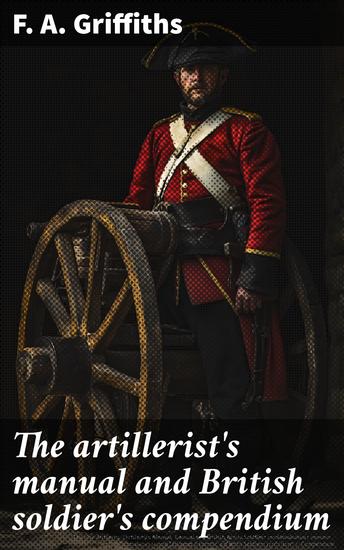
The artillerist's manual and British soldier's compendium - cover

The artillerist's manual and British soldier's compendium

F. A. Griffiths

Publisher: Good Press

  • 0
  • 0
  • 0

Summary

In "The Artillerist's Manual and British Soldier's Compendium," F. A. Griffiths offers a meticulous guide that showcases both the technical expertise and tactical nuances of artillery in the British military context. Written in an accessible yet authoritative style, the compendium blends detailed illustrations, diagrams, and comprehensive descriptions to elucidate complex concepts in military artillery. It serves as a crucial resource for understanding the evolution of British military engagement during the 19th century, reflecting broader themes of industrialization and modernization within armed forces. The book not only instructs on the mechanics and operations of artillery but also provides insights into the soldier's life, emphasizing discipline, strategy, and camaraderie among troops. F. A. Griffiths, a figure deeply entrenched in military studies, draws from his extensive background in both practical artillery service and academic scholarship to deliver this compendium. His experience fosters a unique perspective that marries technical proficiency with historical narrative, offering readers a both hands-on approach and a broader societal perspective on the role of artillery in shaping British military fortunes. Griffiths's expertise is rooted in the 19th-century military milieu, allowing him to capture the zeitgeist of an era poised at the nexus of tradition and innovation. Recommended for historians, military enthusiasts, and professionals alike, Griffiths's work stands as an essential reference that enriches the understanding of British military history. Its blend of practical guidance and historical context makes it a vital tool for both scholars and practitioners seeking knowledge about the complexities of military operations and their sociopolitical implications. This compendium is a significant contribution to the annals of military literature, providing invaluable insights for anyone interested in the legacy of military prowess.
Available since: 03/02/2025.
Print length: 150 pages.

Other books that might interest you

  • All Who Are Weary - Easing the Burden on the Walk with Mental Illness - cover

    All Who Are Weary - Easing the...

    Emmy Kegler

    • 0
    • 0
    • 0
    We live in an age uniquely attentive to the problem of mental illness. More than half of us will be diagnosed with a mental illness or disorder at some point in our lifetime. It has been easy, for centuries, to relegate persistent emotional and mental struggles entirely to the realm of a failed personal work ethic ("Just don't worry so much!"), not enough faith ("Just pray harder!"), or, in recent years, a chemical imbalance in our brains ("Just take this pill!"). Yet, for those of us who live with mental illness, none of these suggestions provides the quick relief it promises, and the continued struggle takes its toll on our already burdened hearts and minds. 


    In All Who Are Weary, Emmy Kegler joins the listener on the long walk of reflection, understanding, and compassion, calling followers of Jesus back to ancient practices of lament, vulnerability, honesty, community, and hope. This book is not a map to a cure, nor a perfectly restorative prayer. Written with a wide community in mind—patients, but also parents and partners, coworkers and friends, pastors and therapists, and the whole church—All Who Are Weary points to the embodied grace known in Jesus, trusting in the promise of a lighter load for all.
    Show book
  • The Shocking Truth about Cultural Appropriation - cover

    The Shocking Truth about...

    Zoey Fraisers

    • 0
    • 0
    • 0
    Cultural appropriation is the act of taking or borrowing elements of one culture by members of another culture, typically without permission or proper understanding. This often occurs when a dominant culture adopts aspects of a marginalized or minority culture, without recognizing the significance or history behind these cultural symbols, practices, or traditions. While some might argue that cultural exchange is a natural part of globalization, cultural appropriation is controversial because it is frequently associated with power imbalances, exploitation, and the erasure of the identities of those whose culture is being borrowed. 
    At its core, cultural appropriation is not about borrowing something for appreciation or respect, but rather taking something from another culture in a way that is exploitative or disrespectful. For example, wearing traditional garments like a kimono or a Native American headdress as fashion statements, without understanding their cultural importance or context, is often cited as an example of cultural appropriation. These items are not just clothes or accessories; they carry deep meanings and are often tied to spiritual, ceremonial, or political significance. 
    One of the key aspects that distinguishes cultural appropriation from cultural appreciation is power dynamics. The group that appropriates tends to have more social, political, or economic power, while the culture being appropriated is often marginalized. This power imbalance is evident in many cases where elements of minority cultures are commodified and turned into trends or products, while the people from those cultures continue to face oppression, discrimination, and lack of recognition.
    Show book
  • Dunkirk - The Epic Story of History's Most Extraordinary Evacuation - cover

    Dunkirk - The Epic Story of...

    John Harriss

    • 0
    • 0
    • 0
    How the miracle on the beaches saved a nation. A gripping account of one of the most famous episodes of the Second World War 


    In May 1940 British and Allied troops on mainland Europe were in a perilous situation: cut off and surrounded, at the conclusion of the bloody Battle of France they faced complete annihilation. It would be a devastating blow, handing Europe to the Nazis. 


    But over a few frantic days, the greatest evacuation in history managed to salvage hope, saving the total destruction of the army and hundreds of thousands of soldiers lives. It was a pivotal and defining moment in the war, one Churchill described as a "miracle" in his "we shall fight them on the beaches" speech. 


    Bestselling author John Harris describes in vivid detail how the evacuation developed on a day-by-day basis, and destroys more than one myth associated with Dunkirk. Packed with authentic atmosphere and first-hand recollections, the retreat and the desperate lifting of the weary British expeditionary force is seen in its tragic but spirited entirety, an epic of courage and confusion without parallel.
    Show book
  • Lying - Communicating False Information Deliberately - cover

    Lying - Communicating False...

    Cito Harder

    • 0
    • 0
    • 0
    Lying, the deliberate act of communicating false information, has been a part of human behavior for centuries. It is a complex and multifaceted phenomenon that plays a role in many aspects of life, from personal relationships to politics, business, and beyond. While most people recognize lying as morally wrong, it remains a pervasive and unavoidable part of the human experience. This chapter will explore the nature of lying, the different types of lies, and why people engage in this behavior. 
    At its core, lying involves providing information that the speaker knows to be false, with the intent to deceive the listener. Unlike mistakes or misunderstandings, lies are intentional and often involve a conscious decision to mislead. Lying can take many forms, ranging from small, seemingly harmless "white lies" to more harmful and deliberate fabrications designed to achieve personal gain or avoid consequences. While some lies may appear trivial, others can have significant consequences, leading to broken trust, damaged relationships, or even harm to others. 
    The act of lying is not limited to individuals but can also be embedded in larger societal and cultural practices. From politicians who manipulate public opinion to corporations that mislead consumers about the quality of their products, deception is often employed as a tool to achieve power, influence, or financial success. Understanding the motivations behind lying is key to understanding its prevalence and persistence in society. People lie for various reasons: to protect themselves, to avoid punishment, to gain an advantage, or to spare others' feelings. The reasons behind a lie often depend on the context and the perceived consequences of telling the truth.
    Show book
  • Norse Runes for Beginners: Unlocking Secrets of Rune Divination Nordic Magic and Paganism Asatru Rituals Spells and Reading Elder and Younger Futhark Runes - cover

    Norse Runes for Beginners:...

    Silvia Hill

    • 0
    • 0
    • 0
    Learn how to read runes to practice divination and runic magic. 
    Are you interested in Norse mythology? 
    Do you want to learn how to unlock the secrets of an ancient language where words have the real power? 
    Have you been searching for meaning and a purpose in your life? 
    Would you like to achieve inner balance and have a strong sense of community? 
    This guide will teach you everything you need to know about the religion of Asatru, Norse mythology, and the esoteric runic language used by the ancient Norse pagans. 
    In this audiobook, you will:        Learn about the history of Asatru        Get an extensive background of the tales and deities of Norse mythology        Study an ancient runic language that has been around for thousands of years        Discover how these runes fit into both ancient and modern society        Learn how to create spells using runes        Become proficient in divination        Learn how to make runestones of your own        And much more! 
    After listening to this audiobook, you’ll have a comprehensive understanding of Norse mythology, divination, and runes. Whether you are just beginning your journey into rune magic or an experienced practitioner, you can find something informative to help you grow and enhance your knowledge. 
    Click on the “add to cart” button now and start learning about Norse runes and the magic they contain.
    Show book
  • Medieval European Empires - Early Nations of Fifth Century Europe to the Renaissance - cover

    Medieval European Empires -...

    Arthur Eaton

    • 0
    • 0
    • 0
    The Medieval Period has to be one of the most fascinating periods of history. With it comes the images of castles, knights, conquests, and, of course, kingdoms and empires. Every European empire and kingdom during this Age is filled with exciting tales, shrewd plots for revenge or power, creation of a national identity enduring to the present day, and inventions with lasting influence. In Medieval European Empires, we will cover notable and lesser known Medieval empires such as: 
    -      The Hunnic Empire led by “The Scourge of God” aka Attila the Hun 
    -      The Umayyad Caliphate continuing with Prophet Muhammed’s vision of spreading Islam 
    -      The Most Serene Republic of Venice who proved that sheer mercantile might can create an empire that would last more than 1000 years 
    -      The Normans, a Viking-French superpower, whose territorial conquests seemed endless
    Show book