Join us on a literary world trip!
Add this book to bookshelf
Grey
Write a new comment Default profile 50px
Grey
Subscribe to read the full book or read the first pages for free!
All characters reduced
Moscow Fires - cover

Moscow Fires

Everett Sinclair

Translator A AI

Publisher: Publifye

  • 0
  • 0
  • 0

Summary

Moscow Fires explores the history of Moscow through the lens of the devastating fires that repeatedly ravaged the city. More than just recounting disasters, the book examines how these events shaped Moscow's urban development and defensive strategies. Readers may be surprised to learn that these fires, despite their destructive nature, acted as catalysts for innovation, leading to the adoption of stone construction and the widening of streets to serve as firebreaks. 

 
The book argues that Moscow's cycle of destruction and rebuilding fundamentally altered its urban fabric. It challenges conventional views by demonstrating how adversity fostered progress, influencing architectural solutions and defense mechanisms. Beginning with an overview of Moscow's vulnerability, the narrative progresses chronologically, detailing each major fire's impact, the immediate responses, and the subsequent political and urban planning shifts. 

 
A significant portion of Moscow Fires is dedicated to the architectural responses to these disasters. By drawing on historical sources and incorporating interdisciplinary perspectives, the book showcases how Moscow's experience with fire shaped its unique urban character and contributed to its identity as a resilient and strategically fortified city.
Available since: 03/21/2025.
Print length: 58 pages.

Other books that might interest you

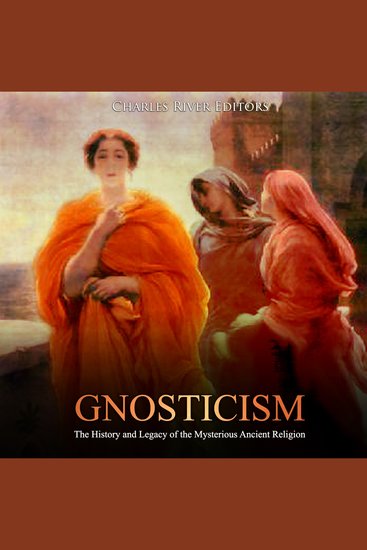
  • Gnosticism: The History and Legacy of the Mysterious Ancient Religion - cover

    Gnosticism: The History and...

    Charles River Editors

    • 0
    • 0
    • 0
    Gnosticism is one of the great mysteries in the history of Western religion. At its core is an ancient Greek word, gnōsis, a word prominent in the writings of Plato which refers to a deep personal knowledge or understanding that often transcends the physical world.[1] The Gnostics painted a picture of a fallen, broken world in which physicality was a product of a lesser deity. This deity was created in defiance of the One and in order to trap humans and blind them to the truths of their predicament and divine origins. By acquiring insight, or gnōsis, in this secret nature of the world, humans might escape their prison. Only through knowledge can people be set free.  
    	As that makes clear, Gnosticism as a belief system is difficult to define since it is not a well-organized or uniform doctrine like Christianity or Judaism, but at one time there was some synchronization with Christianity that nurtured both movements. As a religion and philosophy, Gnosticism flourished alongside Christianity, and it is not easy to say which one came first, but it is certain that both movements influenced each other. To paraphrase John Dominic Crossan, it is unclear whether Gnosticism was a Christian heresy, a Jewish heresy, or an original religion that powerfully merged with both. Gnosticism borrowed elements from Christians, just as the whole of Christianity took a certain Gnostic flavor, to the point that some books of the New Testament, especially the Gospel of John, could easily pass as a proto-Gnostic document. 
    	At the risk of oversimplifying, Gnosticism was the belief that the souls are divine sparks imprisoned in imperfect physical bodies, due to the machinations of a lesser and evil god who created the world. This evil god is identified with the creator of the Genesis and the Hebrew Bible. The material world and the body are prisons separated from the divine realm, from which humans must escape through the ascent of various levels. This is possible through the acquisition of secret knowledge reserved for the elect. This special revelation or gnosis (knowledge) was supposedly disclosed by Jesus to his dearest disciples, and it can be found in the Gnostic books, deliberately written in cryptic language. The acquisition of the secrets necessary for the salvation of the soul in many cases implied a radical asceticism and corporal sacrifice.  
    	Due to such classical roots, it would be easy to conclude that Gnosticism is an ancient philosophy, and a cursory glance might categorize it as simply a way of understanding the world and promoting investigation. However, the term is most often used to describe not a philosophy but a religion, and not just any religion, but a branch of one of the most resilient and influential traditions in history: Christianity. So what exactly is Gnosticism, and why does it remain such a source of confusion, captivation, and charisma for modern scholarship and culture alike? These answers are complex, and indicative of how the many turnings of the last two millennia have unexpectedly unearthed some answers while burying others even deeper.  
    	Gnosticism: The History and Legacy of the Mysterious Ancient Religion looks at the different origins that shaped Gnosticism, what Gnostics believed and practiced, and the influence they had on other religions. Along with pictures depicting important people, places, and events, you will learn about Gnosticism like never before.
    Show book

  • Golden Speech - cover

    Golden Speech

    Elizabeth elizabeth

    • 0
    • 0
    • 0
     Queen Elizabeth I took Parliament by surprise when she began her speech of November 30, 1601. They had expected a discussion of the nation’s economic situation, but instead she announced this speech would be her last as Queen. She drew tears from some of her listeners as she spoke earnestly of her love for her position, people, and country, saying, “though you have had and may have many mightier and wiser Princes sitting in this Seat, yet you never had, nor shall have any that will love you better.” The speech was later printed, accompanied by a note reading, “This speech ought to be set in letters of gold.”  
    Show book
  • The Noosphere-The Thinking Layer of Earth - cover

    The Noosphere-The Thinking Layer...

    Brian Thomas Swimme, Monica...

    • 0
    • 0
    • 0
    Are we living in and collectively participating in a planetary nervous system? Are we all creative participants guiding Earth’s destiny? Here we focus on the noosphere, which represents the third major evolutionary layer enveloping Earth, following the geosphere (inanimate matter) and the biosphere (biological life).  Brian Thomas Swimme, Ph.D. is Professor of Evolutionary Cosmology at the California Institute of Integral Studies in San Francisco. He is the Director of the Third Story of the Universe at The Human Energy Project He is the host of the Emmy-award winning PBS special "Journey of the Universe," written with Mary Evelyn Tucker. He is also the host of the 35-part video series "Story of the Noosphere," created for the Human Energy Project.  Monica DeRaspe-Bolles is a doctoral student at the California Institute of Integral Studies in the Philosophy, Cosmology, and Consciousness program. Her area of research is the “Third Story of the Universe” and the potential emergence of a new structure of experience fostering cosmogenic awakening. She is a collaborator with Brian Swimme on the video series “Story of the Noosphere.” They are the co-authors of the book The Story of the Noosphere (Orbis Books 2024) This interview with Justine Willis Toms was recorded on July 11, 2025 
    Tags: Brian Thomas Swimme, Monica DeRaspe-Bolles, Noosphere, geosphere, biosphere, James Webb telescope, Pierre Teilhard de Chardin, Vladimir Vernadsky, Jiffy time, Arno Penzias, Robert Wilson, universal mind, planetary mind, Zarathustra, entelechy, diversification, conscious recall, Personal Transformation, Philosophy, Science, Community
    Show book
  • A Very Short History of Gaza - cover

    A Very Short History of Gaza

    Ilan Pappe

    • 0
    • 0
    • 0
    A vital history of Gaza from Antiquity to the present—defying Israel's attempts to erase its heritage 
     
    Today Gaza lies in ruins after a genocide perpetrated before our eyes. Over 80% of its buildings have been destroyed, and its people have suffered the worst horrors imaginable. For over twenty years it has been an open-air prison. But once Gaza was an integral part of the Arab and Eastern Mediterranean world, where merchants traded their goods, and intellectual and religious life flourished, across all three Abrahamic faiths. Empires as diverse as the Persians, Romans, Mamluks, and Ottomans vied to control it—and its silks, fruits, and wines were renowned. Ilan Pappe tells the story of Gaza from Roman rule to the present, revealing the indomitable spirit of Gaza's people and the possibility for a more just future in a free Palestine.
    Show book
  • Comic Book Punks - How a Generation of Brits Reinvented Pop Culture - cover

    Comic Book Punks - How a...

    Karl Stock

    • 0
    • 0
    • 0
    The influence of the comic book has never been greater, from movies to streaming and beyond, but the journey comics took from little-regarded kids' magazines to literary prize-winning books and global franchises turned on a highly unusual group of writers and artists. Few would have expected a small gathering of British comic book fans and creators in the early 'seventies to be a global cultural pivot-point, but this was the start of a disparate movement of punks, dropouts, and disaffected youths who reinvented a medium and became the imaginative heart of a global success story. 


    Based on years of interviews with a generation of leading writers, artists, and editors, Karl Stock reveals the true story of the wild times, passion, and determination that helped, hindered, and saw the reinvention of comics. 


    Stock brilliantly tells the story of the triumphs and disasters that rewrote the rulebook on what comics could be and who they should be for.
    Show book
  • The Shocking Truth about Animal Testing - cover

    The Shocking Truth about Animal...

    Zoey Fraisers

    • 0
    • 0
    • 0
    Animal testing has long been a cornerstone of scientific research, serving as a method to understand biological processes, test the safety and efficacy of products, and develop medical treatments. It involves the use of live animals in experiments and observational studies to explore the effects of drugs, chemicals, and other substances on biological systems. This practice, while often viewed as essential, is fraught with controversy, ethical dilemmas, and scientific scrutiny. 
    The origins of animal testing can be traced back to ancient Greece, where philosophers like Aristotle and Erasistratus conducted rudimentary experiments on animals to study anatomy and physiology. Over centuries, as medicine and technology advanced, the scope and complexity of animal testing expanded. By the 19th and 20th centuries, animal experimentation had become an institutionalized component of biomedical research, contributing to groundbreaking discoveries such as vaccines, antibiotics, and surgical techniques. 
    Today, animal testing is pervasive across multiple industries, including pharmaceuticals, cosmetics, and chemicals. It is primarily used to evaluate the safety of products, ensure regulatory compliance, and develop new treatments for diseases. Animals such as mice, rats, rabbits, and primates are commonly employed because of their physiological similarities to humans, which researchers argue make them suitable models for studying human biology.
    Show book