

¡Acompáñanos a viajar por el mundo de los libros!
Añadir este libro a la estantería
Grey
Escribe un nuevo comentario Default profile 50px
Grey
Suscríbete para leer el libro completo o lee las primeras páginas gratis.
All characters reduced
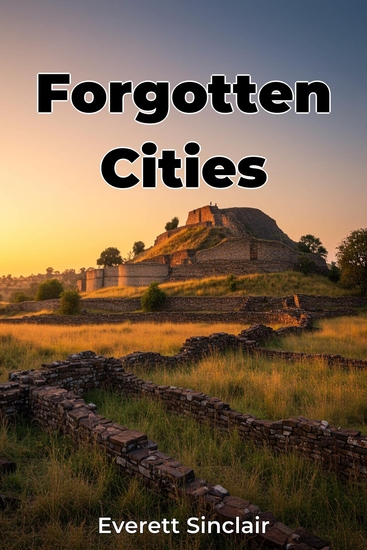
Forgotten Cities - cover

Forgotten Cities

Everett Sinclair

Traductor A AI

Editorial: Publifye

  • 0
  • 0
  • 0

Sinopsis

Forgotten Cities unveils the overlooked urban centers of Africa, challenging conventional world history by exploring their sophisticated architecture and complex economic systems. These cities, such as Great Zimbabwe and the Swahili city-states, played pivotal roles in regional and global trade networks, showcasing the ingenuity and resilience of their societies. The book argues that their decline wasn't due to single events but a confluence of environmental factors, political instability, and resource depletion, highlighting the importance of historical preservation and environmental sustainability.

 
The book adopts a multidisciplinary approach, drawing from archaeology, historical texts, and climate science to reconstruct these urban narratives. It examines trade routes, agricultural practices, and political landscapes to illustrate the multifaceted reasons behind urban decline. By presenting detailed case studies, Forgotten Cities identifies common patterns and unique circumstances that shaped the trajectory of these urban centers, offering valuable lessons for contemporary urban development and a more inclusive understanding of the past.

 
The book progresses by first introducing the concept of "forgotten cities" and then presenting detailed case studies, culminating in a synthesis of findings that explore the broader implications for urban development and historical change. This journey offers readers a fresh perspective on African history, emphasizing the need to understand these lost metropolises for a more complete view of urbanism's evolution.
Disponible desde: 19/03/2025.
Longitud de impresión: 56 páginas.

Otros libros que te pueden interesar

  • The House That Match Built - cover

    The House That Match Built

    T.B. Barnes

    • 0
    • 0
    • 0
    The House That Match Built” by T.B. Barnes is a powerful memoir of survival, resilience, and hope, written to illuminate the path toward healing for those battling the shadows of mental health challenges. With raw honesty and profound vulnerability, Barnes recounts her journey from the depths of despair to the heights of empowerment, offering a testament to the indomitable human spirit. This deeply moving narrative explores the complexities of mental illness, the triumphs of reclaiming life from the grip of darkness, and the transformative power of purpose. Through her personal experiences, Barnes extends a lifeline to those who feel lost or alone in their battles, reminding them that they are never truly alone. More than a memoir, “The House That Match Built” is a beacon of understanding and compassion. It sheds light on the struggles faced by individuals and their loved ones, fostering empathy and encouraging a more supportive society. Barnes story is a testament to the enduring power of hope and the boundless potential for healing. This book serves as an inspiring guide for anyone navigating the labyrinth of mental health struggles, offering solace, encouragement, and the possibility of restoration.
    Ver libro
  • Ten Myths About Israel - cover

    Ten Myths About Israel

    Ilan Pappe

    • 0
    • 0
    • 0
    The myths and reality behind the state of Israel and the Israeli-Palestinian conflict—from "the most eloquent writer on Palestinian history" (New Statesman) 


    The outspoken and radical Israeli historian Ilan Pappe examines the most contested ideas concerning the origins and identity of the contemporary state of Israel. 


    The "ten myths"—repeated endlessly in the media, enforced by the military, and accepted without question by the world's governments—reinforce the regional status quo and include: Palestine was an empty land at the time of the Balfour Declaration; the Jews were a people without a land; there is no difference between Zionism and Judaism; Zionism is not a colonial project of occupation; the Palestinians left their Homeland voluntarily in 1948; the June 1967 War was a war of 'No Choice'; Israel is the only Democracy in the Middle East; the Oslo Mythologies; the Gaza Mythologies; and the Two-State Solution. 


    For students, activists, and anyone interested in better understanding the news, Ten Myths About Israel is another groundbreaking study of the Israel-Palestine conflict from the author of The Ethnic Cleansing of Palestine.
    Ver libro
  • Who Gets to Write Fiction? - Opening Doors to Imaginative Writing for All Students - cover

    Who Gets to Write Fiction? -...

    Ariel Sacks

    • 0
    • 0
    • 0
    Writing and sharing fiction allows adolescents to glimpse other lives 


    The current curricular emphasis on analytical writing can make it feel risky to teach creative writing in ELA classrooms. But the opportunity to write fiction in school opens many doors for young people: doors the author argues are critical to the development of our students, our education system, and even our democracy. 


    This book will delight English teachers weary of focusing relentlessly on argument and information writing. Veteran teacher Ariel Sacks vividly describes the many academic, social–emotional, and community-building advantages of teaching imaginative writing in the classroom, not least of which is the impact it has on equity for marginalized students. Her book is a teacher-to-teacher text that folds in detailed, practical guidance about how to design lessons and meet standards, while presenting a powerful central argument: that the writing of fiction should be treated not as a luxury for some, but as a center of the English curriculum for all students.
    Ver libro
  • On Life and Death - Aristotle’s Inquiry into the Nature of Existence - cover

    On Life and Death - Aristotle’s...

    Aristotle, Tim Zengerink

    • 0
    • 0
    • 0
    What if you could delve into the profound mysteries of life and death, gaining clarity on the essence of being? 
    Aristotle’s enduring exploration of existence stands as a cornerstone in understanding the fundamental questions of life: What is it that animates us? How do we define living vs. nonliving? Adapted for the contemporary reader, this edition bridges ancient knowledge and modern curiosity, offering a timeless lens through which to contemplate life’s greatest enigmas. 
    What You’ll Discover in This Modern Translation: 
    - The philosophical roots of life’s defining qualities 
    - Distinctions between the living and the inanimate world 
    - Insights that connect ancient theories with modern biology 
    - A roadmap to deeper contemplation of mortality and meaning 
    Imagine approaching life and death not with fear or confusion, but with a calm, reflective wisdom that transcends cultural boundaries. Aristotle’s nuanced inquiry encourages new perspectives on the preciousness of life and the inevitability of death. 
    Embrace a richer understanding of existence. Get your copy now and discover insights that spark meaningful reflection on life’s most profound questions.
    Ver libro
  • Israel’s Wars: The History and Legacy of the Jewish State’s Most Important Military Conflicts - cover

    Israel’s Wars: The History and...

    Editors Charles River

    • 0
    • 0
    • 0
    On May 14, 1948, the British Mandate officially expired. That same day, the Jewish National Council issued the Declaration of the Establishment of the State of Israel. About 10 minutes later, President Truman officially recognized the State of Israel, and the Soviet Union also quickly recognized Israel. However, the Palestinians and the Arab League did not recognize the new state, and the very next day, armies from Egypt, Syria, Lebanon and Iraq invaded the former British Mandate to squelch Israel, while Saudi Arabia assisted the Arab armies. Jordan would also get involved in the war, fighting the Israelis around Jerusalem. The eventual armistice lines became known as the “Green Line,” and the conflict has continued to involve those lines and the issues that were contested in a war now nearly 70 years old. 
    In early June 1967, the Israelis captured Jordanian intelligence that indicated an invasion was imminent and thus launched preemptive strikes. Over the next six days, the Israelis overwhelmed the Egyptians in the west, destroying thousands of tanks and capturing the Gaza Strip and the entire Sinai Peninsula. At the same time, Israel drove the Jordanians out of Jerusalem and the West Bank, and it captured the Golan Heights from Syria near the border of Lebanon. In the span of a week, Israel had tripled the size of the lands it controlled. Israel had gone from less than 10 miles wide in some spots to over 200 miles wide from the Sinai Peninsula to the West Bank. Israel also unified Jerusalem. 
    On October 6, 1973, Syria and Egypt caught Israel off guard during the Jewish holy holiday of Yom Kippur, surprise attacking the Sinai Peninsula and Golan Heights. The Israelis turned the tide within a week, going on the counteroffensive and winning the war within 3 weeks.
    Ver libro
  • A City Within One Building - Exploring the Unique Architecture of Urban Life - cover

    A City Within One Building -...

    John Harpoon

    • 0
    • 0
    • 0
    In the heart of urban landscapes, the idea of a "city within one building" has evolved from a futuristic concept to a tangible reality. These monumental structures encapsulate the essence of urban life, redefining the way we live, work, and interact within confined yet dynamic environments. At their core, they embody the idea of vertical urbanism—a vision that seeks to concentrate the diversity and vibrancy of a city into a single architectural entity. 
    The origins of this vision can be traced to the pressures of urbanization and the relentless march of technological innovation. As cities expanded horizontally, they encountered spatial limitations, environmental challenges, and infrastructural strain. The solution lay not outward, but upward. Vertical urbanism emerged as a response to these challenges, combining architectural ingenuity with a commitment to sustainability. The result is a new typology of buildings that integrate residential, commercial, recreational, and even cultural spaces into a cohesive, self-contained ecosystem. 
    One of the most compelling aspects of these megastructures is their ability to transform our perception of space and connectivity. Traditional cities rely on sprawling layouts that separate different functions—housing, offices, schools, and leisure activities are often miles apart. By contrast, a city within a building integrates these elements into a seamless whole. Residents can live, work, and play without stepping outside, reducing reliance on transportation and fostering a sense of community within the structure’s walls.
    Ver libro
