

¡Acompáñanos a viajar por el mundo de los libros!
Añadir este libro a la estantería
Grey
Escribe un nuevo comentario Default profile 50px
Grey
Suscríbete para leer el libro completo o lee las primeras páginas gratis.
All characters reduced
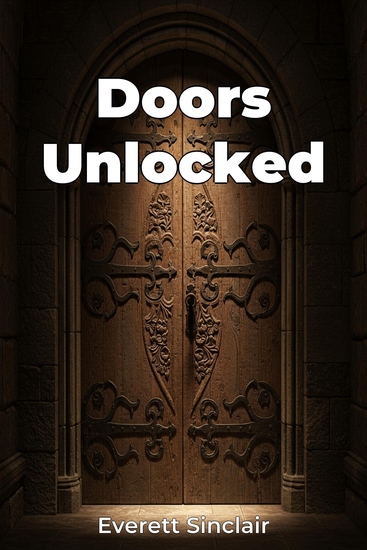
Doors Unlocked - cover

Doors Unlocked

Everett Sinclair

Traductor A AI

Editorial: Publifye

  • 0
  • 0
  • 0

Sinopsis

Doors Unlocked explores the fascinating history of doors, revealing how these often-overlooked elements have shaped architecture, security, and social interactions. From ancient gates to modern smart locks, the book traces the architectural evolution of doors, demonstrating how their design reflects technological advancements and cultural values. One intriguing fact is that the development of locking mechanisms has directly responded to changing societal needs, driven by concerns about crime, warfare, and privacy.

 
The book examines doors through three key lenses: their architectural impact, their role in security, and their social significance as thresholds. It delves into how doors define spatial organization, regulate access, and communicate messages about power and status. Doors, as material culture, offer insights into the priorities and anxieties of societies across time.

 
The book progresses from the earliest door forms to modern innovations, structured around architectural evolution, security imperatives, and the social meanings of thresholds. Supported by archaeological findings, architectural drawings, and historical records, Doors Unlocked provides a unique perspective on understanding spatial control, social hierarchy, and the evolution of technology, making it valuable for architects, historians, and anyone interested in the built environment.
Disponible desde: 03/03/2025.
Longitud de impresión: 62 páginas.

Otros libros que te pueden interesar

  • Revolutionize Your Learning: Secrets to Retain Knowledge Effortlessly - "Transform your learning! Discover powerful audio lessons to effortlessly retain knowledge and ace your exams" - cover

    Revolutionize Your Learning:...

    Cyrus Godfrey

    • 0
    • 0
    • 0
    Revolutionize Your Learning: Secrets to Retain Knowledge Effortlessly 
    ⭐⭐ Simplified Guide & Explanations Included ⭐⭐ 
    Are you eager to advance in your career and reinforce your knowledge while mastering essential exams in 2025?  
    Searching for an all-encompassing resource that includes everything you need to excel in your exams? 
    Your quest is over! 
    This guide is your ultimate companion for enhancing your understanding, applying your skills, and engaging in practical exercises. With it, you'll be well-prepared for success. 
    Updated for the 2025 Exam Structure. 
    Key features of this enhanced guide: 
    - Deep insights into the exam certification for 2025 
    - Thorough explanations of essential concepts 
    - Effective strategies for exam preparation and success 
    What sets our guide apart is its comprehensive coverage, crucial for your exam triumph. Topics are not simply touched upon; they are explored in depth with clarity. 
    Please note that this guide is an independent resource and is not affiliated with any official entities, designed solely for your benefit. 
    Structured for clarity and written in straightforward language, our guide ensures that you move smoothly between topics. Say goodbye to complicated terminology and embrace clear, accurate, and technically sound content. 
    So, why wait? Click the BUY NOW button, secure your guide, and embark on your path to success in 2025!
    Ver libro
  • Trajectory of Power - The Rise of the Strongman Presidency - cover

    Trajectory of Power - The Rise...

    William G. Howell, Terry M. Moe

    • 0
    • 0
    • 0
    In Trajectory of Power, leading political scientists William Howell and Terry Moe provide a sweeping account of the historical rise of presidential power, arguing that it has now grown to the point where, in the wrong hands, it threatens to subvert American democracy and replace it with a de facto system of strongman rule, whether led by Donald Trump or someone else. 


    For much of the twentieth century, Republican and Democratic presidents pursued power in very similar ways and almost always within democratic bounds. But Republican presidents since Ronald Reagan, in a transformation that has grown increasingly extreme over time, have gone beyond the "normal" incentives that have traditionally shaped presidential behavior—and still shape the behavior of Democratic presidents—to pursue a presidency of such expansive unilateral power, and with such disregard for basic democratic requirements, that it puts democracy at serious risk. 


    The book traces this divergence in approach to the backlash of conservatives against the administrative state, and to their epiphany that a war on big government could only be waged through a presidency of extraordinary power. Timely, urgent, and original, Trajectory of Power reveals how the presidency has been profoundly transformed during the modern era—and why it now puts our democracy in imminent danger.
    Ver libro
  • The Aubade Of Spring’s Zephyr - cover

    The Aubade Of Spring’s Zephyr

    Melethril Edhellen

    • 0
    • 0
    • 0
    In the soul of each person lies a bud waiting to blossom, and "THE AUBADE OF SPRING’S ZEPHYR" is a compendium of lyrical droplets that promise to transform the soul's landscape. With each turn of the page, the reader is invited on a journey through the seasons of the heart, where every stanza nurtures the growth of new perspectives and deeper connections, melting the ice around each person's bud. 
    Crafted with the finesse of a master wordsmith, this collection is a medley of emotions, where the beauty of dawn, the quietude of twilight, and the introspective silence beneath the boughs speak volumes of the unspoken. 
    This journey in verse, much like a song that serenades the soul, carries the fresh whispers of seasons waking anew. It grants nature a tongue to speak in secrets, teaching morals hidden in each view to those who listen closely.
    Ver libro
  • Mythology across the Ancient World - The History of Mythological Stories and Rituals in Antiquity - cover

    Mythology across the Ancient...

    Editors Charles River

    • 0
    • 0
    • 0
    Although the Egyptians may not have passed their civilization directly on to later peoples, the key elements that comprised Egyptian civilization, including their religion, early ideas of state, and art and architecture, can be found among other civilizations. For instance, civilizations far separated in time and space, such as China and Mesoamerica, possessed key elements that were similar to those found in ancient Egypt. Indeed, since Egyptian civilization represented some fundamental human concepts, a study of their culture can be useful when trying to understand many other pre-modern cultures.  
    	Today the Mesopotamians and their religion are sources of curiosity, but thousands of years ago, the religion was an integral part of their lives. From their birth to their death, deities surrounded them, and whether their social interactions were on the level of a smaller city or that of a larger nation-state, deities played key roles in the social fabric of their society. Whereas the Israelites were one people who worshipped a single god, Babylon had a succession of different dynasties derived from many ethnic groups, and since Babylonian religion originated from a plethora of sources, there were very few elements that maintained primacy throughout the city’s history. For example, the Sumerian influence resulted in citizens worshipping many deities in the city, but those numbers were reduced after the Amorites came to power.  
    	One of the reasons Zeus remains one of the most recognizable gods in history is because of the spread of his influence. Due to the conquests of Alexander the Great, Zeus was brought along with other elements of Hellenization to Egypt and the Near East, and a few centuries later, Rome all but adopted him as their own chief god, Jupiter. From there, he was exported around the Roman Empire and fused with numerous other local gods in the process.
    Ver libro
  • A Rebel's Recollections - cover

    A Rebel's Recollections

    George Cary Eggleston

    • 0
    • 0
    • 0
    Madison & Adams Press presents the Civil War Memories Series. This meticulous selection of the firsthand accounts, memoirs and diaries is specially comprised for Civil War enthusiasts and all people curious about the personal accounts and true life stories of the unknown soldiers, the well known commanders, politicians, nurses and civilians amidst the war. 
    "A Rebel's Recollections" is a collection of various accounts written by George Cary Eggleston who served as a Confederate soldier during the American Civil War.
    Ver libro
  • Cristero War - The Rebellion against the Mexican Government's Anti-Catholic Laws - cover

    Cristero War - The Rebellion...

    Kelly Mass

    • 0
    • 0
    • 0
    The Cristero War, also known as the Cristero Rebellion or La Cristiada [la kistjaa], was a widespread and deeply significant conflict that unfolded in central and western Mexico during the late 1920s. It was primarily driven by a violent response to the secularist and anti-clerical provisions of the 1917 Mexican Constitution, which sought to curtail the influence of the Catholic Church over the country's political and social life. The Constitution introduced sweeping reforms, including the restriction of church property rights and the severe limitations placed on the clergy’s ability to engage in public life. 
    This growing tension reached a boiling point when President Plutarco Elías Calles, who came into power in 1924, took decisive action to enforce these secular provisions. In 1926, Calles issued an executive order to aggressively implement Article 130 of the 1917 Constitution, known as the Calles Law. This law effectively outlawed many aspects of Catholicism in Mexico, including the practice of the religion in public spaces, the establishment of religious orders, and the public involvement of the clergy in education and politics. Calles' aim was to reduce the power of the Catholic Church, which had long been one of the most influential institutions in Mexican society, and to curb what he perceived as an obstacle to modernization and national unity.
    Ver libro
