Join us on a literary world trip!
Add this book to bookshelf
Grey
Write a new comment Default profile 50px
Grey
Subscribe to read the full book or read the first pages for free!
All characters reduced
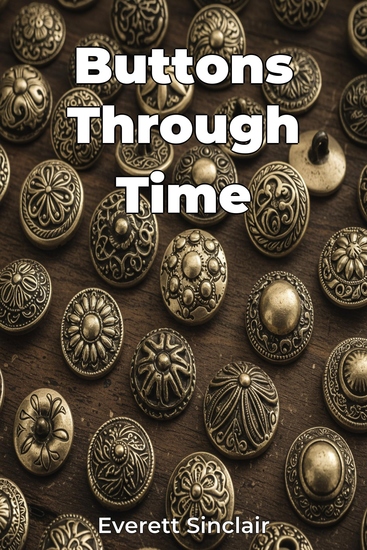
Buttons Through Time - cover

Buttons Through Time

Everett Sinclair

Translator A AI

Publisher: Publifye

  • 0
  • 0
  • 0

Summary

"Buttons Through Time" explores the fascinating evolution of buttons, transforming these seemingly simple fasteners into symbols of status, artistry, and social change. Delving into design history and material culture, the book reveals how buttons mirror technological advancements and aesthetic preferences throughout human civilization. For instance, early buttons made of bone and wood evolved into mass-produced plastic and metal closures during the Industrial Revolution, reflecting significant shifts in manufacturing and societal values.

 
The book examines button history through a chronological lens, starting with ancient civilizations and culminating in the modern button industry. It highlights how buttons have reflected fashion trends, social hierarchies, and gender roles. Furthermore, the study of buttons provides unique insights into broader social and cultural forces.

 
By integrating historical narratives with design principles, "Buttons Through Time" offers a comprehensive understanding of the button's journey, appealing to historians, fashion enthusiasts, designers, and collectors alike, providing guidance on identifying and interpreting historical buttons.
Available since: 02/27/2025.
Print length: 59 pages.

Other books that might interest you

  • Beethoven in the Bunker - Musicians under the Nazi Regime  - cover

    Beethoven in the Bunker -...

    Fred Brouwers

    • 0
    • 0
    • 0
    This compelling study examines the remarkable relationship between the Nazis and classical music through the stories of musicians, composers, and conductors across the political spectrum. 
    May 1945. A Soviet military patrol searches Hitler’s secret bunker in Berlin. They find bodies, documents, jewelry, paintings—and also an extensive collection of 78 rpm records. It comes as no surprise that this collection includes work by Beethoven, Wagner, and Bruckner. 
    The same goes for a procession of other giants promoted by the Nazi regime: “It seems as if the Nazis put a steel helmet on Mozart, girded Schubert with a saber, and wrapped barbed wire around Johann Strauss’s neck,” composer Robert Stolz once said. But how is it possible that Hitler’s favorites also included “forbidden” Jewish and Russian composers and performers? 
    While Hitler sat secretly enjoying previously recorded music in his bunker, musicians made of flesh and blood were denied a means of making a living. They died in concentration camps or in other war-related circumstances. They survived but ended up in psychiatric care; they managed to flee just in time; they sided with the regime—out of conviction or coercion—or they joined the resistance. 
    From fiery conductor Arturo Toscanini, who defied Mussolini and Hitler, to opportunistic composer Richard Strauss and antisemitic pianist Elly Ney, who collaborated with the Third Reich to varying extents and for different reasons, Brouwers profiles the complex figures of this extraordinarily fascinating chapter in music history.
    Show book
  • Journeywork a creative life - cover

    Journeywork a creative life

    Dave Duggan

    • 0
    • 0
    • 0
    Dave Duggan presents Journeywork, a Creative Life — thirteen essays that explore the arc of a creative life. Each essay stands alone as a chapter, combining memoir, medical matters and reflections on creative practice and theory. The tone is humane, engaging and serious without being academic.
     
    The audiobook is aimed at adult readers, including practising, emerging and aspiring creatives. It features travel stories interwoven with health challenges, work achievements and personal reflections. It is a case study of how one person creates works of imagination, while earning a living and maintaining a family, with all the ordinary ups and downs of such a life.
    Show book
  • American Notes - cover

    American Notes

    Rudyard Kipling

    • 0
    • 0
    • 0
    "American Notes" is a fascinating travelogue written by the renowned British author Rudyard Kipling. In this work, Kipling shares his observations and experiences during his travels in the United States. Let's explore more about this intriguing book:    Background:  Rudyard Kipling, known for his iconic works such as "The Jungle Book" and "Kim," visited the United States in the late 19th century.  His journey inspired him to write "American Notes," which provides a unique perspective on American culture, society, and people.  Content:  Kipling's travelogue covers various aspects of American life, including politics, landscapes, and social interactions.  He offers candid observations, sometimes critical and sometimes appreciative, as he explores different cities and regions.  The book reflects Kipling's wit, keen eye for detail, and ability to capture the essence of a place.  Legacy:  "American Notes" remains a valuable historical document, shedding light on the late 19th-century United States.  Kipling's impressions, whether accurate or colored by his own biases, contribute to our understanding of America during that era."
    Show book
  • How to record an audiobook - A step-by-step guide to bringing your audiobook to life - cover

    How to record an audiobook - A...

    Elisabeth Valentine Kristiansen

    • 0
    • 0
    • 0
    Do you want to learn how to record an audiobook people will actually buy, listen to and enjoy?  
    How to record an audiobook. A step-by-step guide to bringing your audio book to life is a comprehensive guide that takes authors though the process of creating an audiobook from start to finish. It will help you prepare, practise, record, edit and publish your audiobook. 
    This book gives you the knowledge and pratical skills to create an audiobook that people will actually listen to and enjoy. It will help you avoid the common mistakes that could cost you time, money and energy. 
    The book takes you through the 5 parts to audiobook creation:The Text: How to work with the words of your book, creating the audiobook script, prepare for and practise reading out-loud, how to deal with jargon, footnotes, illustrations etc and how to deliver it in a compelling way.The Voice: How you need to care for it, how to warm up, what to do if you get a cold etc.The Mindset: Setting yourself up for success and how to avoid the common pitfalls of recording performance.The Studio: Studio basics, the equipment and how use it, choosing studio vs homestudio, recording techniques, studio checklists,The Post production and getting it published it on Audible, Amazon and Itunes. 
    Writing a book is one of the best ways to establish yourself as an expert in your field! With the fast-growing increase of audiobook sales and popularity, having an audio book is essential and YOU should be the one to narrate it. Your voice is a big part of your brand and when you narrate your book, you’re speaking directly to your audience, which builds their trust in you as an authority. 
    Let your audience get to know, like and trust you by being the voice, that brings your book to life.
    Show book
  • Banksy's Lost Works - On the trail of his vanishing street art - cover

    Banksy's Lost Works - On the...

    Will Ellsworth-Jones

    • 0
    • 0
    • 0
    In this richly illustrated landmark book, author and journalist Will Ellsworth-Jones documents the sold, stolen and destroyed works of Banksy, one of the most renowned and controversial artists of our time. 
    This is a book about what you can't see: the works that have disappeared entirely, whether destroyed by authorities or whisked into people's private art collections to languish on walls or in collector's vaults. These remarkable works are as elusive as their creator, but are returned here for public consumption and enjoyment.
    A victim of his own success, Banksy is famous the world over and yet more famously disdainful of the spotlight, preferring to remain anonymous. Considered by many to be one of the greatest living artists in the world and to others a rogue vandal with a political agenda, Banksy has scandalised and enlightened the art world since his acts of guerrilla art began to appear on the streets of Barton Hill in Bristol over 25 years ago. His artworks can now be found on streets across the globe, adorning the walls of some of the world's most distinguished galleries and even being sold for millions at private auctions. 
    
    
    Works unveiled in Banksy's Lost Works include:
    • The pieces painted on partially destroyed buildings around Kyiv, Ukraine, one of which has already been cut off the wall by a group of locals. 
    • Valentine's Day Mascara in Margate that has now been restored and housed in Dreamland after several interventions by Thanet District Council.
    • Banksy's disappearing rats, an early symbol of the artist routinely painted over by councils when the name Banksy was more synonymous with 'vandal' than 'artist'.
    This book, showcasing the often mysterious and occasionally mundane disappearances of works by one of the art world's more elusive figures, is a truly indispensable addition to the library of any Banksy fan. Sold, stolen or destroyed, discover Banksy's works that have disappeared from the wall.
    Show book
  • Alcibiades I - cover

    Alcibiades I

    Plato

    • 0
    • 0
    • 0
    As Jowett relates in his brilliant introduction, 95% of Plato's writing is certain and his reputation rests soundly on this foundation. The Alcibiades 1 appears to be a short work by Plato with only two characters: Socrates and Alcibiades. This dialogue has little dramatic verisimilitude but centres on the question of what knowledge one needs for political life. Like the early dialogues, the question is on whether the virtues needed by a statesman can be taught, on the importance of self-knowledge as a starting point for any leader. While this may be only partially the work of Plato, or even not his at all, Jowett favoured the work with his magisterial translation and appears to favour its inclusion in the canon of true works. (Summary by Kevin Johnson)
    Show book