Join us on a literary world trip!
Add this book to bookshelf
Grey
Write a new comment Default profile 50px
Grey
Subscribe to read the full book or read the first pages for free!
All characters reduced
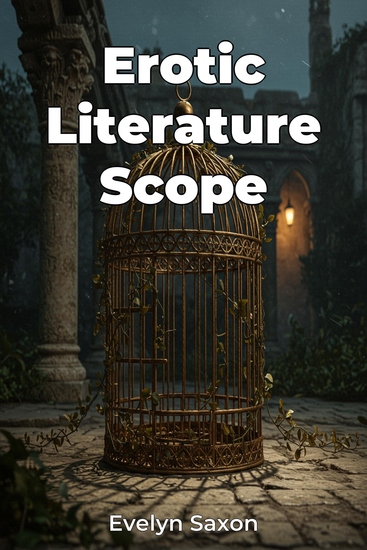
Erotic Literature Scope - cover

Erotic Literature Scope

Evelyn Saxon

Translator A AI

Publisher: Publifye

  • 0
  • 0
  • 0

Summary

Erotic Literature Scope offers a comprehensive journey through the history of erotic literature, demonstrating its profound impact on literary movements and societal values. It examines how erotic expression, often subject to censorship and shifting moral standards, has both reflected and challenged social norms throughout history. The book posits that erotic literature is more than just titillation; it's a powerful force that has shaped the development of literature itself.

 
The book explores the evolution of erotic literature from ancient times through the Renaissance to contemporary works, analyzing key texts and authors. It delves into thematic elements such as desire, power, gender, and transgression, using close readings of significant literary works. The study reveals how societal norms influence the creation and reception of erotic texts, providing a fresh perspective on familiar works.

 
Beginning with foundational concepts, the book progresses through historical analysis and thematic explorations, culminating in an examination of the contemporary landscape. This approach offers readers and scholars valuable insights into literary history, gender studies, and cultural criticism, highlighting the integral role of erotic literature in understanding broader literary and cultural trends.
Available since: 05/05/2025.
Print length: 58 pages.

Other books that might interest you

  • The Stories of Canada's Frontier - Stories and Adventure of the Indians Missionaries Fur-Traders & Settlers of Western Canada - cover

    The Stories of Canada's Frontier...

    Julian Ralph

    • 0
    • 0
    • 0
    On Canada's Frontier is an autobiographical sketch by Julian Ralph. The book is based on author's experiences from his journeys to West Canada. This book is composed of series of papers which recorded journeys and studies author made in Canada during the three years he stayed there. The author brings many interesting stories of adventures of Indigenous people of Canada, missionaries, fur-traders, and settlers to this theritory. 
    Contents:
    Titled Pioneers
    Chartering a Nation
    A Famous Missionary
    Antoine's Moose-yard
    Big Fishing
    "A Skin for a Skin"
    "Talking Musquash"
    Canada's El Dorado
    Dan Dunn's Outfit
    Show book
  • CIA’s Most Controversial Operations The: The History of the Central Intelligence Agency’s Notorious Activities in the 20th Century - cover

    CIA’s Most Controversial...

    Editors Charles River

    • 0
    • 0
    • 0
    Though it might be hard to believe, the Americans did not have a covert operations organization when they joined World War II, and like the British, it took them some time to realize it could be a powerful tool. As a result, the Office of Strategic Services (OSS) was not established until June 13, 1942, six months after the attack on Pearl Harbor. Nevertheless, during World War II, all the hard work in the United States led to the growth of the OSS into an organization with over 13,000 staff and 40 offices scattered across the world. Its purposes were initially similar to that of Britain’s Special Operations Executive, including espionage, sabotage, and intelligence assessments, but with time and experience, it expanded to include economic, psychological, and guerrilla warfare, as well as counter-intelligence work. And of course, it would all chart a path for the early days of America’s most famous intelligence agency, the CIA.  
    The agency has done some good things, and it has inarguably done some bad things. Naturally, people tend to remember the most controversial operations, from CIA-funded revolutions to the Bay of Pigs and domestic experiments such as the mysterious Project MK-Ultra. Many decisions were made, either by the agency or by those elected to give the agency direction, in the raw emotions of the Cold War, and this also colored many of the decisions. Regardless, well after Allen Dulles’ tenure as the CIA’s director, investigations uncovered the facts that the CIA did not merely operate overseas, but also conducted several operations against American citizens, which Dulles both knew about and approved.  
    This book looks at the operations that continue to fascinate, confuse, and disgust modern society, from the people who managed the operations to the results.
    Show book
  • Plowshares into Swords - Weaponized Knowledge Liberal Order and the League of Nations - cover

    Plowshares into Swords -...

    David Ekbladh

    • 0
    • 0
    • 0
    An in-depth look at how the ideas formulated by the interwar League of Nations shaped American thinking on the modern global order. 
    Plowshares into Swords recaptures the power of knowledge and information developed between World War I and World War II by an international society of institutions and individuals committed to liberal international order and given focus by the League of Nations in Geneva. That information and analysis revolutionized critical debates in a world in crisis. In doing so, David Ekbladh transforms conventional understandings of the United States’ postwar hegemony, showing that important elements of it were profoundly influenced by ideas that emerged from international exchanges. The League’s work was one part of a larger transnational movement that included the United States and which saw the emergence of concepts like national income, gross domestic product, and other attempts to define and improve the standards of living, as well as new approaches to old questions about the role of government. Forged as tools for peace these ideas were beaten into weapons as World War II threatened. Ekbladh recounts how, though the US had never been a member of the organization, vital parts of the League were rescued after the fall of France in 1940 and given asylum at the Institute for Advanced Study in Princeton. However, this presence in the US is just one reason its already well-regarded economic analyses and example were readily mobilized by influential American and international figures for an Allied “war of ideas,” plans for a postwar world, and even blueprints for the new United Nations. How did this body of information become so valuable? As Ekbladh makes clear, the answer is that information and analysis themselves became crucial currencies in global affairs: to sustain a modern, liberal global order, a steady stream of information about economics, politics, and society was, and remains, indispensable.
    Show book
  • Pacific Theater in 1942 The: The History of the Decisive Campaigns and Battles that Helped America Turn the Tide of World War II - cover

    Pacific Theater in 1942 The: The...

    Editors Charles River

    • 0
    • 0
    • 0
    Those who had decoded and seen the Japanese communications in early December 1941 would not be surprised when they heard about an attack on December 7, 1941. They would, however, be astonished when they heard where that attack took place. Posted on the other side of the world, it was early on the morning of December 8 in the Philippines when American general Douglas MacArthur received news of the Japanese attack on Pearl Harbor hours earlier. With that, it could only be a matter of time before the Japanese attacked the Philippines. 
    While the Battle of the Coral Sea is not as well known as other battles across the Pacific, it set a precedent by pitting enemy aircraft carriers against each other, a battle in which the rival navies themselves never sighted each other or fired a gun at each other. Instead, the fighting was done with the carriers’ aircraft, something that would become more common over time and would result in decisive actions at places like Midway just months later. Furthermore, while it was in a sense a tactical victory for the Japanese, it would end up helping blunt their aggressive push east in the Pacific, making it a crucial strategic victory for the Allies.    
    By the time the Battle of Midway was over, the defeat was so devastating that it was actually kept secret from all but the highest echelons of the Japanese government. Along with the loss of hundreds of aircraft and over 3,000 men killed, the four Japanese aircraft carriers lost, when compared to America’s one lost carrier, was critical considering America’s huge shipbuilding superiority. However, the Battle of Midway could also have easily turned out differently. Japan began the battle with more carriers, more and better aircraft, and more experienced crews than the Americans, and if the battle of the Coral Sea was any indication, the two sides had irrefutable proof of the dominance of the aircraft carrier in the Pacific. 
    Show book
  • History of Romania - An Overview of Wars Dictators and Social Changes - cover

    History of Romania - An Overview...

    Kelly Mass

    • 0
    • 0
    • 0
    The earliest evidence of human habitation in what is now Romania dates back to prehistoric times, but one of the first recorded mentions comes from the writings of the ancient Greek historian Herodotus. In his work Histories, Book IV, written around 440 BC, Herodotus described the Getae, a Thracian tribe residing in the region that would later become Romania. According to Herodotus, the Getae were defeated by Persian Emperor Darius the Great during his military campaign against the Scythians. This reference marks an important historical mention of the people inhabiting the area. 
    The Dacians, a branch of the Thracian people, are believed to have been closely related to the Getae mentioned by the Greeks. The Dacians inhabited a region known as Dacia, which included present-day Romania, Moldova, parts of northern Bulgaria, and surrounding areas. Their culture, society, and military strength developed significantly, making them a prominent force in southeastern Europe. The Dacians are often regarded as the ancestors of modern Romanians, and their legacy is a crucial element of Romanian national identity.
    Show book
  • The Physics of Miraculous Healing - How Emotion Mind and Spirit Enable Unlimited Self-Healing - cover

    The Physics of Miraculous...

    Joseph Selbie

    • 0
    • 0
    • 0
    During a near-death experience, an end-stage terminal cancer patient had a profound, emotionally transformative experience in which she let go of all fear—she rallied and became cancer free in a few short weeks. A devout woman, body twisted, wasted, and brought to the brink of death by years of multiple sclerosis, heard a Voice, stood up, and walked—she was healed in minutes. Although these and thousands of similarly amazing cases have been medically verified, most doctors and most people believe that such cases cannot be true because the science underlying modern medicine doesn't provide any explanation for how such rapid physical change could be possible. Medicine's underlying science, however, has changed little despite nearly a hundred years of breakthroughs in physics—breakthroughs that do provide scientific explanations for these cases. 


    Modern physics' breakthroughs support millennia old spiritual traditions that suggest that not only is extraordinary, miraculous healing possible, but that we have innate soul powers—our emotions, personal beliefs, and our ability to connect to Spirit—that directly and powerfully determine our health and ability to self-heal. Modern physics and experiential spiritual traditions give us an unlimited view of health and healing that puts controllable influences, emotion, belief, and connection to Spirit, in charge.
    Show book