Join us on a literary world trip!
Add this book to bookshelf
Grey
Write a new comment Default profile 50px
Grey
Subscribe to read the full book or read the first pages for free!
All characters reduced
Western Comics - cover

Western Comics

Ethan Parker

Translator A AI

Publisher: Publifye

  • 0
  • 0
  • 0

Summary

"Western Comics" examines the evolution of the Western genre within comic books, revealing how this visual medium shaped popular narratives about the American West. Did you know that Western comics played a crucial role in both perpetuating and challenging common perceptions of westward expansion and American identity? By analyzing visual storytelling techniques, the book highlights how artists use panels and character design to convey meaning.

 
The book explores the Western genre's historical roots, tracing its origins from dime novels to early cinema, and then delves into the visual language of comics. It is structured in three parts, beginning with the early pioneers of Western comics like "The Lone Ranger," then focusing on the complex representation of marginalized groups, and finally examining the genre's modern evolution that includes revisionist history and social commentary. This approach is unique because it analyzes not only the narratives but also the visual rhetoric within the comic panels.

 
Through in-depth analyses of individual comic books and examination of the cultural and historical elements, "Western Comics" offers a unique perspective on the intersection of comics, American history, and cultural representation. The book argues that Western comics actively participate in shaping our understanding of this pivotal period, making it valuable for those interested in Film & Television, History, and cultural studies.
Available since: 03/10/2025.
Print length: 60 pages.


Other books that might interest you

  • The Antichrist Is Here! - His Name is Alex! - cover

    The Antichrist Is Here! - His...

    E. J. Carmel

    • 0
    • 0
    • 0
    This audiobook is narrated by an AI Voice. They thought the end would come with fire and brimstone. They never expected Alex. In a sleepy town where nothing ever happens, a boy named Alex arrives with a chilling gaze and a smile that never quite reaches his eyes. Miracles follow him. So do shadows. As strange events ripple across the globe, ancient prophecies whisper of a name: Alex. Is he humanity's salvation? Or the final seal of its doom? Bold, provocative, and crackling with tension, The Antichrist is Here! His Name is Alex! is a modern apocalyptic thriller that will leave you questioning everything-faith, fate, and the face of evil.
    Show book
  • Sic Itur Ad Astra - V-201: Volume One - cover

    Sic Itur Ad Astra - V-201:...

    Andrew J. Galambos

    • 0
    • 0
    • 0
    Book four of fifteen for the entire set of SIC ITUR AD ASTRA (This is the Way to the Stars). This first volume of eight of what Professor Galambos calls “the most important course of The Free Enterprise Institute” is subtitled, V-201: The Nature and Protection of Primary Property Volume One and consists of the first seven sessions of the 48 sessions plus three workshop courses in which the professor spells out the actual roadmap to freedom that was introduced in course V-50. 
    The hundreds of philosophically stimulating and critical topics include: 
    –why no political structure can succeed 
    –the meaning of impossible and why freedom is not 
    –the futility of fighting the state 
    –the distinction between cosmological and technological innovation 
    –the concept of the natural estate and its durability 
    –the trivia curve 
    –plunder and culture curves 
    –the difference between importance and urgency 
    –the need for protection of innovators and their ideas 
    –the communist warehouse of ideas 
    –the explanation of the jigsaw puzzle analogy correlation with the creation of knowledge 
    –why Bruno, despite being murdered, won 
    –the two forms of coercion 
    –why primary property theft is not looked upon as theft 
    –why the majority of intellectuals become socialists 
    –Archimedes, the Wright brothers, Semmelweis, Faraday, and the fates of the inventor of the wheel and domesticator of crops 
    –why, until now, freedom has been unattainable 
    –natural vs. political law, integrity vs. honesty, and market justice vs. state justice 
    –the introduction of the integrity machine and a new money based upon primary property 
    –the first 13 tests for independency, and much, much more.
    Show book
  • Rome - Antiquity’s superpower - cover

    Rome - Antiquity’s superpower

    World History

    • 0
    • 0
    • 0
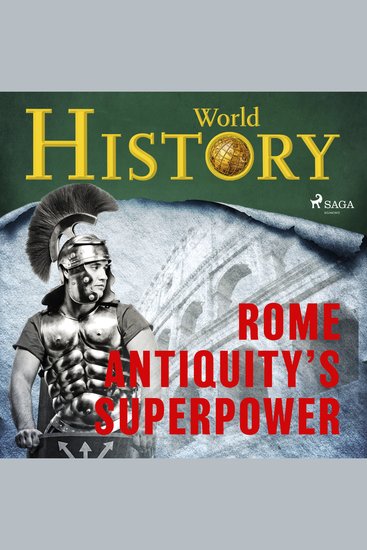
    In 52 BC, after six years of war against the Gallic tribes, Julius Caesar had tamed another enemy of the Roman Republic. Almost one million Gauls were taken as slaves, while their land became just another Roman province. Soon tonnes of grain along with lucrative taxes were flowing towards the imperial capital, whose inhabitants enjoyed all the luxuries of the provinces.  
    Everything had changed since outlaws had founded Rome almost 500 years earlier. The small city on the seven hills had grown powerful through irresistible military might and political ingenuity, and the Roman Republic came to rule an expanse of territory that stretched around the Mediterranean and beyond. A few years later, Julius Caesar was brutally assassinated, and the republic was replaced by an empire that mad tyrants and power-hungry generals would ultimately destroy from within. 
    World History invites you on a fascinating journey to bygone eras, allowing you to explore the greatest events in history. Take a trip back in time - to the frontlines of World War 2, to the Viking raids, and to the religious rituals of ancient Egypt. World History is for everyone who would like to know more about the exciting and dramatic events of the past.
    Show book
  • Of Consolation - To Marcia To Helvia To Polybius - cover

    Of Consolation - To Marcia To...

    Seneca the Younger

    • 0
    • 0
    • 0
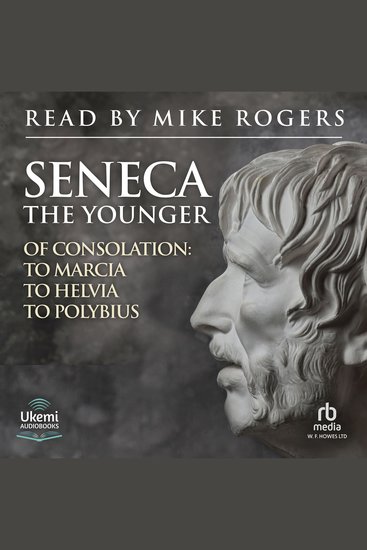
    These three ‘Consolations’, written by Seneca to his mother and two friends, have been described as ‘the crowning achievement in the canon of ‘consolation letters’. But sentimental they are not, for they emerge from the writer’s deep-seated commitment to Stoicism, where individuals are exhorted to inhabit qualities of virtue, positivity, resilience, and indifference. This recording opens with Seneca’s consolatory letter to Marcia, who, after three years, was still mourning the death of her son. He recognises her exceptional personal qualities and what benefits she has brought to her family, having rescued her father’s legacy as a historian following his death. He cites other noble Roman mothers who lost their sons, and enjoins her to adopt a more Stoic attitude of mind: we are all destined to die, he declares.  
    The second letter is to his mother sent after he had been exiled to Corsica by Emperor Caligula. He counsels Helvia not to mourn his absence – not least because he himself does not feel grief at the prospect of his own exile. He acknowledges the trials of his mother during her life, remarking ‘ill-fortune has given you no respite’. But her grief at the absence of her son may be put to one side in the knowledge that as he has ‘never trusted in Fortune,’ she can be comforted that her son is not discommoded. And history points to far harsher separations.  
    The final letter is to Polybius, Emperor Claudius’s Literary Secretary, who was mourning his brother.  Written while in exile, Seneca’s unwavering commitment to Stoic philosophy is again in evidence. One of Seneca’s principal suggestions is for Polybius to distract himself from grief by an increasing involvement in work.  
    These ‘Consolations’ have been widely admired from Classical times to the present, but are periodically questioned for their emphasis on a somewhat detached approach to grief and bereavement. Not all can manage imperturbability in such circumstances. Nevertheless, there is a steadiness and emotional calm in these missives, which Seneca himself displayed when ordered to commit suicide by Emperor Nero.
    Show book
  • Akali Phoola Singh - Akali Ji Di Pehli Vithya - cover

    Akali Phoola Singh - Akali Ji Di...

    Baba Prem Singh Hoti Mardaan

    • 0
    • 0
    • 0
    In "Akali Phoola Singh," Baba Prem Singh Hoti, a distinguished Sikh historian, masterfully unveils the life of one of Sikhism's most revered figures. This biography delves into the compelling journey of Akali Phoola Singh, a stalwart warrior and devoted leader whose valor and unwavering commitment shaped the course of Sikh history. Through meticulous research and vivid storytelling, Baba Prem Singh Hoti brings to light the struggles and triumphs of Akali Phoola Singh, offering readers a profound understanding of his pivotal role in preserving the Sikh faith and heritage. This book is an essential read for anyone seeking to grasp the legacy of this iconic Sikh personality.
    Show book
  • Somersaults: Through the Keyhole - cover

    Somersaults: Through the Keyhole

    Mira Mack

    • 0
    • 0
    • 0
    There are somersaults and there are somersaults. Physically … no big deal. Lots of people can do them. This book is about the other kind of somersaults – through life. In this case, from a little girl plunked into the mid-fifties in socialist Czechoslovakia to a rebel at school with beliefs twisted and turned by social storms. Then in 1968, her family lives through morphing into socialism with a human face, the consequent invasion of the Warsaw Pact armies, and ultimately, the Russian occupation. And eventually, for many ordinary people, the reality of the so-called Velvet Revolution of 1989. When the girl grows into a young woman, she fights with traditions and old thinking. Plenty of humour, the discovery of limits, many sides of the same coin, the power of friendship, stepping into worlds of taboo, and challenging one’s own fear – every somersault has consequences. Intimate, funny, honest. If you enjoyed this audiobook, try listening to the sequel: Czech Mate
    Show book