Join us on a literary world trip!
Add this book to bookshelf
Grey
Write a new comment Default profile 50px
Grey
Subscribe to read the full book or read the first pages for free!
All characters reduced
Unnecessary Film Sequels - cover

Unnecessary Film Sequels

Ethan Parker

Translator A Ai

Publisher: Publifye

  • 0
  • 0
  • 0

Summary

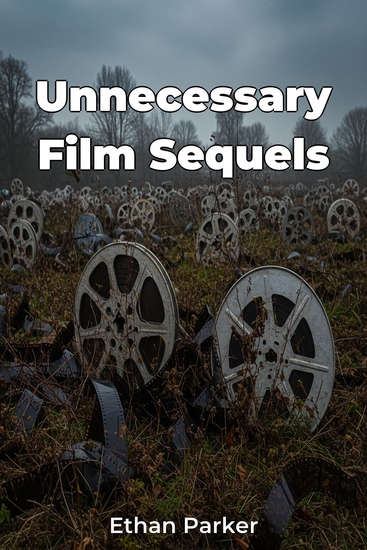
Unnecessary Film Sequels delves into the realm of film franchises, dissecting those sequels that tarnish the legacy of beloved originals. The book examines the driving forces behind these unwelcome additions, such as studio interference and financial incentives, and their impact on how we perceive the original films. For example, sometimes sequels dilute original themes, mischaracterize beloved characters, and introduce convoluted plotlines. The book argues that prioritizing franchise expansion without understanding what made the initial film resonate can lead to creative bankruptcy.

 
Beginning with a definition of what makes a sequel unnecessary, it progresses through case studies, analyzing both critical and commercial failures, as well as sequels that, despite box office success, lack artistic merit.

 
Ultimately, Unnecessary Film Sequels advocates for greater creative control for filmmakers and a more cautious approach to franchise development.
Available since: 03/29/2025.
Print length: 53 pages.
Other books that might interest you

  • Shadows of Love Shadows of Loneliness - Volume One: Photographs: 1980-2020 - cover

    Shadows of Love Shadows of...

    William T. Vollmann

    • 0
    • 0
    • 0
    In this landmark collection, William T. Vollmann offers a kaleidoscopic retrospective of the visual artwork he has produced over four decades, with new commentary from Vollmann on his process, inspiration, and the many intersections with his writing. 


    The celebrated author of over twenty-five books (among them the National Book Award–winning novel Europe Central; the seven-volume Rising Up and Rising Down, based on Vollmann's career as a war correspondent; and the two-volume climate change investigation Carbon Ideologies), Vollmann's equally ambitious and prolific career as a photographer, printmaker, and painter reflects the artist’s deep interest in people existing on the margins, a profound empathy for his subjects, and the humility and generosity to meet them on their terms. 


    In Shadows of Love, Shadows of Loneliness, a series of essays  commissioned especially for this book lays out Vollmann's views on what photographs can and should say, how he chooses what to represent (beauty, suffering, compassion, love, desire, ideology), thoughts on photographic consensuality, and any number of technical descriptions. Particularly useful for Vollmann fans and scholars are the cross-references between these artistic and photographic projects and his books.
    Show book
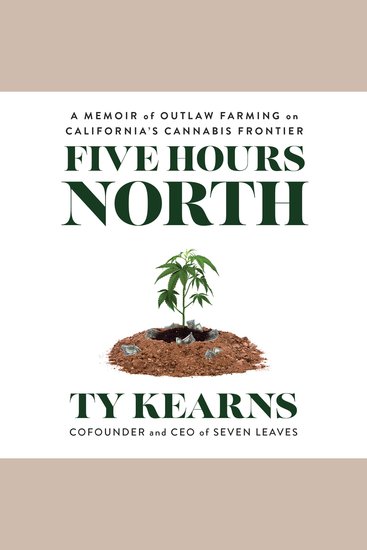
  • Five Hours North - A Memoir of Outlaw Farming on California's Cannabis Frontier - cover

    Five Hours North - A Memoir of...

    Ty Kearns

    • 0
    • 0
    • 0
    The colorful true adventures of an unexpected "pot-star" turned cannabis CEO in the new Wild West of California's green rush.
    Don't give anyone your real name.
    
    Never say anything to your loved ones.
    
    Always have a full tank of gas, a jump starter, and an alibi.
    The year is 2008, and the green rush is taking root in Humboldt County, California. Born and raised in this "Emerald Triangle" famous for its natural beauty and perfect cannabis-growing conditions, Ty Kearns wants no part of it. He has seen too many friends and acquaintances lose or derail their lives for the green dream, always feeling the itch for more cash and more power.
    But as a college student with tuition to pay—and few options in the middle of the worst recession since the Great Depression—Ty is willing to try almost anything.
    When his eccentric Uncle Bob introduces him to some local growers, the rules of the industry start to dominate Ty's double life. He spends his days taking notes in lecture halls and his nights and weekends five hours north at his secret farm in the mountains, where danger and beauty are as tangible as the plants themselves.
    Soon, he is more successful than he ever could have imagined—more successful than just about any other grower on the mountain. But he faces natural disasters, animal encounters, the gossip mill, the authorities, the highs and lows of first love, and a crowd of "trimmigrants" and pot-star groupies as he grapples with the damage that growing does to his mental health and the land itself.
    Today, Ty is the CEO of SEVEN LEAVES, a fully licensed cannabis cultivation operation with product in over four hundred stores and a commitment to 100 percent green energy. But his path to sustainable growing was long and gnarly. Growing pot wasn't Ty's plan, but he found his calling when he stepped out of the shadow of the mountain.
    A coming-of-age journey where the truth is stranger than fiction, Five Hours North tells the story of the lost pre-legalization weed scene, when the characters were larger than life and the growers were always one step from disaster.
    Show book
  • George Balanchine: The Life and Legacy of One of the 20th Century’s Most Influential Choreographers - cover

    George Balanchine: The Life and...

    Editors Charles River

    • 0
    • 0
    • 0
    By the turn of the 20th century, American entertainment was still preoccupied with European-style operetta, as embodied in the works of cellist-composer Victor Herbert. Traditional dance forms moved from European stories to the American prairie in Oklahoma by the late 1940s, and what was once the property of Bavarian princes became the singing standards of cowboys riding through the corn fields in Oh What a Beautiful Morning and Out of My Dreams.  
    	At the time, the availability of classical ballet in America was scant. In contrast to the evolution of an American style in musical theater, Broadway, and film, ballet in the United States was ushered in largely through the efforts of an individual who brought with him a strong traditional sense from Russia and the rest of Europe but was intent on producing a distinctly American style. Other experimentalists appeared, such as Isadora Duncan, but it was George Balanchine who managed to institutionalize and fund both a hybrid traditional as well as experimental form.  
    	Balanchine, although a dancer as well, is today regarded as the “foremost contemporary choreographer in the world of ballet.”[1] Despite much work in Russia and other parts of Europe, his eventual relocation to the United States made possible the establishment of an American ballet school and an elite ballet company, the New York City Ballet. In contrast to the fiercely guarded Russian classical style of the Bolshoi Theater, the New York City Ballet featured uniquely choreographed performances to previously unfamiliar musical works. These were approached with a uniquely American style of dance, however steeped in tradition the basic steps may have been.
    Show book
  • I Wouldn't Do That If I Were Me - Modern Blunders and Modest Triumphs (but Mostly Blunders) - cover

    I Wouldn't Do That If I Were Me...

    Jason Gay

    • 0
    • 0
    • 0
    The Wall Street Journal columnist and bestselling author of Little Victories takes a humorous and insightful look at life in the face of overwhelming societal change that we never anticipated—from the effects on parenthood, marriage, friendship, work, and play to all other aspects of the strange lives we find ourselves living. Like many of us, Jason Gay didn’t see this coming: a reshaped world, on edge, often stuck at home, questioning everything, trying to navigate a digital landscape that changes how we think, parent, coach, and live. With a series of topical and interconnected personal pieces, Gay comically takes on this new state of being, looking for the optimism and joy in the face of discouragement. He embarks on a rowdy ride with his son to the Daytona 500, weeks before lockdown. He confides his hilariously banal texts with his wife. He allows his mom to kidnap the family cat. From the modest thrills of Little League parenting to reckoning with the impending death of a close friend, Gay's essays run the gamut of modern life and he approaches it all with humility, grace, and more than a few laughs.
    Show book
  • Civil War Presidents The: Abraham Lincoln and Jefferson Davis - cover

    Civil War Presidents The:...

    Editors Charles River

    • 0
    • 0
    • 0
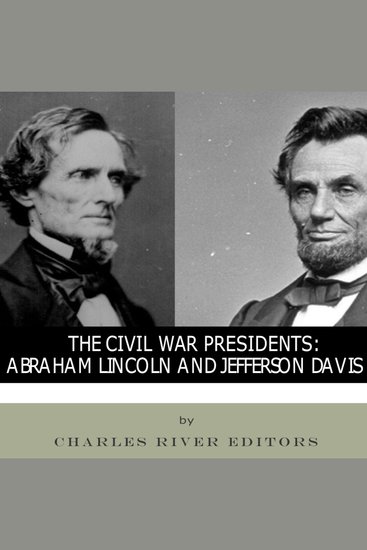
    Abraham Lincoln is one of the most famous Americans in history and one of the country’s most revered presidents. Schoolchildren can recite the life story of Lincoln, the “Westerner” who educated himself and became a self made man, rising from lawyer to leader of the new Republican Party before becoming the 16th President of the United States. Lincoln successfully navigated the Union through the Civil War but didn’t live to witness his crowning achievement, becoming the first president assassinated when he was shot at Ford’s Theater by John Wilkes Booth on April 14, 1865.  
    In the generation after the Civil War, Lincoln became an American deity and one of the most written about men in history. With such a sterling reputation, even historians hesitate to write a critical word; in Team of Rivals Doris Kearns Goodwin casts Lincoln as an almost superhuman puppet master in control of his Cabinet’s political machinations and the war’s direction, juggling the balancing act flawlessly. As a result, Lincoln the man is far less known than Lincoln the myth.  
    Jefferson Davis holds a unique place in American history, as the man best remembered for being the president of the Confederacy during the Civil War. While other famous Confederates like Robert E. Lee and Stonewall Jackson are still celebrated across the reunited country, Davis continues to be the object of scorn, derided over his attempt to flee after the Civil War and criticized as ineffective by historians. Among the Confederates still lauded by today’s Southerners, Davis is well down the list. History has accorded Abraham Lincoln a spot in the pantheon of American politics for the manner in which he steered the Union to victory and into the Reconstruction period after the war. In turn, Davis has been heavily criticized.
    Show book
  • Jack the Ripper - The Victims and Suspects of an Unidentified Serial Killer in London - cover

    Jack the Ripper - The Victims...

    Kelly Mass

    • 0
    • 0
    • 0
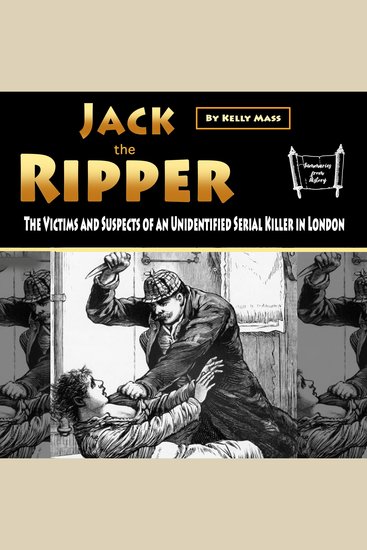
    Jack the Ripper was an unknown serial killer active in the mainly poor parts around the Whitechapel district of London in the year 1888. In both the criminal case files and modern journalistic books, the killer was referred to as the Whitechapel Killer and Leather Apron. 
    He caused quite some havoc, going after some of the most impoverished neighborhoods and killing victim after victim, without ever being found. The British police was dumbstruck and carried out multiple investigations, coming up with various suspects but never able to pinpoint who did it or why. With about 1200 women working as prostitutes in the Whitechapel district at the time, it must have been a special interest of the murderer to pursue and prey on these less fortunate ladies. The removal of intestines and genitalia, as well as facial mutilations were characteristics of this vicious criminal. If that doesn’t give you nightmares, then I don’t know anymore. 
    Find out more about how this gruesome man terrorized the districts of London in the late 19th century.
    Show book