Join us on a literary world trip!
Add this book to bookshelf
Grey
Write a new comment Default profile 50px
Grey
Subscribe to read the full book or read the first pages for free!
All characters reduced
Unexpected Movie Inspirations - cover

Unexpected Movie Inspirations

Ethan Parker

Translator A AI

Publisher: Publifye

  • 0
  • 0
  • 0

Summary

Unexpected Movie Inspirations explores the fascinating origins of cinematic ideas, revealing how films often draw from unexpected sources like historical events, forgotten literature, and personal experiences. The book argues that movies aren't born in a vacuum; filmmakers frequently adapt real-world elements, enriching their narratives with layers of meaning. For example, seemingly obscure historical conflicts can inspire compelling screenplays, offering fresh perspectives on the past.

 
The book is divided into three sections, each dedicated to a core area of inspiration. Initially, it introduces intertextuality and adaptation in filmmaking. The first section examines historical events, the second dives into literature, and the third explores personal experience.

 
By tracing these connections, readers gain a deeper appreciation for the creative process and the myriad influences that shape storytelling. The book adopts an analytical yet accessible approach, balancing scholarly rigor with engaging storytelling. This exploration provides film enthusiasts, students, and anyone interested in the creative process with valuable insights into the hidden connections between film and the real world.
Available since: 03/29/2025.
Print length: 48 pages.

Other books that might interest you

  • Normandy to Nazi Surrender - Firsthand Account of a P-47 Thunderbolt Pilot - cover

    Normandy to Nazi Surrender -...

    Patrecia Slayden Hollis, Colonel...

    • 0
    • 0
    • 0
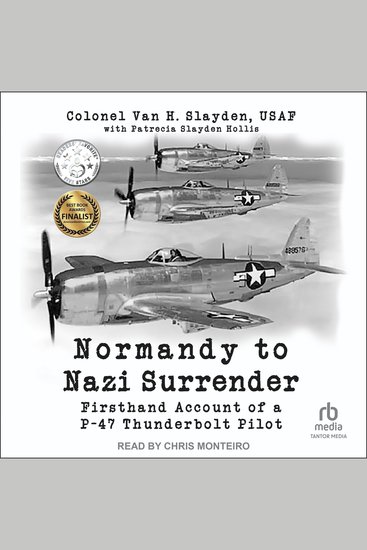
    The late Van Slayden trained on the PT-3 kite-like biplane in 1937, but he learned fighter pilot operations flying "by the seat of his pants," walking away from five crashes. Shortly after the invasion of Normandy, he landed on Utah Beach to help establish a US Army Air Forces' (AAF's) presence in Europe. He flew the P-47 Thunderbolt, a fighter-bomber, in combat over Northern France and commanded the 36th Fighter Group-the "Fightin' 36th-at Batogne, St. Vith, the Bridgehead at Remagen, Operations Grenade, Clarion, Varsity and other missions. His 22nd Fighter Squadron was the first in the AAF to land voluntarily on German soil. 


    He was deep into Germany when the Nazis surrendered on May 8, 1945, which was remarkably anticlimactic. Van Slayden, a country boy from rural Tennessee, like so many of his contemporaries, stepped up to the challenge as part of the Greatest Generation.
    Show book
  • How to Live to be 200 - From their pens to your ears genius in every story - cover

    How to Live to be 200 - From...

    Stephen leacock

    • 0
    • 0
    • 0
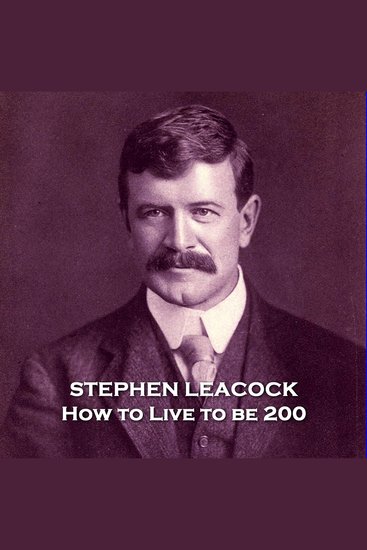
    Stephen P H Butler Leacock FRSC was born on 30th December 1869 in Swanmore, near Southampton, England.  He was the third of eleven children. 
    The family emigrated to Canada in 1876, settling on a 100-acre farm in Sutton, Ontario.  There Leacock was home-schooled until, funded by his grandfather, he was enrolled into the elite private school Upper Canada College in Toronto.  Academically he was very strong.  In 1887, at age 17, he became head boy and then proceeded on to the University of Toronto to study languages and literature.  Despite completing two years of study in only one, he was obliged to leave the university because his father, an alcoholic, had abandoned the family and finances could not be stretched to continue his attendance.  Leacock now enrolled in a three-month course at Strathroy Collegiate Institute to become a qualified high school teacher with a regular income. 
    He worked at Upper Canada College from 1889 through 1899 and later resumed his studies part-time at the University of Toronto, graduating with a B A in 1891.  It was during this period that he was first published in The Varsity, a campus newspaper.  But his passion was now economics and political theory.  In 1899 he enrolled for postgraduate studies at the University of Chicago and earned his PhD in 1903. 
    Leacock had married Beatrix Hamilton in 1900 and 15 years later the couple had their only child, Stephen.  In time father and son developed a love-hate relationship, partially caused by his son’s diminutive stature of only four feet.  
    Accepting a post at McGill University Leacock would remain there until he retired in 1936.  In 1906, he wrote ‘Elements of Political Science’, quickly adopted as a standard textbook for the next two decades and his most profitable book.  He also began public speaking and lecturing, and took a year's leave of absence in 1907 to speak throughout Canada on the subject of national unity.  
    Leacock had submitted humourous articles to the Toronto magazine Grip in 1894, and was soon published in other Canadian and US magazines.  In 1910, he printed privately a collection of these as ‘Literary Lapses’.  Acquired by the British publisher, John Lane, it was released in London and New York.   He was now a commercially successful writer.  There soon followed ‘Nonsense Novels’ (1911) and the sentimental favourite, ‘Sunshine Sketches of a Little Town’ (1912).  His ‘Arcadian Adventures with the Idle Rich’ (1914) is a darker collection that satirizes city life.  Collections of sketches continued to be published almost annually, filled with a mixture of light-hearted whimsy, parody, nonsense, and satire. 
    In later life, he wrote on the art of humour writing and published biographies on Twain and Dickens.  Together with continued speaking tours he also added to his non-fiction with many well-regarded and award-winning volumes on Canada. 
    Politically Leacock was a social conservative and a partisan Conservative.  He opposed women’s right to vote and had a varied record on non-English immigration.  He was a champion of Empire but an advocate of social welfare legislation and wealth redistribution, but he often caused friction with his racist views towards blacks and Indigenous peoples. 
    Leacock has for some time been forgotten as an economist, but it’s often quoted that in 1911 more people had heard of him than had heard of Canada.  For the decade after 1915 Leacock was the most popular humorist in the English-speaking world. 
    Stephen Leacock died on 28th March 1944 of throat cancer in Toronto, Canada.  He was 74.  He was buried in the St George the Martyr Churchyard, Sutton, Ontario.
    Show book

  • The Bravest Scout at Gallipoli - cover

    The Bravest Scout at Gallipoli

    Ryan Butta

    • 0
    • 0
    • 0
    The many lives and tragic death of Harry Freame, the Anzac hero betrayed by his nation. 
     
    Harry Freame was the first Australian to win the Distinguished Conduct Medal at Gallipoli. Raised as a samurai, he risked his life again and again to scout the beaches and hills of the battlefield, reporting invaluable intelligence back to his officers and relieving stranded soldiers who otherwise would surely have died. Some say he should have got the VC but didn't because he was half-Japanese, a fact he tried hard to conceal. 
     
    After the war, Harry (real name Henry Wykeham Koba Freame) became a soldier settler and champion apple grower. But when Japan emerged as a perceived threat to Australia, Harry was recruited into Australian intelligence to spy on the Japanese community in Sydney. Before Japan's entry into World War II, Australia opened a diplomatic legation in Tokyo, and Harry was sent as a translator - but his real role was a spy. Extraordinarily, his cover was leaked by the Australian press, and the Japanese secret police tried to assassinate him not long after his arrival in Tokyo in 1941. Harry died back in Australia a few weeks later, but his sacrifice has never been acknowledged by Australia. 
     
    Until now. Featuring never-before-seen material, The Bravest Scout at Gallipoli is a fascinating and immersive investigation into a grievous historical wrong.
    Show book
  • Hillbilly Elegy: Book Summary & Analysis - cover

    Hillbilly Elegy: Book Summary &...

    Briefly Summaries

    • 0
    • 0
    • 0
    This is a concise summary and analysis of Hillbilly Elegy, by J. D. Vance. It is not the original book and is not affiliated with or endorsed by J. D. Vance. Ideal for those seeking a quick and insightful overview.
     
    A poignant memoir and sociological analysis, this book explores the struggles of a working-class Appalachian family in the face of economic decline and cultural upheaval. Through personal anecdotes and broader observations, it examines issues of poverty, social mobility, and the complex ties of family and community, offering a raw and compelling perspective on the American Dream.
    Show book
  • The Boy Who Sat By the Window - The Story of the Queen of Soho - cover

    The Boy Who Sat By the Window -...

    David Hodge

    • 0
    • 0
    • 0
    'Enjoy this story. I already jumped to the parts about me.' - Boy George 
    The extraordinary life story of David Hodge – the ‘Very Miss Dusty O’.- 
    'My story is one of laughter and hedonism, dressing up and showing off. I played Queen in a parallel universe of glamour, rhinestones and couture outfits. It’s also one of alienation and loneliness and of always being the odd one out. I lived through AIDS, Princess Diana and Thatcher but came out singing and dancing my way through Soho and the West End. I survived a murder attempt and bankruptcy. I am still here. Now I paint my feelings and not my face and once again feel as if my journey is beginning. This is my truth. Grubby at times but mine to tell. Here it is. Uncensored.' - David Hodge 
    From a skinny, ginger-haired kid from Walsall who was bullied at school, to the ‘Queen of Soho’, who would rule London’s drag scene in its most dazzling era. This gripping true story follows an unassuming boy, separated from other children and made to sit by the window, on to a remarkable career, with celeb buddies including Kylie Minogue, The Pet Shop Boys, Grace Jones, Cyndi Lauper and, of course, Boy George. 
    But behind the glitter, there was a far darker reality. David worked simultaneously at London Lighthouse, the pioneering centre for the care of people living with HIV and AIDS. Here, the young David grew up fast and opened his eyes to the true impact of this terrifying pandemic. The contrast was stark between the life of David Hodge during the day and the life of Miss Dusty O after dark. 
    After two decades in clubland, as drink and drugs started to take their toll and he feared he was developing his father’s alcoholic patterns, David changed his life yet again…
    Show book
  • The Arm of Mrs Egan - From their pens to your ears genius in every story - cover

    The Arm of Mrs Egan - From their...

    W F Harvey

    • 0
    • 0
    • 0
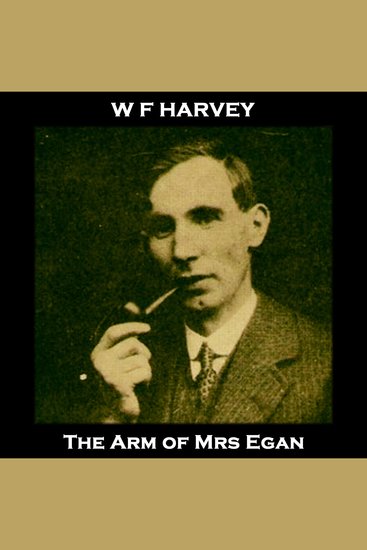
    William Fryer Harvey AM was born on 14th April 1885 into a wealthy Quaker family in Leeds, West Yorkshire. 
    He was educated at the Quaker Bootham School in Yorkshire and Leighton Park School in Reading before university at Balliol College, Oxford.  
    His health was fragile and he poured his energies into writing short stories and in 1910 published his first collection ‘Midnight House’. 
    In the Great War he was with the Friends' Ambulance Unit and then served as a surgeon-lieutenant in the Royal Navy.  There he received the Albert Medal for Lifesaving but lung damage received at that time troubled him for the rest of his life. 
    He continued to write short stories, and even a memoir, but by 1925 ill health had forced his retirement to any outside work.  Three years later he published his second collection which contained his macabre classic ‘The Beast with Five fingers’, only one more collection would come from his pen in his lifetime. 
    For many years of his life he now lived in Switzerland with his wife but a yearning to be home saw them come back to England in 1935. 
    W F Harvey died in Letchworth on the 4th June 1937. He was 52.
    Show book