Join us on a literary world trip!
Add this book to bookshelf
Grey
Write a new comment Default profile 50px
Grey
Subscribe to read the full book or read the first pages for free!
All characters reduced
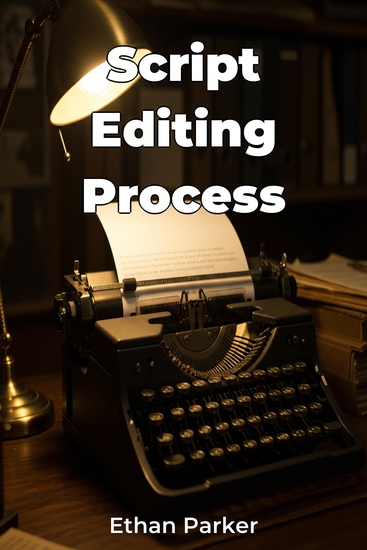
Script Editing Process - cover

Script Editing Process

Ethan Parker

Translator A AI

Publisher: Publifye

  • 0
  • 0
  • 0

Summary

Script Editing Process explores the vital role of the script editor in transforming a raw screenplay or play script into a polished, production-ready piece. It emphasizes that effective script editing involves more than just fixing errors; it's a comprehensive process that can elevate the narrative and ensure the story deeply resonates with audiences. The book uniquely highlights the editor as a crucial collaborator, enhancing the writer's vision. Did you know that even some of the most successful films and plays have undergone extensive script editing to hone their impact? The book progresses methodically, beginning with the fundamental principles of script editing and the responsibilities of the editor. It then dissects three core elements: cut decisions, pacing adjustments, and textual clarification. For example, cutting unnecessary scenes can sharpen the focus of the narrative, while adjusting pacing can build suspense or enhance comedic timing. Through case studies, interviews, and textual analysis, the book provides a practical, hands-on approach to understanding and applying these essential editing skills. This resource provides aspiring script editors, screenwriters, playwrights, and students of performing arts with actionable advice and real-world examples. It demonstrates how careful attention to narrative structure, dialogue, and the overall editing process can significantly impact the success of any film or television project.
Available since: 05/05/2025.
Print length: 89 pages.

Other books that might interest you

  • Industrial Designs - Ideas and Inventive Problem Solving for Industrial Design - cover

    Industrial Designs - Ideas and...

    Phil Gilberts

    • 0
    • 0
    • 0
    Industrial design plays a pivotal role in modern industry by significantly influencing product functionality, aesthetics, user experience, and market competitiveness. One of the primary contributions of industrial design is the enhancement of product functionality and usability. Designers achieve this by thoroughly understanding user needs and behaviors, which allows them to create products that are intuitive and easy to use. This not only boosts customer satisfaction but also reduces the demand for customer support. 
      
    The aesthetic appeal and brand identity of a product are also heavily shaped by industrial design. A well-designed product can greatly enhance a brand’s image and market position, as the integration of form and function results in visually appealing products that stand out. This visual attractiveness is a critical factor in consumer decision-making and fostering brand loyalty. 
      
    Innovation and differentiation are crucial in a competitive market, and industrial designers play a key role here by merging creative thinking with technical expertise. This fusion leads to the development of unique features and functionalities that distinguish products from those of competitors.
    Show book
  • How to Be Avant-Garde - Modern Artists and the Quest to End Art - cover

    How to Be Avant-Garde - Modern...

    Morgan Falconer

    • 0
    • 0
    • 0
    Reacting to the tumultuous crises of the twentieth century, especially the horrors of World War I, avant-garde artists and writers sought to destroy art by transforming it into the substance of everyday life. Following the evolution of these revolutionary groups, How to Be Avant-Garde charts its pioneers and radical ideas. 


    Avant-gardists challenged the confines of the definition of art along with the confines of the canvas itself. Art historian Morgan Falconer starts with the Futurist founder Filippo Tommaso Marinetti, whose manifesto seeded avant-gardes across Europe. In turn, Dadaists Hugo Ball and Emmy Hennings sought to replace art with political cabaret, and the Surrealists tried to exchange it for tools to plumb the unconscious. He guides us through the Russian Constructivists with their adventures in advertising and utopianism and De Stijl with the geometric abstractions of Piet Mondrian. The Bauhaus broke more boundaries, transmuting art into architecture and design. Finally, the Situationists swapped art for politics, with their ideas inspiring the 1968 Paris student protests. 


    How to Be Avant-Garde is a journey through the interlocking networks of these creative lives with their visions of a better world, their sometimes sympathetic but often strange conversations, and their objects and writings that defied categorization.
    Show book
  • Audio Bundle An: Sing Better Now & What Great Singers Do and You (Probably) Don't - cover

    Audio Bundle An: Sing Better Now...

    Stan Munlsow

    • 0
    • 0
    • 0
    Over the years, Stan Munslow has worked with hundreds of professional singers, students and colleagues alike. He has seen it all, from "wow" to "oh dear." If there is one thing (well, six, actually) Munslow would tell all of them, it would be the six high-level pro tips you'll learn on this audio program. May each and every tip help you become the kind of singer you really want to be! Believe it or not, there are five simple steps you can take that can dramatically improve the quality of your singing voice literally today. These steps are the success habits of many of the greatest singers in the world and they are shockingly easy to implement. Whether your goal is to kill it at karaoke night or national TV, these strategies will pump quality, soul, and energy into your voice and give you exactly what it takes to wow any crowd. Listen to this amazing audio and bring your singing voice to an amazing new place!
    Show book
  • Santa's Coming From The North Pole - cover

    Santa's Coming From The North Pole

    Kim Mitzo Thompson, Karen Mitzo...

    • 0
    • 0
    • 0
    “Santa's Coming from the North Pole” is a delightful story/song combination as they listen to this and follow along word-for-word in this adorably illustrated eBook. Fun music will entertain pre-readers as these rhymes reinforce early literacy skills needed for school success. This holiday season, kids and parents alike will enjoy reading and singing along to “Santa's Coming from the North Pole” over and over again!
    Show book
  • Skirts - Fashioning Modern Femininity in the Twentieth Century - cover

    Skirts - Fashioning Modern...

    Kimberly Chrisman-Campbell

    • 0
    • 0
    • 0
    In a sparkling social history, Skirts traces the shifting roles of women over the twentieth century through the era's most iconic and influential dresses. 


    While the story of women's liberation has often been framed by the growing acceptance of pants over the twentieth century, the most important and influential female fashions of the era featured skirts. Suffragists and soldiers marched in skirts; the heroines of the Civil Rights Movement took a stand in skirts. As women made strides towards equality in the vote, the workforce, and the world at large, their wardrobes evolved with them. 


    Kimberly Chrisman-Campbell's Skirts looks at the history of twentieth-century womenswear through the lens of game-changing styles like the little black dress and the Bar Suit, as well as more obscure innovations like the Taxi dress or the Pop-Over dress, which came with a matching potholder. These influential garments illuminate the times in which they were first worn—and the women who wore them—while continuing to shape contemporary fashion and even opening the door for a genderfluid future of skirts. At once an authoritative work of history and a delightfully entertaining romp through decades of fashion, Skirts charts the changing fortunes, freedoms, and aspirations of women themselves.
    Show book
  • Aloha Rodeo - Three Hawaiian Cowboys the World's Greatest Rodeo and a Hidden History of the American West - cover

    Aloha Rodeo - Three Hawaiian...

    David Wolman, Julian Smith

    • 0
    • 0
    • 0
    In August 1908, three unknown riders arrived in Cheyenne, Wyoming, their hats adorned with wildflowers, to compete in the world’s greatest rodeo. Steer-roping virtuoso Ikua Purdy and his cousins Jack Low and Archie Ka’au’a had travelled 4,200 miles from Hawaii, of all places, to test themselves against the toughest riders in the West. Dismissed by whites, who considered themselves the only true cowboys, the native Hawaiians would astonish the country, returning home champions—and American legends.  
    An unforgettable human drama set against the rough-knuckled frontier, David Wolman and Julian Smith’s Aloha Rodeo unspools the fascinating and little-known true story of the Hawaiian cowboys, or paniolo, whose 1908 adventure upended the conventional history of the American West.  
    What few understood when the three paniolo rode into Cheyenne is that the Hawaiians were no underdogs. They were the product of a deeply engrained cattle culture that was twice as old as that of the Great Plains, for Hawaiians had been chasing cattle over the islands’ rugged volcanic slopes and through thick tropical forests since the late 1700s. 
    Tracing the life story of Purdy and his cousins, Wolman and Smith delve into the dual histories of ranching and cowboys in the islands, and the meteoric rise and sudden fall of Cheyenne, “Holy City of the Cow.” At the turn of the twentieth century, larger-than-life personalities like “Buffalo Bill” Cody and Theodore Roosevelt capitalized on a national obsession with the Wild West and helped transform Cheyenne’s annual Frontier Days celebration into an unparalleled rodeo spectacle, the “Daddy of ‘em All.” 
    The hopes of all Hawaii rode on the three riders’ shoulders during those dusty days in August 1908. The U.S. had forcibly annexed the islands just a decade earlier. The young Hawaiians brought the pride of a people struggling to preserve their cultural identity and anxious about their future under the rule of overlords an ocean away. In Cheyenne, they didn’t just astound the locals; they also overturned simplistic thinking about cattle country, the binary narrative of “cowboys versus Indians,” and the very concept of the Wild West. Blending sport and history, while exploring questions of identity, imperialism, and race, Aloha Rodeo spotlights an overlooked and riveting chapter in the saga of the American West.
    Show book