Join us on a literary world trip!
Add this book to bookshelf
Grey
Write a new comment Default profile 50px
Grey
Subscribe to read the full book or read the first pages for free!
All characters reduced
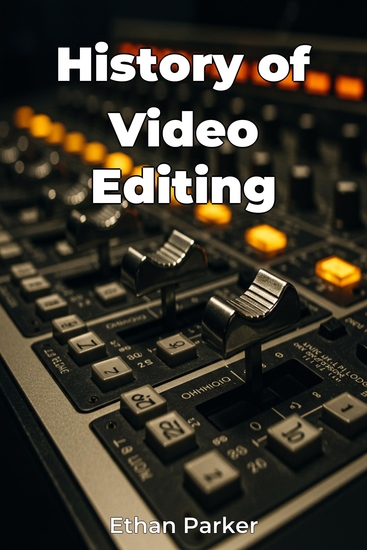
History of Video Editing - cover

History of Video Editing

Ethan Parker

Translator A Ai

Publisher: Publifye

  • 0
  • 0
  • 0

Summary

History of Video Editing charts the captivating journey of assembling moving images, from razor blades and glue to today's sophisticated digital systems. It explores how technological advancements, creative innovations, and cultural shifts have shaped the field of film editing, impacting visual storytelling and cinematic language. Did you know early film editors manipulated frames to create special effects, and that each leap in editing technology redefined narrative construction? The book uniquely links the evolution of editing technology to the development of film and television as art forms. 

 
The book delves into the mechanical era, the transition to analog video editing, and the rise of non-linear digital systems, highlighting the ingenuity required to overcome technical limitations. It emphasizes how each technological leap was intertwined with broader societal and artistic movements. 

 
Beginning with pioneering techniques like film splicing, the book progresses through analog video's real-time challenges to the digital revolution's non-linear editing, digital effects and compositing, ultimately leading to the current state of cloud-based workflows and AI.
Available since: 02/26/2025.
Print length: 73 pages.

Other books that might interest you

  • Nature’s Rhapsody Of Relaxing Campfire Nights For Inner Peace Emotional Healing & Stress Relief - Listen to the Soothing Sounds of Flickering Flames for Full Serenity using Enhanced 8D Audio Tracks - cover

    Nature’s Rhapsody Of Relaxing...

    Selena Brooke

    • 0
    • 0
    • 0
    Discover a journey of tranquility with "Nature’s Rhapsody Of Relaxing Campfire Nights For Inner Peace, Emotional Healing & Stress Relief." This captivating guide invites you to immerse yourself in the serene beauty of nature while exploring effective nature relaxation techniques that promote emotional healing and stress relief. 
    Set against the backdrop of enchanting campfire nights, this book provides insights into mindful camping experiences that encourage you to reconnect with the great outdoors. Each chapter offers practical exercises and reflective prompts designed to foster outdoor self-care and cultivate a sense of calm amidst the chaos of everyday life. 
    Learn how to create your own serenity rituals as you embrace the healing power of nature. The book emphasizes the importance of nature-based stress relief techniques, guiding you in developing a personal practice that nurtures your mind and spirit. You will find inspiration in the simplicity of nature, discovering how to integrate mindfulness in nature into your daily routine. 
    Whether you seek a quiet escape or a deeper connection with yourself, this book is your companion on the path to inner peace. Experience the profound benefits of guided outdoor meditation, and let the tranquility of the natural world transform your emotional landscape. 
    Join the journey to rejuvenation and harmony, and unlock the power of nature to heal and restore. With Nature’s Rhapsody, you'll embrace a lifestyle of serenity, emotional well-being, and personal growth, all under the stars by the warm glow of a campfire.
    Show book
  • The 49% Architect 51% Entrepreneur - A Blueprint for Entrepreneurship in Architecture - cover

    The 49% Architect 51%...

    Edgard Rios

    • 0
    • 0
    • 0
    The 49% Architect, 51% Entrepreneur: A Blueprint for Entrepreneurship in Architecture will inspire architects and aspiring architects with its insights into the visionaries of the past and a look to the future of architecture—and sustainability, the planet, and an urgent call to global stewardship of our fragile world.  The 49% Architect, 51% Entrepreneur: A Blueprint for Entrepreneurship in Architecture explores architectural history and the inspirations of the visionaries of the field including: • Ludwig Mies ven der Rohe • Le Corbusier • Frank Lloyd Wright • Gustave Eiffel • Zaha Hadid • Carme Pigem • And many Pritzker winners who have designed the greatest buildings in the world  In addition, the author examines the most pressing issues of architecture and society today, from global warming to the pressures and problems of city planning, from urban sprawl to a lack of commitment to the principles of urbanism. He shares his vision of cities of the future—with ground-breaking, original ideas of what buildings and cities and communities in the next century could be.  Architects must be both artists—and businesspeople and entrepreneurs capable of steering projects, partnerships, and companies forward, with a view toward creating sustainable structures and cities. By looking through the lens of the past, Edgard Rios helps readers imagine the future. He urges the citizens of the world to live in harmony with the landscape and world around it. By presenting cutting-edge concepts, The 49% Architect, 51% Entrepreneur presents a look at what the world could be, along with a clarion call to embrace environmental stewardship and sustainable practices.  Warm, inspiring, provocative, and thought-provoking, Edgard Rios aims to both challenge and applaud today’s architects, as well as inspire the next generation. He shares his insights gained from decades collaborating, creating, and envisioning transformative projects.
    Show book
  • Fort Lee: The Film Town - cover

    Fort Lee: The Film Town

    Richard Koszarski

    • 0
    • 0
    • 0
    During the 1910s, motion pictures came to dominate every aspect of life in the suburban New Jersey community of Fort Lee. During the nickelodeon era, D.W. Griffith, Mary Pickford, and Mack Sennett would ferry entire acting companies across the Hudson to pose against the Palisades. Theda Bara, "Fatty" Arbuckle, and Douglas Fairbanks worked in the rows of great greenhouse studios that sprang up in Fort Lee and the neighboring communities. Tax revenues from studios and laboratories swelled municipal coffers.Then, suddenly, everything changed. Fort Lee, the film town once hailed as the birthplace of the American motion picture industry, was now the industry's official ghost town. Stages once filled to capacity by Paramount and Universal were leased by independent producers or used as paint shops by scenic artists from Broadway. Most of Fort Lee's film history eventually burned away, one studio at a time.Richard Koszarski re-creates the rise and fall of Fort Lee filmmaking in a remarkable collage of period news accounts, memoirs, municipal records, previously unpublished memos and correspondence, and dozens of rare posters and photographs—not just film history, but a unique account of what happened to one New Jersey town hopelessly enthralled by the movies.Distributed for John Libbey Publishing
    Show book
  • Raw Black & Blue - cover

    Raw Black & Blue

    Shantre Pinkney

    • 0
    • 0
    • 0
    Raw, Black and Blue is a fictional love story told through the lens and journals of Tamia, a photographer navigating her relationships and mental health when she returns to her childhood home.
    Show book
  • The Art and Business of Songwriting - cover

    The Art and Business of Songwriting

    Larry D. Batiste

    • 0
    • 0
    • 0
    In this valuable resource guide for both beginners and professionals, veteran songwriter, producer, arranger, vocalist, music director, and educator Larry D. Batiste shares practical advice and tips from his decades of experience in ways that are bound to help all listeners improve their songwriting skills. Through this book, listeners will learn the craft of professional songwriting, including the ins-and-outs of song structure, lyric and melody writing, and the essential elements of a hit song. From the start, Batiste incorporates exercises to help songwriters strike upon ideas for song titles, concepts, and stories that will appeal to their audience. He also discusses critical business aspects of songwriting, such as copyrighting, publishing, royalties, networking, and digital media. In addition to the fundamentals, the listener will learn how to build their songwriting career, generate income, build an online community and fanbase, release music independently, expertly place their songs, and navigate the world of digital music. Throughout the book are interviews with iconic songwriters and producers such as Peter Asher, Lamont Dozier, and Narada Michael Walden, as well as independent recording artists, including Fantastic Negrito, a winner of multiple Grammy Awards, and Meklit Hadero.
    Show book
  • African Myths and Legends - Exploring the Rich History of African Folklore - cover

    African Myths and Legends -...

    Odessa Nightshade

    • 0
    • 0
    • 0
    African mythology is a vast and intricate tapestry woven from the oral traditions of countless ethnic groups across the continent. Unlike written records, these stories have been passed down through generations by storytellers, elders, and spiritual leaders who use them to explain the world, instill moral values, and preserve the history of their people. The myths and legends of Africa are deeply connected to the land, the ancestors, and the spiritual beliefs that guide daily life. They reflect not only the diversity of the continent but also the shared themes that bind its cultures together.  
    Myths in African societies serve multiple functions beyond simple entertainment. They provide explanations for natural phenomena, such as the origins of the sun, moon, and stars, as well as the formation of rivers and mountains. Many myths are also tied to religious beliefs, detailing the actions of gods, spirits, and ancestors who shape the destiny of human beings. These stories help maintain social order by offering lessons about morality, justice, and respect for tradition. In many communities, mythology is a central aspect of spiritual life, reinforcing the belief that the unseen world is just as real and influential as the physical one.  
    Oral tradition is the primary vehicle for preserving African myths and legends. Storytelling is an art form, often accompanied by music, dance, and dramatic performance. The storyteller, known in some cultures as a griot, holds a respected position in society, responsible for keeping the wisdom of the past alive. These narratives evolve over time, adapting to new circumstances while retaining their core lessons. Because of this, African folklore is dynamic, shaped by the voices of those who tell and retell the stories. 
    Show book