Join us on a literary world trip!
Add this book to bookshelf
Grey
Write a new comment Default profile 50px
Grey
Subscribe to read the full book or read the first pages for free!
All characters reduced
Genre Crossover - cover

Genre Crossover

Ethan Parker

Translator A AI

Publisher: Publifye

  • 0
  • 0
  • 0

Summary

Genre Crossover explores the increasing trend of genre blending in film and television, revealing how filmmakers strategically combine diverse conventions to create innovative hybrid narratives. This book argues that genre crossover is not just a stylistic choice but a powerful tool for exploring complex social issues and subverting audience expectations, ultimately redefining storytelling.

 
One intriguing fact is the emergence of combinations like Western-Sci-Fi, showcasing the vast possibilities of genre fusion; another is how these blends reflect underlying societal anxieties and cater to diverse audiences.

 
The book begins with a foundational understanding of genre theory, questioning rigid classifications in media. It then delves into case studies of films and television series, demonstrating successful genre crossover and how it shapes plot and character development.

 
Finally, it analyzes the broader cultural implications, emphasizing how these narratives serve as potent cultural commentary.

 
Through film and television criticism, media studies, and audience reception analysis, it highlights the strategic intent behind genre blending, making it a valuable resource for students, scholars, and media professionals.
Available since: 05/05/2025.
Print length: 66 pages.


Other books that might interest you

  • Steel Drivin' Man: John Henry the Untold Story of an American Legend - cover

    Steel Drivin' Man: John Henry...

    Scott Reynolds Nelson

    • 0
    • 0
    • 0
    The ballad "John Henry" is the most recorded folk song in American history and John Henry--the mighty railroad man who could blast through rock faster than a steam drill--is a towering figure in our culture. 
    In Steel Drivin' Man, Scott Reynolds Nelson recounts the true story of the man behind the iconic American hero, telling the poignant tale of a young Virginia convict who died working on one of the most dangerous enterprises of the time, the first rail route through the Appalachian Mountains. Using census data, penitentiary reports, and railroad company reports, Nelson reveals how John Henry, victimized by Virginia's notorious Black Codes, was shipped to the infamous Richmond Penitentiary to become prisoner number 497, and was forced to labor on the mile-long Lewis Tunnel for the C&O railroad. Equally important, Nelson masterfully captures the life of the ballad of John Henry, tracing the song's evolution from the first printed score by blues legend W. C. Handy, to Carl Sandburg's use of the ballad to become the first "folk singer," to the upbeat version by Tennessee Ernie Ford. 
    Attractively illustrated with numerous images, Steel Drivin' Man offers a marvelous portrait of a beloved folk song--and a true American legend.
    Show book
  • The Civic Brand - The Power & Responsibility of Place - cover

    The Civic Brand - The Power &...

    Ryan Short

    • 0
    • 0
    • 0
    The Civic Brand: The Power & Responsibility of Place is a bold and practical book that challenges conventional thinking about city-building, tourism, economic development, and community engagement. Author Ryan Short introduces a new framework for shaping more resilient, equitable, and loveable places that is rooted in identity, values, and a triple bottom line. 
    Drawing from years of experience working with cities, counties, and regions across the country, Ryan Short shows how fragmented efforts, siloed departments, and surface-level branding have left communities struggling to grow with intention or preserve what makes them special. The Civic Brand reveals how place branding, when done right, isn’t just logos or slogans, but about uniting people, guiding policy, and building shared civic pride. Blending strategic insight with vivid, often entertaining stories from the field, this book brings to life the challenges and triumphs of real places navigating growth, decline, and identity. 
    Whether facing overtourism or decline, rapid growth or disinvestment, division or disengagement, this book offers a bold path forward. It’s a call to city leaders, planners, business owners, developers, and residents alike to recognize their role in shaping place and to do so with purpose. 
    The Civic Brand is more than a book, it’s a movement to reimagine how we care for the places we call home.
    Show book
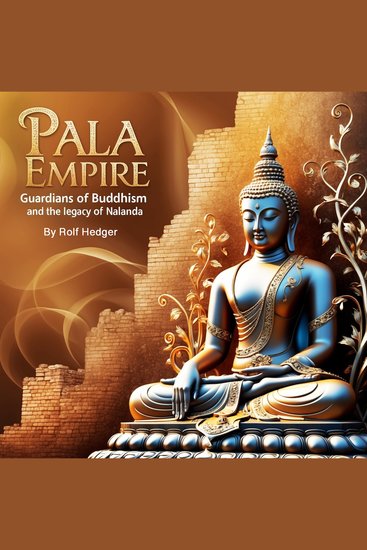
  • Pala Empire - Guardians of Buddhism and the Legacy of Nalanda - cover

    Pala Empire - Guardians of...

    Rolf Hedger

    • 0
    • 0
    • 0
    The Pala Empire emerged in the eastern regions of the Indian subcontinent during the eighth century, marking the beginning of a powerful dynasty that would shape the cultural and political landscape of Bengal and Bihar for nearly four centuries. The empire was established in a period of political fragmentation and instability following the decline of the earlier Gupta Empire and the subsequent rule of smaller, competing kingdoms. This power vacuum set the stage for the rise of a strong and centralized authority under the leadership of Gopala, the first ruler of the Pala dynasty. 
    Gopala's ascent to power is believed to have been unique for the time, as he was reportedly chosen by local chieftains and influential figures through a process of election, rather than simply inheriting his position through lineage. This suggests that his leadership was recognized as a unifying force in a region that had suffered from prolonged disorder and internal conflicts. Once in power, Gopala took significant steps to stabilize his realm, laying the foundation for what would become one of the most enduring dynasties in Indian history. He consolidated his rule over Bengal and expanded his influence into neighboring territories, establishing control over strategic trade routes and fertile agricultural lands that contributed to the empire’s prosperity. 
    Gopala’s son, Dharmapala, proved to be an even more ambitious ruler. Under his leadership, the Pala Empire reached its zenith, with its influence stretching far beyond Bengal into northern and central India. Dharmapala was not only a military leader but also a great patron of Buddhism, playing a crucial role in the expansion of Buddhist institutions, including the famed Nalanda University. His military campaigns brought him into direct conflict with two of the other major powers of the time, the Gurjara-Pratiharas and the Rashtrakutas.
    Show book
  • Nature's Harmony of Gentle Water Soundscapes Mixed with Lullaby Tracks for Deep Relaxation & Stress Relief - Experience Restful Nights for Full Body & Mind Recovery Using Enhanced BGM 8D Audio Sounds - cover

    Nature's Harmony of Gentle Water...

    Molly Mey

    • 0
    • 0
    • 0
    Rediscover peace and balance with Nature's Harmony of Gentle Water Soundscapes Mixed with Lullaby Tracks for Deep Relaxation & Stress Relief. This book is your sanctuary, offering a calm retreat from the fast-paced demands of daily life. Crafted for those seeking gentle relaxation techniques for full-body recovery, it provides a pathway to restore your inner harmony and well-being. 
    Within its pages, you'll find a journey of transformation, where stress melts away, and relaxation becomes second nature. Whether you are looking to enhance your nightly routine, embrace mindfulness, or cultivate lasting peace, this book offers practical tools and inspiration for creating moments of calm in your everyday life. 
    At the heart of this experience are lullaby-inspired pathways to stress relief and renewal, thoughtfully designed to guide you toward deeper rest and emotional rejuvenation. These elements encourage a state of profound relaxation that nurtures not just your body, but your mind and spirit as well. 
    Let this book help you reconnect with yourself and reclaim the serenity you deserve. With each chapter, you’ll feel more balanced, centered, and ready to face the world with a renewed sense of energy and calm. Whether you’re seeking restful nights, mindfulness, or simply a moment of escape, Nature's Concerto is your perfect companion. 
    Step into a world of tranquility where relaxation meets recovery. Allow this book to be your guide as you embark on a journey toward peace, self-care, and holistic well-being. Discover how a few intentional moments can transform your day—and your life.
    Show book
  • Sustainability in Software Engineering - Harnessing Eco-Efficient Techniques for Modern Development - cover

    Sustainability in Software...

    Steve Abrams

    • 0
    • 0
    • 0
    In "Sustainability in Software Engineering: Harnessing Eco-Efficient Techniques for Modern Development," readers are invited into the evolving world of sustainable software practices where innovation meets environmental responsibility. This book equips software engineers, tech leaders, and sustainability advocates with the essential knowledge and tools needed to integrate eco-efficiency into every stage of software development. 
    From foundational concepts and principles of sustainability to advanced techniques and strategies, the book provides a thorough exploration of how software engineering can contribute positively to the environment. Readers will discover how to optimize code for energy efficiency, select the right tools and technologies that reduce environmental impact, and implement green algorithms and architectures that promote sustainability. 
    Each chapter is enriched with real-world case studies, practical examples, and actionable insights that illuminate the path toward more sustainable software practices. Metrics and measurement tools are discussed in detail, providing readers with the means to assess their progress and impact. 
    "Sustainability in Software Engineering" is more than just a guide—it's a call to action for software professionals to lead the charge in creating a more sustainable future through thoughtful, responsible, and innovative engineering practices. Whether you're a developer, a project manager, or a CTO, this book will inspire and challenge you to make sustainability a core part of your professional projects and products. 
     
    Show book
  • The Song Dynasty - Economic and Technological Innovations - cover

    The Song Dynasty - Economic and...

    Jun Liu

    • 0
    • 0
    • 0
    The Song Dynasty (960–1279) emerged from the remnants of the fragmented Five Dynasties and Ten Kingdoms period, establishing a centralized government that would shape China for centuries. Unlike previous dynasties that relied heavily on military conquest, the Song prioritized administration, economic growth, and cultural development, laying the foundation for one of the most prosperous eras in Chinese history. 
    The dynasty is traditionally divided into two periods: the Northern Song (960–1127) and the Southern Song (1127–1279). The Northern Song was founded by Emperor Taizu, who implemented policies to weaken the power of military governors and strengthen civilian rule. This shift reduced the influence of warlords, allowing for a stable bureaucratic system. However, external threats, particularly from the Khitan Liao and later the Jurchen Jin, forced the court to focus on diplomacy and financial strategies rather than military expansion. Eventually, the Jin conquest of the north in 1127 led to the retreat of the Song court to the south, marking the beginning of the Southern Song period. Despite losing control over key northern territories, the Southern Song maintained a flourishing economy, driven by trade, technological advancements, and agricultural productivity. 
    The Song Dynasty’s political structure was characterized by a well-organized bureaucracy based on merit rather than aristocratic privilege. The expansion of the civil service examination system ensured that government officials were selected through rigorous academic testing rather than birthright. This system, rooted in Confucian ideals, emphasized knowledge of classical texts and governance principles, creating a scholar-official class that played a crucial role in state affairs. While this meritocratic system promoted stability, it also created a conservative bureaucracy resistant to radical reforms.
    Show book