Join us on a literary world trip!
Add this book to bookshelf
Grey
Write a new comment Default profile 50px
Grey
Subscribe to read the full book or read the first pages for free!
All characters reduced
Dance Trends Evolution - cover

Dance Trends Evolution

Ethan Parker

Translator A AI

Publisher: Publifye

  • 0
  • 0
  • 0

Summary

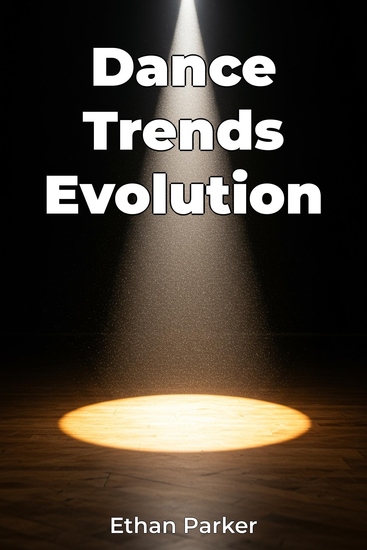
Dance Trends Evolution explores the captivating story of how dance crazes emerge, evolve, and reflect society. It examines dance not just as entertainment, but as a powerful form of cultural expression and social negotiation. The book uniquely blends performance analysis with cultural studies, revealing how dance interacts with social, political, and economic forces. For example, the book illuminates how dance trends often express prevailing social anxieties and aspirations, and how technological advancements impact the spread of dance styles.

 
The book progresses systematically across three parts. It begins by laying a foundation of key concepts and historical context and defining terms like "cultural appropriation". It then delves into specific dance trends such as the waltz, swing, hip-hop, and even TikTok dances, analyzing their origins, technical characteristics, and cultural impact.

 
Finally, the book synthesizes these findings to draw broader conclusions about dance's role in shaping cultural identities and fostering social change, offering a valuable perspective for anyone interested in dance history, performing arts, or cultural studies.
Available since: 02/22/2025.
Print length: 61 pages.
Other books that might interest you

  • Magic Mirror - Nine Practices to Be a Better Leader Colleague Educator Neighbor Friend and More - cover

    Magic Mirror - Nine Practices to...

    PhD Meagan Pollock

    • 0
    • 0
    • 0
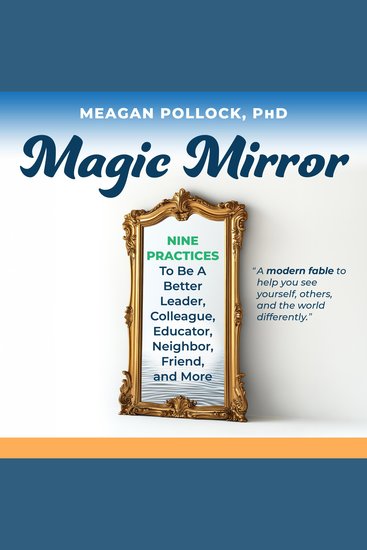
    What if the key to becoming a better leader, friend, and change-maker was hidden within your own reflection? When Mira stumbles across an ad for the “Magic Mirror—One Look Makes You a Better Person,” she’s skeptical. But curiosity pulls her into a journey beyond anything she imagined. Guided by the enigmatic Elara, Mira steps through the mirror into a world where self-discovery, empathy, and action converge. Along the way, she confronts hidden truths, challenges limiting beliefs, and unlocks the power of the Positionality Prism—a transformative framework for understanding identity, privilege, and power. This audiobook is for: 1) Those curious about identity, bias, and power and wanting to explore new perspectives; 2) Individuals eager to deepen their understanding and challenge assumptions; 3) Educators and leaders guiding conversations on equity, inclusion, and social change. With insightful lessons woven into an immersive narrative, Magic Mirror encourages reflection and transformation. It challenges listeners to step beyond their perspectives, see through new lenses, and navigate the world with greater empathy and awareness. Listeners also gain access to a companion workbook and a PDF summary to further engage with the book’s lessons. Download them at magicmirrorbook.com and continue your journey beyond the story.
    Show book
  • Second Crusade The: The History of the Controversial Campaign that Led to the Collapse of the Crusader States - cover

    Second Crusade The: The History...

    Charles River Editors

    • 0
    • 0
    • 0
    In the 50 years following the First Crusade, the Latin states in the East were consolidated, but there were also growing tensions and new challenges. Against this backdrop, the fall of the County of Edessa in December 1144 at the hands of Zengi, the atabeg of Aleppo and Mosul, was a catastrophic event. Founded in 1098 by the future King Baldwin of Boulogne, Edessa was the first Crusader state, as well as the northernmost, weakest, and least populated. It was constantly exposed to Muslim attacks, and news of its fall reached Europe at the beginning of 1145, and the fall was the catalyst for the Second Crusade. Furthermore, the Crusader states were also concerned about their relationship with the Byzantine Empire. Relations with the Empire were often tense. As early as 1105, Bohemond of Antioch travelled to the West in search of troops to fight the Muslims while concealing his intention to attack parts of the Byzantine Empire. He reportedly obtained papal acquiescence, though not an explicit bull.  
    Historically, writers have given little prominence to the Second Crusade because of its failure, and it is understandably overshadowed by the triumphant First Crusade and the more captivating Third Crusade. For a long time, historiography attributed a central role to Bernard of Clairvaux, sometimes portraying him as the sole architect of the enterprise due to the political difficulties experienced by Pope Eugene III in Rome. However, more recent studies have re-evaluated the Pope's role, emphasizing his commitment to planning and coordinating the crusade through a network of legates and advisors. Contrary to the portrayal of him as a naïve monk, Eugene III had a profound grasp of the dynamics of crusading and the boundaries of Christendom, which informed his bull and overall strategy. Another historiographical issue concerns the scope of the crusade itself:
    Show book
  • Events Unlimited Communication or Almost - cover

    Events Unlimited Communication...

    William Perkins

    • 0
    • 0
    • 0
    In this biography, events guru William Perkins recounts the high points of his life and reveals his little secrets.For this new art of the grandiose and the ephemeral, the means deployed are immense and the results magical and spectacular. And all for a single day, a single session, a show that will never be repeated! Like many artists whose talent and works carry the colors of France around the world, William Perkins, modest and secretive in his everyday life, never ceases to make the headlines abroad.
    Show book
  • The Age of Innocence - cover

    The Age of Innocence

    Edith Wharton

    • 0
    • 0
    • 0
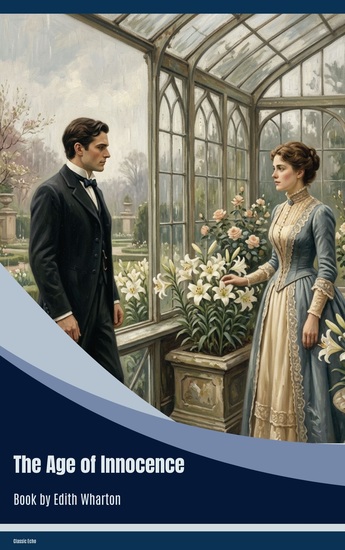
    When love and duty collide, every choice comes at a price.
    
    In The Age of Innocence, Edith Wharton masterfully portrays the elegance and complexity of New York's Gilded Age, where tradition, reputation, and personal desire shape every decision. Through unforgettable characters and emotionally rich storytelling, the novel explores the delicate balance between societal expectations and the pursuit of true happiness.
    
    Blending historical fiction with romance and keen social observation, Wharton examines timeless themes of love, sacrifice, freedom, and identity. Her graceful prose and psychological insight bring to life a world of refined customs, hidden emotions, and difficult choices, creating a narrative that remains as compelling today as when it was first published.
    
    Both intimate and sweeping, The Age of Innocence is celebrated for its richly developed characters, emotional depth, and brilliant portrayal of a changing society. Its universal themes continue to resonate with readers who appreciate literary fiction, historical classics, and thoughtful explorations of the human heart.
    
    Winner of the 1921 Pulitzer Prize for Fiction, The Age of Innocence stands as Edith Wharton's most celebrated novel and a landmark of American literature. Its enduring legacy has inspired acclaimed film, television, and stage adaptations, securing its place among the greatest literary classics ever written.
    
    Experience a masterpiece of love, society, and self-discovery. Download The Age of Innocence today and discover the Pulitzer Prize-winning novel that continues to captivate readers around the world.
    Show book
  • Breathmaker: The History and Legacy of the Seminole’s Creator God - cover

    Breathmaker: The History and...

    Editors Charles River

    • 0
    • 0
    • 0
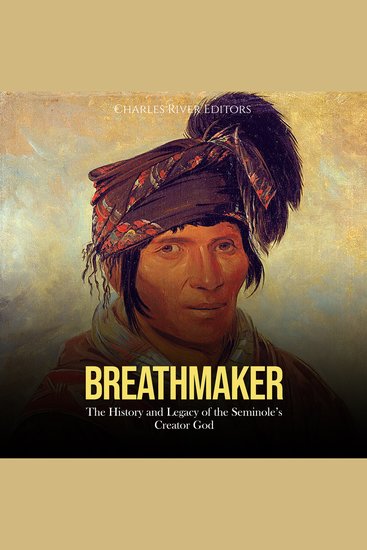
    The Seminole tribe is one of the best known Native American tribes, and one of the most feared among 19th century Americans and Spaniards. In fact, the origin of the term Seminole comes from a Spanish description of them as “wild”, which belies the fact that the Seminole had friendly relations with the British and Spanish during the colonial era.  
    	To appreciate Seminole Native American mythology, their history and origins must be understood. Their forebears, the Muscogee, first migrated into what is now the Southeastern United States from various points in the north and west, which they accomplished by overpowering the indigenous inhabitants. The region was already occupied by several groups, including the Yuchi and Hitchiti, tribes that were likely descendants of the Moundbuilders. These tribes were subdued and then integrated into the Muscogee system. Thus, the traditions, beliefs, rituals, and mythologies of these various groups became the communal belief system of the Muscogee collective.  	 
    	According to the Muscogee, humans emerged “somewhere in the west,” a location described as the “foundation of all things” or the “backbone” of the Earth. Most scholars associate this location with the Rocky Mountains, and they credit the Four Corners area of the United States as being the location for the creation myths of Native American groups like the Pueblo. Though still not commonly understood, Breathmaker became the creator god of the Seminole peoples (the name is also written as Breath Maker and Maker of Breath), and he became the center of a cycle of creation stories. 
    Show book
  • Toxic Water Toxic System - Environmental Racism and Michigan's Water War - cover

    Toxic Water Toxic System -...

    Michael Mascarenhas

    • 0
    • 0
    • 0
    The tireless resistance of local communities fighting for ownership of America's third largest water system 


    Toxic Water, Toxic System exposes the consequences of a seemingly anonymous authoritarian state willing to maintain white supremacy at any cost—including poisoning an entire city and shutting off water to thousands of people. Weaving together narratives of frontline activists along with archival data, Michael Mascarenhas provides a powerful exploration of the political alliances and bureaucratic mechanisms that uphold inequality. 


    Drawing from three years of ethnographic fieldwork in Flint and Detroit, this book amplifies the voices of marginalized communities, particularly African American women, whose perspectives and labor have been consistently overlooked. Toxic Water, Toxic System offers a fresh perspective on the ties between urban austerity policies, environmental harm, and the advancement of white supremacist agendas in predominantly Black and brown cities.
    Show book