Join us on a literary world trip!
Add this book to bookshelf
Grey
Write a new comment Default profile 50px
Grey
Subscribe to read the full book or read the first pages for free!
All characters reduced
Dance Scandals - cover

Dance Scandals

Ethan Parker

Translator A AI

Publisher: Publifye

  • 0
  • 0
  • 0

Summary

Dance Scandals exposes the rarely seen underbelly of the dance world, revealing a landscape often marred by exploitation, abuse, and cover-ups. This book delves into the ethical lapses that occur when the pursuit of artistic perfection overshadows basic human rights, highlighting how the intense drive for success and relentless competition can breed unethical conduct within dance institutions. Discover how societal pressures and economic factors contribute to a culture where artistic plagiarism and harassment can thrive.

 
The book progresses through a series of case studies, each focusing on different types of scandals, from financial impropriety to instances of abuse. Learn about the systemic nature of exploitation in elite dance academies and the damaging effects of relentless competition on dancers' mental and physical health. Dance Scandals explores how silence and complicity perpetuate a cycle of abuse, hindering genuine artistic growth.

 
Ultimately, Dance Scandals seeks to foster a more responsible and transparent dance community by advocating for improved governance, stronger ethical guidelines, and increased dancer empowerment. It provides practical recommendations for creating a safer and more equitable environment for dancers at all levels, thereby challenging the romanticized image of dance and prompting a necessary re-evaluation of the systems in place.
Available since: 02/24/2025.
Print length: 81 pages.

Other books that might interest you

  • Lighting Candles - A Paramilitary's War with Death Drugs and Demons - cover

    Lighting Candles - A...

    David Leslie

    • 0
    • 0
    • 0
    When Manny McDonnell was twelve, he awoke to discover British troops surrounding his home in the toughest area of trouble-torn Belfast. Internment had begun and, encouraged by a fiercely Republican mother, he took to the streets with other school kids, throwing bricks, bottles and petrol bombs at soldiers. Jailed at fifteen for having IRA links, he became a unit commander leading deadly missions for the INLA before joining the IPLO, a group so vicious even the IRA ordered it to disband. But his decades of commitment to a free united Ireland turned to disillusion when bombs indiscriminately killed two little boys in mainland Britain. It was a wake-up call and, sickened by the way events were unfolding, McDonnell distanced himself from the Troubles and began to spend more time in Scotland with major gangland players Paul Ferris and Tam 'The Licensee' McGraw. Friendly with both, he then faced difficult choices when the two fell out and became bitter rivals and sworn enemies. Lighting Candles is an astonishing and horrifying exposé of one man's journey through the blood, bombs and bullets of the paramilitaries to the criminal activities of drug-smuggling gangsters. It is also a story of how, no matter what has gone before, it's possible to put the past behind you and begin again.
    Show book
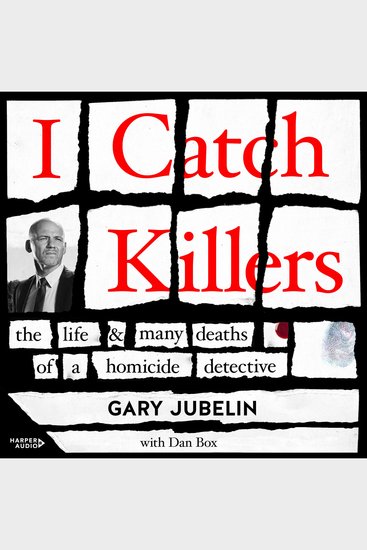
  • I Catch Killers - cover

    I Catch Killers

    Anonymous

    • 0
    • 0
    • 0
    THE #1 TRUE CRIME BESTSELLER. Serial killings, child abductions, organised crime hits and domestic murders. This is the memoir of a homicide detective. 
      
    WINNER OF 2021 DANGER PRIZE FOR NON-FICTION 
    Here I am: tall and broad, shaved head, had my nose broken three times fighting. Black suit, white shirt, the big city homicide detective. I've led investigations into serial killings, child abductions, organised crime hits and domestic murders. But beneath the suit, I've got an Om symbol in the shape of a Buddha tattooed on my right bicep. It balances the tattoo on my left ribs: Better to die on your feet than live on your knees. That's how I choose to live my life. 
    As a cop, I got paid to catch killers and I learned what doing it can cost you. It cost me marriages and friendships. It cost me my reputation. They tell you not to let a case get personal, but I think it has to. Each one has taken a piece out of me and added a piece, until there's only pieces. 
    I catch killers - it's what I do. It's who I am. 
    Gary Jubelin was one of Australia's most celebrated detectives, leading investigations into the disappearance of preschooler William Tyrrell, the serial killing of three Aboriginal children in Bowraville and the brutal gangland murder of Terry Falconer. During his 34-year career, Detective Chief Inspector Jubelin also ran the crime scene following the Lindt Cafe siege, investigated the death of Caroline Byrne and recovered the body of Matthew Leveson. Jubelin retired from the force in 2019. This is his story.
    Show book
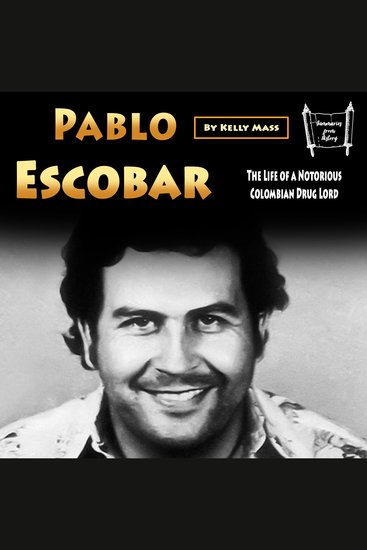
  • Pablo Escobar - The Life of a Notorious Colombian Drug Lord - cover

    Pablo Escobar - The Life of a...

    Kelly Mass

    • 0
    • 0
    • 0
    One of the big lords of the drug cartels in Colombia is Pablo Escobar, a criminal who became a leader and expanded his influence on organized crime throughout the North and South American continents. With billions in his bank account, in cash, and in other assents, it’s not easy to ignore his name and the power he gained. 
    In 1976, Escobar established the Medellín Cartel, which dispersed powder cocaine, and developed the first smuggling paths into the United States. In the 1982 Colombian parliamentary election, Escobar was chosen as an alternate member of the Chamber of Representatives as part of the Liberal Alternative movement. 
    What determined his road to success, his personal problems, and eventually, to his death? Learn more about this influential figure in recent modern-day history.
    Show book
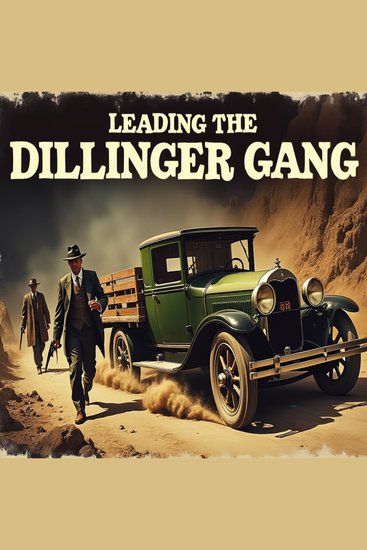
  • Leading the Dillinger Gang - cover

    Leading the Dillinger Gang

    Editors Charles River

    • 0
    • 0
    • 0
    America has always preferred heroes who weren’t clean cut, an informal ode to the rugged individualism and pioneering spirit that defined the nation in previous centuries. The early 19th century saw the glorification of frontier folk heroes like Davy Crockett and Daniel Boone. After the Civil War, the outlaws of the West were more popular than the marshals, with Jesse James and Billy the Kid finding their way into dime novels. And at the height of the Great Depression in the 1930s, there were the “public enemies”, common criminals and cold blooded murderers elevated to the level of folk heroes by a public frustrated with their own inability to make a living honestly. 
    	Two months after Franklin D. Roosevelt’s inauguration in 1933, a petty thief who had spent almost a decade behind bars for attempted theft and aggravated assault was released from jail. By the end of the year, that man, John Dillinger, would be America’s most famous outlaw: Public Enemy Number One. From the time of his first documented heist in early July 1933, until his dramatic death in late July of the following year, he would capture the nation’s attention and imagination as had no other outlaw since Jesse James. 
    	The man who became Public Enemy Number One after the deaths of John Dillinger and Pretty Boy Floyd was Lester Joseph Gillis, whose alias “George Nelson” eventually gave way to the nickname “Baby Face Nelson”. Despite the almost playfully innocent nickname, and the fact that he was not as notorious as two of his partners in crime, Dillinger and Floyd, Baby Face Nelson was the worst of them all. In an era where the outlaws were glorified as Robin Hood types, Baby Face was a merciless outlier who pulled triggers almost as fast as he lost his temper. He was believed to have been responsible for the deaths of more FBI agents than anybody else in American history.
    Show book
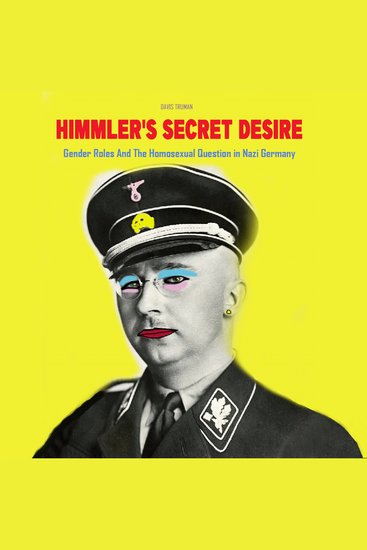
  • Himmler's Secret Desire - Gender Roles And The Homosexual Question in Nazi Germany - cover

    Himmler's Secret Desire - Gender...

    Davis Truman

    • 0
    • 0
    • 0
    This audiobook is narrated by an AI Voice.   
    In the whirlwind of early 20th-century Germany, Heinrich Himmler grapples with questions of masculinity and identity amidst a society in flux. Denied the opportunity to prove himself in war, Himmler is forced to confront his own biases when faced with the complexities of homosexuality. 
    Coming from a conservative background, Himmler's beliefs clash with the realization that masculinity can manifest in diverse ways, including within the LGBTQ+ community. As he ascends to power, his inner struggle reaches a climax with the notorious Bad Tölz speech of 1937, marking a dark chapter in Nazi history. 
    "Himmler's Secret Desire" delves deep into Himmler's journey, offering insights into Nazi attitudes towards gender and sexuality. It serves as a poignant reminder of the dangers of prejudice and the ongoing pursuit of acceptance and understanding.
    Show book
  • GOD RACE AND NATION - Inside the Ku Klux Klan's Secrets - cover

    GOD RACE AND NATION - Inside the...

    Brian Gibson

    • 0
    • 0
    • 0
    This book analyzes the profound symbolism encapsulated in the white robe and hood famously worn by the modern Ku Klux Klan, exploring their central role in shaping the racial consciousness of contemporary America. Tracing the historical evolution of Klan regalia, the book illustrates how the visual representation of the Klansman in uniform influenced the rise, expansion, and ultimately decline of this notorious white supremacist fraternity in the early 20th century. 
    The book meticulously examines the intricate interplay between the image of Klansmen in uniform, the clothes themselves, and the ideological underpinnings embraced by the Klan. It provides a compelling lens to understand the intricate connections between material culture, visual reconstruction, and material use.
    Show book