Join us on a literary world trip!
Add this book to bookshelf
Grey
Write a new comment Default profile 50px
Grey
Subscribe to read the full book or read the first pages for free!
All characters reduced
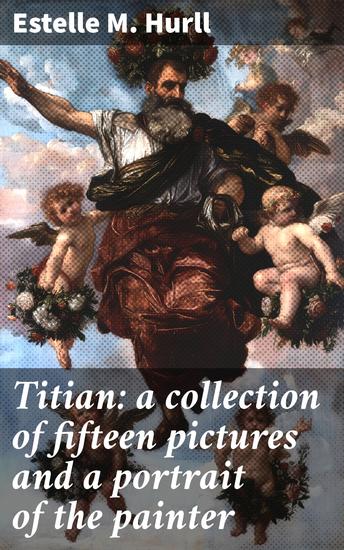
Titian: a collection of fifteen pictures and a portrait of the painter - Exploring the Renaissance Master's Artistic Legacy - cover

Titian: a collection of fifteen pictures and a portrait of the painter - Exploring the Renaissance Master's Artistic Legacy

Estelle M. Hurll

Publisher: Good Press

  • 0
  • 0
  • 0

Summary

In "Titian: A Collection of Fifteen Pictures and a Portrait of the Painter," Estelle M. Hurll presents a scholarly examination of the illustrious works of the Venetian master Titian. The book deftly interweaves detailed descriptions of fifteen paintings with an insightful analysis of Titian's artistic evolution. Hurll's literary style is characterized by its clarity and precision, meticulously contextualizing the vibrant color palettes and dynamic compositions that define Titian's oeuvre. This collection not only serves as an aesthetic celebration of Titian'Äôs work but also stands as a critical resource for understanding the cultural and historical milieu of the Italian Renaissance. Estelle M. Hurll, a dedicated art historian and critic, draws from her extensive knowledge of Renaissance art to illuminate the significance of Titian during a transformative period in European painting. Her deep appreciation for art history and critical methodologies informs her exploration, making it clear that Hurll is not just an observer, but a passionate advocate for preserving and interpreting art'Äôs rich legacy. Her perspective is enriched by a profound understanding of the influences that shaped Titian'Äôs career and the broader art world of his time. This book is an invaluable resource for art enthusiasts, students, and scholars alike, inviting readers to engage with Titian's mastery through a well-curated selection of his most influential works. Hurll's insightful commentary encourages a deeper appreciation for the nuances in Titian's artistry, making it a must-read for anyone seeking a comprehensive understanding of this pivotal figure in art history.
Available since: 09/18/2023.
Print length: 57 pages.

Other books that might interest you

  • Vibrational Harmony of Meditative Singing Bowls for Anxiety Relief Emotional Healing & Inner Peace - Experience Restful Nights for Complete Sleep & Relaxation using Amplified BGM 8D Audio Sounds - cover

    Vibrational Harmony of...

    Molly Mey

    • 0
    • 0
    • 0
    Discover the Path to Emotional Healing and Inner Peace 
    In today’s hectic world, finding moments of true calm can seem impossible. This book offers a holistic approach to healing, mental clarity, and emotional wellness, providing you with the tools to restore balance and peace in your life. Through mindful practices and restorative techniques, you’ll embark on a transformative journey of personal growth and emotional resilience, helping you overcome stress and embrace a life of tranquility. 
    Designed for anyone seeking to reduce stress, increase clarity, and find balance, this guide empowers you to unlock your inner peace and cultivate lasting well-being. Whether you’re dealing with anxiety, looking to improve your sleep, or striving to find more emotional stability, the practices within this book will help you achieve a sense of calm and control. 
    Inside, you’ll explore effective strategies to enhance mindfulness and foster restoration, allowing you to heal emotionally, physically, and mentally. With each practice, you’ll learn how to embrace peaceful living and connect deeply with your true self. This book offers the tools to help you manage your emotions, release negative energy, and create a life filled with balance and purpose. 
    Perfect for those looking to deepen their personal growth, improve emotional health, or reduce the effects of stress, this book provides powerful guidance for overcoming challenges and building emotional resilience. Whether you’re new to healing practices or have been on a journey of self-discovery for some time, this book serves as an invaluable resource to help you reach your goals.
    Show book
  • What Your Favorite Color Says About You - The Psychology of Color Preferences - cover

    What Your Favorite Color Says...

    John Harpoon

    • 0
    • 0
    • 0
    Color is a fundamental part of human experience, shaping emotions, perceptions, and even behavior. From ancient civilizations to modern psychology, color has been studied for its impact on the human mind. Some colors evoke feelings of warmth and excitement, while others create a sense of calm and relaxation. But beyond their immediate effects, colors can also serve as a reflection of personality and identity. The idea that a person’s favorite color reveals something about their character has intrigued psychologists, researchers, and individuals alike. This book explores the fascinating connection between color preferences and human psychology, offering insights into how and why we gravitate toward certain shades.  
    How a person develops a preference for a particular color is influenced by multiple factors, including early childhood experiences, cultural associations, and even genetic predispositions. Some psychologists suggest that color preferences are rooted in personal memories—positive experiences with a specific color may lead to a lasting affinity for it. Additionally, cultural and societal norms play a significant role in shaping perceptions of color. For example, while white represents purity and new beginnings in Western cultures, it is often associated with mourning in parts of Asia. These cultural variations demonstrate that color meanings are not universal, but rather deeply ingrained in social contexts.  
    Despite these external influences, color preferences are also highly personal and can evolve over time. A child who loves bright and playful colors like yellow or orange may later develop an appreciation for more subdued tones such as blue or gray. Life experiences, emotional growth, and shifting priorities contribute to these changes.
    Show book
  • Natural Processes in Textile Art - From Rust Dyeing to Found Objects - cover

    Natural Processes in Textile Art...

    Alice Fox

    • 0
    • 0
    • 0
    More and more textile artists are using natural processes in their work, from dyeing with rust to working with found and scavenged items, and this book is the first to bring these increasingly popular techniques together. It promotes a way of working creatively with what is close at hand, whether gathered on walks by the seashore or collected in your garden, and working in tune with natural processes, bringing the rhythms and unpredictability of nature into your work.
    Examples of this type of working include rust dyeing embroidered fabric to give it a natural patina, dyeing with garden fruits or seaweed, weaving with pieces of beachcombed fibre and printing with found objects. In all of this work nature is directly harnessed to make its mark.
    The book is illustrated with the finest examples of contemporary embroidery and textile-art work using nature, by artists whose practice is tied up with their experience of and respect for the natural environment, often capturing a very strong sense of place and a feeling of calmness and contemplation.
    Show book
  • Home Security - Volume 2 - cover

    Home Security - Volume 2

    Owen Jones

    • 0
    • 0
    • 0
    I hope that you will find the information helpful, useful and profitable. 
    The issues in this ebook concern various aspects of protecting your family and home and related ideas is organised into 15 chapters of about 500-600 words each. 
    I hope that it will interest those who are concerned about their safety.  
    There has always been an unacceptable amount of burglary. It is such a harrowing experience to be burgled. People are forced to accept that they are not safe even in their own homes. 
    In the days of larger families, it was not easy for the burglar. There was always someone at home, and usually several people. Burglars would be detected and easily overpowered. Nowadays, on the other hand, many people live alone, and many of those are elderly baby-boomers. 
    It can induce a permanent state of worry and anxiety. 
    One way around this, is to implement a home security system. They are actually quiet affordable now too. A decent home security system, coupled with friendly neighbours, is an affordable solution. 
    As an added bonus, I am granting you permission to use the content on your own website or in your own blogs and newsletter, although it is better if you rewrite them in your own words first. 
    In fact, the only right that you do not have is to resell or give away the book as it was delivered to you.
    Show book
  • Tokugawa Shogunate - Peace Isolation and the Preservation of Samurai Culture - cover

    Tokugawa Shogunate - Peace...

    Rolf Hedger

    • 0
    • 0
    • 0
    The Tokugawa Shogunate, also known as the Edo period (1603–1868), was a time of unprecedented peace and stability in Japan, following centuries of war and political fragmentation. This era began with the victory of Tokugawa Ieyasu at the Battle of Sekigahara in 1600, a decisive conflict that allowed him to consolidate power over the warring daimyo. Three years later, in 1603, he was granted the title of shogun by the emperor, officially marking the beginning of Tokugawa rule. 
    Ieyasu’s triumph at Sekigahara was not merely a military success but also a demonstration of his strategic brilliance and political foresight. By carefully forging alliances and exploiting rivalries among the daimyo, he ensured that his Tokugawa clan would emerge as the dominant force in Japan. Once in power, Ieyasu took immediate steps to secure his family’s hold over the nation. He redistributed land among the daimyo, rewarding loyal vassals and weakening potential threats. This reorganization of landholdings laid the foundation for the centralized feudal system that would define the Tokugawa era. 
    Although Ieyasu formally retired in 1605, passing the title of shogun to his son Tokugawa Hidetada, he continued to wield significant influence from behind the scenes. His retirement was a strategic move designed to solidify the legitimacy of hereditary succession, ensuring that the Tokugawa family would maintain control for generations. This transition of power set a precedent for stability, preventing the kind of succession disputes that had plagued previous shogunates.
    Show book
  • Piet Mondrian and artworks - cover

    Piet Mondrian and artworks

    Stéphanie Angoh

    • 0
    • 0
    • 0
    Piet Mondrian (1872-1944), who can be assigned to the school of classical modernism, was born in Amersfort, Netherlands. After studying in Amsterdam, he started his artist´s career in the impressionist style as a figure and landscape painter. His works from these years showed the influence of Vincent Van Gogh (1853-1890) and of Fauvism, a French school from the beginning of the 20th century. When he traveled to Paris in 1911, he discovered Pablo Picasso´s works (1881-1973) and, with that, Cubism. He thereafter became a pioneer of abstract painting in the Netherlands. From the 1920s on, his paintings show a vertical and horizontal composition that, combined with the oppositions of blue, yellow, red, and noncolored spaces, turned into his trademark. His art was very appreciated in New York, where he spent his last years. Mondrian was not only a painter but also an art theoretician and cofounder of the art school De Stijl.
    Show book