Join us on a literary world trip!
Add this book to bookshelf
Grey
Write a new comment Default profile 50px
Grey
Subscribe to read the full book or read the first pages for free!
All characters reduced
The Riddle of the Universe at the close of the nineteenth century - cover

The Riddle of the Universe at the close of the nineteenth century

Ernst Haeckel

Translator Joseph McCabe

Publisher: e-artnow

  • 0
  • 0
  • 0

Summary

Monism is the metaphysical and theological view that all is one, that there are no fundamental divisions, and that a unified set of laws underlie all of nature, which author Ernst Haeckel brilliantly examines.
Available since: 11/23/2023.
Print length: 293 pages.

Other books that might interest you

  • I Chose Me: You Can Too - Memoir by 2Benjii - cover

    I Chose Me: You Can Too - Memoir...

    Christopher Smith

    • 0
    • 0
    • 0
    Struggling with self-worth? Feeling lost? Self-Love issues? This is the book for you. This Self-Worth package includes a 13 page scroll detailing lessons Iv'e learned through this realm we call earth thus far that I KNOW will aid so many others along theirs. Read with an open mind and willingness to expand. I wish you all the best on your journey. 
    - Peace & Blessings
    Show book
  • As a Man Thinketh - The Original 1902 Classic (includes The Mastery of Destiny) (Reader's Library Classics) - cover

    As a Man Thinketh - The Original...

    James Allen

    • 0
    • 0
    • 0
    "As a Man Thinketh" by James Allen is a timeless philosophical work that explores the power of thought and its direct influence on a person's character, circumstances, and destiny. First published in 1903, this classic asserts that a man is literally what he thinks, and that by mastering one's thoughts, one can shape their life, health, and success. With its concise yet profound insights, the book offers practical wisdom on topics like purpose, serenity, and self-discipline. Often regarded as one of the foundational texts in the self-help and personal development genre, As a Man Thinketh continues to inspire readers to cultivate a mindset of responsibility, positivity, and inner strength. This dynamic audiobook edition, performed by Jason McCoy and Will Stauff, also includes The Mastery of Destiny, expanding Allen’s teachings with further reflections on self-determination, character building, and achieving true greatness through focused and ethical living.
    Show book
  • Kaale Hath Gorey Hath - cover

    Kaale Hath Gorey Hath

    Balbir Sandha Dadwindi

    • 0
    • 0
    • 0
    Kaale Hath Gorey Hath by Balbir Sandha Dadwindi is a collection of 15 unique chapters portraying the real-life struggles of middle-class and hardworking individuals. Through themes like greed, caste discrimination, and social injustice, the book reflects the emotional and social realities that listeners can deeply relate to.
    Show book
  • Washington's Heir - The Life of Justice Bushrod Washington - cover

    Washington's Heir - The Life of...

    Gerard N. Magliocca

    • 0
    • 0
    • 0
    The first biography of George Washington's extraordinary nephew, who inherited Mount Vernon and was Chief Justice John Marshall's right-hand man on the Supreme Court for nearly thirty years. 


    In Washington's Heir, Gerard N. Magliocca gives us the first published biography of Bushrod Washington, one of the most underrated Founding Fathers. Born in 1762, Justice Washington fought in the Revolutionary War, served in Virginia's ratifying convention for the Constitution, and was Chief Justice John Marshall's partner in establishing the authority of the Supreme Court. Though he could only see from one eye, Justice Washington wrote many landmark decisions defining the fundamental rights of citizens and the structure of the Constitution, including Corfield v. Coryell—an influential source for the Congress that proposed the Fourteenth Amendment. As George Washington's personal heir, Bushrod inherited both Mount Vernon and the family legacy of owning other people, one of whom was almost certainly his half-brother or nephew. Yet Justice Washington alone among the Founders was criticized by journalists for selling enslaved people and, in turn, issued a public defense of his actions that laid bare the hypocrisy and cruelty of slavery.
    Show book
  • Cryptography and the World Wars: The History of Codemaking and Codebreaking during Both Global Conflicts - cover

    Cryptography and the World Wars:...

    Editors Charles River

    • 0
    • 0
    • 0
    World War I was the first major conflict in which new electronic means of transmitting and receiving messages became a major factor in political and military operations. The electric telegraph was developed in the first half of the 19th century, and by 1850, there were several telegraph companies around the world providing a service that allowed virtually instantaneous communication over long distances. This was a major breakthrough, but the telegraph depended on the availability of wires to transmit messages between stations, meaning that if these wires were broken or damaged, communications were cut off. 
    	Of course, this came with a fundamental problem: radio, telephone, and telegraph messages could be intercepted by the enemy, potentially giving them notice of impending operations. To protect these electronic messages from being read by the enemy, armies began to use codes and ciphers to disguise the meaning of messages. Teams were created to devise effective codes and ciphers, and these were quickly followed by other teams whose role was to attempt to break the codes and ciphers used by the other side. As a result, a secret war began, almost completely hidden from public view, as the belligerents devised complex ways of hiding the real meaning of their own messages while simultaneously attempting to understand those of the enemy.  
    	During the Second World War, cryptography suddenly became a significant factor in warfare because of mid-20th century advances in communications technology. With radios small and common enough to be fitted into most individual vehicles and readily carried in a man-portable form, information and orders flowed from supreme headquarters to individual squad leaders, tanks, and soldiers at the front and back again.  
    Despite the power of the new technology and its metamorphic effects on warfare, cryptography's story during World War II remained a very human one. 
    Show book

  • Berlin - cover

    Berlin

    Ingo Latotzki, Claudia Latotzki

    • 0
    • 0
    • 0
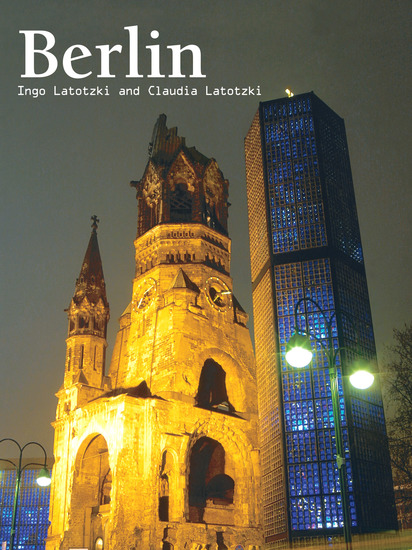
    In the past decade, Berlin has become the construction site of a new Reichstag, image of the German democracy, of futuristic buildings and incredible museums like the Pergamon or the Charlotteburg. Mythical sites such as the Alexanderplatz, the Unter den Linden, the arch of Brandeburg, the favourite esplanades of the Berliners, the Kurfürstendamm, breathe a new life and are illuminated once a year for the joyful celebration of the Love Parade. For these festivities, young people from all over the world come to express their passion for the city that has now become a symbol of joy and love. “Ich bin ein Berliner” were the words pronounced by JFK in the 1960s. After visiting Berlin, we can pronounce these memorable words without an ounce of shame.
    Show book