Join us on a literary world trip!
Add this book to bookshelf
Grey
Write a new comment Default profile 50px
Grey
Subscribe to read the full book or read the first pages for free!
All characters reduced
England's Antiphon - cover

England's Antiphon

Ernest Rhys

Publisher: DigiCat

  • 0
  • 0
  • 0

Summary

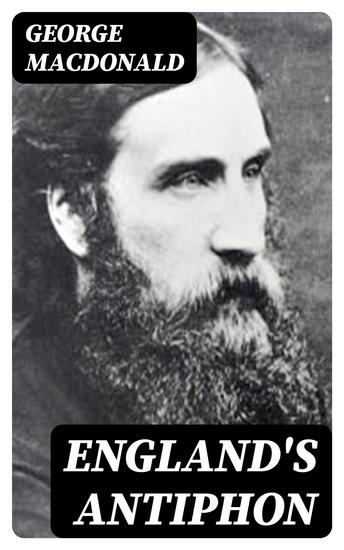
In "England's Antiphon," George MacDonald skillfully explores the intricacies of faith, identity, and the human experience through a series of poetic and philosophical reflections. Set against the backdrop of Victorian England, this work employs a lyrical style that blends narrative prose with rich, allegorical poetry. MacDonald's unique ability to weave together personal belief with broader themes of societal and spiritual significance allows readers to engage deeply with his examination of the struggle between earthly limitations and divine aspirations, effectively placing the text within the larger context of Victorian spiritual literature. George MacDonald (1824-1905), a Scottish author, poet, and Christian minister, profoundly influenced the realms of fantasy and literary imagination. His own journey through doubt, faith, and the challenges of the religious landscape in 19th-century Britain inspired him to articulate a vision of hope and reconciliation in his work. Raised in a devout family, MacDonald's experiences with both spiritual ecstasies and crises shaped his literary voice, embedding theological themes into his storytelling. "England's Antiphon" is a must-read for anyone interested in the intersections of literature and spirituality. MacDonald's profound insights and magnetic prose invite readers to reflect on their journeys and consider the beauty of faith amidst adversity. This work remains a significant contribution to the literary canon, encouraging earnest exploration and contemplation.
Available since: 09/16/2022.
Print length: 198 pages.

Other books that might interest you

  • The Adventures of Tom Sawyer - Experience the ultimate Classic Adventure of boyhood rebellion midnight graveyard secrets and the wild Mississippi River in this timeless masterpiece of American fiction - cover

    The Adventures of Tom Sawyer -...

    Mark Twain

    • 0
    • 0
    • 0
    Step into a sun-drenched world of barefoot escapades, stolen kisses, and deadly secrets hidden beneath the Mississippi moonlight. 
    In the quiet, seemingly innocent village of St. Petersburg, Missouri, young Tom Sawyer knows only two things: how to avoid work, and how to find trouble. Whether he's ingeniously tricking the neighborhood boys into whitewashing his Aunt Polly’s fence, playing pirate on a remote river island, or courting the lovely Becky Thatcher, Tom’s life is a masterclass in boyhood rebellion. But when Tom and the town outcast, Huckleberry Finn, sneak into the graveyard at midnight to cure warts with a dead cat, they accidentally witness a brutal murder. Suddenly, their innocent games of pirates and outlaws become terrifyingly real, plunging the boys into a harrowing game of cat-and-mouse with the ruthless killer Injun Joe. 
    Why you will love this: This definitive Classic Adventure captures the golden age of youth with unmatched wit and thrilling suspense. If you crave stories featuring mischievous rogues, coming of age journeys, small-town mysteries, and daring riverboat-era escapades, this audiobook is an absolute must-listen. Twain's masterful blend of brilliant satire, enduring friendship, and nail-biting danger guarantees that the legend of the mischievous boy will stay with you forever. 
    About the Author: Samuel Langhorne Clemens, known universally by his pen name Mark Twain, was a celebrated American humorist, essayist, and novelist. Revered as the "greatest humorist the United States has produced," Twain's pioneering use of vernacular speech and sharp social commentary forever transformed the landscape of modern literature.
    Show book
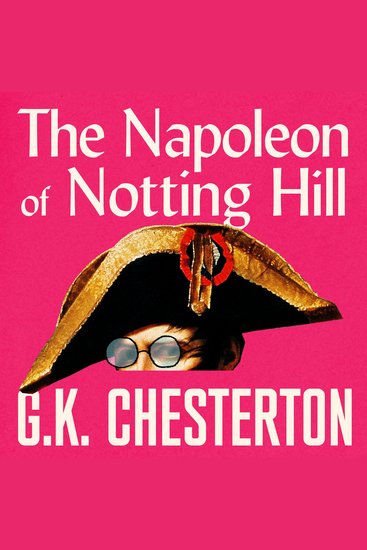
  • The Napoleon of Notting Hill - A Novel - cover

    The Napoleon of Notting Hill - A...

    G. K. Chesterton

    • 0
    • 0
    • 0
    'The joke is the noblest thing in the world. The joke is older than the throne, and will survive it.'
    
    A colourful reimagining of the year 1984, written eighty years before its occurrence, The Napoleon of Notting Hill is a playful yet philosophical satirical novel which explores how meaning can emerge from even the most absurd situations.
    
    The year is 1984. The British government has become impersonal and apathetic, not run by a particular party or corresponding ideology, but by the random selection of a new figurehead each year. When the eccentric Auberon Quin – who loves nothing more than a good gag – is chosen to lead the country, the nation begins to take a whimsical turn. In an attempt to liven up London, Auberon transforms the city into a mock-medieval town, complete with crests, flags and costumes. Everything is a joke – that is until Adam Wayne, a young man claiming to be the Napoleon of Notting Hill, begins to take it seriously. A masterclass in how even silliness can transcend into nobility, The Napoleon of Notting Hill is one of Chesterton's finest satirical works. This audiobook edition is compellingly narrated by Justin Avoth.
    Gilbert Keith Chesterton (1874 – 1936) was an English novelist, philosopher, journalist and critic. A Christian apologist, he is famed for creating the fictional priest-detective Father Brown. His writing was also renowned for his sense of humour: known as 'the prince of paradox', Chesterton often turned common sayings upside down. Admired by several of his literary contemporaries, Chesterton's work is still widely read today.
    Show book
  • Last of the Mohicans The - Audiobook - cover

    Last of the Mohicans The -...

    James Fenimore Cooper, Classic...

    • 0
    • 0
    • 0
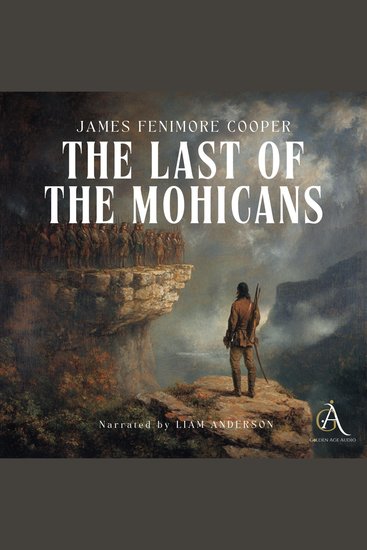
    Set during the French and Indian War, The Last of the Mohicans follows the perilous journey of two British sisters, Cora and Alice Munro, as they travel through the untamed wilderness of 18th-century America to reunite with their father, a British officer. Guided by the noble frontiersman Hawkeye and his Native American companions, Chingachgook and his son Uncas—the last members of the Mohican tribe—the group must evade treacherous enemies, including the vengeful Huron warrior Magua.The novel is a gripping tale of adventure, loyalty, and cultural conflict. It explores the tragic consequences of colonization and the fading way of life for Native American tribes. With its vivid descriptions of the American frontier and powerful themes of honor, identity, and sacrifice, The Last of the Mohicans has become a timeless classic in American literature.
    Show book
  • The Heathen - cover

    The Heathen

    Jack London

    • 0
    • 0
    • 0
    The Heathen is a short story by Jack London. John Griffith "Jack" London (born John Griffith Chaney, January 12, 1876 – November 22, 1916) was an American author, journalist, and social activist. He was a pioneer in the then-burgeoning world of commercial magazine fiction and was one of the first fiction writers to obtain worldwide celebrity and a large fortune from his fiction alone. He is best remembered as the author of The Call of the Wild and White Fang, both set in the Klondike Gold Rush, as well as the short stories "To Build a Fire", "An Odyssey of the North", and "Love of Life". He also wrote of the South Pacific in such stories as "The Pearls of Parlay" and "The Heathen", and of the San Francisco Bay area in The Sea Wolf. London was a passionate advocate of unionization, socialism, and the rights of workers and wrote several powerful works dealing with these topics such as his dystopian novel The Iron Heel, his non-fiction exposé The People of the Abyss, and The War of the Classes. On July 12, 1897, London (age 21) and his sister's husband Captain Shepard sailed to join the Klondike Gold Rush. This was the setting for some of his first successful stories. London's time in the Klondike, however, was detrimental to his health.
    Show book
  • The Heathen - cover

    The Heathen

    Jack London

    • 0
    • 0
    • 0
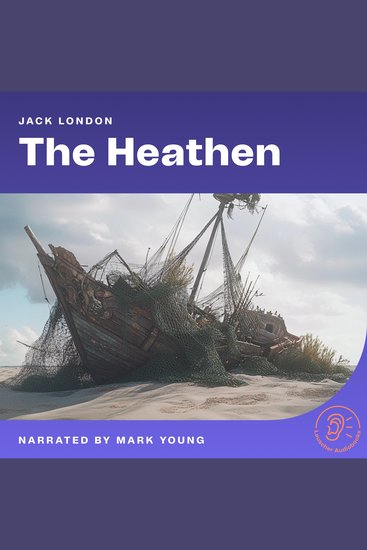
    "The Heathen" is a short story by the American writer Jack London. It was first published in Everybody's Magazine in August 1910.
    In the story, two people, from different cultural and racial backgrounds, are the only survivors of a ship that encounters a hurricane in the Pacific, and they remain together.
    The narrator, a pearl buyer named Charley, is a cabin passenger on a schooner, the Petite Jeanne, sailing from Rangiroa to Tahiti with a Kanaka crew, at the end of the pearling season in the Paumotas. The boat, having eighty-five deck passengers, is overloaded. Several passengers die of smallpox; Charley and the other cabin passengers drink whisky, until it runs out, in the belief that it will kill the smallpox germs.
    The boat is in the direct path of a hurricane. "The second sea filled the Petite Jeanne's decks flush with the rails, and, as her stern sank down and her bow tossed skyward, all the miserable dunnage of life and luggage poured aft. It was a human torrent.... Out of all my experiences I could not have believed it possible for the wind to blow as it did.... It was a monstrous thing, and the most monstrous thing about it was that it increased and continued to increase."
    Show book
  • The Lifted Veil - cover

    The Lifted Veil

    George Eliot

    • 0
    • 0
    • 0
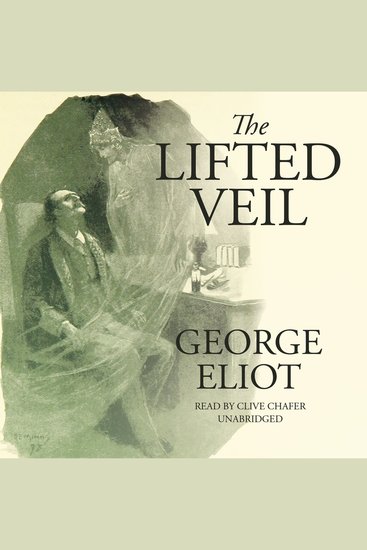
    George Eliot’s The Lifted Veil was first published in Blackwood’s Edinburgh Magazine in 1859 and has now become one of the author’s most widely read and critically discussed stories. Told from the point of view of a young, egocentric, and morbid clairvoyant man, Latimer, it is a dark fantasy portrait of an artist whose visionary powers merely blight his life. The story reflected the scientific interest of the time in the physiology of the brain, mesmerism, phrenology, and experiments in revivification. It also is a reflection of the author’s moral philosophy. 
    The Lifted Veil is a significant part of the Victorian tradition of horror fiction, along with Mary Shelley’s Frankenstein, Robert Louis Stevenson’s The Strange Case of Dr. Jekyll and Mr. Hyde, and Bram Stoker’s Dracula.
    Show book