Join us on a literary world trip!
Add this book to bookshelf
Grey
Write a new comment Default profile 50px
Grey
Subscribe to read the full book or read the first pages for free!
All characters reduced
The Sun Also Rises - cover

The Sun Also Rises

Ernest Hemingway

Publisher: The Ebook Emporium

  • 0
  • 0
  • 0

Summary

"You can't get away from yourself by moving from one place to another."

In the wake of World War I, a group of disillusioned American and British expatriates drifts through the cafes of Paris, searching for a purpose that the war stripped away. At the center of this circle are Jake Barnes—a journalist left impotent by a war wound—and the captivating, fiercely independent Lady Brett Ashley. Their journey takes them from the jazz-soaked nights of the Rive Gauche to the raw, sun-drenched intensity of the bullfights in Pamplona.

The Iceberg Theory in Action: Hemingway's revolutionary prose is on full display here. Using his "Iceberg Theory," he conveys deep emotional turmoil through sparse, rhythmic dialogue and direct action. Beneath the surface of every drink ordered and every trout caught lies a profound exploration of masculinity, resilience, and the "lost" nature of a youth that survived the trenches only to find a hollow peace.

The Ritual of the Bullring: The novel reaches its crescendo during the Fiesta de San Fermín. Hemingway contrasts the chaotic, drunken revelry of the expatriates with the "purity" and tragic grace of the bullfight. Through the young matador Pedro Romero, Hemingway explores the "grace under pressure" that becomes the only available virtue in a world where traditional moral structures have collapsed.

Experience the sunlit tragedy of a generation. Purchase "The Sun Also Rises" today and discover the origin of the modern American voice.
Available since: 01/05/2026.
Print length: 237 pages.

Other books that might interest you

  • Surviving Against All Odds: Tales of Shipwreck and Betrayal - "Unlock adventure with 'Surviving Against All Odds'—powerful audio stories that ignite your imagination!" - cover

    Surviving Against All Odds:...

    Silas Oakhire

    • 0
    • 0
    • 0
    Surviving Against All Odds: Tales of Shipwreck and Betrayal 
    ⭐⭐ Simplified Guide & Explanations Included ⭐⭐ 
    Are you eager to enhance your career and solidify your knowledge through inspiring stories of resilience and survival? 
    Searching for a comprehensive resource that captures all necessary elements to discover courage through incredible stories of human endurance? 
    Your quest ends here! 
    This guide serves as your ultimate companion for deepening your understanding, applying your insights, and engaging with compelling narratives of survival. With this, you're prepared to thrive. 
    Updated for the 2024-2025 edition. 
    Key features of this enriched guide: 
    - In-depth explorations of human courage and endurance through incredible tales of survival. 
    - Detailed narratives of shipwrecks and betrayal that illuminate the power of the human spirit. 
    - Effective strategies for drawing inspiration and lessons from remarkable survival stories. 
    Our guide stands out with its thorough coverage, which is essential for your journey through extraordinary accounts of strength. Concepts are not merely brushed over; they are examined with care. 
    Structured clearly and written in an easy-to-understand manner, our guide ensures seamless transitions between topics. Say goodbye to complex jargon and embrace clear, concise, and engaging content. 
    So, why wait? Click the BUY NOW button, secure your guide, and embark on your adventure through the captivating stories of Surviving Against All Odds: Tales of Shipwreck and Betrayal!
    Show book
  • Burying the Dead in Ancient Egypt: The History of Egyptian Mummies Tombs and Other Burial Rituals - cover

    Burying the Dead in Ancient...

    Editors Charles River

    • 0
    • 0
    • 0
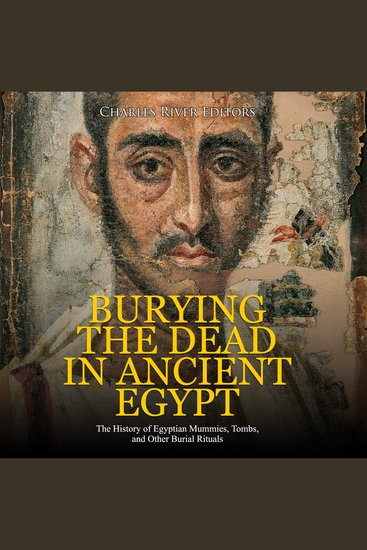
    Given the abundance of funerary artifacts that have been found within the sands of Egypt, it sometimes seems as though the Egyptians were more concerned with the matters of the afterlife than they were with matters of the life they experienced from day to day. This is underscored most prominently by the pyramids, which have captured the world’s imagination for centuries. The pyramids of Egypt are such recognizable symbols of antiquity that for millennia, people have made assumptions about what they are and why they exist, without full consideration of the various meanings these ancient symbolic structures have had over the centuries. Generations have viewed them as symbols of a lost past, which in turn is often portrayed as a world full of romance and mystery. This verbal meaning has become associated with the structures through the tourism industry, where intrigue obviously boosts ticket sales. In fact, the Egyptian pyramids are so old that they were also drawing tourists even in ancient times. In antiquity, the Great Pyramid of Giza was listed as one of Seven Ancient Wonders of the World, and it is the only one still surviving today. 
    The age and structural integrity of the pyramids also make them symbols of longevity and power, which is only fitting because those are two purposes the ancient pharaohs who commissioned these works intended them to serve. For the pharaohs, the construction of these large monuments presented an opportunity for them to showcase their influence and become something to be remembered by, both in the society they ruled and in the annals of history that would follow. Even as new dynasties came and went, and even as Egypt was subjected to foreign domination and rulers from across the world, the pyramids have continued to stand as a prominent testament to Egypt’s glorious past.
    Show book
  • Neon Girls - A Stripper's Education in Protest and Power - cover

    Neon Girls - A Stripper's...

    Jennifer Worley

    • 0
    • 0
    • 0
    A riveting true story of a young woman’s days stripping in grunge-era San Francisco where a radical group of dancers banded together to unionize and run the club on their own terms.  
    When graduate student Jenny Worley needed a fast way to earn more money, she found herself at the door of the Lusty Lady Theater in San Francisco, auditioning on a stage surrounded by mirrors, in platform heels, and not much else. So began Jenny’s career as a stripper strutting the peepshow stage as her alter-ego “Polly” alongside women called Octopussy and Amnesia. But this wasn’t your run-of-the-mill strip club—it was a peepshow populated by free-thinking women who talked feminist theory and swapped radical zines like lipstick. 
    As management’s discriminatory practices and the rise of hidden cameras stir up tension among the dancers, Jenny rallies them to demand change. Together, they organize the first strippers’ union in the world and risk it all to take over the club and run it as a co-operative. Refusing to be treated as sex objects or disposable labor, they become instead the rulers of their kingdom. Jenny’s elation over the Lusty Lady’s revolution is tempered by her evolving understanding of the toll dancing has taken on her. When she finally hangs up her heels for good to finish her Ph.D., neither Jenny nor San Francisco are the same—but she and the cadre of wild, beautiful, brave women who run the Lusty Lady come out on top despite it all.  
    A first-hand account as only an insider could tell it, Neon Girls paints a vivid picture of a bygone San Francisco and a fiercely feminist world within the sex industry, asking sharp questions about what keeps women from fighting for their rights, who benefits from capitalizing on desire, and how we can change entrenched systems of power. 
     
    Show book
  • Being Victorian - How it felt then Why it matters now - cover

    Being Victorian - How it felt...

    Jamie Camplin

    • 0
    • 0
    • 0
    Writers and poets, academics and art critics, mathematicians and experimental scientists, churchmen and politicians, women of strong opinions gather for a summer weekend in the 1870s. Is it real, or is it a fantasy? One thing's sure: their debates – about life's aims, rural and urban living, love and money, civilization and belief, the social framework, the past, the present and the future take us to the heart of the Victorian dream and its reality: the idea that their society exemplified 'Progress'. What did 'Progress' mean? Were things (and which things) getting better? What did 'better' mean? And for whom? The history of the world before the Victorians, from Aberdeen to Africa, showed a particular form of equality for almost everyone: an equality of poverty and no prospects, with kindness often in short supply. Victorians wanted to change that world, thought they were changing it, did change it. They did it in a human way: a melange of muddle, vision, certainty, doubt, too slow for many, too fast for some. Yet their changes were decisive both for creating the modern world, but also for revealing the dilemmas attached to mass living in urban, technological societies, as well as the moral flaws in imposing one civilization's or one person's beliefs on another. Most remarkably of all, the upheaval in making major transitions in every area of life, which produced revolutions and violence across Europe, in the Americas and in Asia, was carried out – at least in Britain itself – almost entirely peacefully. The past will always be a foreign country for those unwilling to engage with its people. Whether viewing the lives of rulers or the ruled, 'Being Victorian' corrects innumerable preconceptions.
    Show book
  • Traces of Enayat - cover

    Traces of Enayat

    Iman Mersal

    • 0
    • 0
    • 0
    "A subtle and universal exploration of identity." —Aida Alami, the New York Times 


    Cairo, 1963: four years before her lone novel is finally published, the writer Enayat al-Zayyat takes her own life at age twenty-seven. For the next three decades, it's as if Enayat never existed at all. 


    Years later, when celebrated Egyptian poet Iman Mersal stumbles upon Enayat's long-forgotten Love and Silence in a Cairo book stall, she embarks on a journey of reflection and rediscovery that leads her ever closer to the world and work of Enayat al-Zayyat. 


    In this luminous biographical detective story, Mersal retraces Enayat's life and afterlife though interviews with family members and friend, even tracking down the apartments, schools, and sanatoriums where Enayat spent her days. As Mersal maps two simultaneous psychogeographies—from the glamor of golden-age Egyptian cinema to the Cairo of Mersal's own past—a remarkable portrait emerges of two women striving to live on their own terms. With Traces of Enayat, Iman Mersal embraces the reciprocal relationship between a text and its reader, between past and present, between author and subject.
    Show book
  • The Common Wind - Afro-American Currents in the Age of the Haitian Revolution - cover

    The Common Wind - Afro-American...

    Julius S. Scott, Marcus Rediker

    • 0
    • 0
    • 0
    The Common Wind is a gripping and colorful account of the intercontinental networks that tied together the free and enslaved masses of the New World. Having delved deep into the gray obscurity of official eighteenth-century records in Spanish, English, and French, Julius S. Scott has written a powerful "history from below." Scott follows the spread of "rumors of emancipation" and the people behind them, bringing to life the protagonists in the slave revolution. 


    By tracking the colliding worlds of buccaneers, military deserters, and maroon communards from Venezuela to Virginia, Scott records the transmission of contagious mutinies and insurrections in unparalleled detail, providing listeners with an intellectual history of the enslaved. 


    Though The Common Wind is credited with having "opened up the Black Atlantic with a rigor and a commitment to the power of written words," the manuscript remained unpublished for thirty-two years. Now, after receiving wide acclaim from leading historians of slavery and the New World, it has been published for the first time, with a foreword by the academic and author Marcus Rediker.
    Show book