Join us on a literary world trip!
Add this book to bookshelf
Grey
Write a new comment Default profile 50px
Grey
Subscribe to read the full book or read the first pages for free!
All characters reduced
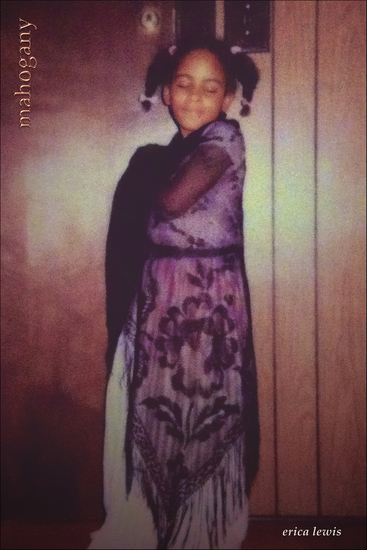
mahogany - cover

mahogany

Eric Lewis

Publisher: Wesleyan University Press

  • 0
  • 0
  • 0

Summary

mahogany takes its name from the dark wood prized for its durability, workability, and elegant look, and from the Diana Ross movie, whose theme song asks if what lies ahead is what you really want. This book is the third in a trilogy, and like the first two books it is steeped in pop music. Each poem here takes its title from a line of a Diana Ross and The Supremes song, as well as songs from Diana Ross' solo career. Short lines flow down the page like postmodern psalms, connecting dailyness to timelessness, merging the historical and the beloved through reverence for family, music, and the life we actually live. mahogany is a lament for the passing of time and unimaginable loss, and at the same time it models the daily search for joy, and the deep shine that can arise from the darkest times.[sample poem]i'm like a woman who once knew splendor*sometimes i feel like the pink pantherall naked and pinklost in the morass ofdo the best you can todayand nigga heal thy selfour end of winterspirits breaklike old tibetan snowi rememberyou was conflictedand i found myself alonehere on my ancient hurtthe disquieting humof living historydear god, pleaseput my head above my heartwe can only be togetherif the stories are toldplain facesame instrumentjust a couple of coke bottlesfull of gasolinelike god and rainis a waste of timemy mother used to clean housesas a childsome days i can barelyget out of bedin my mindshe's like diana rossscrubbing the white lady's stairsin lady sings the bluesexcept prettierand with green eyesi've just been livingoff of cough dropsand water and angerjust sitting in the whole foodsparking lot eating pineapplei am literallythe definition of "hot mess"pain changes everythingsomebody comeand pick upmy limp bodyoff the groundi am dyinga slow ohio deathwe miss you starmanit's our first sunrise of the burn* "dark side of the world"erica lewis
Available since: 09/05/2023.
Print length: 129 pages.

Other books that might interest you

  • The Carrying - Poems - cover

    The Carrying - Poems

    Ada Limón

    • 0
    • 0
    • 0
    WINNER OF THE NATIONAL BOOK CRITICS CIRCLE AWARD 
    FINALIST FOR THE PEN/JEAN STEIN BOOK AWARD 
    From U.S. Poet Laureate Ada Limón comes The Carrying—her most powerful collection yet. 
    Vulnerable, tender, acute, these are serious poems, brave poems, exploring with honesty the ambiguous moment between the rapture of youth and the grace of acceptance. A daughter tends to aging parents. A woman struggles with infertility—“What if, instead of carrying / a child, I am supposed to carry grief?”—and a body seized by pain and vertigo as well as ecstasy. A nation convulses: “Every song of this country / has an unsung third stanza, something brutal.” And still Limón shows us, as ever, the persistence of hunger, love, and joy, the dizzying fullness of our too-short lives. “Fine then, / I’ll take it,” she writes. “I’ll take it all.” 
    In Bright Dead Things, Limón showed us a heart “giant with power, heavy with blood”—“the huge beating genius machine / that thinks, no, it knows, / it’s going to come in first.” In her follow-up collection, that heart is on full display—even as The Carrying continues further and deeper into the bloodstream, following the hard-won truth of what it means to live in an imperfect world.
    Show book
  • Titus Andronicus - cover

    Titus Andronicus

    William Shakespeare

    • 0
    • 0
    • 0
    Titus Andronicus is the main character and tragic hero in William Shakespeare's play of the same name, Titus Andronicus, a Senecan tragedy. 
    Titus is a Roman nobleman and a general in the war who distinguished himself in ten years of service against the Goths. Despite his exemplary service the war's toll on him is sufficient that he declined the emperorship. Nonetheless, he begins the play as an exemplary citizen. However faith in the traditions of the Roman system of government eventually leads to his death as others seek revenge.
    Among the most significant works William Shakespeare: Hamlet, Othello, King Lear, Macbeth, Orpheus, Romeo and Juliet, Julius Caesar, Troilus and Cressida, The Tempest, Venus and Adonis, Antony and Cleopatra, Measure for Measure, The Winter's Tale and many more.
    Show book
  • Cocoa Butter Kisses - cover

    Cocoa Butter Kisses

    Poetic Elle

    • 0
    • 0
    • 0
    Cocoa Butter Kisses is an exclusive collection of literary art highlighting the raw and authentic journey of Elle's to and through self-love. With an array of poems, song lyrics, and short stories, Elle artistically addresses essential topics like depression, anxiety, heartbreak aftermath, and navigating through love's unexpected ebb's and flows in her work. Her words stress the importance of self-acceptance and the need for wholeheartedly discovering, honoring, and celebrating yourself without feeling guilty. Elle speaks honestly on the misconceptions, stigmas, and unrealistic expectations that many have around love incomparison to what social media portrays it to be in this 21st century. This piece is for anyone who struggles with self-expression and attracting love in all the right places. Just as a familiar touch comforts, music and poetry heal the soul.
    Show book
  • Be - cover

    Be

    Adrian Cox-Settles

    • 0
    • 0
    • 0
    Be is a collection of poems that delve into the intimate feelings of a young woman who didn’t see light at the end of the tunnel yet felt the light in her heart growing up in a dysfunctional family and community. The poems are raw. They describe a myriad of internal and external struggles the author endured that helped to shape the woman she is today. The poems speak of survival and success as the reader is encouraged to thrive in the face of adversity. The reader experiences the author’s vulnerabilities and the depths of her feelings as her sentiment unfolds on the pages—"There is light at the end of the tunnel, even if I can’t see it.” Be is a work of trials and triumphs. “Be” inspired.
    Show book
  • The Tent Generations - Palestinian Poems - cover

    The Tent Generations -...

    Fadwa Tuqan, Salem Jubran,...

    • 0
    • 0
    • 0
    From the Introduction by Mohammed Sawaie:
    The Palestinian poets included in The Tent Generations, Palestinian Poems represent different age groups and backgrounds, yet they all express a strong sense of "Palestinian-ness". They include Israeli citizens, the offspring of those who remained in Palestine after 1948. They also include poets who lived or continue to live in the West Bank and Gaza, areas that are still occupied, or controlled by Israelis as of this writing. Finally, they include poets born in Palestine, but whose families were expelled, or migrated to neighboring Arab countries as a result of the Arab-Israeli wars of the Nakba in 1948, and then of 1967 and 1973.
    The educational backgrounds of the poets represented here vary. Salem Jubran, Samih al-Qasim, Tawfiq Zayyad, and Marwan Makhoul, for example, were products of the Israeli educational system. Others attended institutions of learning in various Arab countries. Fadwa Tuqan received little formal education in her city of Nablus; she, however, acquired instruction in language, support in writing poetry, and encouragement to publish her poems from her brother, the well-known poet Ibrahim Tuqan, mentioned previously.
    All these poems are written in fusha Arabic, Modern Standard Arabic, the codified literary, written language shared by educated speakers of Arabic in their various respective regions. Palestinian folkloric poetry, referred to as al-Shi'r al-Sha'bi or Shi'r al-'Ammiyya, is not included in this work. Folk poetry, richly expressed orally in the Palestinian dialect, 'Ammiyya, embraces a variety of themes (national pride, panegyric, love, generosity toward guests/strangers, and so on), including the political themes expressed in the poems in this work. There is a rising interest in collecting and preserving this folkloric poetry, and several anthologies of oral poetry as well as studies have recently appeared.
    The 1948 Nakba, the wars of 1967 and 1973, and their subsequent tragic impact find expression in the work of Palestinian poets. Some of the authors in this collection had firsthand experience of the loss of home, and the up-rootedness from and destruction of their villages and cities. Others acquired knowledge of such experiences, the tragedy that befell Palestinians, through stories told by grandparents or parents, stories of hardship and deprivation transmitted from one generation to another. Thus, poets express in vocabulary specific to the Palestinian experience of the dispossession of homeland, the forced expulsion, the pain of living in the miserable conditions of refugee camps in the diaspora.
    Show book
  • Meditations in an Emergency - cover

    Meditations in an Emergency

    Frank O Hara

    • 0
    • 0
    • 0
    Collected poems from one of the Twentieth Century's most influential voices. 
    Frank O’Hara was one of the great poets of the twentieth century and, along with such widely acclaimed writers as Denise Levertov, Allen Ginsberg, Robert Creeley, and Gary Snyder, a crucial contributor to what Donald Allen termed the New American Poetry, “which, by its vitality alone, became the dominant force in the American poetic tradition.” 
    Frank O’Hara was born in Baltimore in 1926 and grew up in New England; from 1951 he lived and worked in New York, both for Art News and for the Museum of Modern Art, where he was an associate curator. O’Hara’s untimely death in 1966 at the age of forty was, in the words of fellow poet John Ashbery, “the biggest secret loss to American poetry since John Wheelwright was killed.”. 
    This collection is a reissue of a volume first published by Grove Press in 1957, and it demonstrates beautifully the flawless rhythm underlying O’Hara’s conviction that to write poetry, indeed to live, “you just go on your nerve.
    Show book