Join us on a literary world trip!
Add this book to bookshelf
Grey
Write a new comment Default profile 50px
Grey
Subscribe to read the full book or read the first pages for free!
All characters reduced
Waterloo: A sequel to The Conscript of 1813 - cover

Waterloo: A sequel to The Conscript of 1813

Erckmann- Erckmann-Chatrian

Publisher: DigiCat

  • 0
  • 0
  • 0

Summary

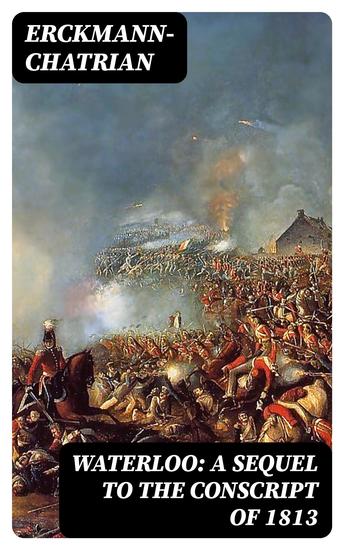
In "Waterloo: A Sequel to The Conscript of 1813," Erckmann-Chatrian deliver a poignant exploration of the human condition against the backdrop of the Napoleonic Wars. This historical novel masterfully intertwines personal narratives with significant historical events, providing a vivid portrayal of the 1815 Battle of Waterloo. The authors utilize a rich, descriptive literary style that immerses readers in the chaos of battle while simultaneously delving into the psychological states of their characters, showcasing the interplay between heroism and futility. Their nuanced approach presents a multilayered examination of loyalty and sacrifice, shedding light on the deeply personal costs of war. The collaboration between Émile Erckmann and Alexandre Chatrian was driven by their shared passion for history and literature, both men being products of the turbulent period of the 19th century in France. Their works often reflect their interest in the social implications of war, informed by their own experiences and the tumultuous backdrop of post-Napoleonic Europe. This sequel not only builds upon the narrative of its predecessor but also serves to amplify their collective voice, exploring themes of morality and destiny shaped by the chaos of conflict. Readers seeking an evocative blend of historical insight and character-driven storytelling will find "Waterloo" both compelling and enlightening. It stands as a significant contribution to the literature of war, offering timeless reflections on bravery, loss, and the haunting remnants of individual choices. This book is an essential read for anyone interested in the interplay of history and personal narrative, making it a valuable addition to both literary and historical collections.
Available since: 07/20/2022.
Print length: 186 pages.

Other books that might interest you

  • Say It Skillfully - Speak Up Make Your Words Matter Win Together - cover

    Say It Skillfully - Speak Up...

    Molly Tschang, Marshall...

    • 0
    • 0
    • 0
        Effective communication is the ultimate currency. It *is* the way to trusted relationships, great work and a happy life—and it’s a team sport. All of us play a role.Whether you’re a CEO, mid-level manager, or individual contributor, Say It Skillfully will empower you to:* Communicate with confidence* Navigate tough conversations with grace* Build stronger relationships, and* Drive meaningful results—ensuring your voice is heard and your impact is maximized.
    Show book
  • The Albigensian Crusade - Heresy and Conflict - cover

    The Albigensian Crusade - Heresy...

    Harris Ropes

    • 0
    • 0
    • 0
    The Cathars emerged as one of the most distinctive and controversial religious movements of medieval Europe, particularly in the Languedoc region of modern-day southern France. Rooted in dualist beliefs, the Cathars rejected many of the core teachings of the Catholic Church, viewing the material world as the creation of an evil force and striving for spiritual purity. Their growing influence in the 12th and 13th centuries alarmed both the Church and secular rulers, eventually leading to their violent suppression during the Albigensian Crusade. 
    The origins of Catharism can be traced to earlier dualist traditions, particularly those of the Bogomils in the Balkans. These beliefs likely spread into western Europe through trade routes and missionary activity, finding fertile ground in the tolerant and prosperous culture of Languedoc. Cathar teachings were based on a stark division between the material and spiritual realms. They believed that the physical world was ruled by a malevolent force, often associated with Satan, while the true God presided over the spiritual world. This view led them to reject the Catholic Church, which they saw as corrupt and complicit in the worship of the material. Unlike the Church, which emphasized hierarchical structure, the Cathars maintained a simpler, more egalitarian approach to religious life. 
    Cathar society was structured around two primary groups: the Perfects and the Believers. The Perfects, considered the spiritual elite, led austere lives dedicated to prayer, fasting, and celibacy. They followed strict moral codes, renouncing wealth and worldly pleasures in pursuit of spiritual enlightenment. Believers, while not held to the same rigorous standards, supported the Perfects and aspired to receive the consolamentum, a ritual that purified the soul before death. Cathars rejected many Catholic sacraments, including baptism by water, believing instead in a form of spiritual baptism.
    Show book
  • Naked Mind: Manipulation Dark Psychology and Critical Thinking - The Art of Soul Reading Influences Through Persuasion and Brainwashing Learn Body Language and Facial Expressions easily - cover

    Naked Mind: Manipulation Dark...

    Chase Hughas

    • 0
    • 0
    • 0
    Would you like to be able to manipulate other people’s minds with ease? 
    Do you want to learn how to better yourself to become successful? 
    Then you are in the right place: thanks to “Naked Mind: Manipulation, Dark Psychology and Critical Thinking” you will discover the subtle art of dark psychology and learn to control other people's minds. 
    In this book, you'll learn that there is much more to it than that. You will see what people are doing each day, consciously and subconsciously, and how to recognize it faster. 
    Here's what you'll learn:The Basics of Dark PsychologyWhat is Body LanguageThe Importance of Analyzing PeopleHypnosisMind control techniquesThe Basics of Persuasion and Dark PsychologyWhy is Persuasion So Important?Changing MindsetsTechniques of PersuasionWhat Causes Specific Personality Traits How Different Personalities See the WorldImportance of Emotional Intelligence in Human LifeUnderstand the Various Dark Personalities: Psychopaths, Narcissists & MachiavelliansDark Psychology vs. Covert Emotional Manipulation             Concept of EmpathyDark Methods of ManipulationHow to Use Dark Psychology to Succeed at WorkGaslighting 
    Don't let yourself be victimized any longer. Manipulation is all around you, and it's impossible to escape. But it's not impossible to fight. Turn their tactics against them. 
    If you want to learn how to influence other people's subconsciousness and control their minds, all you have to do is follow the easy guides found in this book.  
    You will become the master of persuasion and mind control in no time. So what are you waiting for? 
    Get your copy today!
    Show book
  • Showa Era - Empire War and the Post-War Transformation of Japan - cover

    Showa Era - Empire War and the...

    Rolf Hedger

    • 0
    • 0
    • 0
    The Showa Era began on December 25, 1926, with the ascension of Emperor Hirohito following the death of his father, Emperor Taisho. This period marked a critical turning point in Japan’s history, as the nation transitioned from the political turbulence of the Taisho democracy to a time of increasing militarism and nationalist sentiment. Although the early years of the Showa Era were characterized by economic struggles and political instability, they also set the stage for Japan’s dramatic expansion and eventual involvement in global conflict. 
    Emperor Hirohito’s rise to the throne was met with both hope and uncertainty. Many saw him as a symbol of continuity and strength, while others were concerned about the growing influence of the military in governmental affairs. Unlike his father, whose reign was defined by a parliamentary democracy, Hirohito’s early years as emperor witnessed the gradual erosion of democratic institutions. The shift toward a more authoritarian government was driven by widespread dissatisfaction with the parliamentary system and the belief that Japan needed strong leadership to navigate domestic and international challenges. 
    One of the most pressing issues Japan faced at the beginning of the Showa Era was economic instability. The global economy had already begun to weaken, and in 1929, the Wall Street Crash sent shockwaves through Japan’s financial system. The economic downturn led to mass unemployment, factory closures, and widespread poverty, exacerbating social tensions. Farmers, who made up a significant portion of Japan’s population, suffered greatly as the price of rice plummeted, leading to rural hardships that fueled growing resentment toward the government. In response, nationalist and ultraconservative factions gained popularity, advocating for territorial expansion as a means to secure resources and economic stability.
    Show book
  • The Wari Empire - Pre-Incan Conquerors and the Engineers of South America - cover

    The Wari Empire - Pre-Incan...

    Rolf Hedger

    • 0
    • 0
    • 0
    The Wari Empire emerged as one of the most influential pre-Incan civilizations in the Andean region, setting the foundation for future Andean states, including the Inca. Its origins can be traced back to the highlands of present-day Peru, where early societies laid the groundwork for its rise. The unique combination of environmental adaptation, cultural influences, and political innovation allowed the Wari to establish a powerful state that would dominate much of the central Andes for centuries. 
    Before the Wari civilization took shape, the Andean region was home to various cultures that contributed to its development. Among these, the Chavín culture, which thrived from around 900 to 200 BCE, played a crucial role in spreading religious and artistic traditions that later influenced Wari art and iconography. The Nazca civilization, known for its intricate geoglyphs and advanced irrigation techniques, also left an imprint on Wari agricultural and engineering practices. However, it was the lesser-known Huarpa culture of the Ayacucho Valley that provided the most direct influence on early Wari society. The Huarpa people developed small-scale irrigation systems, terraced farming, and distinct ceramic styles, all of which became defining features of Wari civilization. 
    Sometime between 500 and 600 CE, the Wari began to expand beyond their heartland in the Ayacucho region. This expansion was driven by both environmental necessity and strategic ambition. The high-altitude valleys of the central Andes provided fertile land for agriculture, but they were also subject to fluctuating climatic conditions. To mitigate these challenges, Wari elites developed large-scale irrigation systems and storage facilities, ensuring food security for growing populations. This ability to manage resources effectively gave them an advantage over neighboring groups, allowing them to assert dominance through both diplomacy and military conquest.
    Show book
  • The Storied Life - Christian Writing as Art and Worship - cover

    The Storied Life - Christian...

    Jared C Wilson

    • 0
    • 0
    • 0
    When writers write, they are getting in touch with the image of God in them. This is true in some way of all artistry, but writers especially create worlds, characters, histories, and transformation--all ex nihilo ("out of nothing"). 
    In The Storied Life, veteran author Jared C. Wilson explores the ins and outs of writers and writing, exploring the myriad ways the craft is more about transformation than simply communication. From decades of experience and with his signature wit, Wilson brings well-earned insight, autobiographical reflections, and meaningful meditations to the topic of writing as a way of life and as a way of worship, showing how the concept of Story--our personal stories and God's grand story of redemption--shapes fiction and non-fiction writers alike. 
    Chapters focus on topics like:The liturgy of story.Writing as a spiritual act.Perseverance and endurance.Writing as a calling.Promotion, publishing, and platform. 
      
    Whether you're a long-time writer or a beginning author, a daily journaler or an occasional dabbler, The Storied Life will help you improve your craft. It will lead you to think more deeply about the disciplines and dispositions needed to write for transformation. 
    Recommended readingcan be found in the audiobook companion PDF download.
    Show book