Join us on a literary world trip!
Add this book to bookshelf
Grey
Write a new comment Default profile 50px
Grey
Subscribe to read the full book or read the first pages for free!
All characters reduced
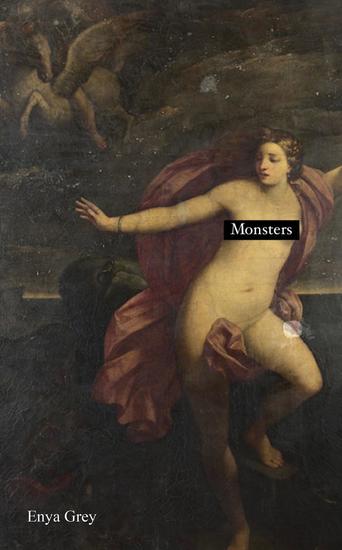
Monsters - cover

Monsters

Enya Grey

Publisher: Austin Macauley Publishers

  • 0
  • 0
  • 0

Summary

For she knows that she is his creation, a monster herself.

So she tries to fit in and become somebody else.

The forced noise of happiness births from her stapled lips.

She ravages and mauls at her skin, not a sound of pain as she begins to rip.

Even with her mask in place, she does not belong here, even when in disguise.

They can see straight through to her soul through her transparent eyes.

There they source innocence and naivety, hope, and ignorance.

And so, the man they call Narcissus, asks her to dance.

And so, begins the story all over again.

Into his arms she was beckoned in.

Hope raped by Narcissus birthed a gorgon conception.

Birthed a child who shook her head at love and any form of affection.
Available since: 08/15/2025.
Print length: 42 pages.

Other books that might interest you

  • Ancient Egyptian Legends - cover

    Ancient Egyptian Legends

    Margaret Alice Murray

    • 0
    • 0
    • 0
    Brought to you by Altrusian Grace Media and narrated by Matthew Schmitz. 
    "Ancient Egyptian Legends" by Margaret Alice Murray is a collection of mythological tales written in the early 20th century. The book recounts the rich legends of ancient Egyptian gods and their exploits, offering readers an accessible retelling of stories that have captivated scholars and enthusiasts alike. Aimed at a general audience, it presents narratives of legendary figures such as King Rameses, Osiris, and Horus, highlighting their adventures and relationships within a vibrant mythological context. The opening of the work introduces the premise and intentions behind the narratives presented. The author explains her approach to retelling these legends, maintaining the essence of the Egyptian stories while adapting them for English readers. The first story, "The Princess and the Demon," features King Rameses, who is beset with challenges surrounding his newfound love, Queen Neferu-Ra, and her family. As the tale unfolds, it explores themes of love, duty, and supernatural intervention, setting the stage for the epic conflicts and divine interactions that characterize the subsequent stories in the collection. Overall, this introduction promises a rich exploration of Egyptian mythology, inviting the reader into a fascinating world of gods, kings, and enchanted beings.  
    Eleven tales of mythology concerning the Ancient Egyptian gods and goddesses. Stories such as The Princess And The Demon, The King's Dream, The Book Of Thoth, The Scorpians Of Isis, The Battles Of Horus, The Name Of Ra and The Regions Of Night And Darkness.
    Show book
  • Ode - The Age of Dryden' is a fitting marker for why he stood above all the others of his age - cover

    Ode - The Age of Dryden' is a...

    John Dryden

    • 0
    • 0
    • 0
    John Dryden was born on August 9th, 1631 in the village rectory of Aldwincle near Thrapston in Northamptonshire. As a boy Dryden lived in the nearby village of Titchmarsh, Northamptonshire. In 1644 he was sent to Westminster School as a King's Scholar.  
    Dryden obtained his BA in 1654, graduating top of the list for Trinity College, Cambridge that year.  
    Returning to London during The Protectorate, Dryden now obtained work with Cromwell's Secretary of State, John Thurloe. 
     At Cromwell's funeral on 23 November 1658 Dryden was in the company of the Puritan poets John Milton and Andrew Marvell.  The setting was to be a sea change in English history. From Republic to Monarchy and from one set of lauded poets to what would soon become the Age of Dryden. 
    The start began later that year when Dryden published the first of his great poems, Heroic Stanzas (1658), a eulogy on Cromwell's death.  
    With the Restoration of the Monarchy in 1660 Dryden celebrated in verse with Astraea Redux, an authentic royalist panegyric. 
     With the re-opening of the theatres after the Puritan ban, Dryden began to also write plays. His first play, The Wild Gallant, appeared in 1663 but was not successful. From 1668 on he was contracted to produce three plays a year for the King's Company, in which he became a shareholder. During the 1660s and '70s, theatrical writing was his main source of income.  
    In 1667, he published Annus Mirabilis, a lengthy historical poem which described the English defeat of the Dutch naval fleet and the Great Fire of London in 1666. It established him as the pre-eminent poet of his generation, and was crucial in his attaining the posts of Poet Laureate (1668) and then historiographer royal (1670). 
    This was truly the Age of Dryden, he was the foremost English Literary figure in Poetry, Plays, translations and other forms. 
    In 1694 he began work on what would be his most ambitious and defining work as translator, The Works of Virgil (1697), which was published by subscription. It was a national event.  
    John Dryden died on May 12th, 1700, and was initially buried in St. Anne's cemetery in Soho, before being exhumed and reburied in Westminster Abbey ten days later.
    Show book
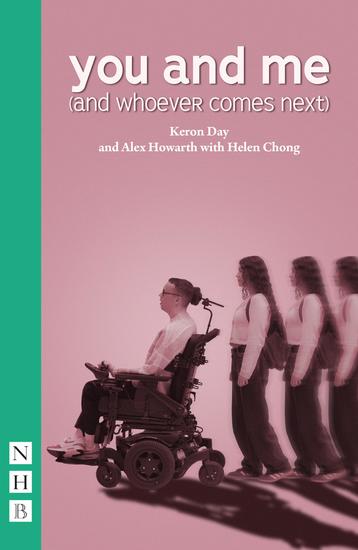
  • You and Me (and Whoever Comes Next) - cover

    You and Me (and Whoever Comes Next)

    Keron Day, Alex Howarth

    • 0
    • 0
    • 0
    'It's not your job to help me, Keron. It's literally the other way round.'
    Keron Day is disabled. Dani is his newly appointed Personal Assistant (not as fancy as it sounds). She is the latest of many, and Keron, longing for stability, needs this to work.
    But as their working relationship becomes a friendship and Dani's life outside of Keron threatens to harm them both, the boundaries of caring become increasingly blurred.
    Inspired by real events, You and Me (and Whoever Comes Next) is a touching and funny exploration of how care goes both ways. Keron Day and Alex Howarth's play, written with Helen Chong, won the Mary Dick Award, and premiered at Summerhall during the 2026 Edinburgh Festival Fringe, produced by Patch of Blue and 3 hearts canvas.
    Show book
  • The Playboy of the Western World - cover

    The Playboy of the Western World

    J. M. Synge

    • 0
    • 0
    • 0
    The Playboy of the Western World by J. M. Synge is a celebrated classic of Irish drama known for its vibrant characters, sharp humor, and rich portrayal of rural life in early twentieth-century Ireland. First performed in 1907, the play quickly became one of the most famous—and controversial—works of modern theatre, admired for its lively storytelling and distinctive use of Irish dialect. 🎭📚
    
    The story unfolds in a small village on the rugged western coast of Ireland, where the quiet routine of a rural pub is suddenly disrupted by the arrival of a young stranger named Christy Mahon. Nervous and exhausted, Christy claims to be fleeing the law after committing a shocking act against his own father. Instead of rejecting him, the villagers become fascinated by his bold confession.
    
    To Christy's surprise, his story transforms him into a local hero. The villagers, especially the spirited barmaid Pegeen Mike, are captivated by his supposed bravery and rebellious spirit. Christy, once shy and uncertain, begins to gain confidence as admiration from the community elevates his status and reshapes his identity.
    
    However, as the truth behind his dramatic tale begins to unravel, the villagers' admiration turns to doubt and chaos. What once seemed heroic suddenly appears far less admirable, revealing how easily society can build—and destroy—its heroes based on rumor, storytelling, and imagination.
    
    Synge's play blends humor, irony, and sharp social observation. Through its colorful dialogue and lively characters, it explores themes such as the power of storytelling, the nature of heroism, community expectations, and the tension between myth and reality. The rural setting and rhythmic language give the play a strong sense of Irish cultural identity and folk tradition.
    
    When it first premiered at Dublin's Abbey Theatre, The Playboy of the Western World caused public controversy and protests due to its bold themes and unconventional portrayal of Irish rural life. Over time, however, it came to be recognized as one of the greatest achievements of Irish theatre and a masterpiece of modern drama.
    
    Today, Synge's play continues to captivate audiences with its wit, energy, and unforgettable characters.Through humor and satire, The Playboy of the Western World offers a timeless reflection on reputation, imagination, and the stories people tell to shape their place in the world.
    Show book
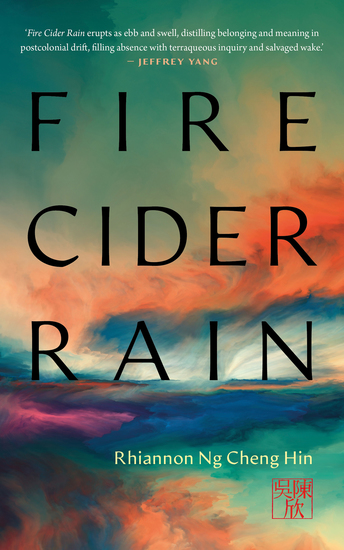
  • Fire Cider Rain - cover

    Fire Cider Rain

    Rhiannon Ng Cheng Hin

    • 0
    • 0
    • 0
    SHORTLISTED FOR THE 2023 ARCHIBALD LAMPMAN AWARD 
    Poetry that navigates the science of cold waterways to consider the warmth of the poet’s Chinese-Mauritian family ties 
    Fire Cider Rain is about the limits to which shared cultural and geographic histories can hold a family together. It follows the lives of three Chinese-Mauritian women on the course of dispersing, settling, and rooting over northern landscapes, and the brittle family bonds that tie them to one another and to their home country. Told from the perspective of the youngest of the three women, Fire Cider Rain follows the events leading up to and following the death of her grandmother, an ex-lighthouse keeper and matriarch whose fractured relationship with her own daughter haunts the narrator’s life in soft, painful aftershocks. As she navigates the cold cities and waterways of Southern Ontario, our narrator struggles with conflicting desires to run toward and flee from her island identity, which grows ever distant, ever more difficult to find her way back to. 
    At its core, Fire Cider Rain is a book about parent-child relationships as vessels for cultural identity, and the ways in which expressions of love and non-love within those relationships can rupture sense of place, self, and at times, a collective diaspora. Throughout the book, Ng Cheng Hin explores the geopolitics of island nations, the dilution of family histories over time, and the experience of water as a medium for the cyclical movement of island bodies, stories, and cultures. The Mauritian landscape and waterways of southern Ontario recur through the book as convergence points for its many themes. 
    "In this stunning debut, Rhiannon Ng Cheng Hin weaves wondrous verse across geological spaces that extend from Mauritius to Canada. In this poetry, the Indian Ocean converses with northern landscapes to give voice to the (un)settling of diasporic women in search of rootedness. Water becomes a medium, a metaphor, a rhythm, a motif, and a metamorphosing figure through which memory, loss and mourning become bodies. Rhiannon Ng Cheng Hin's sweeping poetry is infused with dexterous and lavish verse that makes the reader want to live within the nuances of each line. Fire Cider Rain is a dazzling debut!" – Kama La Mackarel, author of ZOM-FAM 
    “Mauritian waters of memory migrate through ‘imperial decay’ and ‘calcic dust’ to the cold northern continent where Rhiannon Ng Cheng Hin’s lustrous poetic telemetry manifests a lexical biogeography of uprootedness—her lyrical ‘I’ the connecting thread between past and future, between mother and moth, grandmother and cyclone, selia lover and terra nullius. Fire Cider Rain erupts as ebb and swell, distilling belonging and meaning in postcolonial drift, filling absence with terraqueous inquiry and salvaged wake.” – Jeffrey Yang, author of Line and Light 
    "In reading Rhiannon Ng Cheng Hin’s poetry, I became immersed within a deep sense memory of why I came to love poetry in the first place. Her attunement to language and cadence vibrates, or as she writes 'love – or recognition, catches in my throat and stings.' Hers is a voice that can make nerve endings sing and one that speaks with such artful earnestness to the difficulties there are in a personal history. Ng Cheng Hin’s poetry is cousin to the spider's web, which belies a kind of vulnerability through its delicate beauty, yet each of its strands contains an exceptional tensile strength." – Liz Howard, author of Letters in a Bruised Cosmos
    Show book

  • Poets of the Early 20th Century The - Volume 2 - Find beauty and hope in a period ravaged worldwide by war - cover

    Poets of the Early 20th Century...

    Edna St. Vincent Millay, T S...

    • 0
    • 0
    • 0
    In England the Victorian Age was about to become the past and a new age of worldwide wars of horror and slaughter would envelop and decimate generations, forever staining mankind.   
     
    The Century would see the World discover strengths. The Democracies would stand firm against Fascism and later Communism yet still keep its own elite and privileged in power and the rest of us underfoot. 
     
    The World was more connected than ever before.  Culture accelerated its kaleidoscopic and interwoven journey. Transport delivered people by car and train and then aeroplane to far flung corners of the globe.  Empires were at their zenith and ready to fragment with new nations, many troubled, rising from their decay. 
     
    The natural world continued to be plundered and pillaged for its resources by industries who pledged ‘more’ and ‘better’ and would clothe and feed a growing world yet sow the seeds now ready to devastate us in our current times. 
     
    The globe was as vibrant and violent as troubled and tarnished as it ever was.  But new ideas, new political systems, new times changed everything once again. 
     1 - The Poets of the Early Twentieth Century  - Volume 2 - An Introduction 
    2 - The Lions by Joseph Mary Plunkett 
    3 - 1841-1891 by Joseph Mary Plunkett 
    4 - If We Return by F W Harvey 
    5 - The Soldier Speaks by F W Harvey 
    6 - The Negro Soldiers by Roscoe C Jamison 
    7 - Into Battle by Julian Grenfell 
    8 - Prayer For Those on the Staff by Julian Grenfell 
    9 - Hymn by Fenton Johnson 
    10 - Tired by Fenton Johnson 
    11 - Sonnet I by Fernando Pessoa 
    12 - If, After I Die by Fernando Pessoa  
    13 - I Have A Rendezvous with Death by Alan Seeger 
    14 - All Thats Not Love by Alan Seeger 
    15 - Maktoob by Alan Seeger 
    16 - The Unseen Planets by Raymond Chandler 
    17 - The Poet's Knowledge by Raymond Chandler 
    18 - I Saw A Man This Morning by Patrick Shaw Stewart 
    19 - Whispers of Immortality by T S Eliot 
    20 - The Love Song of J Alfred Prufrock by T S Eliot 
    21 - Preludes by T S Eliot 
    22 - The Wounded Bird by Katherine Mansfield 
    23 - Stars by Katharine Mansfield 
    24 - A Fine Day by Katherine Mansfield 
    25 - I Taught Myself To Live Simply by Anna Akhmatova 
    26 - When I Write Poems by Anna Akhmatova 
    27 - Poetry by Claude McKay 
    28 - The White House by Claude McKay 
    29 - The Lynching by Claude McKay 
    30 - Strange Hells by Ivor Gurney 
    31 - Crucifix Corner by Ivor Gurney 
    32 - Serenade by Ivor Gurney 
    33 - Break of Day in the Trenches by Isaac Rosenberg 
    34 - Dead Man's Dump by Isaac Rosenberg 
    35 - August 1914 by Isaac Rosenberg 
    36 - Journey's End by Zora Neale Hurston 
    37 - The Dog Tupman by Stella Benson 
    38 - The Ballad of the Harp-Weaver by Edna St Vincent Millay 
    39 - My Heart Being Hungry by Edna St Vincent Millay 
    40 - What Lips My Lips Have Kissed, And Where, And Why by Edna St Vincent Millay 
    41 - Sonnet XVIII - I, Being Born a Woman by Edna St Vincent Millay 
    42 - Unity by Cesar Vallejo 
    43 - Love by Edith Sodergran 
    44 - On Foot I Had to Cross the Solar System by Edith Sodergran 
    45 - Insouciance by Richard Aldington 
    46 - Goodbye by Richard Aldington 
    47 - Grey Hairs by Marina Ivanova Tsvetaeva 
    48 - Lady with Camelias by Marina Ivanova Tsvetaeva 
    49 - To Mother by Marina Ivanova Tsvetaeva 
    50 - Back To Rest by Lietenant William Noel Hodgson MC 
    51 - Before Action  by Lieutenant William Noel Hodgson MC 
    52 - Past One O'Clock by Vladimir Mayakovsky 
    53 - So This Is How I Turned into a Dog by Vladamir Mayakovsky 
    54 - Verse for a Certain Dog by Dorothy Parker 
    55 - A Dream Lies Dead by Dorothy Parker<p
    Show book