Join us on a literary world trip!
Add this book to bookshelf
Grey
Write a new comment Default profile 50px
Grey
Subscribe to read the full book or read the first pages for free!
All characters reduced
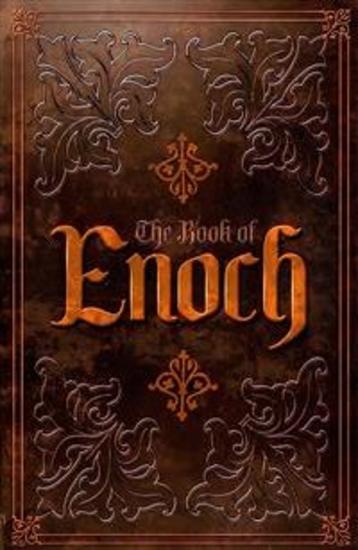
The Book of Enoch - cover

The Book of Enoch

Enoch, Thomas R., Horn

Publisher: Crux Press

  • 0
  • 0
  • 0

Summary

The Bible, as we hold it today, is esteemed by many religious institutions and especially Conservative Christians to be the inspired, inerrant Word of God. This doctrinal position affirms that the Bible is unlike all other books or collections of works in that it is free of error due to having been given by inspiration of God, and is profitable for doctrine, for reproof, for correction, for instruction in righteousness: that the man of God may be perfect, thoroughly furnished unto all good works (2 Tim. 3:16, 17). While no other text can claim this same unique authority, the Book of Enoch is an ancient Jewish religious work, ascribed by tradition to Enoch, the great-grandfather of Noah, which played a crucial role in forming the worldview of the authors of the New Testament, who were not only familiar with it but quoted it in the New Testament, Epistle of Jude, Jude 1:14 15, and is attributed there to "Enoch the Seventh from Adam" (1 En 60:8). The text was also utilized by the community that originally collected and studied the Dead Sea Scrolls. While some churches today include Enoch as part of the biblical canon (for example the Ethiopian Orthodox Tewahedo Church and Eritrean Orthodox Tewahedo Church), other Christian denominations and scholars accept it only as having historical or theological non-canonical interest and frequently use or assigned it as supplemental materials within academic settings to help students and scholars discover or better understand cultural and historical context of the early Christian Church. The Book of Enoch provides commentators valuable insight into what many ancient Jews and early Christians believed when, God, who at sundry times and in divers manners spake in time past unto the fathers by the prophets (Heb. 1:1). As Dr. Michael S. Heiser in the Introduction to his important book Reversing Hermon so powerfully notes: For those to whom 1 Enoch sounds unfamiliar, this is the ancient apocalyptic literary work known popularly (but imprecisely) as the Book of Enoch. Most scholars believe that 1 Enoch was originally written in Aramaic perhaps as early as the 3rd century B.C. The oldest fragments of the book were found among the Dead Sea Scrolls and dated to roughly the second century B.C. This places the book squarely in the middle of what scholars call the Second Temple Period (ca. 500 B.C. 70 A.D.), an era more commonly referred to as the Intertestamental Period. This book will use the more academic designation ( Second Temple Period ) [...] The Watcher story of 1 Enoch, as many readers will recall, is an expansion of the episode described in Genesis 6:1-4, where the sons of God (Hebrew: beney ha- elohim) came in to the daughters of man (Gen 6:4; ESV). Consequently, Watchers is the Enochian term of choice (among others) for the divine sons of God. While the story of this supernatural rebellion occupies scant space in Genesis, it received considerable attention during the Second Temple Period [...] The Enochian version of the events of Gen 6:1-4 preserves and transmits the original Mesopotamian context for the first four verses of the flood account. Every element of Gen 6:1-4 has a Mesopotamian counterpoint a theological target that provides the rationale for why these four verses wound up in the inspired text in the first place. Connections to that backstory can be found in the Old Testament, but they are scattered and unsystematically presented. This is not the case with Second Temple Jewish literature like 1 Enoch. Books like 1 Enoch preserve all of the Mesopotamian touchpoints with Gen 6:1-4 when presenting their expanded retelling of the events of that biblical passage. The Book of Enoch is therefore intended to be an important supplemental resource for assisting serious researchers and students in the study of the Bible.
Available since: 06/10/2023.


Other books that might interest you

  • MCAT Hacks: Transformative Tips to Supercharge Your Prep - "Elevate your MCAT prep with powerful audio insights—your ultimate guide to acing the exam!" - cover

    MCAT Hacks: Transformative Tips...

    Sawyer Loxley

    • 0
    • 0
    • 0
    MCAT Hacks: Transformative Tips to Supercharge Your Prep 
    ⭐⭐ Simplified Guide & Explanations Included ⭐⭐ 
    Are you eager to advance in your career and solidify your knowledge by successfully conquering the MCAT? 
    Looking for a comprehensive resource that encompasses everything you need to excel in your MCAT preparation? 
    Your search ends here! 
    This guide serves as your ultimate companion for enhancing your understanding, honing your skills, and engaging in practical exercises. With this, you're set up for success. 
    Updated for the MCAT 2024-2025 Exam Structure. 
    Key Features of This Enhanced Guide: 
    - In-depth insights about the MCAT Certification  
    - Comprehensive explanation of core MCAT concepts  
    - Effective strategies for exam preparation and problem-solving  
    Our guide stands out due to its thorough coverage, which is essential for your exam triumph. Concepts are explored in detail rather than merely skimmed over. 
    Please note that this guide is an independent resource designed solely for your benefit and is not affiliated with any official MCAT entity. 
    Crafted with a clear layout and straightforward language, our MCAT Prep Guide assures smooth transitions between topics. Wave goodbye to complex jargon and greet clear, precise, and technically accurate content. 
    So, why wait? Click the BUY NOW button, secure your guide, and embark on your journey to MCAT success! 
    Get ready to supercharge your MCAT prep with our transformative strategies!
    Show book
  • What's Wrong with Stereotyping? - cover

    What's Wrong with Stereotyping?

    Erin Beeghly

    • 0
    • 0
    • 0
    What's Wrong with Stereotyping? offers a refreshing and accessibly written philosophical take on the ethics of stereotyping. Stereotyping is woven into every aspect of human experience: conversation, psychology, algorithmic systems, and culture. It relates to generalization and induction, core aspects of rationality. But when and why it is morally wrong to stereotype? This book tackles this deep and enduring puzzle. 


    Core chapters evaluate important ethical wrongs: the failure to treat persons as individuals, disrespect, harm, prejudice, threats to freedoms, and the failure to treat persons as equals. One finds that there is no "essence" of wrongful stereotyping, a single property or set of properties that all problematic cases share in common. Nor are the wrongs of stereotyping reducible to an elegant number, two or three. Instead, wrongful stereotyping is characterized by clusters of wrong-making properties, including all the ones noted here. Listeners will come away with a radically pluralistic, open-ended theory of wrongful stereotyping that they can use to identify wrongful stereotyping in their own lives and our contemporary world. Filled with thought-provoking examples and models for social change, this book emphasizes the messiness of moral reality and the importance of looking to the past in order to understand the ethical perils of stereotyping.
    Show book
  • Fury and Ice - Greenland the United States and Germany in World War II - cover

    Fury and Ice - Greenland the...

    Peter Harmsen

    • 0
    • 0
    • 0
    The wartime interest in Greenland was a direct result of its vital strategic position—if you wanted to predict the weather in Europe, you had to have men in place on the vast, frozen island. The most celebrated example of Greenland's crucial contribution to Allied meteorological services is the correct weather forecast in June 1944 leading to the decision to launch the invasion of Normandy. In addition, both before and after D-Day a stream of weather reports from Greenland was essential for the Allied ability to carry out the bombing offensive against Germany. 


    The Germans were aware of the value of Greenland from a meteorological point of view, and they repeatedly attempted to establish semi-permanent weather stations along the sparsely populated east coast of the island. This resulted in an epic cat-and-mouse game, in which US Coast Guard personnel assisted by a celebrated sledge patrol manned by Scandinavian adventurers struggled to locate and eliminate German bases before they could make any difference. It's a story seldom told, but the fact remains that Greenland was the only part of the North American continent in which German troops maintained a presence throughout almost the entirety of the war.
    Show book
  • Chorology - Geographical Distributions: How Organisms Spread Across the Planet - cover

    Chorology - Geographical...

    Mike Crawford

    • 0
    • 0
    • 0
    Chorology, the study of the geographical distribution of organisms, offers crucial insights into how life is spread across the planet. This scientific discipline examines the patterns, processes, and factors that determine where species occur and why they are found in particular regions. From dense tropical rainforests to arid deserts and remote island ecosystems, chorology helps explain the complex relationships between organisms and their environments. Understanding these distributions is essential not only for ecological research but also for conservation efforts, climate change studies, and predicting future biodiversity trends. 
    The origins of chorology date back to early explorations and observations of naturalists who noted how plants and animals varied across regions. Over time, with advancements in biology, geography, and technology, chorology has developed into a distinct field of study. It now integrates concepts from ecology, evolution, geology, and climatology to provide a comprehensive understanding of how species disperse, adapt, and thrive in diverse environments. By identifying distribution patterns, chorologists can trace the historical movements of species, understand their evolutionary relationships, and predict how current and future environmental changes might alter these patterns. 
    One of the fundamental aspects of chorology is recognizing that species distributions are influenced by a combination of environmental, biological, and historical factors. Climate, topography, soil composition, and availability of resources play significant roles in determining where species can survive and reproduce. Additionally, interactions such as competition, predation, and symbiosis shape the presence or absence of species in particular areas.
    Show book
  • Airplane Mode - An Irreverent History of Travel - cover

    Airplane Mode - An Irreverent...

    Shahnaz Habib

    • 0
    • 0
    • 0
    Longlisted for the Andrew Carnegie Medals of Excellence 


    The conditions of travel have long been dictated by the color of passports and the color of skin. 


    The color of one's skin and passport have long dictated the conditions of travel.  For Shahnaz Habib, travel and travel writing have always been complicated pleasures. Habib threads the history of travel with her personal story as a child on family vacations in India, an adult curious about the world, and an immigrant for whom roundtrips are an annual fact of life. Tracing the power dynamics that underlie tourism, this insightful debut parses who gets to travel, and who gets to write about the experience. 


    Threaded through the book are inviting and playful analyses of obvious and not-so-obvious travel artifacts: passports, carousels, bougainvilleas, guidebooks, trains, the idea of wanderlust itself. Together, they tell a subversive history of travel as a Euro-American mode of consumerism—but as any traveler knows, travel is more than that. As an immigrant whose loved ones live across continents, Habib takes a deeply curious and joyful look at a troubled and beloved activity.
    Show book
  • Resilient Journey: Surviving Against All Odds in Auschwitz - Unlock survival skills with 'Resilient Journey' and conquer the psychological battlefield of Auschwitz through gripping audio lessons! - cover

    Resilient Journey: Surviving...

    Reed Tennyson

    • 0
    • 0
    • 0
    Resilient Journey: Surviving Against All Odds in Auschwitz 
    ⭐⭐ Simplified Audio Guide ⭐⭐ 
    Are you seeking to deepen your understanding of human resilience and courage in the face of unimaginable adversity? 
    Looking for a comprehensive guide that captures the essence of survival and strength during humanity's darkest hours? 
    Your search ends here! 
    This audiobook serves as your definitive companion for immersing yourself in the incredible stories of perseverance, applying vital lessons, and engaging with powerful narratives. With this, you're inspired to appreciate the strength of the human spirit. 
    Key features of this enriched audiobook: 
    - Profound insights about humanity's resilience and courage 
    - Detailed explanation of surviving the Auschwitz ordeal 
    - Fruitful strategies for overcoming adversity and finding hope 
    Our audiobook distinguishes itself through comprehensive coverage, essential for deeply understanding these life-changing stories. Concepts aren't merely touched upon; they are explored with precision. 
    Please note that this audiobook is not affiliated with any official entity and is purely an independent resource for your benefit. 
    Designed with a clear structure and easy-to-understand language, our guide to "Resilient Journey: Surviving Against All Odds in Auschwitz" ensures smooth transitions between topics. 
    So, why wait? Click the BUY NOW button, secure your audiobook, and begin your journey into the profound tales of resilience and survival!
    Show book