Join us on a literary world trip!
Add this book to bookshelf
Grey
Write a new comment Default profile 50px
Grey
Subscribe to read the full book or read the first pages for free!
All characters reduced
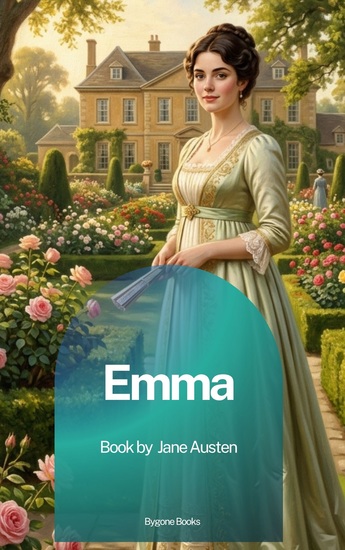
Emma - cover

Emma

Jane Austen

Publisher: Bygone Books

  • 0
  • 0
  • 0

Summary

A charming and witty story of love, misunderstandings, and the journey toward self-discovery.

Discover "Emma" by Jane Austen, one of the most beloved novels in English literature, celebrated for its clever storytelling, unforgettable characters, and insightful portrayal of relationships and society.

Follow the life of Emma Woodhouse, a confident and intelligent young woman whose fascination with matchmaking leads her into unexpected situations and personal discoveries. Through humor, sharp observations, and elegant prose, Austen explores themes of love, friendship, pride, and the importance of understanding oneself and others.

First published in 1815, "Emma" remains a masterpiece of classic fiction, admired for its memorable characters, social commentary, and brilliant exploration of human behavior. Jane Austen's subtle wit and timeless wisdom continue to make this novel a favorite among generations of readers.

Perfect for fans of classic romance, historical fiction, literary novels, and stories about relationships and personal growth, "Emma" offers a delightful reading experience filled with charm, emotion, and intelligence.

Experience Jane Austen's celebrated tale of romance and self-discovery. Add "Emma" to your Kindle library today and enjoy one of the greatest classics of English literature.
Available since: 06/29/2026.
Print length: 577 pages.
Other books that might interest you

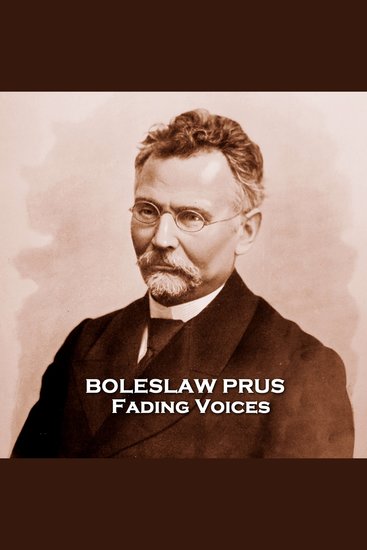
  • Fading Voices - From their pens to your ears genius in every story - cover

    Fading Voices - From their pens...

    Boleslaw Prus

    • 0
    • 0
    • 0
    Aleksander Głowacki who wrote under the nom de plume Boleslaw Prus was born on 20th August 1847 at Hrubieszów in the Kingdom of Poland, at that time, controlled by the Russian Empire. 
    At three his mother died and then at nine his father.  Female relatives helped raise him but at 15 he joined the Polish uprising against the might of Imperial Russia.  Wounded on the battlefield, arrested and imprisoned, he was later released into the care of a relative and resumed secondary school and then Warsaw University but poverty forced him to leave after two years.  At some point he developed agoraphobia which often caused problems. 
    In 1869, he enrolled in the Forestry Department at Puławy but was soon sacked and so he began a system of self-education that led to work as a newspaper columnist on a wide-ranging series of topics that eventually became the ‘Weekly Chronicles’ and spanned 40 years. 
    With his finances now stabilized he married and then adopted his late brother-in-law’s son.  
    It seems he had doubts as to the scale of his talents and early on adopted the name ‘Boleslaw Prus’ for both his journalistic and literary offerings. 
    His work as a short-story writer met with much acclaim. He wrote several dozen of them, originally published in newspapers and ranging in length from micro-story to novella. His keen observation of everyday life and sense of humor are evident in them.  
    During his career he also wrote novels. After ‘Pharoah’, in 1895, he embarked on a four-month journey taking in Berlin, Dresden, Nuremberg, Rapperswil in Switzerland, where he stayed for two months, and his final destination, Paris.  Here his agoraphobia was so bad he couldn’t cross the Seine.  
    However, his writing continued and in 1911 his novel ‘Changes’, though uncompleted, began to be serialised.  It was never finished. 
    Boleslaw Prus died on 19th May 1912, at his Warsaw apartment.  He was 64.  A National Hero, thousands attended both his funeral service and interment.
    Show book
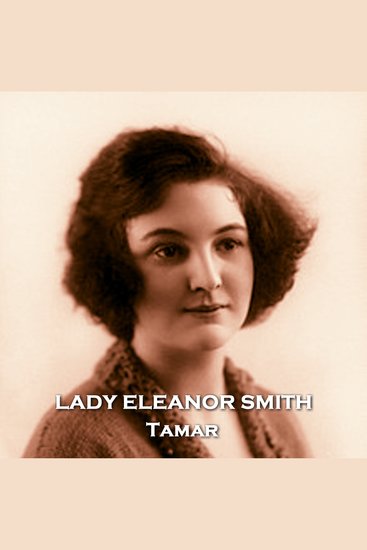
  • Tamar - From their pens to your ears genius in every story - cover

    Tamar - From their pens to your...

    Lady Eleanor Smith

    • 0
    • 0
    • 0
    Lady Eleanor Furneaux Smith was born in Birkenhead, Merseyside in England on the 7th August 1902 into a privileged family steeped in titles and politics. 
    Part of her education was at Miss Douglas's school at Queen's Gate.  Here she met and befriended several other young women that the British tabloid press would later call the ‘Bright Young Things’, a group of bohemian young aristocrats and socialites in 1920s London. 
    Smith's paternal great-grandmother, was said to have been a Gypsy, and this sparked an early and life-long interest with the Romani people, she even went so far as to learn to read and speak the language, which she called ‘musical and broken.’ 
    Her life was full of adventure and mishaps.  A mistaken encounter with a man she thought could help her into the film business turned out to be threats of marriage and death from a man wanted for the murder of his father.  She was even arrested twice.  Once for listing her career as a journalist and another, in Rome, for walking around in a sleeveless dress. 
    Smith began her career writing society gossip columns for various newspapers but later received an offer to write for the newly-formed Great Carmo Circus, with which she travelled for several years and was the source material for many of her books. 
    Her first novel, ‘Red Wagon’, was published when she was 28 and it was an immediate bestseller.  A prolific writer several of her works were also adapted for films. 
    Smith also wrote ghost stories and others flavoured with evil.  Her support for the Conservative party may be forgiven but her attributed quote to be a ‘warm adherent of General Franco’ less so. 
    Lady Eleanor Furneaux Smith died on the 20th October 1945 in Westminster after a long illness.  She was 43.
    Show book
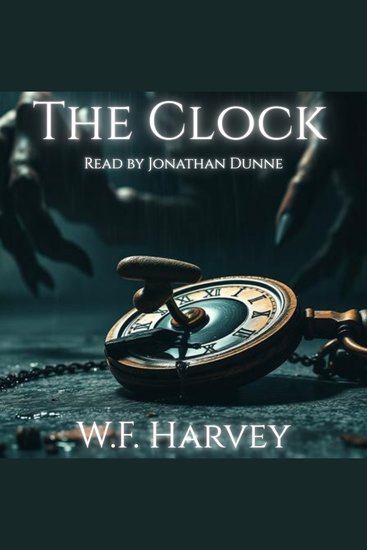
  • The Clock - cover

    The Clock

    W. F. Harvey

    • 0
    • 0
    • 0
    🎬 Experience the atmospheric visual edition of this tale by searching “Jonathan Dunne Horror” on YouTube. 
    Title: The Clock 
    Series Name: Timeless Terrors 
    Series Entry: 153 
    Author: W. F. Harvey 
    Narrator: Jonathan Dunne 
    Original Publication: 1928 
    Public Domain: Yes 
    Description: 
    The Clock is one of W. F. Harvey’s finest examples of quiet psychological horror — a subtle and deeply unsettling tale in which an ordinary household object becomes the focus of a mystery that defies reason. 
    The story centers on a man who notices something peculiar about a clock in his home. At first, the irregularity seems insignificant, the sort of detail that might easily be dismissed as forgetfulness or coincidence. Yet as the strange occurrence repeats itself, curiosity gradually turns to unease, and a simple question begins to demand an explanation. 
    Harvey masterfully builds tension through restraint, allowing the mystery to unfold through observation rather than spectacle. The familiar surroundings of everyday life become increasingly disquieting as the narrator struggles to understand what he has witnessed and whether a rational explanation is possible. The horror emerges not from overt terror but from the creeping realization that something is profoundly wrong beneath the surface of the ordinary. 
    Rather than relying on shocks or dramatic supernatural manifestations, The Clock draws its power from uncertainty, suggestion, and the fear of hidden truths. The result is an elegant and haunting story that lingers in the mind long after its final revelation, demonstrating Harvey’s remarkable ability to transform the commonplace into something deeply unsettling. 
    🎬 Experience the atmospheric visual edition of this tale by searching “Jonathan Dunne Horror” on YouTube.
    Show book
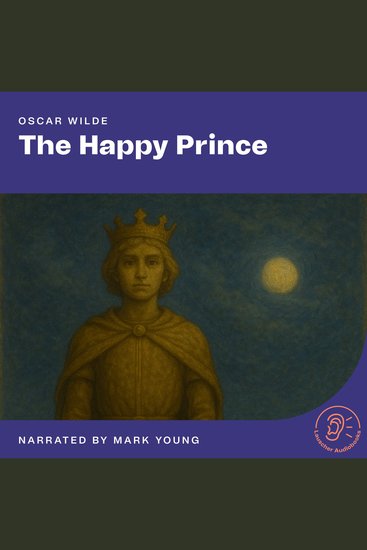
  • The Happy Prince - cover

    The Happy Prince

    Oscar Wilde

    • 0
    • 0
    • 0
    In a town full of suffering poor people, a swallow who was left behind after his flock flew off to Egypt for the winter meets the statue of the late "Happy Prince", who has never experienced true sorrow, for he lived in a palace where sorrow was not allowed to enter. Viewing various scenes of people suffering in poverty from his tall monument, the Happy Prince asks the swallow to take the ruby from his hilt, the sapphires from his eyes, and the gold leaf covering his body to give to the poor...
    Show book
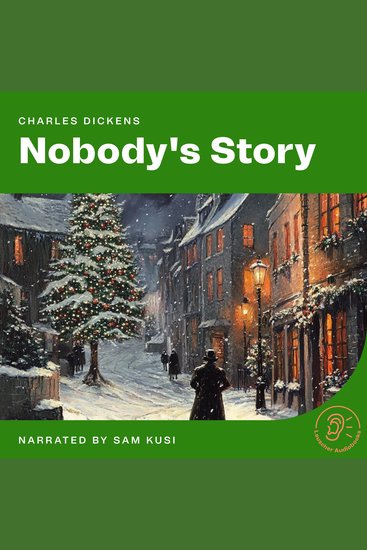
  • Nobody's Story - cover

    Nobody's Story

    Charles Dickens

    • 0
    • 0
    • 0
    Who’s story is this? Nobody. - Who’s nobody? The average working man.
    This story is very old but very relevant. The common man’s opinions are disregarded. His needs are manipulated. But of course the story makes clear that he is key to society.
    The story shows that. Then the narrator comes in and rather dramatically reinforces that point in the final three paragraphs just in case you missed it the first time. Yes, there’s a pretty high soapbox. Yes, it’s pretty holier than thou. But hey, it’s Christmas time. What’s so funny ‘bout peace, love and understanding, anyway? And that’s quite a trick on Dickens’s part.
    Show book
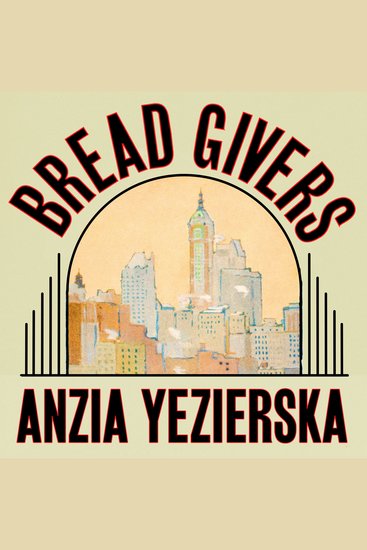
  • Bread Givers - cover

    Bread Givers

    Anzia Yezierska

    • 0
    • 0
    • 0
    'I felt I could turn the earth upside down with my littlest finger. I wanted to dance, to fly in the air and kiss the sun and stars with my singing heart. I, alone with myself, was enjoying myself for the first time as with grandest company.'
    
    A stunning coming-of-age tale, Bread Givers is a moving depiction of the Jewish–American experience in the early twentieth century.
    
    Set in New York's Lower East Side, Bread Givers recounts the early life of Sara Smolinksy and her complicated family, who have immigrated from Poland. Her father, an Orthodox Jew, has committed himself to studying the Torah, refusing to contribute to the family household's income in pursuit of his loftier endeavours. At first, Sara remains dutiful, selling herring on Hester Street to help pay rent. But after seeing her father's self-interested actions and their tumultuous consequences, Sara makes an oath to herself to forge her own path. Deeply poignant and masterfully crafted, Bread Givers remains a masterpiece of Jewish American fiction.
    Anzia Yezierska (1880 – 1970) was an American novelist and screenwriter. Born in Poland under the Russian Empire, she moved to New York as a child – an experience she drew upon in her writing. She is famed for her portrayals of Jewish-American life during the early twentieth century, for which she gained critical acclaim.
    Show book