Join us on a literary world trip!
Add this book to bookshelf
Grey
Write a new comment Default profile 50px
Grey
Subscribe to read the full book or read the first pages for free!
All characters reduced
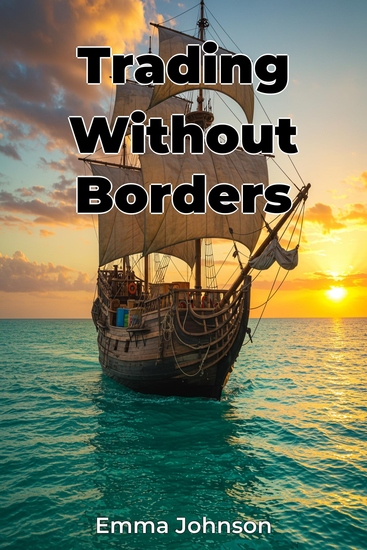
Trading Without Borders - cover

Trading Without Borders

Emma Johnson

Translator A Ai

Publisher: Publifye

  • 0
  • 0
  • 0

Summary

"Trading Without Borders" explores the historical roots of international trade, revealing how rudimentary bartering systems evolved into the complex global commerce we know today. Delving into early trade routes like the Silk Road and spice routes, the book examines the motivations, methods, and challenges faced by ancient merchants. Discover how the desire for scarce resources and luxury goods drove them to navigate unfamiliar territories, fostering cultural exchange and laying the foundations for international law. 

 
The book uniquely combines historical analysis with economic theory to offer a nuanced understanding of early global commerce. It challenges the notion that globalization is a recent phenomenon, highlighting the enduring impact of historical trade practices on contemporary business. Beginning with fundamental concepts like currency and transportation, the book progresses through case studies of major trade routes, culminating in connections to the modern global economy. 

 
By examining archaeological findings, merchants' journals, and diplomatic records, "Trading Without Borders" argues that early merchants were pioneers in establishing networks transcending geographical and cultural barriers. Understanding this evolution is crucial for appreciating the interconnectedness of modern economies and the enduring impact of historical trade on contemporary business and economic development.
Available since: 03/03/2025.
Print length: 64 pages.
Other books that might interest you

  • Dangerous Liaisons - cover

    Dangerous Liaisons

    Pierre Choderlos de Laclos

    • 0
    • 0
    • 0
    Set in pre-revolutionary France, "Dangerous Liaisons" is an epistolary novel that revolves around the cynical Marquise de Merteuil and the Vicomte de Valmont, two former lovers who engage in a web of seduction, manipulation, and betrayal. Through their letters, the novel exposes the moral corruption and decadence of the French aristocracy. With themes of sexual intrigue, power dynamics, and the consequences of unbridled passions, Laclos crafts a gripping and psychologically intricate narrative that continues to captivate readers today. "Dangerous Liaisons" remains a timeless exploration of human desires and the destructive nature of games played with hearts. 
     
    Pierre Choderlos de Laclos, a French army general and writer, is most famous for his epistolary novel "Les Liaisons Dangereuses" ("Dangerous Liaisons"), published in 1782. The novel, exploring themes of seduction, manipulation, and revenge among the French aristocracy, became a literary classic and a seminal work of French literature.
    Show book
  • Service - The Act of Helping - Using Your Gifts to Benefit Others - cover

    Service - The Act of Helping -...

    Esther Jameson

    • 0
    • 0
    • 0
    Service is much more than a mere act of giving; it is a transformative experience that intertwines our personal growth with the welfare of others. At its core, service is an expression of compassion, empathy, and responsibility. It calls upon us to use our unique gifts to address the needs of our communities and to create an environment where everyone feels valued and supported. When we engage in service, we recognize that our contributions, no matter how small, have the potential to bring about significant change. 
    Understanding service begins with a deep reflection on our own lives. It requires us to assess our strengths and passions, asking ourselves what we can offer that might alleviate another’s struggle or enhance their quality of life. This process is not solely about what we do for others but also about how these actions enrich our own lives. The act of helping fosters a sense of purpose and fulfillment that can lead to personal development and a more resilient, positive mindset. 
    Service is also a powerful tool for building community. In a world where isolation and disconnection are increasingly prevalent, acts of service serve as a bridge that connects individuals from diverse backgrounds. Whether it is lending a hand to a neighbor, volunteering for a local charity, or engaging in community projects, each act of service contributes to a larger tapestry of collective well-being. These actions remind us that we are part of a larger whole and that every contribution is vital to the strength and success of our communities.
    Show book
  • Blue - A History of Postpartum Depression in America - cover

    Blue - A History of Postpartum...

    Rachel Louise Moran

    • 0
    • 0
    • 0
    New motherhood is often seen as a joyful moment in a woman's life; for some women, it is also their lowest moment. For much of the twentieth century, popular and medical voices blamed women who had emotional and mental distress after childbirth for their own suffering. By the end of the century, though, women with postpartum mental illnesses sought to take charge of this narrative. In Blue: A History of Postpartum Depression in America, Rachel Louise Moran explores the history of the naming and mainstreaming of postpartum depression. Coalitions of maverick psychiatrists, psychologists, and women who themselves had survived substantial postpartum distress fought to legitimize and normalize women's experiences. They argued that postpartum depression is an objective and real illness and fought to avoid it being politicized alongside other fraught medical and political battles over women's health. 


    Based on insightful oral histories and in-depth archival research, Blue reveals a secret history of American motherhood, women's political activism, and the rise of postpartum depression advocacy amid an often-censorious conservative culture. By breaking new ground with the first book-length history of postpartum mental illness in the twentieth century, Moran brings mothers' battles with postpartum depression out of the shadows and into the light.
    Show book
  • 24 Hours in Ancient China - A Day in the Life of the People Who Lived There - cover

    24 Hours in Ancient China - A...

    Yijie Zhuang

    • 0
    • 0
    • 0
    Spend twenty-four hours with the ancient Chinese. 


    Travel back to AD 17, during the fourth year of the reign of Wang Mang of the Han dynasty, a vibrant and innovative era full of conflicts and contradictions. But as different as the Han culture might have been to other great ancient civilizations, the inhabitants of ancient China faced the same problems as people have for time immemorial: earning enough money, coping with workplace dramas, and keeping your home in order—although the equivalent in this era was more about bribing inspectors, avoiding bullying from abusive watchmen, and trying to keep your house from being looted by Huns. 


    In each chapter we meet one of twenty-four citizens of this ancient culture, from the midwife to the soldier, the priest to the performer, and the blacksmith to the tomb looter, and see what an average day in ancient China was really like.
    Show book
  • Buddhism in a Value-changing Society - cover

    Buddhism in a Value-changing...

    P. D. Premasiri

    • 0
    • 0
    • 0
    This is an audiobook of Bodhi Leaves No. 148 by P. D. Premasiri, Buddhism in a Value-changing Society narrated by Jayashree Tata Nagaraj. The print edition can be found in the Pariyatti Edition of Collected Bodhi Leaves Vol. 5. The eBook of Bodhi Leaves No. 148 can be downloaded from the BPS website.
     
    Excerpt:
     
    Values can be approached from two different standpoints. Most social scientists prefer to take the standpoint that may be called sociological relativism in dealing with questions of value in relation to different societies. The social scientist’s approach does not involve any absolute standard for judging the goodness or badness of the norms upheld by a particular society. The application of such an approach to examine the existing values of a traditional Buddhist society involves merely a description of the social behaviour of its people and a causal explanation of such behaviour.
     
    The subject under investigation in the present discussion is the question of the relationship between Buddhism and changing values. Where doesBuddhism stand in a value-changing world? Here, we have admitted in some sense that we are living in a world in which values are changing. In this connection it may be questioned whether values themselves are changing or whether it is only our beliefs about values that are changing. I made the point that our beliefs about facts do change. But is there a sense in saying that facts changes?
    Show book
  • The Big 100 - cover

    The Big 100

    William J. Kole

    • 0
    • 0
    • 0
    By 2050, the world’s centenarian population—those aged 100 or more—will increase eightfold. Half of today’s 5-year-olds can expect to reach the same heights. It’s going to upend everything we thought we knew about health care, personal finance, retirement, politics, and more. Whether we’re 18 or 81, this tectonic demographic shift will affect us all. The Big 100 confronts listeners with both the brightness and potential bleakness of a fate few of us thought possible. Journalist William Kole guides us on this journey into our future, an optimistic but sometimes fraught exploration of super-aging as the grandson of a centenarian. Along the way, there are expert sources, like Dr. Jane Goodall, longevity expert Dr. Thomas Perls, Senator Elizabeth Warren, and even 101-year-old influencer and fashionista Iris Apfel, along with surprises. And there’s the troubling truth that those reaching extreme longevity tend to be overwhelmingly white, a product of what experts deem the “weathering theory”: the idea that the health of African Americans begins to deteriorate in early adulthood as a physical consequence of socio-economic disadvantages. How long can we live? How long should we live? And what happens when 65 is merely a life half-lived? The Big 100 explores the most pressing questions of our super-aging future and offers a glimpse of a reality that awaits us, our children, and our grandchildren.
    Show book