Join us on a literary world trip!
Add this book to bookshelf
Grey
Write a new comment Default profile 50px
Grey
Subscribe to read the full book or read the first pages for free!
All characters reduced
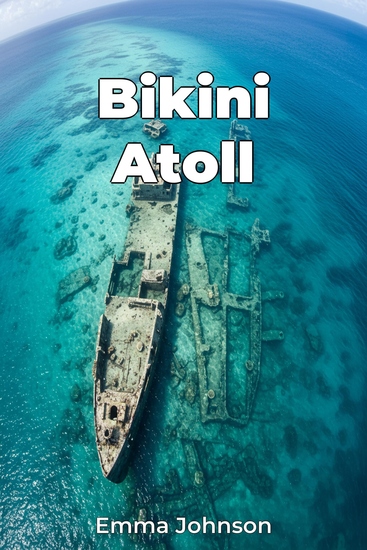
Bikini Atoll - cover

Bikini Atoll

Emma Johnson

Translator A AI

Publisher: Publifye

  • 0
  • 0
  • 0

Summary

Bikini Atoll explores the transformation of a Pacific paradise into a symbol of nuclear devastation. Focusing on the period following World War II, the book examines the history of nuclear testing, its far-reaching environmental impact, and the displacement of the indigenous Bikinian people. The narrative reveals the complex interplay of Cold War politics, environmental destruction, and human rights violations that continue to resonate today. One striking fact is how Operation Crossroads in 1946 marked the beginning of the atoll's transformation, initiating a series of events that would forever alter its ecosystem and the lives of its inhabitants.

 
The book uniquely combines scientific analysis with personal narratives, giving voice to the often-overlooked experiences of the Bikinian people. Through declassified documents, scientific reports, and oral histories, Bikini Atoll progresses across three main sections. It begins by providing a detailed historical context, then delves into the science of nuclear testing and its environmental consequences, and concludes by exploring the human dimension of this tragedy, offering insight into the Bikinians' ongoing pursuit of justice and self-determination and how their indigenous rights were impacted.
Available since: 03/20/2025.
Print length: 59 pages.


Other books that might interest you

  • The Revolutionary Self - Social Change and the Emergence of the Modern Individual 1770-1800 - cover

    The Revolutionary Self - Social...

    Lynn Hunt

    • 0
    • 0
    • 0
    An illuminating exploration of the tensions between self and society in the age of revolutions. 


    The eighteenth century was a time of cultural friction: individuals began to assert greater independence and there was a new emphasis on social equality. In this surprising history, Lynn Hunt examines women's expanding societal roles, such as using tea to facilitate conversation between the sexes in Britain. In France, women also pushed boundaries by becoming artists, and printmakers' satiric takes on the elite gave the lower classes a chance to laugh at the upper classes and imagine the potential of political upheaval. Hunt also explores how promotion in French revolutionary armies was based on men's singular capabilities, rather than noble blood, and how the invention of financial instruments such as life insurance and national debt related to a changing idea of national identity. Wide-ranging and thought-provoking, The Revolutionary Self is a fascinating exploration of the conflict between individualism and the group ties that continues to shape our lives today.
    Show book
  • Unguessed Kinships - Naturalism and the Geography of Hope in Cormac McCarthy - cover

    Unguessed Kinships - Naturalism...

    Steven Frye

    • 0
    • 0
    • 0
    It took six novels and nearly thirty years for Cormac McCarthy to find commercial success with All the Pretty Horses, followed by major prizes, more bestsellers, and Hollywood adaptations of his work. Those successes, though, have obscured McCarthy's commitment to an older form of literary expression: naturalism. McCarthy's work tends to darker themes: violence, brutality, the cruel indifference of nature, themes which would not be out of place in the writing of Jack London or Stephen Crane. But literary naturalism is more than the oversimplified Darwinism that many think of. Nature may be red in tooth and claw, and humans are part of nature, but the humanity depicted in naturalist literature is capable of love, selflessness, and spirituality, as well. 


    In Unguessed Kinships, Steven Frye illuminates all these dimensions of McCarthy's work. In his novels and plays, McCarthy engages both explicitly and obliquely with the project of manifest destiny, in the western drama Blood Meridian, the Tennessee Valley Authority-era Tennessee novels, and the atomic frontier of Alamogordo in Cities of the Plain. McCarthy's concerns are deeply religious and philosophical, drawing on ancient Greek philosophy, Gnosticism, and Nietzsche, among other sources. Frye argues for McCarthy not merely as a naturalist writer but as a naturalist in the most expansive sense.
    Show book
  • Triumphant Fox - Erwin Rommel and the Rise of the Afrika Korps - cover

    Triumphant Fox - Erwin Rommel...

    Samuel W Mitcham

    • 0
    • 0
    • 0
    A military historian examines the strategic cunning of Erwin Rommel’s first campaign in North Africa during WWII. The legend of “The Desert Fox,” German Field Marshal Erwin Rommel, was forged in the North African desert conflicts of World War II. It was here, as commander of Germany’s Afrika Korps, that Rommel ignored orders from German High Command and launched his infamous West Desert campaign into Cyrenaica, now eastern Libya.  Driving his exhausted Panzer forces with his indomitable will, Rommel swept through North Africa, where he brought the British Eighth Army to the brink of defeat. Although ultimately curtailed by supply shortages and logistics problems, Rommel nearly claimed the entire region for Hitler. In this stirring account of Rommel’s first campaign, Samuel W. Mitcham, Jr. takes the reader into his subject's strategy, mindset and viewpoints.
    Show book
  • History of Mexico - The Mayans the Aztec and the Mexican Revolution - cover

    History of Mexico - The Mayans...

    Kelly Mass

    • 0
    • 0
    • 0
    This combo contains the following topics: 
    1 - Have you ever wondered what the Maya people did? How they lived? How their empire grew? Then this is the right book for you. In this book, we'll go over the most important discoveries about the Mayans, the Central American inhabitants that were in the region hundreds of years before the journey to the New World by European settlers and conquistadores. 
    2 - When you think of the Aztecs, you might think of certain movies you have seen or what you've been taught in history class. And although some of those images and descriptions fit the main narrative, there is still much left to be discovered. This brief book will take you on a journey and kidnap your imagination to a faraway place in time. 
    3 - It’s a hard name to pronounce, but hey, it’s been the legend of Native American peoples for centuries. Was it a man? Was it a god? Was it a white person? Or was it some animal or strange thing? Quetzalcoatl is an Aztec divine being whose name originates from the Nahuatl language and meaning "valuable snake" or "Quetzal-feathered Snake." "Quetzalcoatl, in its actual sense, means 'snake of valuable plumes,' but in the allegorical sense, 'best of men,'" said Ixtlilxóchitl, a descendant of Aztec royalty and history expert of the Nahua people, in the 17th century. 
    4 - Emiliano Zapata Salazar was a revolutionary in Mexico. He was a key figure in the Mexican Revolt of the years 1910 until 1920, and also the primary leader of the people's revolution in the Mexican state of Morelos and the creator of the Zapatismo agrarian movement.
    Show book
  • Napoleon’s Great Escapes: The History of Napoleon’s Escapes from Egypt and Elba - cover

    Napoleon’s Great Escapes: The...

    Editors Charles River

    • 0
    • 0
    • 0
    In addition to being unable to be reinforced or supplied by sea, Napoleon's ambitions to establish a permanent presence in Egypt were further frustrated by a number of uprisings. Early in 1799, Napoleon advanced against France’s erstwhile enemy, the Ottoman Empire, invading modern Syria (then the province of Damascus) and conquering the cities of Gaza, Jaffa, Arish and Haifa. However, with the plague running rampant through his army and his lines of supply from Egypt stretched dangerously thin, Napoleon was unable to destroy the fortified city of Acre and was forced to retreat. The retreat cost him almost all of his wounded as, harassed by enemy forces, he was forced to abandon most of his casualties to the Ottomans’ mercy, or lack thereof. Most of the wounded were tortured and beheaded. Napoleon harbored all kinds of delusions about his time in Egypt that were not based in reality, but he definitely left a lasting legacy in the region, one he would never live to see or appreciate. By shifting the theater of operations to Africa and the Middle East, Napoleon inadvertently ensured the Europeans would fight there in the future. 
    	Of all the incredible military feats Napoleon accomplished, none were more impressive than his escape from Elba and his return to France, which was literally a bloodless revolution. On February 26, 1815, Napoleon escaped from Elba, and in a desperate gamble, he landed on the French mainland with less than a thousand men and marched on Paris. What happened next was truly remarkable. An infantry regiment was sent to intercept Napoleon and his men, but Napoleon rode up to them alone and shouted, "Here I am. Kill your Emperor, if you wish." Upon seeing their once invincible leader before them, the soldiers mutinied and went over to his side en masse. Other corps soon followed, and in no time at all Napoleon found himself at the head of an army marching on Paris.
    Show book
  • The Heart of Homestay - Creating Meaningful Connections When Hosting International Students - cover

    The Heart of Homestay - Creating...

    Jennifer Robin Wilson

    • 0
    • 0
    • 0
    Open yourself up to the homestay experience and bring the world to your family.Every year, thousands of students from around the world come to Canada, Australia, the U.K., and the U.S. for an immersive, educational experience. Helping them to get the most of their overseas adventure are the homestay families who open their hearts and homes to these students. But beyond the usual tips on meal preparation and culture shock, what does it take to have success as a homestay family? If you’re ready to ask deeper questions, this collection of stories and guidance has your answers.In The Heart of Homestay, Jennifer Robin Wilson draws on her two decades of experience working in the homestay industry to provide an honest and comprehensive portrayal of the homestay experience. By sharing real stories from a vast network of homestay families, Wilson shows the benefits of bringing an international student into your home while also being real about the challenges that can arise. From first impressions and settling in to navigating cultural differences with compassion, communicating through language barriers, and what to do when it's time to say goodbye, Wilson guides you through countless scenarios to bring you closer to the experience.No matter what stage of the homestay journey you are in, this book is a resource you will return to again and again. And you’ll learn that while there is a lot to consider when choosing to open your home to a stranger, once you do, your family will grow further abroad than you ever imagined.
    Show book