Join us on a literary world trip!
Add this book to bookshelf
Grey
Write a new comment Default profile 50px
Grey
Subscribe to read the full book or read the first pages for free!
All characters reduced
Men Enjoy Fiber - cover

Men Enjoy Fiber

Emily Williams

Translator A AI

Publisher: Publifye

  • 0
  • 0
  • 0

Summary

"Men Enjoy Fiber" explores the pivotal, yet often overlooked, shift in understanding the importance of dietary fiber, particularly from beans, for men's health and digestive well-being around the 1960s. It examines how emerging health data during this era gradually revealed fiber's crucial role, influencing dietary habits and cultural attitudes. The book uniquely focuses on this turning point, dissecting initial research and sociological factors that either promoted or hindered the acceptance of fiber-rich diets. For example, early studies began to pinpoint fiber's role in preventing common digestive ailments, but these findings were not immediately embraced by the general public. 

 
The book adopts a fact-based approach, drawing from published research, dietary surveys, and sociological trends to present a balanced view. It begins by establishing the landscape of nutritional science before the 1960s, then delves into pivotal research highlighting the benefits of fiber and beans for digestion. Finally, it culminates with an analysis of the cultural reception of this information, specifically amongst men, and their evolving understanding of health and fitness. 

 
This historical perspective offers valuable insights into how scientific findings translate into everyday life, helping readers understand our evolving relationship with food.
Available since: 02/27/2025.
Print length: 70 pages.
Other books that might interest you

  • Ruthenia: The History of Ukraine and Belarus after the Dissolution of the Polish–Lithuanian Commonwealth - cover

    Ruthenia: The History of Ukraine...

    Editors Charles River

    • 0
    • 0
    • 0
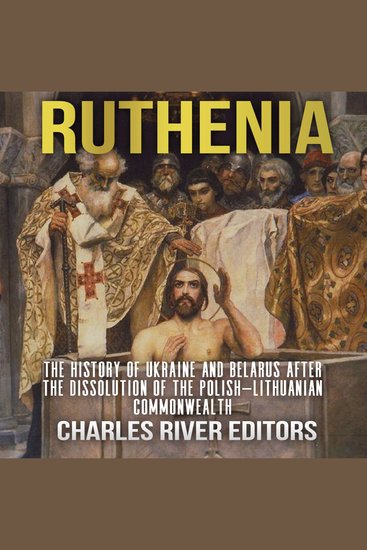
    The history of Ukraine is a fascinating story of how cultures, political systems, religions, and power have met, intersected, morphed, and expanded. The region was relatively sparsely populated for much of ancient history, a wilderness of rivers, forests, and steppes, but that does not detract from the rich historical development of the region. A huge area, Ukraine is wedged between the continents of Asia and Europe, and its position as a crossroads ensured there was fierce competition for influence there. Historians have called the formation of Ukraine the “establishment of a unity among three zones…the ports of Crimea and the coast, the rich steppe heartland, and the forests,” based around the themes of “geography, ecology and culture.”  
    	Today’s Ukraine is a huge country, incorporating an area over 600,000 square kilometers and home to 42 million people. It stretches from the Crimean Peninsula on the Black Sea in the south to Belarus in the north, Russia to the east, and Poland, Slovakia, and Hungary to the west. The Dnieper River is the region’s key waterway, running into the Black Sea, while the Danube Delta also forms its border with modern-day Romania to the southwest. A steppe exists in the middle of the country while the Carpathian Mountains feature in the west. This geographical formation has influenced some of the country’s key historical developments, as well as the location of its major settlements. Kiev (known today as Kyiv) is, of course, the longstanding capital of the country, located on the Dnieper River in the central northern part of modern Ukraine. Lviv is another large city, located in the northwest near the border with Poland. Odessa is a seaside city on the Black Sea in Ukraine’s southwest, while Kharkiv, Luhansk, and Donetsk are major cities in the country’s east, close to the Russian border.
    Show book
  • Unbreakable Confidence: Your Guide to Peak Performance - Boost your Unbreakable Confidence! Dive into audio lessons for ultimate peak performance - cover

    Unbreakable Confidence: Your...

    Garrett Thornfield

    • 0
    • 0
    • 0
    Unlock Peak Performance: Achieve Unbreakable Confidence  
    ⭐⭐ Simplified Audio Guide ⭐⭐ 
    Are you eager to elevate your career and strengthen your self-assurance with unwavering confidence? 
    In search of a complete resource containing all the essentials to unlock peak performance? 
    Look no further! 
    This guide serves as your ultimate companion for expanding your understanding, applying practical skills, and engaging in hands-on exercises that set you up for success. 
    Key features of this enriched guide: 
    - Profound insights on achieving unbreakable confidence 
    - Detailed explanations on unlocking peak performance 
    - Fruitful strategies for self-improvement and overcoming challenges 
    Our guide stands out with its comprehensive coverage, which is crucial for your personal and professional triumph. Concepts are not just briefly mentioned; they are thoroughly explored with precision. 
    Please note that this guide is not affiliated with any official entity and is purely an independent resource for your benefit. 
    Designed with a clear structure and easy-to-understand language, our guide ensures smooth transitions between topics. Say goodbye to dense jargon and welcome clear, precise, and technically accurate content. 
    So, why wait? Click the BUY NOW button, secure your guide, and embark on your journey to achieving unbreakable confidence and peak performance success!
    Show book
  • Battle of Edgehill The: The History and Legacy of the Opening Battle of the English Civil War - cover

    Battle of Edgehill The: The...

    Editors Charles River

    • 0
    • 0
    • 0
    The outcome of the English Civil War was no doubt unthinkable to many across Europe before it actually happened, and the Battle of Edgehill represented the first sign that things might not go according to the typical plan. The tiny hamlet of Edgehill sits atop an escarpment in the parish of Ratley and Upton in Warwickshire, England, an unremarkable location in and of itself, like many others in Warwickshire. It attracts a few tourists, some of whom are on the lookout for ghosts. Some claim to hear cries of pain and terror, the clash of swords, cannon fire, and the lament of lost souls. The first report of such phenomena was made shortly before Christmas 1642 when a number of Edgehill inhabitants claimed to have seen two ghostly armies fighting in the sky. So strong and widespread did these claims become that King Charles I sent a commission to investigate. The commissioners supposedly witnessed the apparitions and were able to identify some of the combatants as participants in the Battle of Edgehill, which occurred three months earlier on October 23, 1642. This included Sir Edmund Verney, who lost a hand in the battle and was observed missing an appendage. The apparitions supposedly ended when villagers buried the corpses of soldiers who still lay on the battlefield, but people still claim to hear signs of the celestial battle 370 years later. 
    The enormous upheaval in English society in 1642 may very well have engendered such tales. For the simple villagers, it seemed as if heaven and earth had been rent asunder. After all, the whole concept of divinely ordained kings was that God had created the system and placed a king over England, making the monarch, Charles I of the House of Stuart, God’s viceregent. But that year, the unthinkable happened when the king and Parliament broke with each other, raising their standards of war. The divinely appointed order was broken, and the result was bloodshed, terror, and chaos.
    Show book
  • Women at War - The Pivotal Role of Women in the Allied Effort - cover

    Women at War - The Pivotal Role...

    Sage Winters

    • 0
    • 0
    • 0
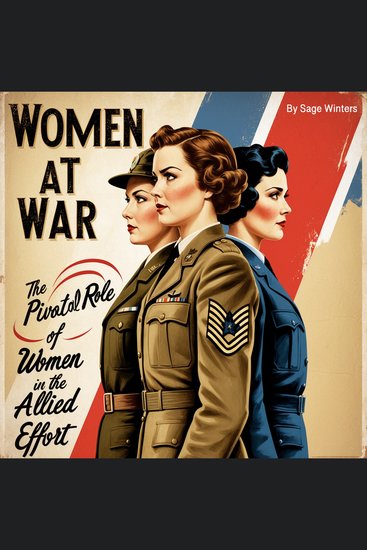
    Before the outbreak of World War II, women’s roles in society were primarily defined by traditional expectations of domesticity and support. The early 20th century saw most women confined to the home, tasked with caring for children, managing households, and supporting their husbands. While some women worked outside the home, their opportunities were limited to roles deemed suitable for their gender, such as teaching, nursing, and clerical work. A societal emphasis on strict gender roles reinforced the idea that women’s contributions were secondary to those of men.  
      
    Despite these restrictions, change was already stirring in many parts of the world. The suffrage movement had gained momentum in the late 19th and early 20th centuries, granting women the right to vote in some countries. This political shift signaled the beginning of a broader movement toward gender equality. Women’s participation in the workforce during World War I also laid important groundwork, as millions stepped into roles vacated by men who had gone to fight. Although many women were forced to relinquish these jobs after the war, the experience proved their capability and fueled the belief that women could contribute beyond the domestic sphere.  
      
    However, the interwar period brought mixed progress. The economic hardships of the Great Depression in the 1930s reinforced traditional values in some regions, with governments and employers often prioritizing men for scarce jobs. At the same time, women’s organizations continued to advocate for expanded rights, education, and opportunities. The period also saw significant cultural shifts, with women entering public life in new ways. The flapper era of the 1920s, for instance, challenged societal norms by embracing independence, freedom of expression, and modernity. 
    Show book
  • Evolution Is Wrong - A Radical Approach to the Origin and Transformation of Life - cover

    Evolution Is Wrong - A Radical...

    Erich von Däniken

    • 1
    • 1
    • 0
    A Fascinating Exploration on Why the Darwinists’ Theory No Longer Explains Everything 
    There was once a set of ideas called the theory of evolution, conceived by clever people and confirmed by countless scientists. Then people discovered the electron microscope. This made it possible to make the molecules within the cell visible, and suddenly questions about evolution arose that were not possible before. Which force actually bundles the atoms in the right order? What moves the molecular chains into the correct position? How did the first living unit within the cell actually come about? How does inheritance work, how does information pass on to the next generation? Did humans descend only and exclusively from primates—as Charles Darwin and countless other great minds assumed—or did additional “engines” intervene in evolution?  
    Today it is clear: countless questions can no longer be answered with the previous theory of evolution. There is a form of life called “Blob” (Physarum polycephalum). The “thing” has neither eyes nor ears, neither a mouth nor a nose or even a brain. Nevertheless, it takes in food, overcomes obstacles by the shortest route and exchanges information with other “blobs.” The “blob” contradicts any evolutionary thought that one develops from the other. Or the “gastric-brooding frogs” (Rheobatrachus) found in Australia. They hatch their young in the stomach. Impossible in a slow, evolutionary process.  
    Everywhere there are characteristics of animals that do not want to fit into the theory of evolution anywhere. And man? Are we really the most adapted life-form on this planet? Today, more and more scientists who contradict the previous theory of evolution speak out. The theory fits the changes within the species, but it can no longer be reconciled with the inner workings of the cell. Some other influence that has so far escaped us is affecting evolution. It is called “Intelligent Design.” Intelligent planning is suspected behind this. Anyone or anything—a spirit of the universe? Aliens?—could be behind this planning.  
    Erich von Däniken uses countless examples to demonstrate the impossibility of the previous evolutionary idea. He quotes scientists who argue against the previous teaching, but also those who defend it. Unfortunately, established science still refuses to look at discrepancies and holes in the theory of evolution, even though it is quite obvious that there is more going on with regard to the development of all species, as well as human culture, than could be explained by the theory of evolution alone.
    Show book
  • How to Make an Audiobook with Joshua Macrae - cover

    How to Make an Audiobook with...

    Joshua Macrae

    • 0
    • 0
    • 0
    HOW TO MAKE AN AUDIOBOOK is a step by step guide for independent publishers and authors to help navigate the wide-world of audiobook production. Including budgeting, casting, distribution, prepping manuscripts, recording audio, as well as marketing techniques used by successful authors in the industry. Written by Audiobook Obsession Award winning narrator Joshua Macrae, this guide has been used for years by his authors and potential clients to help determine the scope of their audiobook productions in a fun and exciting way. Even if you kinda maybe wanna dip your toe in the idea of someday maybe turning your manuscript into an audiobook possibly, this is the book for you.
    Show book