Join us on a literary world trip!
Add this book to bookshelf
Grey
Write a new comment Default profile 50px
Grey
Subscribe to read the full book or read the first pages for free!
All characters reduced
Indigenous Women Power - cover

Indigenous Women Power

Emily Williams

Translator A AI

Publisher: Publifye

  • 0
  • 0
  • 0

Summary

Indigenous Women Power explores the pivotal roles of Indigenous women in leadership, activism, and cultural preservation, challenging mainstream narratives and offering insights into sustainable solutions. Highlighting often-overlooked perspectives, the book demonstrates how empowering these women is crucial for social justice and community resilience.

 
It reveals that Indigenous women are not only knowledge keepers and cultural transmitters but also key figures in land rights movements and environmental protection.

 
The book progresses through thematic sections covering leadership, activism, and culture, drawing on oral histories, ethnographic studies, and contemporary case studies.

 
It connects Indigenous studies with gender studies, environmental studies, and political science, offering a cross-disciplinary analysis of the complex factors shaping Indigenous women’s lives. This approach emphasizes their agency and resilience, providing practical examples of initiatives that promote Indigenous rights and cultural sovereignty.
Available since: 02/27/2025.
Print length: 70 pages.
Other books that might interest you

  • Writers As The Protagonists – Short Stories - Wide spanning anthology with similar main characters - cover

    Writers As The Protagonists –...

    Fyodor Dostoyevsky, Nathaniel...

    • 0
    • 0
    • 0
    The short story in Literature is a few pages of beginning, middle and end peopled by characters who quickly draw themselves into its arc from the minds of their authors.   
     
    How these authors, including Herman Melville, Fyodor Dostoyevsky, M R James and Violet Hunt imagine their characters journeys is, of course, illuminating, thought-provoking and classic literature. 
     
    1 - Stories with The Writer as Protagonist - An Introduction 
    2 - Bobok by Fyodor Dostoyevsky 
    3 - The Devil In Manuscript by Nathaniel Hawthorne 
    4 - Cohen of Trinity by Amy Levy 
    5 - The Art of BookMaking by Washington Irving 
    6 - The Fiddler by Herman Melville 
    7 - The Eyes by Edith Wharton 
    8 - Count Magnus by M R James 
    9 - His Wife's Deceased Sister by Frank R Stockton 
    10 - The House of Cobwebs by George Gissing 
    11 - Room For One by Frederick Cowles 
    12 - Couching at the Door by D K Broster 
    13 - The Vampire Maid by Hume Nisbet 
    14 - Truth is Not Sober by Winifred Holtby 
    15 - The Plutonian Fire by O Henry 
    16 - A Sucessful Rehearsal by Anthony Hope 
    17 - The Memoir by Violet Hunt 
    18 - Warning Whispers by A M Burrage
    Show book
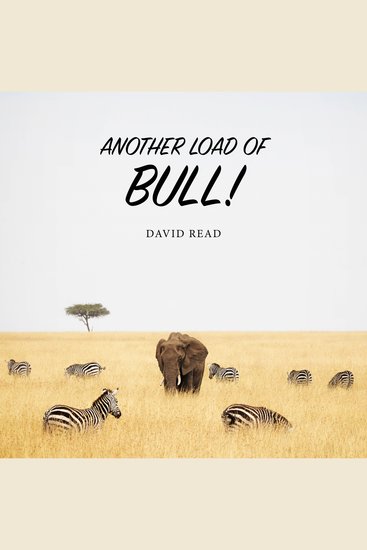
  • Another Load of Bull - cover

    Another Load of Bull

    David Read

    • 0
    • 0
    • 0
    An historical audiobook 'Another load of Bull' by David Read,  read from Jason Savidge.  The war was over and David, returning to East Africa, asked himself, as did many of his contemporaries, "what next"? It was not an easy world in which to readjust. He opted to become a Livvestock Marketing Officer in Dodoma, with the Tanganyika Veterinary Department. Money was short, and Pat, who had also been demobbed and had joined him in Dodoma, nursed to help augment their income.    Finally, the break David had been hoping for materialized and he embarked on a new chapter in his life as a wheat farmer on the Western slopes of Kilimanjaro. With no formal training, David survived largely on his local knowledge and language skills, supplemented by his cattle buying. Life on 'Mountainside' suited David, despite the constant battle against Africa's unforgiving environment, but the winds of change were to bring a greater challenge and one that would ultimately end David's dreams.
    Show book
  • Top 10 Short Stories The - The Modernists - The top ten modernist short stories - cover

    Top 10 Short Stories The - The...

    James Joyce, Virginia Woolf,...

    • 0
    • 0
    • 0
    Short stories have always been a sort of instant access into an author’s brain, their soul and heart.  A few pages can lift our lives into locations, people and experiences with a sweep of landscape, narration, feelings and emotions that is difficult to achieve elsewhere. 
     
    In this series we try to offer up tried and trusted ‘Top Tens’ across many different themes and authors. But any anthology will immediately throw up the questions – Why that story? Why that author?  
     
    The theme itself will form the boundaries for our stories which range from well-known classics, newly told, to stories that modern times have overlooked but perfectly exemplify the theme.  Throughout the volume our authors whether of instant recognition or new to you are all leviathans of literature. 
     
    Some you may disagree with but they will get you thinking; about our choices and about those you would have made.  If this volume takes you on a path to discover more of these miniature masterpieces then we have all gained something. 
     
    In this volume our authors show that Modernism was once cutting edge.  A way to explore, create, show and share in new ways.   Decades may have passed but their words still seem fresh and new and cutting edge.  Genius in every name. 
     
    01 - The Top 10 - The Modernists - An Introduction 
    02 - The Dead - Part 1 by James Joyce 
    03 - The Dead - Part 2 by James Joyce 
    04 - The Legacy by Virginia Woolf 
    05 - The Defense of Strikerville by Damon Runyon 
    06 - Bliss by Katherine Mansfield 
    07 - The Yellow Wallpaper by Charlotte Perkins Gilman 
    08 - Youth - Part 1 by Joseph Conrad 
    09 - Youth - Part 2 by Joseph Conrad 
    10 - Rooms by Gertrude Stein 
    11 - Here We Are by Dorothy Parker 
    12 - Speed by Sinclair Lewis 
    13 - Ariel's Triumph by Booth Tarkington
    Show book
  • History of Vladimir Lenin - cover

    History of Vladimir Lenin

    A.J. A.J.Kingston

    • 0
    • 0
    • 0
    Introducing "History of Vladimir Lenin" - the definitive guide to one of the most influential figures in modern history!    Vladimir Lenin was a revolutionary leader who played a critical role in shaping the future of Russia and the world. His ideas and teachings continue to inspire political movements around the globe, making him a figure of both admiration and controversy.    In this comprehensive book, we delve deep into the life of Vladimir Lenin, exploring his childhood, his early political activism, his rise to power, and his lasting impact on the world. We examine his theories on communism, his leadership style, and his role in the Bolshevik Revolution.    But this book is more than just a historical account - it's a fascinating exploration of Lenin's character, motivations, and personal life. We examine the relationships that shaped him, his struggles with health issues, and his complex legacy.    Whether you're a history buff, a political science student, or simply someone who wants to understand the life of one of the most influential figures of the 20th century, "History of Vladimir Lenin" is the book for you. With engaging prose, meticulous research, and a wealth of insights, this book is sure to captivate and inform.    Order your copy today and discover the fascinating life and legacy of Vladimir Lenin!
    Show book
  • My Secret Life Vol 2 Chapter 21 - cover

    My Secret Life Vol 2 Chapter 21

    Dominic Crawford Collins

    • 0
    • 0
    • 0
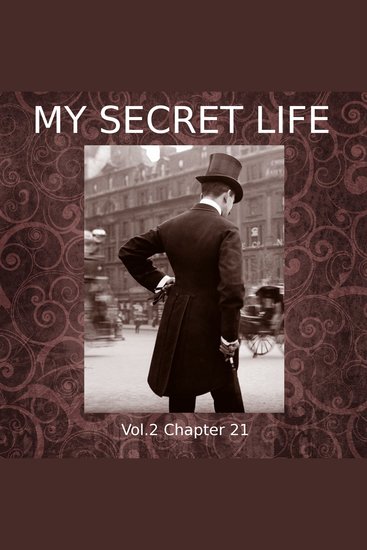
    My Secret Life, the anonymously written erotic memoirs of a Victorian English gentleman who refers to himself simply as 'Walter' is one of the most idiosyncratic and sexually obsessed books ever written. In this vast autobiographical confessional the author recounts, in meticulous detail, his sexual exploits throughout the course of a life devoted entirely to the pursuit of carnal pleasure. Through this compelling exploration of the author's sexual behaviour we are left with a uniquely entertaining insight into life behind the closed doors of Victorian society. My Secret Life is evocative, provocative, sorrowful, suspenseful, obscene, exciting and highly erotic...in it we are privy to the thoughts, emotions and memories of one of the most unusual, unsung and colourful English eccentrics of the Victorian era.
    
    Now, for the first time, the complete unabridged version of this unique text is being narrated and scored by film composer Dominic Crawford Collins as an 'audiofilm' (an audiobook in which the emotional landscape is explored through the music score). Each chapter of My Secret Life will be released at monthly intervals over the next ten or so years culminating in what is likely to become the longest audio book ever to be produced.
    Show book
  • Evening Guest An - From their pens to your ears genius in every story - cover

    Evening Guest An - From their...

    Alexander Kuprin

    • 0
    • 0
    • 0
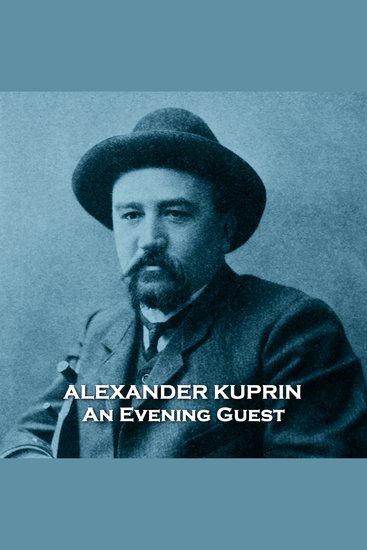
    Alexander Kuprin was born in Narovchat, Penza in Russia on 7th September 1870. 
    At 3 his Father died and he and mother moved to Moscow. By 10 he was enrolled at the Second Moscow Military High School and there his interest in literature began. The Alexander Military Academy followed and two years later he was a sub-lieutenant and posted to an Infantry Regiment for a further four years. 
    Despite his duties he was a now a keen writer and published his first short story at this time. His military duties also garnered him experiences for his breakthrough work ‘The Duel’.  Leaving the military he left for Kiev to work for local newspapers.  He continued to publish both stories and novels and by 1901 he was in St Petersburg becoming part of a group that included Chekhov, Ivan Bunin, Maxim Gorky and Leonid Andreyev.  
    In the years that followed further controversial works and acclaim followed.  His comments on the regime meant he was also put under secret police surveillance.   
    As World War I erupted, Kuprin opened a military hospital but was then given command of an infantry company in Finland. He was soon discharged on grounds of ill health.  
    The October Revolution saw him praise Lenin, but he warned that the Bolsheviks threatened Russian culture and might cause further widespread suffering to the peasants.  As Civil War raged he took his family to Helsinki and then on to Paris. 
    Exile saw his talents decline further and his succumbing to alcoholism. He became lonely and withdrawn. The family's poverty increased his malaise.   
    In May 1937, the Kuprin’s returned to Moscow.  He now saw his work published but wrote almost nothing new.  In 1938 his health rapidly deteriorated.  Already suffering from a kidney problems and sclerosis, he had now developed cancer of the oesophagus.  
    Alexander Kuprin died on 25th August 1938.
    Show book