
Join us on a literary world trip!
Add this book to bookshelf
Grey
Write a new comment Default profile 50px
Grey
Subscribe to read the full book or read the first pages for free!
All characters reduced
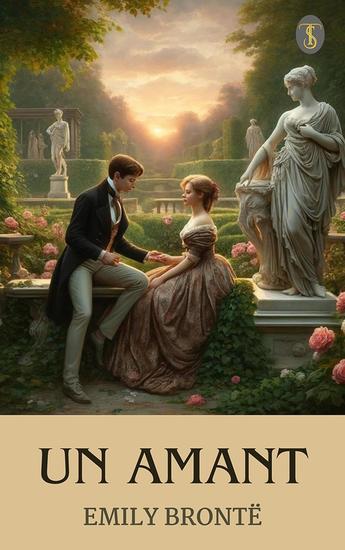
Un amant - cover

Un amant

Emily Brontë

Publisher: Truesign Publisher

  • 0
  • 0
  • 0

Summary

"Un amant" is a lesser-known work by Emily Brontë, the acclaimed author of "Wuthering Heights." Originally written in French, this short story explores themes of passion, desire, and the complexities of human relationships. Set in the atmospheric backdrop of the Yorkshire moors, the story follows the protagonist as she navigates the tumultuous emotions stirred by the arrival of a mysterious lover. Through vivid imagery and lyrical prose, Brontë delves into the inner workings of the human heart, depicting the conflicting emotions of love, longing, and betrayal. While "Un amant" may not have achieved the same recognition as Brontë's more famous works, it nevertheless showcases her remarkable talent for crafting compelling narratives and exploring the depths of human experience.
Available since: 06/16/2025.
Print length: 401 pages.
Other books that might interest you

  • The Luft Bad - cover

    The Luft Bad

    Katherine Mansfield

    • 0
    • 0
    • 0
    The Luft Bad is a short story by Katherine Mansfield: I think it must be the umbrellas which make us look ridiculous. – When I was admitted into the enclosure for the first time, and saw my fellow-bathers walking about very nearly “in their nakeds,” it struck me that the umbrellas gave a distinctly “Little Black Sambo” touch...
    Show book
  • A Son At The Front - cover

    A Son At The Front

    Edith Wharton

    • 0
    • 0
    • 0
    In the realm of classic literature, there exists a treasure trove of stories that capture the essence of human emotions and experiences during times of conflict. One such masterpiece is "A Son at the Front," a novel written by Edith Wharton and published in 1923. This poignant work of fiction delves into the lives of its characters against the backdrop of World War I, weaving a narrative that explores themes of love, sacrifice, and the unrelenting toll of war. 
     
    The story primarily revolves around the protagonist, John Campton, an American painter residing in Paris. John is a devoted father, and his world revolves around his beloved son, George. The novel traces John's inner turmoil as he wrestles with his desire to protect his son from the horrors of war while also coming to terms with his own artistic ambitions. 
     
    As the novel unfolds, we witness the complex interplay of personal and societal forces on the characters. John Campton's internal conflict reflects the broader dilemma faced by countless individuals during the Great War. The choice between pursuing one's creative aspirations and succumbing to the overwhelming demands of duty and patriotism is a recurring theme that resonates with readers even today. 
     
    Edith Wharton, celebrated for her incisive social commentary and keen insight into human nature, portrays the characters in "A Son at the Front" with depth and nuance. John's struggles are a testament to the emotional turmoil experienced by parents who see their children heading to the frontlines of battle. The fear, anxiety, and helplessness that John grapples with are emotions that transcend time and place, making his character all the more relatable to modern readers.
    Show book
  • Edgar Allan Poe - Selected Tales (Volume 2) - cover

    Edgar Allan Poe - Selected Tales...

    Edgar Allan Poe

    • 0
    • 0
    • 0
    Though he is most often remembered as the architect of the modern tale of terror, Edgar Allan Poe's short fiction ranges far beyond the confines of the macabre. In these 13 selected stories, he deals not merely with fear, but with consciousness itself: its obsessions, its perversities, its fragile hold upon identity, memory, and reason. 
    Ligeia – A meditation on beauty, intellect, and the terrifying possibility that the will may conquer death itself. 
    Berenice – A stark study of monomania, in which intellectual obsession descends into horror. 
    Eleonora – A gentle tale, exploring idealised love, memory, and the redemptive power of beauty. 
    Morella – A dark philosophical romance concerning the persistence of the self beyond death. 
    Three Sundays in a Week – A playful tale of ingenuity and deception. 
    The Imp of the Perverse – Poe’s chilling exploration of the irrational impulse that drives us toward self-destruction. 
    The Assignation – A tale of passion and fatalism, set against a decaying aristocratic world . 
    The Facts in the Case of M. Valdemar – A disturbing experiment at the border of life and death, told with clinical precision. 
    The Cask of Amontillado – A masterclass in cool revenge, where pride, cruelty, and calculation lead to perfect atrocity. 
    Silence – A Fable – A haunting parable about the terror of absolute stillness. 
    Shadow – A Parable – A solemn meditation on death and inevitability. 
    The Man of the Crowd – An early exploration of urban alienation and the unsettling mystery of the unknowable individual. 
    Some Words with a Mummy – A sharp satire skewering modern arrogance through an encounter with the ancient past.
    Show book
  • About Love - From their pens to your ears genius in every story - cover

    About Love - From their pens to...

    Anton Chekhov

    • 0
    • 0
    • 0
    Anton Pavlovich Chekhov was born on 29th January 1860 in Taganrog, on the south coast of Russia.  
    His family life was difficult; his father was strict and over-bearing but his mother was a passionate story-teller, a subject Chekhov warmed to. As he later said; ‘our talents we got from our father, but our soul from our mother’.  
    At school Chekhov was distinctly average. At 16 his father mis-managed his finances and was declared bankrupt. His family fled to Moscow. Chekhov remained and eked out a living by various means, including writing and selling short sketches to newspapers, to finish his schooling. That completed and with a scholarship to Moscow University obtained he rejoined his family. 
    He was able to help support them by selling satirical sketches and vignettes of Russian lifestyles and gradually obtained further commissions. In 1884, he qualified as a physician and, although it earned him little, he often treated the poor for free, he was fond of saying ‘Medicine is my lawful wife, and literature is my mistress.’ 
    His own health was now an issue as he began to cough up blood, a symptom of tuberculosis.  Despite this his writing success enabled him to move the family into more comfortable accommodation.  
    Chekhov wrote over 500 short stories which included many, many classics including ‘The Kiss’ and ‘The Lady with a Dog’.  His collection ‘At Dusk’ won him the coveted Pushkin Prize when was only 26.  
    He was also a major playwright beginning with the huge success of ‘Ivanov’ in 1887.   
    In 1892 Chekhov bought a country estate north of Moscow. Here his medical skills and money helped the peasants tackle outbreaks of cholera and bouts of famine. He also built three schools, a fire station and a clinic.  It left him with less time for writing but the interactions with real people gained him detailed knowledge about the peasantry and their living conditions for his stories.  
    His most famous work, ‘The Seagull’ was received disastrously at its premiere in St Petersburg. It was later restaged in Moscow to highlight its psychological aspects and was a huge success. It led to ‘Uncle Vanya’, ‘The Three Sisters’ and ‘The Cherry Orchard’.  
    Chekhov suffered a major lung hemorrhage in 1897 while visiting Moscow. A formal diagnosis confirmed tuberculosis and the doctors ordered changes to his lifestyle.  
    Despite a dread of weddings the elusive literary bachelor quietly married the actress Olga Knipper, whom he had met at rehearsals for ‘The Seagull’, on 25th May 1901. 
    By May 1904 with his tuberculosis worsening and death imminent he set off for the German town of Badenweiler writing cheerful, witty letters to his family and assuring them his health was improving.  
    On 15th July 1904 Anton Chekhov died at Badenweiler.  He was 44.
    Show book
  • David Poindexter's Disappearance and Other Tales - Strange Cases from the English Records - cover

    David Poindexter's Disappearance...

    Julian Hawthorne

    • 0
    • 0
    • 0
    Complete and unabridged, with 58 full-page plates by Edvard Munch, Winslow Homer and Odilon Redon. A Sussex parson deep in gambling debts meets his exact double, a highwayman, in a wood; one of them is found dead, the other rides back into the parson's life, and no court can prove which man he is — and around that, a set of tales about ghosts, obsession and the thinness of a personality. Julian Hawthorne grew up among Emerson, Thoreau and Melville, produced some fifty books, and later went to prison for mail fraud over a mining stock. He wrote identity as something that comes loose. Fifty-eight plates, among them Munch and Eastman Johnson, run from 1783 to 1912 and dwell on interiors, kinsmen and uncertain selves, the very ground these tales of doubled identity occupy.
    Show book
  • Fear - From their pens to your ears genius in every story - cover

    Fear - From their pens to your...

    Catherine Wells

    • 0
    • 0
    • 0
    Little information survives on Catherine’s life. 
    She was born Amy Catherine Robbins in 1872. 
    In about 1892 she was a student in a biology cramming class where the teacher was H G Wells.  Though married he was quickly attracted to his student and within a short time they were living together in Woking, Surrey.  He then divorced his first wife and married Catherine in October 1895 at St Pancras register office. 
    In the early years they were poor to the point that they could not afford to start a family.  When they did they had two children; Philip in 1901 and Frank two years later. 
    For much of her life she seemed to pursue other interests, being a mother, a gardener, running much of her husband’s business affairs and this seemed to leave little time for her own literary pursuits.  She published little during her lifetime apart from a few poems and some short stories.  Indeed her prodigiously talented husband even referred to her as ‘Jane’ and soon all around her did too, her writing life seemingly in another personality far, far away.   
    By the mid 20’s she was ill with cancer and succumbed to its advance in 1927. 
    Wells, although wayward and promiscuous during much of the marriage, now attempted to put his wife’s literary merits into book form and published ‘The Book of Catherine Wells’, a collection of short stories and poems.
    Show book