Join us on a literary world trip!
Add this book to bookshelf
Grey
Write a new comment Default profile 50px
Grey
Subscribe to read the full book or read the first pages for free!
All characters reduced
Theresa Raquin - cover

Theresa Raquin

Émile Zola

Translator -Ernest Alfred Vizetelly

Publisher: DigiCat

  • 0
  • 0
  • 0

Summary

In "Thérèse Raquin," Émile Zola presents a gripping exploration of passion, guilt, and the darker aspects of human nature, framed within the backdrop of a 19th-century Parisian society rife with social constraints. Zola's naturalistic style vividly depicts the suffocating environment of the characters, employing detailed descriptions and psychological depth to capture the internal struggles of Thérèse, who finds herself trapped in a loveless marriage. The novel serves as a hallmark of Zola's critique of bourgeois morality, revealing the consequences of unchecked desires through a meticulously woven narrative that delves into themes of lust, betrayal, and the inexorable force of fate. Zola, a pivotal figure in the literary movement of naturalism, drew on his background and personal experiences to inform the narrative of "Thérèse Raquin." His own observations of the Parisian working class and exposure to the socio-political landscape of the time greatly influenced his portrayal of complex characters grappling with their circumstances. Zola's commitment to revealing the underlying truths of society, often through the lens of working-class existence, is palpably evident in Thérèse's tumultuous journey. This novel is highly recommended for readers interested in a profound psychological study veiled in a tragic love story. Zola's unflinching examination of moral decay and human instinct will resonate with anyone drawn to nuanced character studies and societal critique, making "Thérèse Raquin" an essential read for understanding the foundations of modern realism.
Available since: 09/16/2022.
Print length: 178 pages.


Other books that might interest you

  • White Nights - Audiobook - cover

    White Nights - Audiobook

    Fyodor Dostoevsky, Classic...

    • 0
    • 0
    • 0
    Fyodor Dostoevsky's White Nights is a deeply emotional and poetic novella that explores themes of loneliness, dreams, and fleeting connections. The story follows a solitary dreamer who wanders the streets of St. Petersburg at night, lost in his own thoughts and imagination. One evening, he meets a mysterious young woman, Nastenka, who, like him, is longing for something beyond her reach. Over the course of several nights, they open up to each other, sharing their fears, hopes, and desires, forming an unusual bond.Through delicate and lyrical prose, Dostoevsky captures the fragile nature of human emotions and the contrast between dreams and reality. White Nights is a meditation on love, solitude, and the way our most cherished moments can slip away like a dream. The novella remains one of Dostoevsky's most touching works, leaving readers with a bittersweet sense of longing and reflection on the nature of human connection.
    Show book
  • Lifted Veil The (Unabridged) - cover

    Lifted Veil The (Unabridged)

    George Eliot

    • 0
    • 0
    • 0
    The tale of a man who is incapacitated by visions of the future and the cacophony of overheard thoughts, and yet who can't help trying to subvert his vividly glimpsed destiny, it is easy to read The Lifted Veil as being autobiographically revealing of Eliot's sensitivity to public opinion and her awareness that her days concealed behind a pseudonym were doomed to a tragic unveiling (as indeed came to pass soon after this novella's publication). But it is easier still to read the story as the exciting and genuine precursor of a moody new form, as well as an absorbing early masterpiece of suspense.
    Show book
  • The Collected Tales of Nikolai Gogol - cover

    The Collected Tales of Nikolai...

    Nikolai Gogol

    • 0
    • 0
    • 0
    The Collected Tales of Nikolai Gogol includes the works of the famous writer Nikolai Gogol:   
    The Viy
    A May Night
    Memoirs of a Madman
    The Nose
    The Cloak
    Christmas Eve
    Show book
  • The Premature Burial - cover

    The Premature Burial

    Edgar Allan Poe

    • 0
    • 0
    • 0
    Immerse yourself in the terror of "The Premature Burial," the fifth part of an Edgar Allan Poe short story collection, narrated by Jake Urry. This unsettling tale explores the intense fear of being buried alive, as the narrator recounts various horrifying incidents of premature interment and his own obsessive dread of such a fate. The story delves deep into the psyche, blending horror with the claustrophobic fear of being trapped in one's own grave. 
    Jake Urry's evocative narration amplifies the suspense and dread of Poe's chilling tale, making this audiobook a captivating and eerie experience. His nuanced voice draws listeners into the narrator's paranoia, creating a palpable sense of fear that lingers long after the story ends.
    Show book
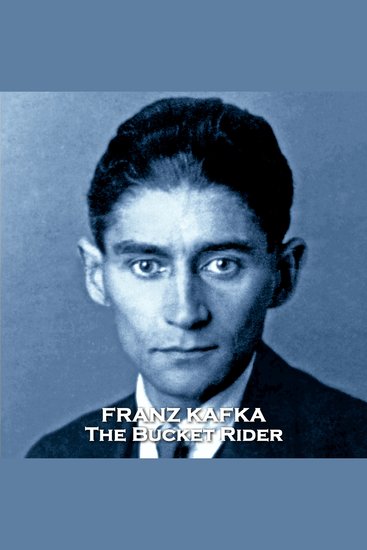
  • The Bucket Rider - A poor man seeks compassion but is found wanting - cover

    The Bucket Rider - A poor man...

    Franz Kafka

    • 0
    • 0
    • 0
    Franz Kafka was born on 3rd July 1883 in Prague, then in Bohemia, the eldest of 6, into a middle-class Jewish family. 
     
    Life for the young Kafka and his passion for literature was often made an ordeal by his over-bearing and domineering entrepreneur of a father.   
     
    In 1889 Kafka was sent to the Deutsche Knabenschule, an elementary school in Prague. His father would only allow him to be educated in German-speaking schools and even went so far as to limit visits to the synagogue to four a year. 
     
    In 1901 he graduated from the classics-oriented Altstädter Gymnasium. Kafka did well there and across a large range of subjects.  He now enrolled at the Charles Ferdinand University, to study chemistry, but quickly switched to law for which he obtained his degree in June 1906 and then performed the mandatory year of unpaid service as clerk at the civil and criminal courts. 
     
    A job at an Italian insurance company left him little time to write and after a year he took another job with the Worker's Accident Insurance Institute for the Kingdom of Bohemia where he stayed until ill health led to his resignation in 1922. 
     
    Although he saw work as a means to pay the bills and to allow him time to write, he received several promotions and was noted as a good employee. 
     
    By 1917 Kafka was suffering from tuberculosis, which required frequent periods of convalescence. Interspersed with this, were several intense affairs before he settled in Berlin with Dora Diamant, a 25-year-old kindergarten teacher who herself having left the ghetto now influenced Kafka's interest in the book of Jewish law, the Talmud. 
     
    Kafka’s on-going health was littered with problems. Apart from TB there were several other ailments, including migraines, insomnia, boils, depression, all usually brought on by excessive stresses and strains. He attempted to counteract all of this by naturopathic treatments, a vegetarian diet and consuming large quantities of unpasteurized milk. 
     
    His tuberculosis still worsened. He returned to Prague, where he died on 3rd June 1924. He was 40. 
     
    His literary works are few in number but towering in influence.  His masterpieces include ‘The Trial’, ‘The Metamorphosis’ as well as a number of short stories which reveal facets of humankind that truthfully could only be born from Kafka’s brain and pen.
    Show book
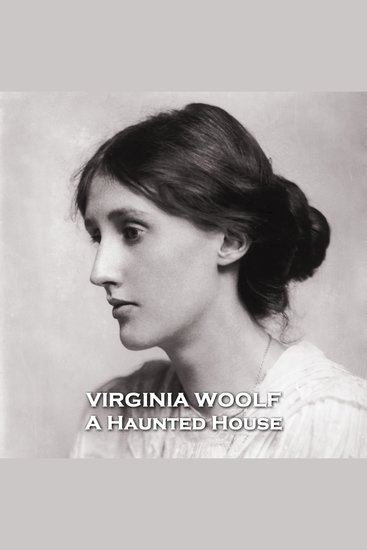
  • A Haunted House - From their pens to your ears genius in every story - cover

    A Haunted House - From their...

    Virginia Woolf

    • 0
    • 0
    • 0
    Adeline Virginia Woolf was born on the 25th January 1882 in South Kensington in London. 
    Although lauded as a founder of modernist writing with such classics as ‘Orlando’, ‘Mrs Dalloway’ and ‘To the Lighthouse’ and, of course, many classic short stories, her background is filled with elements of tragedy that she somehow overcame to become such a revered writer.   Her mother died when she was 13, her half-sister Stella two years later and with it her first of several nervous breakdowns.  Appallingly it was later found that three of her half-brothers had sexually abused her so darkness must have seemed ever present.   
    She began writing professionally at age 20 but her father’s death two years later brought a complete mental collapse and she was briefly institutionalised.  Somehow she found within herself a literary career and with it great innovations in writing; she was a pioneer of “stream of consciousness”.    
    Her tight circle of friends were the founders of the Bloomsbury Group, a movement whose legacy still influences across the arts and society in many way to this day.   
    Whilst the dark periods continued to interrupt her emotional state her rate of work never ceased.  Until, on 28th March 1941, Woolf put on her overcoat, filled up its pockets with stones, and walked into the River Ouse, in Lewes, East Sussex and drowned herself.  Her body was not recovered until the 18th April.  She was 59. 
    She left behind a note which read in part “Dearest, I feel certain that I am going mad again.  I feel we can't go through another of those terrible times.  And I shan't recover this time.  I begin to hear voices, and I can't concentrate.  So I am doing what seems the best thing to do”.
    Show book