Begleiten Sie uns auf eine literarische Weltreise!
Buch zum Bücherregal hinzufügen
Grey
Einen neuen Kommentar schreiben Default profile 50px
Grey
Jetzt das ganze Buch im Abo oder die ersten Seiten gratis lesen!
All characters reduced
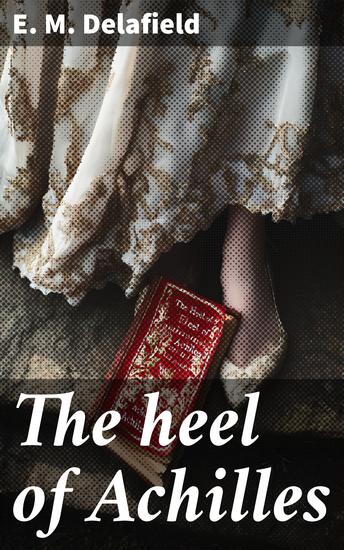
The heel of Achilles - cover

The heel of Achilles

E.M. Delafield

Verlag: Good Press

  • 0
  • 0
  • 0

Beschreibung

In "The Heel of Achilles," E. M. Delafield presents a sharp critique of societal norms through the lens of her protagonist, Lady Frances, who navigates the restrictive contours of early 20th-century British society. Delafield employs a blend of wit and keen observational humor, reminiscent of her contemporaries in the modernist movement, to explore themes of identity, gender, and the often suffocating expectations placed upon women. The narrative is steeped in a rich literary context marked by the tensions of post-war society, where traditional roles clash with burgeoning modern ideas, making the book both a reflection and a rebellion against societal standards of the time. E. M. Delafield, known for her acute social commentary, drew upon her own experiences as a woman in a patriarchal society to craft this engaging work. Raised in a family of notable intellects and plagued by the limitations imposed on her gender, the author's insights on the complexities of female existence resonate throughout the text. Her own struggles with identity and societal adherence strongly influenced Lady Frances's journey, infusing the novel with authenticity. For readers interested in the intersections of feminism, society, and literature, "The Heel of Achilles" is an essential read. Delafield's ability to merge humor with poignant observations allows for a multifaceted exploration of its themes, making this work both an enjoyable and thought-provoking experience that invites reflection on the enduring challenges of women in society.
Verfügbar seit: 02.03.2025.
Drucklänge: 150 Seiten.

Weitere Bücher, die Sie mögen werden

  • Medea - (National Theatre of Scotland version) - cover

    Medea - (National Theatre of...

    Euripides

    • 0
    • 0
    • 0
    'She's chucked out like an old coat that nae langer fits him…'
    Medea and Jason, clinging together as refugees in Corinth, have struggled to bring up their beloved offspring in this alien and unsympathetic society. Now Jason has a plan to better integrate himself. Unfortunately, this involves abandoning his wife, the mother of his children…
    Spurned, destitute, desperate, Medea exacts her terrible retribution.
    Liz Lochhead's Scots-inflected version of Euripides' classic revenge tragedy was first performed by Theatre Babel in 2000 and won the Saltire Society Scottish Book of the Year Award. It was revived by the National Theatre of Scotland as part of the 2022 Edinburgh International Festival, with Adura Onashile as Medea, directed by Michael Boyd.
    Zum Buch
  • The Million Pound Note - This hilarious story set in Victorian London is about two rich brothers performing a rather cruel social experiment on someone for their own amusement a la the movie Trading Places but written a century earlier - cover

    The Million Pound Note - This...

    Mark Twain

    • 0
    • 0
    • 0
    Samuel Langhorne Clemens was born in Florida, Missouri on the 30th November 1835 and is far better known by his pen name of Mark Twain.  An American writer and humorist of the first order he is perhaps best known for his novels ‘The Adventures of Tom Sawyer’ and its sequel ‘The Adventures of Huckleberry Finn’ which are often described with that mythic line The Great American Novel. 
     
    Twain grew up in Hannibal, Missouri which would later provide the backdrop to these great novels.  Apprenticed to a printer he also became a typesetter and then a master riverboat pilot on the Mississippi.  Later, heading west with his brother Orion to make his fortune, he failed at gold mining and instead turned to journalism and thence his true calling as a writer of humorous stories where his wit and humor sparkled from every paragraph, his craft evident with every page and punctured target. 
     
    A staunch supporter of copyright protections this helped him keep much of the wealth his writing created, though much money was also lost on investments that he pursued in his love for science and technology as well as investing in his own inventions. 
      
    Twain was born during a visit by Halley’s comet, and he predicted that he would go out with it as well.  He died the day after its subsequent return on 21st April 1910, at his house, Stormfield, located in Redding, Connecticut.   
     
    In this story Twain proposed that coming into possession of a million pound note should solve all of life’s problems, both big and small.  And he’s right.  For a time it does.  But…. Yes, with Twain, there is always a but.
    Zum Buch
  • Uncle Wiggily and Puss in Boots - cover

    Uncle Wiggily and Puss in Boots

    Howard R. Garis

    • 0
    • 0
    • 0
    Uncle Wiggily and Puss in Boots is written by Howard R. Garis. The gentleman rabbit Uncle Wiggily is out and he hears a cat crying. "Without my boots they will take me out of all the story books!". He finds Puss in Boots, but without his boots! Uncle Wiggily helps out. The moral of the story is: Put good out, you get good back. Recommended for age 3+.
    Zum Buch
  • Jackals and Arabs - cover

    Jackals and Arabs

    Franz Kafka

    • 0
    • 0
    • 0
    "Jackals and Arabs" is a short story by Franz Kafka, written and published in 1917. The story was first published by Martin Buber in the German monthly Der Jude.A European traveler from the North, accompanied by Arab guides, is camped in the desert. When night falls, and the Arabs are at a distance, the traveler is accosted by talking jackals. The jackals speak of an age-old hatred for Arabs, whom they associate with uncleanliness. They relate a belief passed down from their ancestors, that a man such as the protagonist would be the one to "end the quarrel which divides the world in two". The jackals attempt to enlist the traveler's assistance in destroying them, offering him old rusted scissors with which to slit the throats of the Arabs.At this moment an Arab happens upon the discussion, and cracks his whip, "laughing cheerfully". He declares the fondness of Arabs for jackals, and the Arabs bring out the carcass of a camel that had died in the night. The jackals begin to feast on it uncontrollably, and the Arab whips several of them as they tear at the flesh of the carcass, until the European interferes. The Arab agrees to stop, and the story ends: "We'll leave them to their calling. Besides, it's time to break camp. You've seen them. Wonderful creatures, aren't they? And how they hate us."
    Zum Buch
  • Paiute Passage (Stonecroft Saga Book 11) - A Historical Western Novel - cover

    Paiute Passage (Stonecroft Saga...

    B.N. Rundell

    • 0
    • 0
    • 0
    BLOOD WOULD BE SPILT, LIVES CHANGED AND DECISIONS MADE. 
    When the Salish War Leader, Spotted Eagle appeared in the clearing before their cabin, life-long friends Gabe and Ezra weren’t sure what to think. This man had shown himself to be their friend, and now he invited them to join him and the village on a buffalo hunt. With winter just around the corner, it seemed the likely thing to do, but had they known what the journey would bring, they might have had second thoughts… 
    Gabe and Ezra’s discovery of the massacre of the Paiute village, and the three survivors that told the story, was just the beginning of the fight against the warring Waiilatpus. When the band of raiders also attacked the Salish and fled, it was up to Gabe and Ezra to seek some vengeance and recapture the stolen girls. 
    A pursuit across the lava beds of the Snake River plains, a fight in the dead of night, a thundering stampede of buffalo, and a horde of bugs that shrouded the entire valley, were just the added complications to a simple buffalo hunt, or perhaps more. The unorthodox ways of the two non-native men would earn Gabe more scars, Ezra a new name, the lasting friendship of the Paiute, and the gratefulness of the Salish.
    Zum Buch
  • Witch Wood - cover

    Witch Wood

    John Buchan

    • 0
    • 0
    • 0
    …for Witch Wood specially I am always grateful; all that devilment sprouting up out of a beginning like Galt's Annals of the Parish. That's the way to do it. — C. S. Lewis Published in 1927, Scottish writer John Buchan's Witch Wood is set in a rural parish located in the Scottish Borders during the Wars of the Three Kingdoms. The story centers around newly-ordained minister David Sempill's arrival in Woodilee in the wake of the Church of Scotland's acceptance of the Solemn League and Covenant and explores themes and issues surrounding religious tolerance and seventeenth-century Calvinism. With pagan rituals, an outbreak of the plague, and rumors about fairies and the devil, Witch Wood also delves into the supernatural and occult. Written while doing research for his biography of Scottish nobleman James Graham, the 1st Marquess of Montrose, Witch Wood is considered Buchan's masterpiece by scholars and critics. Read by Scottish narrator Angus King, this audio edition maintains sections of dialogue originally written and published in Scots.
    Zum Buch